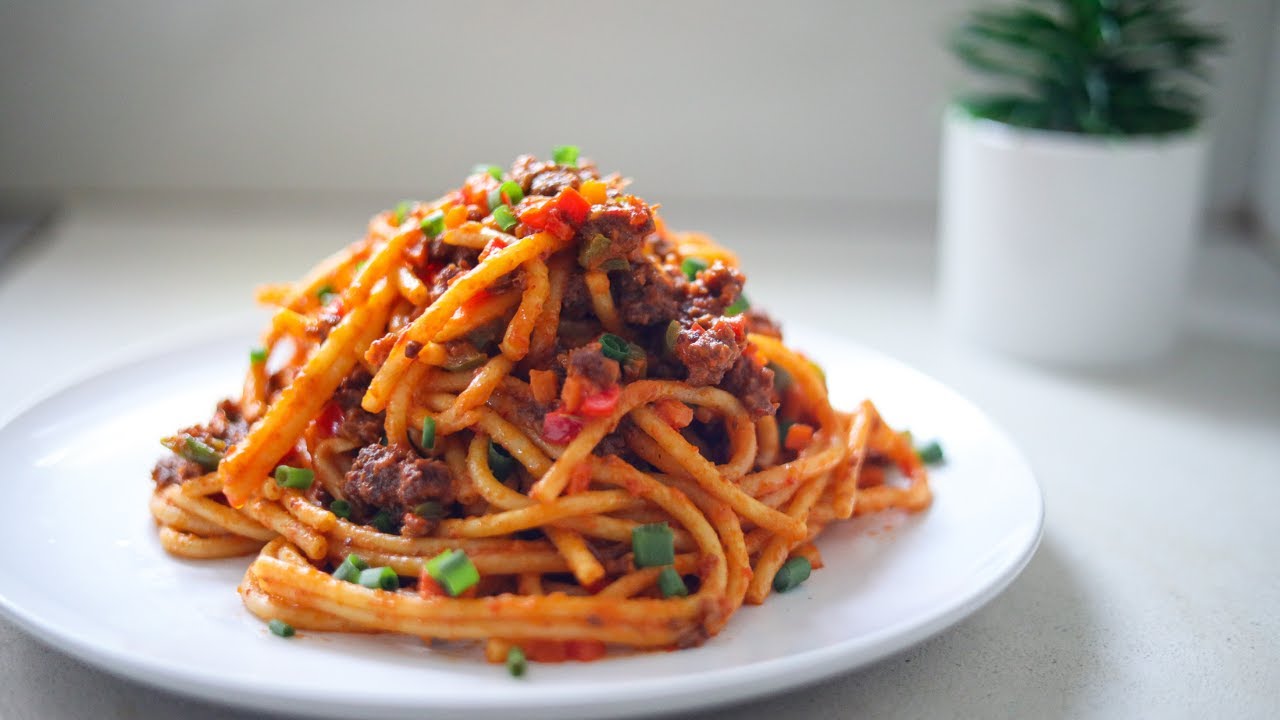
Jollof Spaghetti is a rich, colourful, and flavour-packed Nigerian pasta dish prepared by cooking spaghetti in a well-seasoned tomato and pepper sauce. It combines the familiar smoky taste of Nigerian Jollof with the soft, satisfying texture of pasta, creating an easy meal that works perfectly for lunch, dinner, family gatherings, or special occasions.
In this Nigerian Jollof Spaghetti recipe, we prepare the sauce with tomatoes, red bell peppers, onions, tomato paste, seasoning, herbs, and stock. We then allow the spaghetti to finish cooking directly in the sauce so that every strand absorbs the delicious Jollof flavour.
The result is a vibrant plate of spicy Nigerian spaghetti with a savoury tomato base, beautiful colour, and satisfying aroma. We can serve it on its own or pair it with fried chicken, grilled meat, fish, boiled eggs, plantain, or vegetables.
What Is Jollof Spaghetti?
Jollof Spaghetti is a Nigerian pasta dish inspired by the cooking method used for Nigerian Jollof Rice. Instead of rice, we use spaghetti and cook it in a seasoned tomato-pepper sauce until the pasta absorbs the flavours.
Unlike ordinary spaghetti served with tomato stew, Jollof Spaghetti is usually finished directly inside the sauce. This cooking method gives the pasta a deeper flavour and ensures that the sauce coats every strand.
We can make the dish mild or spicy depending on the amount of pepper used. It can also be customised with chicken, beef, prawns, sausages, vegetables, or other favourite ingredients.
Ingredients for Jollof Spaghetti
Before we begin cooking, we gather all the ingredients needed to produce a balanced sauce and perfectly seasoned pasta.
Main Ingredients
- 500g spaghetti
- 4 medium fresh tomatoes
- 2 red bell peppers
- 1–2 Scotch bonnet peppers, depending on preferred heat
- 2 medium onions
- 3 tablespoons tomato paste
- 3 tablespoons vegetable oil
- 2 cups chicken or beef stock
- 2 seasoning cubes
- 1 teaspoon curry powder
- 1 teaspoon dried thyme
- 1 teaspoon paprika, optional
- 1 teaspoon garlic powder or fresh garlic
- ½ teaspoon ginger powder or fresh ginger
- 1 bay leaf, optional
- Salt to taste
- Water as required
For additional texture and flavour, we may add sliced carrots, green peas, sweet corn, spring onions, chopped bell peppers, cooked chicken, beef, prawns, or sausages.
How to Make Jollof Spaghetti Step by Step
Making Jollof Spaghetti at home is straightforward when we build the tomato sauce properly and avoid overcooking the pasta.
1. Blend the Tomatoes and Peppers
We wash the fresh tomatoes, red bell peppers, Scotch bonnet peppers, and one onion. We roughly chop them before blending until smooth.
For a richer and more concentrated sauce, we can blend the mixture with very little water. Excess water increases the cooking time and can weaken the flavour.
2. Prepare the Spaghetti
We bring a large pot of water to a boil and add a small amount of salt. We add the spaghetti and cook it until it is slightly underdone.
We do not need to cook the pasta completely at this stage because it will continue cooking inside the Jollof sauce.
Once slightly tender, we drain the spaghetti and set it aside.
3. Fry the Onions and Tomato Paste
We place a clean pot over medium heat and add the vegetable oil. Once heated, we add sliced onions and sauté until fragrant and slightly soft.
Next, we add the tomato paste.
We fry the paste for a few minutes while stirring regularly. Properly frying the tomato paste helps reduce its raw acidic flavour and contributes to the deep red colour associated with Nigerian Jollof Spaghetti.
4. Cook the Tomato and Pepper Mixture
We pour the blended tomato and pepper mixture into the fried tomato paste.
We stir thoroughly and allow the sauce to cook over medium heat. The sauce should reduce considerably, and the raw tomato taste should disappear.
We continue cooking until the sauce becomes thicker and more concentrated.
5. Season the Jollof Sauce
Once the tomato mixture has reduced, we season it with curry powder, thyme, garlic, ginger, paprika, seasoning cubes, bay leaf, and salt.
We then pour in the chicken or beef stock and mix thoroughly.
The sauce should taste slightly stronger than the desired final flavour because the spaghetti will absorb some of the seasoning as it cooks.
6. Add the Spaghetti
We carefully add the partially cooked spaghetti to the sauce.
Using a wooden spoon or pasta tong, we gently combine the spaghetti with the tomato mixture until the sauce coats the pasta evenly.
If there is not enough liquid to finish cooking the spaghetti, we add a small quantity of water or stock. We avoid adding too much liquid at once.
7. Allow the Spaghetti to Cook in the Sauce
We reduce the heat, cover the pot, and allow the spaghetti to simmer gently.
Cooking on low to medium heat helps the pasta absorb the flavour without burning the bottom of the pot.
We stir occasionally to prevent sticking.
Once the spaghetti is tender and most of the liquid has been absorbed, we check the seasoning and adjust if necessary.
8. Add Vegetables or Protein
If we are using vegetables such as carrots, peas, sweet corn, spring onions, or bell peppers, we add them towards the end of cooking.
Adding vegetables later helps them retain some texture, colour, and freshness.
Cooked chicken, beef, sausages, prawns, or other proteins can also be stirred into the spaghetti before serving.
How to Make Jollof Spaghetti Taste Better
The quality of the tomato base makes a significant difference when preparing the best Jollof Spaghetti.
We should allow the blended pepper mixture to cook properly before adding the pasta. A rushed tomato sauce can leave the dish tasting acidic or watery.
Stock also adds considerable depth. Using well-seasoned chicken or beef stock instead of plain water gives the spaghetti a fuller savoury flavour.
We should also avoid drowning the pasta in liquid. Adding stock gradually gives us better control over the final texture.
For additional richness, we can finish the spaghetti with chopped spring onions, colourful bell peppers, grilled chicken, or a small amount of butter.
Common Mistakes to Avoid When Making Jollof Spaghetti
One common mistake is overcooking the spaghetti before adding it to the sauce. Since the pasta will continue cooking in the tomato mixture, boiling it until completely soft beforehand can result in mushy Jollof Spaghetti.
Another mistake is using too much water. The pasta should absorb the seasoned sauce rather than boil in a large quantity of diluted liquid.
We should also cook the tomato mixture long enough to remove its raw flavour. Proper reduction creates a thicker sauce, stronger flavour, and richer colour.
Finally, we should stir gently after adding the spaghetti. Excessive stirring can break the pasta strands and create an undesirable texture.
What to Serve With Nigerian Jollof Spaghetti
Jollof Spaghetti is filling enough to enjoy as a complete meal, but adding a protein or side dish can make it even more satisfying.
Popular pairings include:
- Fried chicken
- Grilled chicken
- Fried fish
- Grilled fish
- Beef
- Turkey
- Boiled eggs
- Fried eggs
- Fried plantain
- Coleslaw
- Steamed vegetables
- Nigerian salad
For a classic Nigerian combination, we particularly enjoy serving Jollof Spaghetti with fried plantain and chicken.
How to Make Spicy Jollof Spaghetti
For those who enjoy extra heat, we can increase the amount of Scotch bonnet pepper in the blended mixture.
However, we should balance the pepper with enough tomatoes and red bell peppers so the heat does not overpower the other flavours.
Fresh Scotch bonnet gives Nigerian Jollof Spaghetti its characteristic peppery aroma, while red bell pepper contributes sweetness, colour, and body to the sauce.
How to Make Jollof Spaghetti With Chicken
To prepare Jollof Spaghetti with chicken, we first season and cook the chicken separately.
We can boil the chicken with onions, thyme, curry powder, seasoning, garlic, ginger, and salt. The resulting chicken stock can then be used in the Jollof sauce.
After boiling, we may fry, grill, or bake the chicken until golden.
We either serve the chicken beside the finished spaghetti or cut it into smaller pieces and mix it directly into the pasta.
Using homemade chicken stock in the sauce gives the dish even more flavour.
How to Store Leftover Jollof Spaghetti
If we have leftover Jollof Spaghetti, we allow it to cool before transferring it into an airtight food container.
We refrigerate it promptly and reheat only the quantity needed for serving. When reheating, a small splash of water or stock can help restore moisture.
For the best texture and flavour, we avoid repeatedly reheating the entire batch.
Tips for Perfect Nigerian Jollof Spaghetti
A few simple techniques can help us achieve delicious results every time.
We should slightly undercook the spaghetti before adding it to the sauce, fry the tomato paste properly, reduce the blended tomatoes until concentrated, use flavourful stock, and finish cooking the pasta over gentle heat.
We should also taste the Jollof sauce before adding the spaghetti. If the sauce is bland at this stage, the finished pasta is unlikely to have enough flavour.
Fresh vegetables can be added near the end of cooking to provide colour and a pleasant contrast to the soft pasta.
Easy Jollof Spaghetti Recipe for Family Meals
One of the greatest advantages of this easy Jollof Spaghetti recipe is its versatility. We can prepare a simple version using pantry ingredients or create a richer version with chicken, prawns, sausages, beef, and mixed vegetables.
It is also convenient for larger family meals because the recipe can easily be increased depending on the number of people being served.
When preparing a larger quantity, we should use a wide enough pot so the spaghetti can mix evenly with the sauce without becoming compressed or breaking excessively.
FAQs about Jollof Spaghetti Recipe
1. What is Jollof Spaghetti?
Jollof Spaghetti is a popular West African dish made by cooking spaghetti in a rich, spicy tomato and pepper sauce. It is inspired by traditional Jollof rice but uses pasta instead of rice.
2. What ingredients are needed for Jollof Spaghetti?
The main ingredients include spaghetti, tomatoes, red bell peppers, onions, tomato paste, cooking oil, seasoning cubes, curry powder, thyme, and pepper. Chicken, beef, vegetables, or seafood can also be added.
3. How do we prevent Jollof Spaghetti from becoming soggy?
We should avoid overcooking the spaghetti before adding it to the sauce. Cooking it until slightly firm allows it to finish cooking in the Jollof sauce without becoming too soft.
4. Can we make Jollof Spaghetti without fresh tomatoes?
Yes. We can prepare it with tomato paste and canned tomatoes, although fresh tomatoes and peppers usually provide a richer and fresher flavour.
5. Can vegetables be added to Jollof Spaghetti?
Absolutely. Carrots, green peas, sweet corn, green beans, and bell peppers are excellent additions that improve the dish’s flavour, texture, and appearance.
6. What protein goes well with Jollof Spaghetti?
Chicken, beef, turkey, fish, shrimp, or boiled eggs can be served with Jollof Spaghetti.
7. How long can Jollof Spaghetti be stored?
Leftover Jollof Spaghetti can generally be kept in an airtight container in the refrigerator for about 3–4 days. Reheat thoroughly before serving.
8. What can we serve with Jollof Spaghetti?
We can serve it with fried plantain, grilled chicken, salad, fried eggs, or roasted meat for a more satisfying meal.
Conclusion
This Jollof Spaghetti recipe gives us a simple way to prepare one of Nigeria’s most satisfying pasta meals. By combining spaghetti with a properly cooked tomato and pepper sauce, flavourful stock, herbs, spices, and optional vegetables or protein, we create a meal that is colourful, aromatic, and deeply savoury.
The key is to prepare a rich Jollof base, partially cook the pasta, and allow the spaghetti to finish cooking directly in the sauce. This ensures that every strand absorbs the tomato, pepper, stock, and seasoning flavours.
Whether we serve it with fried chicken, grilled fish, fried plantain, eggs, beef, or vegetables, Nigerian Jollof Spaghetti remains an easy and delicious meal suitable for both everyday cooking and special occasions.