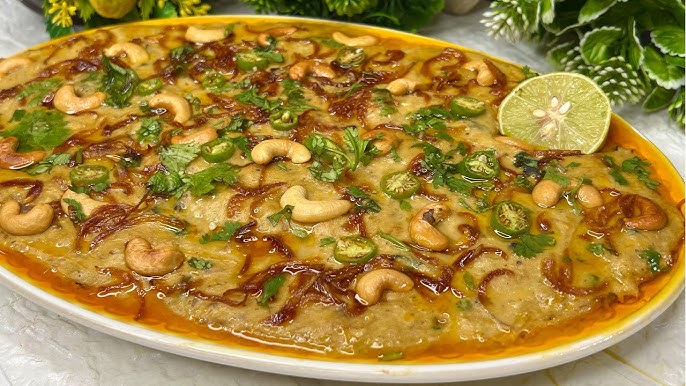
Hyderabadi Haleem Recipe: Hyderabadi Haleem is one of the most beloved slow-cooked dishes in Indian cuisine. It is rich, hearty, aromatic, and deeply satisfying. We prepare it with wheat, lentils, meat, fragrant spices, and ghee, then cook everything until it turns into a smooth, savory, and luxurious paste-like stew. This dish is famous for its silky texture, deep flavor, and highly spiced aroma. Although it takes time, the result is always worth the effort.
In this detailed guide, we will walk through the ingredients you need, the preparation steps, and the best method to make authentic Hyderabadi Haleem at home.
What Is Hyderabadi Haleem?
Hyderabadi Haleem is a slow-cooked savory dish made by blending broken wheat, lentils, and meat into a thick, rich mixture. It is especially popular during Ramadan, but it is enjoyed throughout the year by food lovers who crave something wholesome and flavorful.
Unlike ordinary meat porridge or stew, haleem is known for its smooth consistency, long cooking process, and complex spice base. Every spoonful delivers tender meat, creamy grains, buttery richness, and a warming spice profile. Traditionally, it is cooked for hours, pounded by hand, and garnished generously before serving.
Ingredients You’ll Need for Hyderabadi Haleem
To make a flavorful and authentic version, we need fresh ingredients and a balanced spice mix.
For the Meat
- 1 kg mutton with bones or boneless pieces
- 2 tablespoons ginger-garlic paste
- 1 teaspoon turmeric powder
- 1 tablespoon red chili powder
- 1 tablespoon coriander powder
- 1 teaspoon cumin powder
- Salt to taste
- 2 tablespoons lemon juice
- 1 cup yogurt
For the Wheat and Lentil Mixture
- 1 cup broken wheat
- 2 tablespoons barley optional
- 1/4 cup chana dal
- 1/4 cup masoor dal
- 1/4 cup moong dal
- 1/4 cup urad dal
- 1/4 cup toor dal
- Water as needed
For the Haleem Masala and Base
- 4 large onions, thinly sliced
- 3 to 4 green chilies, slit
- 2 tablespoons ginger-garlic paste
- 1/2 cup oil
- 4 tablespoons ghee
- 1 teaspoon black pepper powder
- 1 teaspoon garam masala
- 1 teaspoon cumin seeds
- 2 small cinnamon sticks
- 4 green cardamoms
- 4 cloves
- 2 bay leaves
- A handful of mint leaves
- A handful of coriander leaves
For Garnishing
- Fried onions
- Fresh coriander leaves
- Fresh mint leaves
- Lemon wedges
- Ginger juliennes
- Green chilies
- Cashews fried in ghee optional
- Extra ghee for serving
How to Prepare the Ingredients Properly
Before cooking, we need to prep everything correctly. This step helps build the classic texture and flavor that define a good Hyderabadi Haleem recipe.
Step 1 – Cook the Wheat and Lentils Until Soft
Drain the soaked wheat and lentils. Add them to a large pot or pressure cooker with enough water. Cook until everything becomes very soft and mushy.
If using a pressure cooker, cook for about 6 to 8 whistles or until the mixture breaks down easily. If using a regular pot, cook on low heat and stir occasionally until fully softened.
Once cooked, mash the mixture with a hand whisk, masher, or immersion blender. The goal is a smooth, thick base without visible grains. This creamy mixture forms the heart of the haleem.
Step 2 – Cook the Mutton Until Tender
In another large pot or pressure cooker, heat oil and a little ghee. Add cumin seeds, cinnamon, cardamom, cloves, and bay leaves. Let them release their aroma.
Add the sliced onions reserved for the cooking base and sauté until soft and slightly golden. Then add ginger-garlic paste and cook until the raw smell disappears.
Now add the marinated mutton. Cook on medium heat for several minutes until the meat changes color and the spices coat it well. Add green chilies, mint, and coriander leaves.
Pour in enough water to cover the meat. Pressure cook until the mutton becomes very tender. This usually takes 20 to 30 minutes depending on the cut. If using a pot, cook slowly until the meat falls apart.
After cooking, separate the meat from large bones if needed. Shred the meat lightly so it blends well into the haleem later.
Step 3 – Combine the Meat and Grain Mixture
Now comes the most important stage. Add the cooked and mashed wheat-lentil mixture into the cooked mutton. Stir thoroughly so the two mixtures combine evenly.
At this point, the haleem should look thick but still stirrable. If it is too dense, add hot water gradually. If it is too loose, cook longer over low heat.
Add garam masala, black pepper powder, and a little extra salt if needed. Stir continuously to prevent sticking. Cook on low heat for 30 to 45 minutes. During this time, the meat fibers break down further and blend into the grains.
This slow simmering is what gives Hyderabadi Haleem its iconic velvety texture. The mixture should become glossy, rich, and aromatic.
Step 4 – Pound or Blend for Authentic Texture
Traditional haleem is pounded while cooking. This helps the meat, wheat, and lentils merge into one thick mass. At home, we can use an immersion blender carefully for a few pulses. Do not over-blend completely. Some texture should remain.
If you prefer a more rustic haleem, use a wooden spoon or masher and keep stirring until the mixture turns elastic and smooth. This stage creates the signature consistency that makes the dish so memorable.
Step 5 – Finish with Ghee for Rich Flavor
Heat ghee separately and pour it into the haleem. Stir well. This simple finishing step transforms the final taste. The ghee deepens the richness and brings all the spices together beautifully.
Cook for another 10 minutes on very low heat. Taste and adjust the seasoning. At this stage, the haleem should be perfectly savory, gently spicy, and incredibly fragrant.
Best Garnishing Ideas for Hyderabadi Haleem
Garnish is not optional for a proper Hyderabadi Haleem recipe. It adds freshness, crunch, heat, and brightness.
Top each serving with:
- Golden fried onions
- Chopped coriander
- Mint leaves
- Fresh ginger juliennes
- Sliced green chilies
- A squeeze of lemon juice
- A spoonful of melted ghee
- Fried cashews for extra richness
These toppings balance the heaviness of the haleem and make every bite more exciting.
Tips for Making Perfect Hyderabadi Haleem
To get the best result, we should focus on texture, patience, and spice balance.
Use Mutton for Authentic Flavor
Although chicken or beef can be used, mutton haleem gives the richest and most traditional taste. Bones also add more body and depth.
Do Not Rush the Cooking
Haleem needs slow cooking. Therefore, avoid high heat after combining everything. Gentle simmering creates the best flavor.
Soak the Grains and Lentils Well
This ensures a smoother finish and helps everything cook evenly.
Fry Onions Properly
Golden fried onions bring sweetness and color. If they are undercooked, the final flavor will feel flat.
Adjust Thickness Carefully
Haleem thickens as it cools. So, keep it slightly looser while cooking. Later, it will settle into the perfect consistency.
Use Ghee Generously
A good haleem should feel rich and luxurious. Ghee is essential for that final restaurant-style finish.
Serving Suggestions for Hyderabadi Haleem
Serve Hyderabadi Haleem hot in deep bowls. It works beautifully as a main dish because it is filling and complete on its own. However, we can also pair it with:
- Naan
- Sheermal
- Rumali roti
- Lemon wedges
- Fresh salad
- Boiled eggs on the side
This dish is perfect for family dinners, festive gatherings, and special weekend meals.
Why This Hyderabadi Haleem Recipe Works
This recipe works because it respects the classic method while keeping the steps practical for home cooking. The lentils create body, the wheat gives thickness, and the mutton brings deep savory flavor. Meanwhile, the fried onions, herbs, whole spices, and ghee build the signature aroma that makes this dish unforgettable.
When prepared properly, haleem should never feel bland, watery, or grainy. Instead, it should be smooth, rich, spicy, buttery, and deeply satisfying.
Common Mistakes to Avoid
Many home cooks miss the mark because they skip critical details. To make the best haleem, avoid these mistakes:
- Using too little water at the beginning
- Not soaking the grains and lentils
- Underseasoning the meat
- Cooking on high heat after mixing
- Skipping the ghee finish
- Serving without garnish
Each of these mistakes affects either texture or flavor. Therefore, careful preparation matters at every step.
FAQs about Hyderabadi Haleem Recipe
1. What is Hyderabadi haleem?
Hyderabadi haleem is a rich, slow-cooked dish made with meat, lentils, wheat, spices, and ghee. It is known for its smooth texture and deep flavor.
2. What meat is commonly used in haleem?
It is usually made with mutton or beef, though some versions also use chicken.
3. Why is haleem cooked for so long?
Slow cooking helps the meat, grains, and lentils break down completely, creating the dish’s thick, paste-like texture.
4. Is Hyderabadi haleem spicy?
It is usually well-spiced and mildly to moderately hot, but the heat level can be adjusted to taste.
5. What grains and lentils are used?
Common ingredients include broken wheat, lentils, and sometimes barley, which give haleem its body and texture.
6. What makes Hyderabadi haleem unique?
Its uniqueness comes from the slow cooking method, rich spice blend, and smooth consistency, often finished with fried onions, herbs, and lemon.
7. How is haleem served?
It is often served hot with fried onions, fresh coriander, mint, lemon wedges, and sometimes ghee on top.
8. Can haleem be made ahead of time?
Yes, haleem can be made ahead, and the flavor often becomes even better after resting and reheating.
9. How do we store leftover haleem?
We should keep it in an airtight container in the refrigerator for 2 to 3 days.
10. Can Hyderabadi haleem be frozen?
Yes, it can be frozen in portions for up to 2 to 3 months and reheated when needed.
Final Thoughts
A well-made Hyderabadi Haleem recipe delivers everything we want in a comfort dish. It is warming, rich, protein-packed, and deeply flavorful. More importantly, it carries the unmistakable character of traditional Hyderabad cooking. The long simmer, the tender meat, the creamy grains, and the aromatic garnish all come together in one impressive dish.
Once we master the process, making haleem at home becomes easier every time. With the right ingredients, patient cooking, and careful finishing, we can create a truly satisfying bowl of authentic Hyderabadi Haleem that tastes festive, hearty, and memorable.