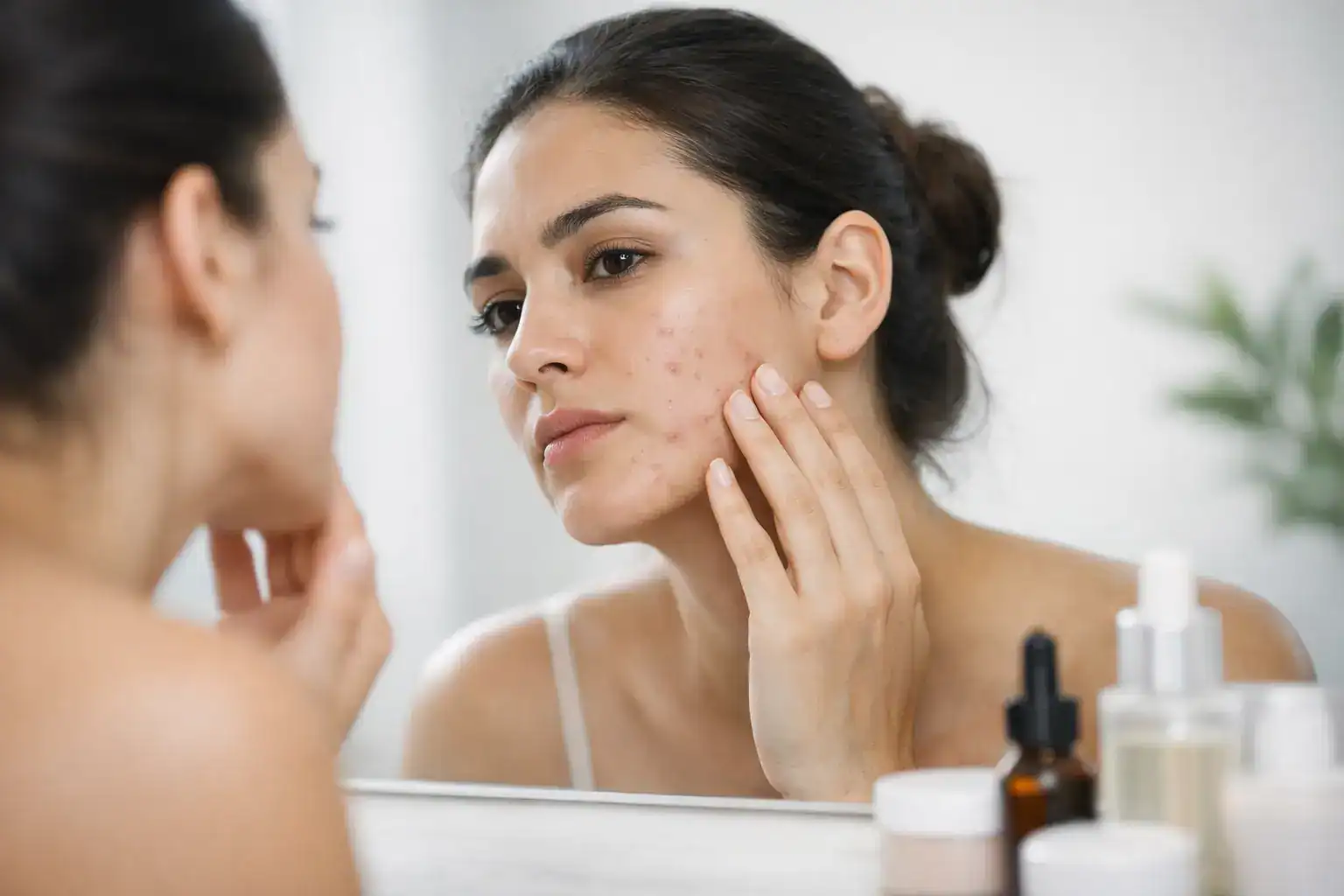
Choosing the right dark spot treatment for face begins with understanding the marks we want to treat, our skin’s sensitivity, and the products we can use consistently. A treatment suited to acne marks may differ from one prescribed for melasma or sun-related pigmentation.
We should look beyond promises of rapid brightening and focus on appropriate ingredients, daily sun protection, and a manageable routine. The aim is to reduce unwanted pigmentation while maintaining healthy skin and preserving our natural complexion.
Identify the Type of Dark Spots Before Choosing Treatment
Dark spots are not all the same. Their appearance, location, and history help guide treatment, although a dermatologist may be needed to confirm the diagnosis.
Common Types of Facial Pigmentation
- Post-inflammatory hyperpigmentation: Dark marks that develop after acne, eczema, irritation, or skin injury.
- Melasma: Uneven brown or grey-brown patches, often affecting the cheeks, forehead, nose, or upper lip.
- Sun-related spots: Pigmented marks associated with accumulated sun exposure.
We should consider what happened before the discoloration appeared. Did the marks follow breakouts? Did patches develop during pregnancy? Has a new skincare product caused burning or inflammation?
For acne-related pigmentation, treating ongoing breakouts helps reduce the cycle of new marks. Melasma often requires a longer-term treatment and maintenance plan because pigmentation can return.
A new, changing, bleeding, or unusual spot deserves medical assessment before we apply a fading product. Some skin growths can resemble ordinary age spots, and cosmetic treatment may delay the correct diagnosis.
Match Dark Spot Treatment to Our Skin Type
An effective ingredient still needs a formulation our skin can tolerate. We should consider whether our skin is oily, dry, sensitive, or prone to breakouts before purchasing a serum or cream.
Product Features Worth Comparing
- For oily or acne-prone skin: Lightweight products labelled non-comedogenic may fit the routine more comfortably.
- For dry skin: Moisturising formulations can make treatment easier to maintain.
- For sensitive skin: Fragrance-free products and gradual introduction are sensible priorities.
- For combination skin: We can adjust moisturiser use across different facial areas instead of applying more treatment everywhere.
These features help narrow the options, but labels cannot guarantee that a product will suit everyone. We should also consider previous reactions and any existing skin condition.
A higher price or stronger concentration does not automatically make a treatment a better choice. A formula we can use comfortably and consistently is more practical than one we repeatedly stop because of irritation.
Compare Ingredients Used in Dark Spot Treatments
When choosing a dark spot serum or cream, we should read the active ingredients rather than rely solely on claims such as “radiance,” “glow,” or “instant fairness.” Different ingredients serve different purposes, and their suitability depends on the diagnosis.
Azelaic Acid for Acne and Dark Marks
Azelaic acid is particularly relevant when facial discoloration accompanies acne. It can treat breakouts and help fade the dark marks that remain after they clear.
This makes it an option worth discussing when we want to address both the source of new marks and existing pigmentation. It can still cause irritation, so application should follow the product instructions or prescribed plan.
Retinoids for Uneven Tone and Acne-Prone Skin
Retinoids, including retinol and prescription options such as tretinoin, may help improve pigmentation and skin texture. Some also form part of acne treatment.
We should introduce them cautiously because dryness and irritation can affect tolerability. A dermatologist can help determine which formulation is appropriate, particularly when our skin is already sensitive or we use other acne medicines. Retinoids should be avoided during pregnancy.
Vitamin C and Other Pigment-Fading Ingredients
Vitamin C, kojic acid, and glycolic acid appear in products used to fade dark spots. Their presence on a label, however, does not establish how well the complete formulation will work for our skin.
We should evaluate the product’s instructions, tolerability, and compatibility with our existing routine. Starting several new treatments together makes it harder to identify which product helps or causes a reaction.
Hydroquinone for Clinician-Guided Treatment
Hydroquinone is an established treatment used for melasma and certain pigmentation concerns. A clinician should guide its use, including where to apply it, how long to continue, and when to review progress.
Prescription combination creams may include hydroquinone, a retinoid, and a mild corticosteroid. These are targeted medical treatments requiring supervision; they should not become an unrestricted daily skincare routine.
Make Sunscreen Part of Every Dark Spot Treatment Plan
Daily sun protection is a central part of managing facial pigmentation. Sun exposure can undermine improvement, while visible light can contribute to pigmentation in conditions such as melasma.
We should choose a broad-spectrum sunscreen with SPF 30 or higher. A tinted sunscreen containing iron oxides can provide additional protection against visible light, which is particularly useful for melasma.
Sun Protection Habits to Include
- Apply sunscreen according to its directions before going outdoors.
- Reapply at least every two hours outdoors and after swimming or sweating.
- Choose water resistance when needed for outdoor activity.
- Use shade and a wide-brimmed hat for additional protection.
Comfort matters here. We should choose a sunscreen with a texture and finish we are willing to wear regularly. A suitable treatment plan includes products we can maintain beyond the first few weeks.
Check Pregnancy and Other Treatment Restrictions
Pregnancy can change both facial pigmentation and the treatments we should use. We should review the full ingredient list instead of assuming that an over-the-counter or “natural” product is automatically suitable.
Retinoids and hydroquinone should be avoided during pregnancy. When pregnant, planning pregnancy, or breastfeeding, we should discuss prescription medicines and pigmentation products with our obstetrician or dermatologist.
The same careful review applies when we already use prescription acne medication or have eczema, rosacea, or recurring skincare reactions. Bringing a list of current products to an appointment helps a clinician assess the complete routine.
Choose Professional Procedures Carefully
Chemical peels and laser treatments may help selected pigmentation concerns, but the correct procedure depends on the diagnosis, skin tone, and previous treatment response.
For melasma, procedures can sometimes worsen pigmentation or cause uneven lightening and scarring. We should choose a qualified practitioner experienced in treating our skin tone and the specific condition involved.
Questions to Ask Before Booking Treatment
- What type of pigmentation are we treating?
- Why is this procedure suitable for my skin?
- What improvement is realistic?
- What are the risks of darker or lighter patches?
- How many appointments might be needed?
- What aftercare and maintenance will be required?
- What is the full expected cost?
These questions make the proposed treatment easier to assess. We should receive a clear explanation before committing to a procedure or package.
Assess Cost, Product Quality, and Everyday Practicality
The best dark spot treatment for face should fit both our clinical needs and our budget. We should compare the total routine rather than the price of a single serum.
Sunscreen, moisturiser, repeat purchases, consultations, and follow-up appointments all affect affordability. A modest routine that we can continue may offer better practical value than several expensive products used inconsistently.
A Product-Purchasing Checklist
Before buying, we should check for:
- A complete ingredient list.
- Clear application instructions.
- Identifiable manufacturer information.
- Appropriate packaging and an expiry date.
- A reputable seller.
- Realistic claims about results.
Unlabelled mixtures and products promising dramatic changes within days deserve caution. Some skin-lightening products have contained undeclared mercury or steroids, which can harm skin and health.
Build a Simple Routine and Review Progress
We should begin with a routine that is easy to follow: gentle cleansing, moisturising as needed, daily sunscreen, and one selected pigmentation treatment used as directed.
Adding products gradually helps us judge tolerability. If persistent burning, swelling, marked peeling, or worsening discoloration develops, we should stop the suspected product and seek advice.
Progress photographs can help us compare changes more reliably. We should use similar lighting, camera distance, and facial positioning, avoiding filters that alter skin tone.
Treatment timelines vary. Melasma improvement commonly takes months, and maintenance may be necessary. A review with a dermatologist is useful when pigmentation worsens, the diagnosis remains uncertain, or a consistently followed plan produces little improvement.
FAQs about How to Choose Dark Spot Treatment for Face
1. How Do I Choose the Best Dark Spot Treatment for My Face?
To choose the best dark spot treatment for your face, consider your skin type, the cause of your pigmentation, and your skin’s sensitivity. We recommend products containing niacinamide, vitamin C, azelaic acid, or retinoids, depending on your individual skincare needs.
2. What Is the Most Effective Ingredient for Removing Dark Spots?
Effective ingredients include azelaic acid, retinoids, vitamin C, and hydroquinone. The best option depends on the type and severity of hyperpigmentation. Hydroquinone should be used under professional guidance.
3. How Long Does Dark Spot Treatment Take to Work?
Most dark spot treatments require consistent use for several weeks to months before noticeable improvements appear. Results depend on pigmentation depth, treatment strength, skin type, and daily sun protection.
4. Can I Use Dark Spot Treatment on Sensitive Skin?
Yes. We recommend choosing gentle dark spot treatments containing ingredients such as niacinamide or appropriately formulated azelaic acid. Introduce new products gradually and avoid combining multiple irritating ingredients.
5. Is Sunscreen Necessary When Treating Dark Spots?
Absolutely. Broad-spectrum SPF 30 or higher sunscreen helps prevent existing dark spots from becoming darker and reduces the risk of new pigmentation. Daily sunscreen application is essential for effective treatment.
6. Are Natural Remedies Effective for Removing Facial Dark Spots?
Some natural ingredients have limited evidence of pigmentation benefits. However, we recommend clinically supported skincare ingredients rather than unproven home remedies. Lemon juice and harsh DIY treatments can irritate the skin and worsen pigmentation.
7. When Should I See a Dermatologist for Dark Spots?
We recommend consulting a qualified dermatologist when dark spots persist, worsen, or fail to respond to treatment. Any new, changing, irregular, or bleeding pigmented spot should be professionally assessed before cosmetic treatment.
Conclusion
Knowing how to choose dark spot treatment for face means identifying the pigmentation, selecting suitable ingredients, protecting our skin from sunlight, and choosing a routine we can sustain.
We should prioritise tolerability, transparent product information, and realistic expectations. When marks are persistent, unusual, or difficult to diagnose, professional assessment gives us a clearer path towards safer treatment and a more even-looking complexion.