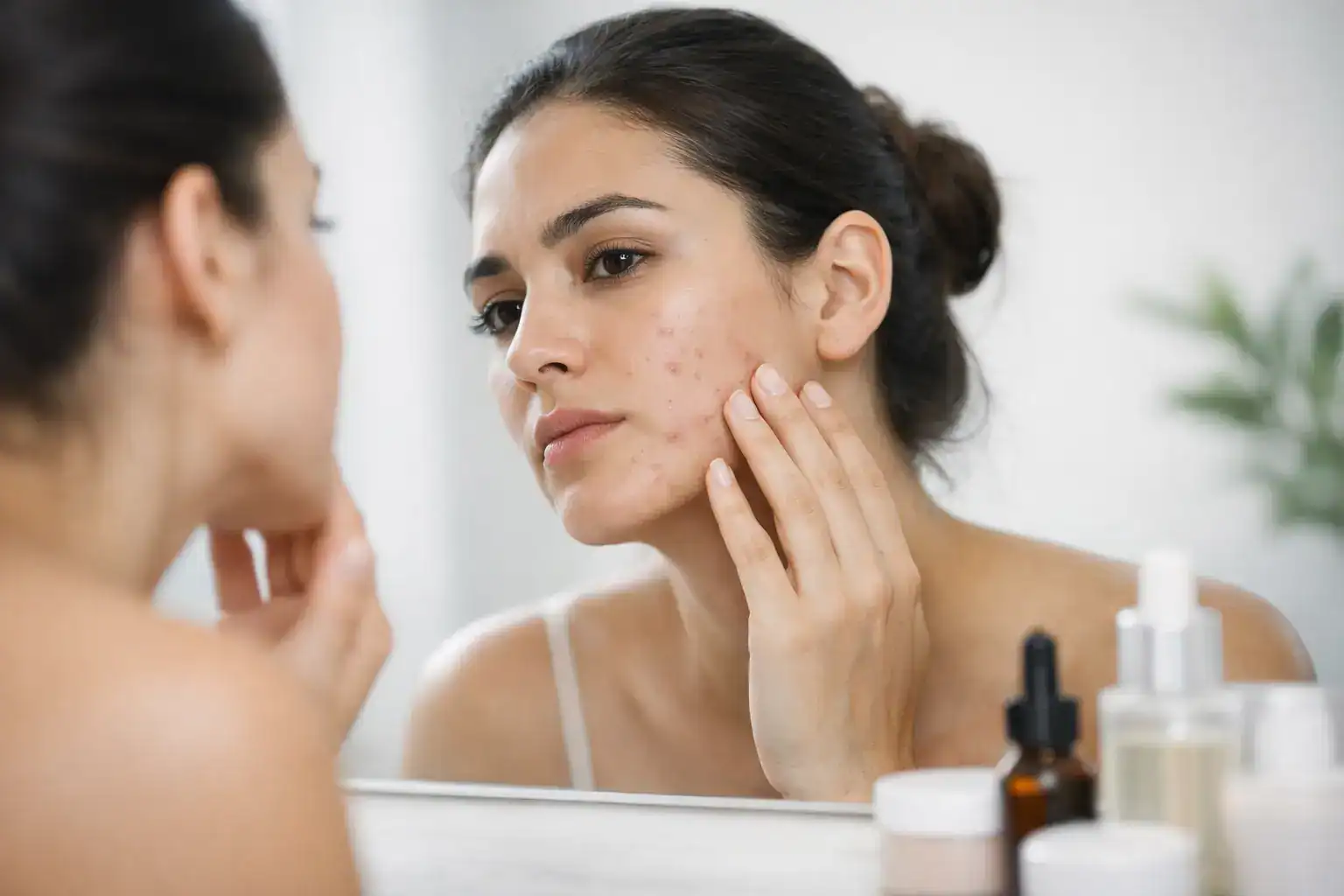
Choosing the right dark spot treatment for acne marks begins with understanding your skin, the type of discoloration you have, and whether breakouts are still developing. A product that suits oily, acne-prone skin may feel irritating on dry or sensitive skin. Likewise, a treatment designed to fade pigmentation will not necessarily improve indented acne scars.
We recommend assessing treatments by their active ingredients, tolerability, suitability for your skin, and realistic results. The aim is to fade existing marks while reducing the inflammation that creates new ones. A manageable routine used consistently offers a better foundation than repeatedly switching between strong products.
Identify Whether You Have Dark Spots or Acne Scars
Flat brown, dark brown, or greyish marks left after pimples heal commonly represent post-inflammatory hyperpigmentation, or PIH. These marks develop when inflammation triggers excess pigment production. They can affect any skin tone, although they tend to be more noticeable and persistent in darker skin.
Acne scars involve changes in skin texture, such as depressions or raised areas. Pink or red marks can also remain after acne, but their appearance does not necessarily indicate excess brown pigment.
Before buying a treatment, we recommend checking whether the affected area is flat or textured. If the distinction is unclear, a dermatologist can identify the problem and help avoid spending money on products that target the wrong concern.
Choose Ingredients That Address Your Main Skin Concern
An ingredient list is more useful than a promise of “instant brightening.” We recommend looking for a clearly labelled formula and selecting an ingredient that addresses both your marks and any ongoing acne.
Ingredients to Consider for Acne Marks
- Azelaic acid: Can treat acne while helping fade the dark spots that remain after breakouts. It is a useful option to discuss when both concerns occur together.
- Topical retinoids: Certain retinoids, including tretinoin, can improve acne-related hyperpigmentation. Their potential for irritation makes careful introduction important.
- Vitamin C: Appears in topical treatments for pigmentation, although results depend on the formulation and the nature of the discoloration.
- Niacinamide: Is another ingredient used in pigmentation treatments. Its presence alone does not guarantee that a finished product will deliver substantial fading.
- Hydroquinone: May be considered for persistent pigmentation under professional guidance, with a defined treatment period and follow-up.
These ingredients have different strengths, limitations, and tolerability profiles. We recommend choosing a targeted starting treatment rather than combining several pigment treatments immediately.
Match the Treatment Formula to Your Skin Type
The finished formula matters as much as the ingredient it contains. A treatment that leaves your skin uncomfortable can be difficult to use consistently, even when its active ingredient is appropriate.
What to Look for in Different Skin Types
- Oily skin: Consider lightweight textures that feel comfortable alongside sunscreen and moisturiser.
- Dry skin: Look for a routine that provides adequate moisture, particularly when introducing potentially drying treatments.
- Sensitive skin: Favour a simple formula and introduce one new treatment at a time.
- Combination skin: Assess how different areas respond rather than applying extra treatment wherever the skin feels oily.
- Acne-prone skin: Look for products labelled non-comedogenic, while remembering that individual reactions can still vary.
We also recommend reviewing your existing routine before adding another serum. If a cleanser, exfoliant, or acne medication already causes dryness, introducing a second strong treatment may make the routine harder to tolerate.
Treat Active Acne Alongside Existing Dark Marks
Fading older marks becomes more difficult when new pimples continually leave fresh discoloration. We therefore recommend considering acne control and pigmentation treatment together.
Azelaic acid can address both acne and post-acne dark spots. Other acne ingredients serve different purposes: salicylic acid is particularly useful for clogged pores, while benzoyl peroxide helps treat inflammatory pimples. These products should be selected according to the type of acne present, rather than treated as interchangeable dark spot correctors. Deep, painful pimples or acne that causes scarring require dermatological assessment.
Avoid judging progress only by whether older marks have disappeared. Fewer new breakouts and fewer new marks are also meaningful signs that the overall plan is helping.
Make Sunscreen Part of Your Dark Spot Treatment
Daily sun protection is a central part of choosing treatment for acne marks. Without it, sunlight can make pigmentation more difficult to manage.
The American Academy of Dermatology recommends a tinted sunscreen containing iron oxide, with broad-spectrum protection, SPF 30 or higher, and water resistance, for people managing dark spots. Iron oxide helps protect against visible light, which can contribute to pigmentation.
Choose a texture and tint that you can wear comfortably. A sunscreen that blends well, sits comfortably under makeup, and fits your budget is easier to keep in a daily routine. Follow its application and reapplication instructions, particularly during outdoor exposure.
When comparing costs, include sunscreen in the treatment budget rather than spending everything on a brightening serum.
Prioritise Tolerability Over Maximum Strength
A higher concentration does not automatically make a product the best choice. Treatment-related irritation can undermine progress, especially in skin that readily develops pigmentation after inflammation.
We recommend following the product directions and avoiding simultaneous introductions of several exfoliants or strong active ingredients. If a product causes persistent burning, marked redness, swelling, or uncomfortable peeling, stop using it and seek advice.
Skin-care products that irritate the skin can themselves trigger dark spots. Gentler choices are therefore part of pigmentation management, rather than simply a comfort preference.
A complicated routine also makes it harder to identify which product caused a reaction. Keeping the starting routine simple allows clearer decisions about what to continue, adjust, or remove.
Assess Prescription Treatments and Procedures Carefully
Persistent acne marks may need more than an over-the-counter product. A dermatologist can assess pigment depth, ongoing inflammation, previous reactions, and whether prescription treatment is suitable.
For hydroquinone, we recommend asking about the intended duration, application area, review schedule, and signs that treatment should stop. Professional supervision is particularly valuable when stronger treatments or combinations are being considered.
Chemical peels, lasers, and intense pulsed light treatments may help selected pigmentation concerns, but they can also worsen discoloration through skin injury. These procedures need careful selection, especially for darker skin tones.
Questions to Ask Before Booking a Procedure
- Is this procedure appropriate for my pigmentation and skin tone?
- What experience do you have treating similar acne marks?
- Could treatment make the discoloration worse?
- Will a test area be appropriate?
- What aftercare, recovery time, and total cost should we expect?
Clear answers help us assess the full treatment plan rather than choosing solely from promotional photographs.
Set Realistic Expectations and Compare Overall Value
Dark spot treatment takes time. Superficial marks a few shades darker than the surrounding skin may fade naturally within six to twelve months after the cause stops. Deeper pigmentation can persist considerably longer. Treatment may help, but no single timetable applies to every person.
We recommend taking occasional photographs in similar lighting to assess gradual changes. Daily mirror checks can make small improvements difficult to notice.
For value, compare the complete routine: treatment, moisturiser, sunscreen, consultations, and any procedure aftercare. An expensive product is not automatically more suitable, and a cheaper product offers poor value if it repeatedly irritates your skin.
FAQs about How to Choose Dark Spot Treatment for Acne Marks
1. What is the best treatment for dark spots caused by acne?
The best dark spot treatment for acne marks depends on your skin type and the severity of pigmentation. Ingredients such as azelaic acid, retinoids, niacinamide, and vitamin C may help fade acne-related discoloration.
2. How do I choose the right dark spot treatment for my skin?
Choose products based on your skin type, sensitivity, and pigmentation concerns. Look for dermatologist-recommended ingredients and avoid harsh products that may cause irritation.
3. Which ingredients are most effective for fading acne marks?
Effective ingredients include azelaic acid, retinoids, vitamin C, glycolic acid, and niacinamide. These ingredients can help improve uneven skin tone and reduce post-inflammatory hyperpigmentation.
4. How long does it take for acne dark spots to fade?
Most treatments require several weeks to months to show noticeable improvements. Results depend on pigmentation depth, treatment consistency, and sun protection.
5. Can I remove acne dark spots naturally?
Some acne marks fade naturally over time. However, daily sunscreen and evidence-based skincare products generally provide more reliable results than unproven home remedies.
6. Is sunscreen necessary when treating acne dark spots?
Yes. Broad-spectrum SPF 30 or higher helps prevent existing dark spots from becoming darker and supports successful hyperpigmentation treatment.
7. Should I consult a dermatologist before choosing treatment?
Consulting a qualified dermatologist is recommended for stubborn pigmentation, sensitive skin, or acne marks that do not improve with over-the-counter products.
8. Can dark spot treatments prevent future acne marks?
Some treatments help manage acne and reduce the risk of new pigmentation. Treating active acne early, avoiding picking, and maintaining consistent skincare can help prevent future dark spots.
Conclusion
To choose dark spot treatment for acne marks, we recommend confirming the type of mark, selecting an appropriate ingredient, controlling ongoing acne, and maintaining daily sun protection. Introduce treatments carefully and assess both fading and skin comfort.
The most useful treatment plan is one that fits your skin and remains practical to follow. When marks persist, acne becomes painful, or treatment causes irritation, dermatological assessment can guide the next step.

