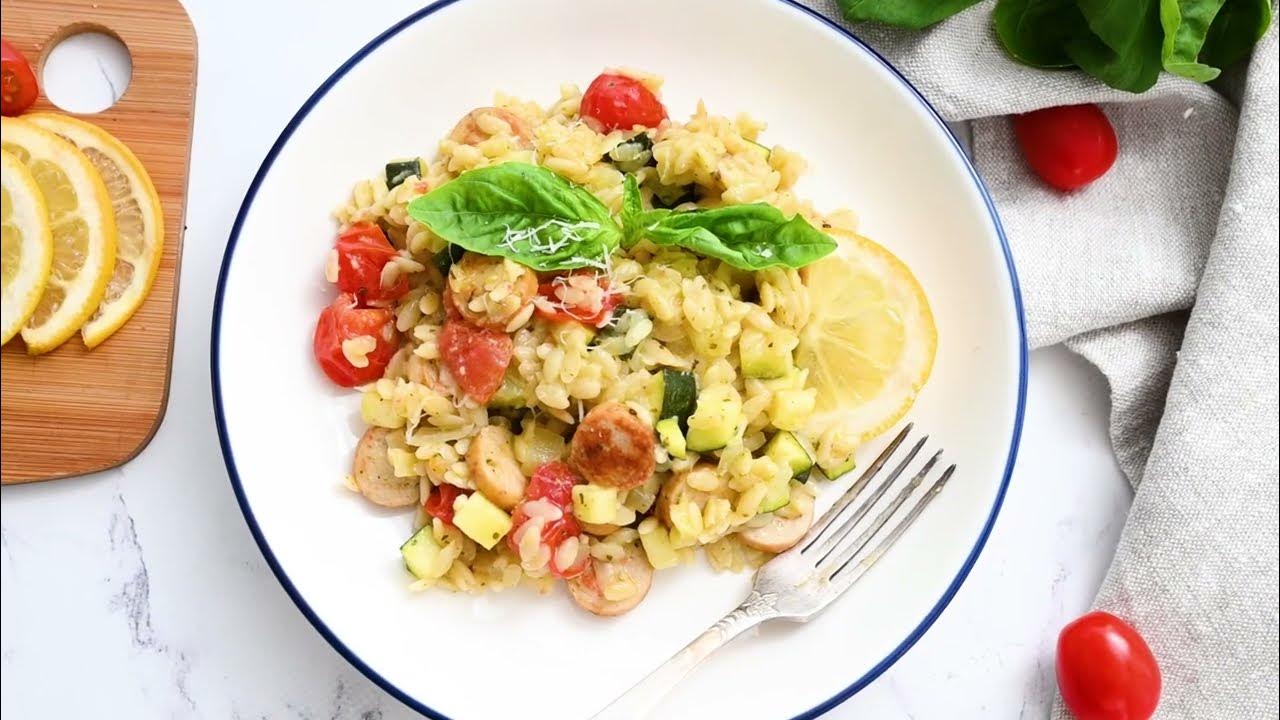
Chicken Sausage Orzo Recipe: There is something incredibly satisfying about a meal that feels cozy, hearty, and a little elegant without demanding a restaurant-level effort. That is exactly where this chicken sausage orzo recipe shines.
It brings together the savory flavor of chicken sausage, the tender bite of orzo, and the comforting richness of a one-pan dinner in a way that feels both easy and special. On busy weeknights, that balance matters.
You want dinner to taste like you tried, even when you did not want to spend all evening standing over the stove.
What Makes Orzo So Good in One-Pan Meals
If you have ever wondered why orzo recipes feel so comforting, the answer is simple: orzo is a tiny pasta with a huge talent for absorbing flavor. It may look like rice at first glance, but once it cooks, it gives you that soft, silky, pasta-like texture that makes each spoonful feel satisfying. In a one-pan recipe like this one, that quality matters a lot because the orzo cooks directly in the broth, soaking up all the savory goodness from the sausage, onions, garlic, and seasonings.
That is really the secret magic of orzo. Instead of boiling pasta separately and combining it later, you let everything cook together. The starch released by the orzo slightly thickens the cooking liquid, creating a sauce that feels naturally creamy even without much cream. It is almost like the difference between a dry sandwich and one with the perfect spread. The ingredients are similar, but the texture changes everything. That is why one-pan chicken sausage orzo feels richer and more cohesive than many other quick pasta dinners.
Orzo is also incredibly forgiving. It cooks faster than many traditional pasta shapes, and it blends beautifully with proteins, vegetables, and cheeses. It can go bright and lemony, creamy and cheesy, or tomato-rich and spicy. For this recipe, it acts like a sponge for flavor and the foundation of the whole dish. When cooked properly, it becomes tender without turning heavy, giving you a meal that feels comforting but still balanced. That combination is hard to beat, especially when you want a dinner that feels homemade in the best way.
Ingredients You’ll Need
Below, you will find the full Ingredients You’ll Need section clearly listed, just as requested. These ingredients create a balanced dish with protein, pasta, aromatics, and a few finishing touches that make it shine. The sausage adds depth, the orzo gives body, and the broth ties it all together.
Main Ingredients
Here is the full list of Ingredients You’ll Need for this chicken sausage orzo recipe:
- 12 ounces chicken sausage, sliced into rounds
- 1 cup orzo
- 1 small yellow onion, finely diced
- 3 cloves garlic, minced
- 2 tablespoons olive oil
- 2 1/2 cups chicken broth
- 1 cup fresh spinach
- 1/2 cup grated parmesan cheese
- 1/2 teaspoon Italian seasoning
- 1/4 teaspoon red pepper flakes (optional)
- Salt, to taste
- Black pepper, to taste
- 1 tablespoon lemon juice (optional but recommended)
These core ingredients create a savory, creamy, and balanced meal. The chicken sausage brings seasoned flavor quickly, while the orzo absorbs broth and becomes tender and glossy. Onion and garlic create the aromatic base, and parmesan helps finish the dish with richness and body. Spinach adds color and freshness, which keeps the final bowl from feeling too heavy. The lemon juice is optional, but it wakes everything up at the end and gives the dish a subtle brightness that makes the flavors feel more complete.
Optional Add-Ins for Extra Flavor
Once you have the base recipe down, you can easily tailor it to your taste. A few add-ins can change the character of the dish without changing the whole method. That is one of the best things about this recipe. It is like having a reliable black jacket in your closet. It always works, but you can style it differently every time.
Great optional add-ins include:
- 1/4 cup sun-dried tomatoes, chopped
- 1/2 cup heavy cream for a richer texture
- 1/2 teaspoon smoked paprika
- Mushrooms, sliced and sautéed with the onion
- Cherry tomatoes, halved
- Fresh basil or parsley for garnish
- Mozzarella or feta for a different cheese finish
These extras let you move the recipe in different directions. Sun-dried tomatoes add a sweet, concentrated punch. Cream makes the dish silkier and more indulgent. Fresh herbs bring color and freshness right at the end. None of them are required, but they are useful when you want to turn a simple dinner into something that feels just a little more special.
Kitchen Tools for Easier Cooking
This recipe does not require fancy equipment, which is another reason it works so well for everyday cooking. A few basic tools are enough to make the whole process easy and efficient. At the center of everything is a large skillet or sauté pan. Since this is essentially a one-pan meal, choosing a pan with enough room matters. You want space to brown the sausage properly and enough depth to let the orzo simmer in broth without overflowing.
A sharp knife and cutting board will also make a noticeable difference. Since you will be slicing sausage, dicing onion, and mincing garlic, a good knife helps keep prep fast and neat. Measuring cups are useful too, especially for getting the broth-to-orzo ratio right. Too little liquid and the orzo stays undercooked. Too much and you may end up with a loose, soupy texture instead of a creamy finish.
A wooden spoon or silicone spatula works best for stirring, especially once the orzo starts releasing starch. You will want something that can scrape the bottom of the pan gently so nothing sticks as the liquid reduces. A cheese grater is helpful if you are using fresh parmesan, and honestly, fresh parmesan is worth it here. It melts better and tastes cleaner than the pre-shredded stuff. With just these few tools, the entire cooking process feels smooth, organized, and approachable, even if this is your first time making chicken sausage orzo.
How to Choose the Best Chicken Sausage
Not all chicken sausage tastes the same, and the kind you choose can shape the final flavor of this dish more than you might expect. Since sausage is one of the main flavor drivers here, it is worth taking a minute to pick a good one. Look for fully cooked chicken sausage if you want the fastest route to you want the fastest route to dinner. It browns quickly, slices easily, and usually comes pre-seasoned with herbs, garlic, or spices that build flavor without extra effort.
For this recipe, varieties like Italian chicken sausage, garlic herb chicken sausage, or even a mild spicy sausage work especially well. Italian-style sausage fits naturally because it plays nicely with onion, garlic, parmesan, and spinach. A spicier variety can be great too if you want the dish to have a little kick. What you want to avoid is a sausage with a very sweet profile, like apple-heavy breakfast sausage, because it may throw off the savory balance of the dish.
Texture matters too. A good chicken sausage should brown nicely and hold its shape when sliced, not fall apart into mush. Check the label for ingredients if that matters to you, and choose one with seasoning you already enjoy. Since the sausage brings salt and spices into the pan, remember to season carefully later in the recipe. It is easier to add more salt than to fix an overly salty pan. In many ways, choosing the right sausage is like choosing the lead singer of a band. It sets the tone for everything else.
How to Prep Your Ingredients Before You Start
A recipe like this moves quickly once the pan gets hot, so preparation makes all the difference. Before you turn on the stove, slice the chicken sausage into even rounds, dice the onion, mince the garlic, measure the orzo, and pour out the broth. Grate your parmesan, wash your spinach, and keep the seasonings nearby. This little bit of organization up front saves you from scrambling later when the sausage is browning and the garlic is ready to go in.
This approach is often called mise en place, but you do not need a fancy term to understand the value. It simply means having everything ready before cooking starts. In a recipe where timing matters, that can keep garlic from burning, onions from overcooking, or orzo from sitting too long before the broth goes in. Think of it like laying out your clothes the night before a big day. It removes friction, reduces stress, and makes the whole experience smoother.
It also helps you enjoy the cooking process more. Instead of rushing from one task to the next, you can focus on what is happening in the pan. You can listen for the sizzle, notice the aroma building, and adjust your heat with confidence. Good prep does not just make you faster. It makes you calmer, and calm cooking usually leads to better food. For this step-by-step chicken sausage orzo recipe, that kind of easy rhythm is exactly what you want.
Step-by-Step Guide for Chicken Sausage Orzo
Step 1 – Slice and Brown the Chicken Sausage
Slice the chicken sausage into rounds or bite-sized pieces. Heat a little oil in a large skillet over medium heat, then add the sausage and cook until lightly browned on both sides. This step adds flavor and gives the sausage a richer texture. Remove and set aside if needed.
Step 2 – Sauté the Aromatics
In the same pan, add chopped onion and minced garlic. Cook over medium heat until softened and fragrant, stirring often so they do not burn. This creates the savory base of the dish and helps build depth of flavor.
Step 3 – Toast the Orzo for Better Flavor
Add the dry orzo to the pan and stir it with the aromatics for a minute or two. Letting the orzo toast lightly gives it a nuttier flavor and helps improve the overall taste of the final dish.
Step 4 – Add Broth and Simmer Until Tender
Pour in the chicken broth and stir well, making sure to scrape up any flavorful bits from the pan. Return the browned sausage to the skillet and let everything simmer gently. Cook until the orzo becomes tender and most of the liquid is absorbed, stirring occasionally so it does not stick.
Step 5 – Stir in Greens, Cheese, and Final Seasoning
Add spinach or another soft green and stir until wilted. Mix in grated Parmesan or your preferred cheese for a creamy, savory finish. Taste and adjust with salt, black pepper, or a squeeze of lemon if desired. Serve hot for a simple and satisfying meal.
Common Mistakes to Avoid
Even simple recipes have a few traps, and avoiding them can make the difference between a good pan of orzo and a great one. One of the most common mistakes is adding all the ingredients too quickly without letting each stage develop. If the sausage is pale instead of browned, or the onion is still sharp and undercooked, the final dish will taste flatter. Flavor builds in layers, and this recipe really rewards patience in those first few minutes.
Another issue is liquid balance. Orzo absorbs broth quickly, and different brands can behave a little differently. If you walk away too long or cook over heat that is too high, the liquid may disappear before the orzo is tender. Then you end up with a pan that is sticky or unevenly cooked. The fix is simple: keep an eye on it and add an extra splash of broth if needed. On the other hand, adding too much liquid at once can leave you with a loose texture that feels more like soup than creamy pasta.
Overseasoning is another easy mistake. Since chicken sausage, broth, and parmesan all bring salt, it is smart to wait until the end before adding much extra. And finally, do not overcook the spinach or dump the cheese in over very high heat. Spinach only needs a minute or two to wilt, and cheese melts best into a warm, gently stirred pan. Small details like these are what turn a decent dinner into one you actually crave again later.
Easy Variations to Try
One of the best parts of a recipe like this is how adaptable it is. Once you understand the core method, you can shape it in different directions depending on your mood, your pantry, or the season. That makes it practical in the real world, where dinner is not always about following a recipe exactly. Sometimes you want something richer. Sometimes you want something brighter or spicier. This dish can handle all of that without losing its comfort-food heart.
You can add extra vegetables, switch up the cheese, stir in cream, or use a tomato base instead of keeping it broth-forward. You can make it feel a little more like a cozy winter dinner or lighten it up for spring with lemon and herbs. The structure remains the same: brown the sausage, build the aromatics, toast the orzo, simmer in liquid, and finish with texture and seasoning. Once you know that pattern, the dish becomes a canvas.
That is why recipes like this tend to become household staples. They are not just one dinner. They are five or six possible dinners, all built from the same familiar base. Below are two especially popular variations that work beautifully and still keep the same easy, one-pan flow.
Creamy Chicken Sausage Orzo
For a richer and more indulgent version, add 1/2 cup heavy cream during the last few minutes of cooking, after the orzo is tender. Stir it in along with the parmesan for a silkier sauce that feels especially comforting on colder nights. This version has a more luxurious texture, almost like a cross between risotto and creamy pasta, but without the same amount of effort.
To balance the richness, a squeeze of lemon is especially helpful here. You can also add mushrooms or peas for extra body and color. If you want something cozy enough to feel like weekend comfort food but easy enough for a weeknight, this is a great version to keep in mind.
Spicy Tomato Chicken Sausage Orzo
For a bolder variation, add 1/2 cup tomato sauce or a handful of chopped cherry tomatoes when you pour in the broth. Pair that with a spicy chicken sausage or a bit more red pepper flakes. The tomatoes add a slightly tangy depth that changes the whole personality of the dish.
This version feels more vibrant and punchy, almost like a pasta-night hybrid with the ease of a skillet meal. A little basil on top works especially well, and you can finish with either parmesan or a few crumbles of feta for a slightly different edge. It is a great option when you want the comfort of orzo with a bit more attitude.
What to Serve with Chicken Sausage Orzo
This dish can absolutely stand on its own as a full meal, but pairing it with the right side can make dinner feel more complete. Since chicken sausage orzo is savory, creamy, and filling, the best sides are usually lighter and fresher. A crisp green salad with lemon vinaigrette works especially well because it cuts through the richness and adds contrast. That simple fresh bite can make the whole plate feel more balanced.
Garlic bread or warm crusty bread is another easy choice, especially if you want something to scoop up the last creamy bits from the bowl. There is something undeniably satisfying about that. If you want vegetables on the side, roasted broccoli, asparagus, or green beans pair beautifully. Their slight char and freshness bring a different texture to the meal, which keeps things interesting from the first bite to the last.
For a dinner with guests, you can even serve this with a simple starter like tomato salad or marinated cucumbers and finish with a light dessert. But for everyday life, a salad and some bread are more than enough. The main dish already carries plenty of flavor and substance. The best sides simply support it without competing for attention.
How to Store and Reheat Leftovers
Leftovers from this recipe can be excellent, but orzo does continue to absorb liquid as it sits. That means the texture the next day will usually be thicker than it was fresh from the pan. To store it, let the dish cool slightly, then transfer it to an airtight container and refrigerate for up to 3 days. It is ideal for lunch the next day, especially because the flavors continue to settle and develop.
When reheating, add a splash of broth, water, or even a little milk before warming it. This helps loosen the orzo and bring back that creamy texture. Reheat gently on the stovetop over low heat or in the microwave in short intervals, stirring in between. High heat can make the cheese separate and the pasta turn too soft, so a slower approach works better.
If you know ahead of time that you are making this for meal prep, you can slightly undercook the orzo the first time by a minute or so. That gives it a little room to soften later without becoming mushy. Fresh spinach and parmesan can also be added in part at reheating to wake the leftovers back up. With just a small splash of liquid and a little care, leftovers can taste almost as good as the original dinner.
FAQs about Chicken Sausage Orzo Recipe
1. What is chicken sausage orzo?
Chicken sausage orzo is a one-pan dish made with sliced chicken sausage, orzo pasta, broth, and often vegetables or greens. It is simple, flavorful, and perfect for a quick meal.
2. What is orzo?
Orzo is a small, rice-shaped pasta. It cooks quickly and absorbs flavors well, making it ideal for creamy or broth-based dishes.
3. What type of chicken sausage should I use?
You can use smoked, spicy, or mild chicken sausage depending on your taste. Pre-cooked sausage is convenient and works very well.
4. Can I use another type of pasta instead of orzo?
Yes, small pasta shapes like ditalini or small shells can be used, but cooking time and liquid amounts may need slight adjustment.
5. Can I add vegetables to this dish?
Yes, vegetables like spinach, kale, tomatoes, mushrooms, or bell peppers are great additions and add color and nutrition.
6. How do I keep the orzo from sticking?
Stir occasionally while cooking and make sure there is enough liquid in the pan. Toasting the orzo slightly at the beginning can also help.
7. Can I make this dish creamy?
Yes, you can add cream, cheese, or even a little butter at the end to create a richer, creamier texture.
8. How do I store leftovers?
Store leftovers in an airtight container in the refrigerator for up to 3 days. Add a splash of broth or water when reheating.
Conclusion
The real charm of this dish is how approachable it is. You do not need advanced skills or special equipment. You just need a good skillet, a few solid ingredients, and a little attention to each step. Brown the sausage well, toast the orzo, simmer it gently, and finish with spinach and parmesan. Those small actions create a dinner that feels thoughtful and satisfying.
Whether you make it exactly as written or put your own spin on it with cream, tomatoes, or herbs, this is a recipe worth keeping close. It is reliable enough for busy weeknights and delicious enough to crave again later. Once you try it, there is a good chance it will become one of those meals you return to when you want something easy that still feels like real comfort food.