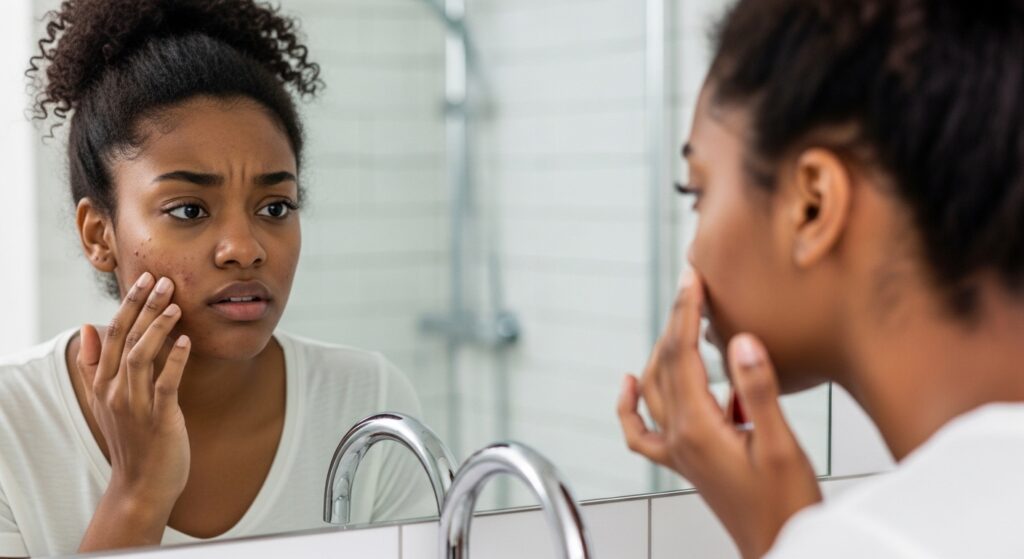
The best uneven skin tone treatment combines daily sun protection, targeted skincare and treatment of the condition causing discoloration. Dark spots after acne, sun-related pigmentation and melasma may look similar, but they do not always respond to the same approach.
We recommend choosing treatments that gradually improve discoloration while protecting the skin barrier. Stronger products and frequent exfoliation can cause irritation, which may create additional dark marks, particularly in darker skin tones. A consistent, well-tolerated routine offers a better foundation for lasting improvement.
Identify the Cause Before Choosing an Uneven Skin Tone Treatment
Uneven skin tone describes several different concerns. Brown patches, persistent redness and pale areas need different assessments, so a brightening serum is not suitable for every change in skin colour.
Common causes of darker pigmentation include:
- Post-inflammatory hyperpigmentation: Dark marks that remain after acne, eczema, insect bites or skin irritation.
- Melasma: Brown or grey-brown facial patches, often associated with sunlight and hormonal influences.
- Sun-related dark spots: Areas of pigmentation that develop after repeated sun exposure.
- Product irritation: Discoloration triggered by harsh skincare, excessive exfoliation or unsuitable treatments.
We recommend addressing the trigger alongside the pigmentation. For example, fading acne marks without controlling new breakouts can leave an ongoing cycle of discoloration. The American Academy of Dermatology emphasises identifying and treating the cause as an essential starting point.
Best Treatment Options for Uneven Skin Tone
Effective treatment usually involves a small number of carefully selected products. We prioritise sun protection first, then choose active ingredients according to the type of pigmentation and the skin’s tolerance.
1. Broad-Spectrum Sunscreen for Daily Protection
Broad-spectrum sunscreen with SPF 30 or higher is a central part of treating uneven pigmentation. Without adequate protection, sunlight can darken existing patches and undermine progress.
For melasma and pigmentation in darker skin, a tinted sunscreen containing iron oxides can provide additional protection against visible light. Choose a shade and texture that feel comfortable enough for daily use.
Apply sunscreen to exposed skin before going outdoors. Reapply at least every two hours outdoors and after swimming or sweating, following the product instructions. Shade and a wide-brimmed hat provide additional protection.
2. Azelaic Acid for Dark Marks and Acne-Prone Skin
Azelaic acid is an established option for treating excess pigmentation. It can be particularly useful when dark marks occur alongside acne, allowing a treatment plan to address both concerns.
We recommend introducing it gradually and following the formulation’s instructions. Although it may suit some people who struggle with other active ingredients, it can still cause stinging, dryness or irritation. A product should remain comfortable enough to use consistently; persistent discomfort calls for reassessment.
3. Vitamin C for Supporting a Brighter Appearance
Vitamin C is another ingredient used to help fade dark spots. It may suit people seeking gradual improvement in mild discoloration, although results depend on the formulation and individual skin response.
We recommend choosing a clearly labelled product from a reputable manufacturer rather than judging effectiveness by a high concentration alone. A formula that repeatedly stings or inflames the skin is unlikely to support a successful routine. Azelaic acid and vitamin C are both included among the AAD’s options for fading dark spots.
4. Retinoids for Selected Pigmentation Concerns
Retinoids, including retinol and prescription tretinoin, may help improve certain forms of hyperpigmentation. They can be useful when discoloration appears alongside acne or other concerns that also respond to retinoid treatment.
However, irritation can limit their usefulness. We favour gradual introduction and professional guidance when stronger formulations are involved. Avoid adding several exfoliating products at the same time, because an irritated routine can become difficult to tolerate.
During pregnancy or when planning pregnancy, avoid retinoids and ask a qualified clinician to review treatment options.
5. Prescription Treatment for Persistent Melasma
Persistent facial patches may require a dermatologist’s diagnosis and a prescription plan. Options for melasma include hydroquinone, tretinoin and carefully formulated combination creams.
These treatments need clear instructions about application, duration and follow-up. We do not recommend using unlabelled bleaching mixtures or steroid-containing creams as everyday brightening products.
For some patients, prescription treatment provides a more appropriate next step than repeatedly changing cosmetic serums. Treatment selection should reflect the diagnosis, skin tone and risk of irritation.
Professional Treatments for Uneven Skin Tone
Procedures may help selected patients, but they require careful assessment. The most expensive treatment is not automatically the most suitable.
Chemical Peels
A professionally selected chemical peel may improve some pigmentation concerns. Its suitability depends on the diagnosis, peel strength, skin sensitivity and history of pigmentation after inflammation.
We recommend consulting a qualified dermatologist, particularly for darker skin tones. An overly aggressive peel can produce inflammation and further discoloration.
Laser and Light Treatments
Laser treatment for uneven skin tone may be considered when appropriate topical treatment has not produced sufficient improvement. However, melasma can worsen after unsuitable laser treatment, and pigment changes are a recognised concern.
An experienced dermatologist should explain the expected benefit, alternatives and risk of darker or lighter patches. Procedures generally work within a broader treatment plan that includes sun protection and ongoing skincare.
How to Choose Treatment for Your Skin Type
We recommend choosing products around both the pigmentation concern and the skin’s tolerance.
- Sensitive skin: Begin with gentle, fragrance-free essentials and introduce one treatment at a time.
- Acne-prone skin: Address active breakouts while treating the marks they leave behind.
- Dry skin: Maintain comfortable hydration so treatment does not create persistent tightness or peeling.
- Darker skin tones: Prioritise irritation prevention and seek a dermatologist experienced in treating skin of colour before undergoing procedures.
Skin type alone does not establish the diagnosis. A person with oily skin may have melasma, acne-related marks or both, requiring a more individual approach.
A Simple Skincare Routine for Uneven Skin Tone
A manageable routine makes consistency easier. We recommend starting with essentials before adding multiple treatments.
Morning Routine
- Cleanse gently if needed.
- Apply one well-tolerated treatment, following its instructions.
- Use moisturiser as needed.
- Finish with broad-spectrum sunscreen.
Evening Routine
- Remove makeup and sunscreen with a gentle cleanser.
- Apply the selected treatment according to its directions.
- Moisturise to maintain comfort.
Prescription instructions take priority over a general routine. Introduce new products separately so that any irritation is easier to identify.
Mistakes That Can Make Uneven Skin Tone Worse
Frequent scrubbing, picking acne and applying several strong treatments together can frustrate progress. Burning and persistent stinging should prompt a review of the routine.
We also recommend avoiding products with unclear ingredient lists or promises of immediate, dramatic lightening. Some unregulated skin-lightening products have contained undeclared mercury or potent steroids, which can harm the skin and overall health. Buy from reputable sources and seek professional advice when a product’s contents are uncertain.
How Long Does Uneven Skin Tone Treatment Take?
Pigmentation improves gradually, and treatment timelines depend on its cause, depth and whether new inflammation continues.
Some superficial dark marks may take six to twelve months to fade after the trigger stops. Melasma can be persistent and may return, making maintenance and sun protection important even after improvement.
We recommend taking occasional photographs in similar lighting to assess progress. Seek a dermatologist’s assessment if pigmentation persists, the diagnosis is uncertain, or a spot changes in size, shape or colour, bleeds or fails to heal.
FAQs about the Best Uneven Skin Tone Treatment
1. What is the best treatment for uneven skin tone?
The best uneven skin tone treatment depends on the underlying cause. Products containing vitamin C, niacinamide, azelaic acid, retinoids, and alpha hydroxy acids (AHAs) can help improve discoloration, reduce dark spots, and promote a more even complexion.
2. What causes uneven skin tone?
Uneven skin tone can result from sun exposure, hyperpigmentation, acne scars, hormonal changes, aging, and skin inflammation. Identifying the cause helps determine the most effective treatment.
3. How can I treat uneven skin tone naturally?
Gentle skincare, regular moisturizing, and daily sun protection can support a more balanced complexion. Natural ingredients such as aloe vera may soothe irritation, although evidence for fading dark spots is limited.
4. How long does uneven skin tone treatment take to work?
Most topical treatments require 6–12 weeks to produce noticeable improvements. Stubborn hyperpigmentation may take several months, depending on skin type, treatment consistency, and severity.
5. Is vitamin C effective for uneven skin tone?
Yes. Vitamin C serums can help reduce the appearance of dark spots, brighten dull skin, and protect against environmental damage through their antioxidant properties.
6. Can uneven skin tone be treated permanently?
Some discoloration can fade significantly, but new dark spots may develop. Consistent skincare, daily sunscreen, and managing underlying causes help maintain results.
7. What is the best uneven skin tone treatment for sensitive skin?
Niacinamide and azelaic acid are often suitable options for sensitive skin. Introduce products gradually and choose gentle, fragrance-free formulations to minimize irritation.
8. Do dermatologists recommend sunscreen for uneven skin tone?
Yes. Dermatologists recommend broad-spectrum SPF 30 or higher daily to prevent existing pigmentation from worsening and protect treatment results. Tinted sunscreen containing iron oxides can be particularly helpful for hyperpigmentation.
Conclusion
The best uneven skin tone treatment matches the cause of discoloration and remains gentle enough for consistent use. We recommend beginning with daily sun protection, maintaining a simple skincare routine and selecting targeted ingredients carefully. Persistent pigmentation benefits from professional assessment, especially before prescription treatment, chemical peels or lasers.

