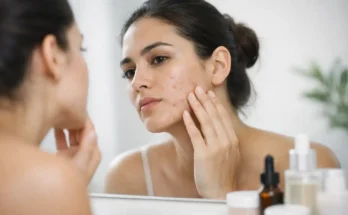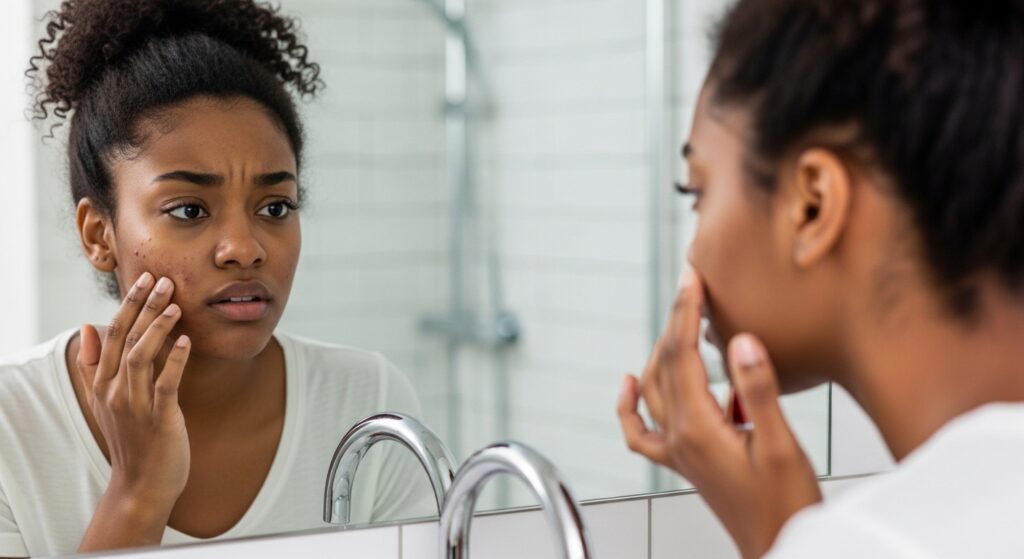
Cystic acne is one of the most severe forms of acne because it develops deep beneath the skin and often causes painful, inflamed bumps that can remain for weeks. Unlike mild blackheads or occasional pimples, cystic acne can affect larger areas of the face, chest, shoulders, back, or jawline and may increase the risk of permanent acne scarring and post-inflammatory hyperpigmentation.
When we consider the best cystic acne treatment, we focus on reducing inflammation, controlling excess oil, preventing clogged pores, limiting acne-causing bacteria, and addressing hormonal or medical factors that may be contributing to repeated breakouts.
Because cystic acne develops deep within the skin, effective treatment often requires more than basic cleansers or spot treatments. A structured skincare routine combined with dermatologist-recommended treatment can provide better long-term control.
What Is Cystic Acne?
Cystic acne develops when pores become blocked with excess sebum, dead skin cells, and bacteria. The resulting inflammation occurs deeper within the skin than typical whiteheads or blackheads.
Cystic acne lesions may appear as:
- Large, red, painful bumps beneath the skin
- Swollen nodules without a visible whitehead
- Tender breakouts around the jawline, cheeks, chin, chest, or back
- Groups of inflamed lesions that take weeks to heal
- Recurring breakouts in the same areas
- Acne that leaves dark marks, discoloration, or scars
Cystic acne should not be squeezed or picked. Because these lesions are located deep in the skin, attempting to pop them may push inflammation further into surrounding tissue and increase the likelihood of scarring.
Best Cystic Acne Treatment Options
The most appropriate treatment depends on the severity of the acne, the patient’s skin type, medical history, hormonal factors, previous treatments, and risk of scarring. We may use topical treatments, prescription medications, professional procedures, or a combination of approaches.
1. Topical Retinoids
Topical retinoids are commonly used in acne management because they help regulate skin-cell turnover and reduce the formation of clogged pores.
Examples include adapalene, tretinoin, and tazarotene.
Retinoids may help:
- Prevent new clogged pores
- Reduce recurring acne
- Improve skin texture
- Support the fading of post-acne marks
- Improve the effectiveness of other acne treatments
Because retinoids may initially cause dryness, peeling, or irritation, we usually recommend introducing them gradually and using a gentle moisturizer.
Daily sunscreen is also important because some acne treatments can make the skin more sensitive to sunlight.
2. Benzoyl Peroxide for Inflamed Cystic Acne
Benzoyl peroxide is widely used for inflammatory acne because it reduces acne-associated bacteria on the skin and can help prevent bacterial resistance when used alongside certain topical or oral antibiotics.
It is available in cleansers, gels, creams, and leave-on treatments.
Higher concentrations are not always better. Strong formulations may increase dryness and irritation without providing significantly greater benefits for every patient.
For sensitive or dry skin, lower-strength products may be better tolerated.
3. Salicylic Acid for Clogged Pores
Salicylic acid is a beta hydroxy acid that penetrates oily pores and helps remove accumulated dead skin cells.
It may be particularly useful for people who have cystic breakouts combined with:
- Blackheads
- Whiteheads
- Excess oil
- Enlarged or congested pores
While salicylic acid can support an acne-treatment routine, severe cystic acne usually requires additional therapy because the inflammation develops deeper than the surface of the skin.
4. Oral Antibiotics for Moderate to Severe Cystic Acne
For widespread inflammatory or cystic acne, a dermatologist may prescribe an oral antibiotic for a limited period.
Commonly used medications may include doxycycline or other appropriate antibiotics depending on the individual’s medical history.
These medications are generally intended to reduce inflammation and acne-associated bacterial activity while a longer-term treatment plan becomes effective.
Oral antibiotics are usually not recommended as permanent acne treatments. They are commonly combined with topical treatments such as benzoyl peroxide or retinoids to improve results and reduce the risk of antibiotic resistance.
5. Isotretinoin for Severe Cystic Acne
For severe, persistent, scarring, or treatment-resistant cystic acne, oral isotretinoin may be considered.
Isotretinoin targets several major acne-producing mechanisms by:
- Significantly reducing oil production
- Decreasing clogged pores
- Reducing inflammation
- Reducing conditions that support acne-causing bacteria
It can be highly effective for severe nodular or cystic acne, but it requires medical supervision because it can cause significant side effects.
Patients taking isotretinoin may require medical monitoring, laboratory testing, and strict pregnancy-prevention measures because the medication can cause severe birth defects if taken during pregnancy.
Hormonal Treatment for Cystic Acne
Hormonal fluctuations can play a major role in persistent cystic acne, particularly when breakouts repeatedly appear around the chin, jawline, lower cheeks, or neck.
Hormonal acne may become more noticeable around menstruation, pregnancy-related hormonal changes, or other endocrine shifts.
Depending on the individual, a dermatologist or qualified healthcare professional may consider treatments such as certain oral contraceptives or spironolactone.
Spironolactone may help reduce the effect of androgen hormones on the sebaceous glands, potentially decreasing oil production and hormonally driven breakouts.
Hormonal medication is not appropriate for everyone, so treatment should be based on medical evaluation.
Professional Treatments for Cystic Acne
Some professional dermatology procedures may help control inflammation or improve acne-related complications.
Corticosteroid Injections
A dermatologist may inject a small amount of corticosteroid directly into a particularly large or painful cyst.
This can rapidly reduce swelling, inflammation, and discomfort.
These injections are generally reserved for selected lesions rather than treating the entire face.
Chemical Peels
Certain superficial chemical peels may help improve clogged pores, excess oil, uneven texture, and post-acne discoloration.
However, chemical peels alone usually cannot control severe cystic acne.
They are more commonly used as part of a comprehensive treatment plan.
Light and Laser Treatments
Some laser and light-based treatments may be used to reduce inflammation, improve acne scarring, or target post-inflammatory pigmentation.
The effectiveness depends on the type of acne, skin tone, device used, and treatment goals.
Professional assessment is particularly important for darker skin tones because inappropriate laser settings or aggressive procedures may increase the risk of pigmentation changes.
Best Skincare Routine for Cystic Acne
A complicated skincare routine is not necessary. In fact, using too many active ingredients can damage the skin barrier and worsen redness, dryness, and irritation.
Morning Routine
A practical morning routine may include:
- Gentle cleanser to remove excess oil without stripping the skin.
- Acne treatment such as benzoyl peroxide if recommended.
- Non-comedogenic moisturizer to support the skin barrier.
- Broad-spectrum sunscreen with SPF 30 or higher.
Evening Routine
An evening routine may include:
- Gentle cleansing
- A topical retinoid or prescribed acne treatment
- Moisturizer
Patients with sensitive skin may benefit from applying moisturizer before and after a retinoid to reduce irritation.
Ingredients to Look for in Cystic Acne Products
When selecting products for cystic or acne-prone skin, we generally look for ingredients that target inflammation, blocked pores, oil production, and skin-barrier health.
Useful ingredients may include:
- Adapalene
- Benzoyl peroxide
- Salicylic acid
- Azelaic acid
- Niacinamide
- Ceramides
- Hyaluronic acid
Azelaic acid can be particularly useful because it may help reduce acne while also improving some forms of post-acne discoloration.
Niacinamide can support oil regulation and the skin barrier, while ceramides and hyaluronic acid may improve hydration during acne treatment.
What to Avoid When Treating Cystic Acne
Using stronger products does not always produce faster results. Over-treatment may damage the protective skin barrier and make inflammation more noticeable.
We generally recommend avoiding:
- Picking or squeezing cysts
- Harsh facial scrubs
- Repeated exfoliation with multiple acids
- Heavy pore-clogging cosmetics
- Excessive alcohol-based skincare products
- Constantly changing acne products
- Applying undiluted essential oils directly to acne
- Using prescription medication without medical guidance
A consistent treatment plan is usually more effective than frequently switching between products.
Cystic Acne and Diet
Diet does not cause every case of acne, but certain dietary patterns may influence acne severity in some individuals.
Research has explored possible relationships between acne and:
- High-glycemic foods
- Sugary beverages
- Certain dairy products
- Highly processed foods
Rather than adopting extreme dietary restrictions, we generally recommend focusing on a balanced diet that includes vegetables, fruits, whole grains, lean protein sources, healthy fats, and adequate hydration.
Patients who notice a consistent relationship between certain foods and breakouts can discuss dietary patterns with a healthcare professional.
How Long Does Cystic Acne Treatment Take to Work?
Acne treatment requires consistency. Many treatments need several weeks before significant improvements become visible.
Some people may notice initial improvement within six to eight weeks, while more substantial control may take several months.
Retinoids can sometimes make acne appear temporarily worse during the early treatment period as clogged pores begin to clear.
This does not always mean that the treatment is failing.
A dermatologist may adjust the treatment plan if acne continues to worsen, causes substantial irritation, or shows little improvement after an appropriate treatment period.
How to Prevent Cystic Acne Scars
Preventing severe inflammation is one of the most effective ways to reduce the likelihood of permanent acne scarring.
Important preventive measures include:
- Treating cystic acne early
- Avoiding squeezing and picking
- Using sunscreen consistently
- Following prescribed acne treatment
- Reducing repeated skin irritation
- Seeking dermatology care for persistent nodules and cysts
Acne scars can become more difficult and expensive to treat once they are established, making early acne management especially important.
Treatment for Cystic Acne Scars and Dark Marks
After active cystic acne is controlled, some patients remain concerned about dark marks, uneven texture, or permanent scars.
Post-acne treatment may include:
- Retinoids
- Azelaic acid
- Chemical peels
- Microneedling
- Fractional laser treatments
- Subcision
- Dermal fillers for selected scars
- Scar-focused combination procedures
The best treatment depends on the scar type.
For example, ice-pick scars, rolling scars, and boxcar scars may require different procedures.
Treating active acne before aggressively treating scars generally produces better long-term results.
When to See a Dermatologist for Cystic Acne
Professional evaluation is recommended when cystic acne is painful, persistent, widespread, recurring, or beginning to cause scars.
We also recommend seeking medical assessment when:
- Over-the-counter treatments are not improving the acne
- Breakouts are becoming increasingly painful
- Acne is spreading across the face, chest, shoulders, or back
- Deep nodules repeatedly appear in the same area
- Acne leaves permanent scars or significant pigmentation
- Breakouts appear to follow a strong hormonal pattern
- Acne is affecting confidence or emotional wellbeing
Early treatment may prevent months or years of repeated inflammation.
How We Choose the Best Cystic Acne Treatment
There is no single treatment that works perfectly for every person with cystic acne. The most effective strategy is usually based on the type and severity of acne, previous treatment history, skin sensitivity, hormonal patterns, medication tolerance, and scarring risk.
For mild inflammatory acne, topical treatments may be enough.
For persistent moderate acne, combination treatment may be required.
For severe nodular or cystic acne, prescription medication or isotretinoin may provide the most effective long-term control.
The goal is not simply to dry out existing pimples. A strong treatment plan should prevent new lesions, protect the skin barrier, minimize inflammation, reduce scarring risk, and maintain clearer skin over time.
Building a Long-Term Cystic Acne Management Plan
Effective cystic acne treatment continues even after the skin begins to improve.
Once active acne is controlled, maintenance treatment may include a topical retinoid, gentle cleansing, non-comedogenic moisturizer, and daily sunscreen.
Consistent maintenance helps reduce the likelihood of recurring clogged pores and inflammatory breakouts.
It is also important to introduce new products carefully. Adding multiple acids, scrubs, retinoids, and acne treatments at the same time can make it difficult to identify which product is helping and which one is causing irritation.
A simple, evidence-based routine is generally easier to follow and more sustainable.
FAQs about Best Cystic Acne Treatment
1. What is the best cystic acne treatment?
The best cystic acne treatment depends on the severity of the acne and individual skin needs. Dermatologists may recommend prescription topical treatments, oral medications, hormonal therapy, or a combination of treatments.
2. Can cystic acne be treated at home?
Mild breakouts may improve with a gentle skincare routine, but cystic acne often requires professional treatment because the inflammation develops deep beneath the skin.
3. What ingredients help treat cystic acne?
Common acne-fighting ingredients include benzoyl peroxide, salicylic acid, and topical retinoids. A dermatologist can determine which ingredients and strengths are appropriate for your skin.
4. How long does cystic acne treatment take to work?
Improvement may take several weeks or months. Results depend on the treatment used, acne severity, consistency, and individual response.
5. Should I pop cystic acne?
No. Squeezing or popping cystic pimples can increase inflammation, infection risk, discoloration, and acne scarring.
6. Can hormonal changes cause cystic acne?
Yes. Hormonal fluctuations can contribute to cystic acne, particularly around the jawline and lower face. A healthcare professional may recommend hormonal treatment when appropriate.
7. When should I see a dermatologist for cystic acne?
Consider seeing a dermatologist if acne is painful, persistent, widespread, causing scars, or not improving with over-the-counter products.
8. Can cystic acne scars be prevented?
Early and appropriate treatment can help reduce the risk of permanent scarring. Avoid picking the skin and seek professional care for persistent cystic breakouts.
Conclusion
The best cystic acne treatment is usually a personalized combination of proven skincare ingredients, prescription medication when necessary, gentle skin-barrier care, and professional dermatology support.
Topical retinoids, benzoyl peroxide, salicylic acid, hormonal treatments, oral antibiotics, and isotretinoin may all have a role depending on the severity and cause of the acne.
For people dealing with painful, recurring, or scarring cystic acne, early professional treatment is especially important. With consistent care and the right treatment strategy, we can reduce active breakouts, prevent future cysts, protect against permanent scarring, and support healthier, clearer skin over the long term.