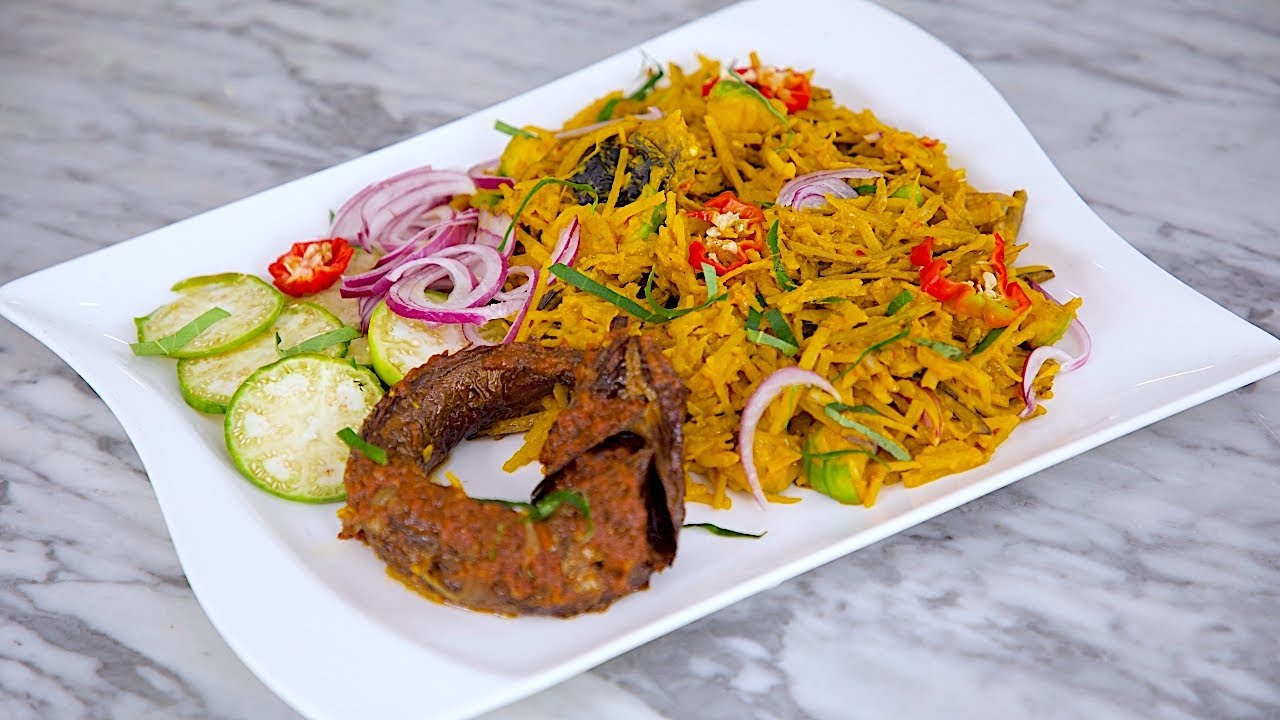
Abacha, popularly known as African Salad, is one of the most distinctive traditional delicacies from southeastern Nigeria. Made primarily from dried, shredded cassava and dressed with a rich palm oil sauce, Abacha combines bold flavours, satisfying textures, and fresh traditional ingredients in one colourful dish.
When we prepare an authentic Abacha (African Salad) recipe, we aim for the perfect balance of softness, crunch, heat, savoury flavour, and the unmistakable richness of palm oil. Depending on preference, we can serve Abacha with ugba (oil bean), stockfish, dry fish, garden eggs, onions, pepper, kpomo, or fried fish.
Whether we are preparing it as a quick meal, an appetizer, or a special dish for guests, this recipe gives us everything needed to make delicious Nigerian African Salad at home.
What Is Abacha (African Salad)?
Abacha is made from cassava tubers that are cooked, sliced or shredded into thin strips, soaked, and dried. Once dried, the cassava strips can be stored and later softened in water whenever we want to prepare African Salad.
The name African Salad reflects the colourful combination of ingredients traditionally added to the cassava. However, unlike many Western-style salads, Abacha does not depend on lettuce or mayonnaise. Its dressing is traditionally made with red palm oil, potash, seasoning, pepper, crayfish, and other local ingredients.
One of the best things about Abacha is how easily we can adjust it. We can make a simple version with only a few ingredients or create a loaded African Salad with different proteins and vegetables.
Ingredients for Abacha (African Salad)
Before we begin preparing our Abacha, we gather all the ingredients so that everything can be combined while the palm oil dressing is fresh.
Main Ingredients
- 500g dried Abacha
- 150g ugba (African oil bean)
- ½ cup red palm oil
- 1–2 tablespoons ground crayfish
- 1 medium onion
- 1 teaspoon ground pepper or to taste
- 1–2 seasoning cubes
- Salt to taste
- 1 teaspoon ground ehuru (calabash nutmeg), optional
- 1 small piece potash (akanwu)
- Warm water
Optional Ingredients and Toppings
For a richer and more traditional African Salad, we can also include:
- Cooked kpomo (cow skin)
- Cooked stockfish
- Smoked or dry fish
- Fried mackerel
- Fresh garden eggs
- Garden egg leaves
- Utazi leaves
- Sliced onions
- Fresh pepper
- Boiled eggs
These additions allow us to customise the dish according to taste and availability.
How to Prepare Abacha Before Mixing
Properly softening the dried cassava is one of the most important parts of making a good Abacha recipe.
We place the dried Abacha in a clean bowl and pour enough warm water over it to cover it completely. We allow it to soak until the cassava strips become tender but remain slightly firm.
The soaking time depends on how dry and thick the Abacha is. We should avoid leaving it in water for too long because excessively soft cassava can become mushy after mixing.
Once softened, we drain the Abacha thoroughly using a colander and set it aside.
If we are using ugba, we rinse it properly and drain it as well.
How to Make the Traditional Palm Oil Dressing
The dressing determines much of the flavour, appearance, and texture of African Salad.
First, we dissolve a small amount of potash in warm water. We allow any particles to settle before carefully collecting the clear liquid at the top. We do not need much potash solution because using too much can affect both the taste and texture of the dish.
Next, we pour the palm oil into a large mixing bowl.
We gradually add a small quantity of the potash liquid while stirring continuously. As we stir, the palm oil begins to thicken and change into a bright orange, creamy mixture.
This traditional process creates the characteristic base used for authentic Abacha.
We then add our ground crayfish, pepper, seasoning, salt, and ground ehuru. We stir everything together until the seasoning is evenly distributed.
How to Make Abacha (African Salad) Step by Step
Once our ingredients and dressing are ready, assembling the dish becomes straightforward.
Step 1: Soften the Abacha
We soak the dried Abacha in warm water until tender, then drain thoroughly.
Step 2: Prepare the Potash Liquid
We dissolve a very small amount of potash in water, allow the residue to settle, and carefully use only the clear liquid.
Step 3: Mix the Palm Oil Base
We pour the palm oil into a clean bowl and gradually stir in the potash liquid until the oil becomes thick and creamy.
Step 4: Add the Seasonings
We add crayfish, pepper, seasoning cube, ehuru, and salt. We mix until the dressing tastes balanced.
Step 5: Add Ugba
We stir the ugba into the palm oil mixture, ensuring it is well coated with the seasoned dressing.
Step 6: Add the Abacha
We add the drained cassava gradually and toss thoroughly until every strand is coated with the palm oil mixture.
Step 7: Add Protein and Extra Ingredients
If using kpomo, stockfish, smoked fish, or other cooked protein, we add them at this stage and mix gently.
Step 8: Finish With Fresh Ingredients
Finally, we add sliced onions, garden egg leaves, utazi, or other fresh vegetables according to preference.
We taste and adjust the salt, pepper, or seasoning before serving.
How to Get the Perfect Abacha Texture
Excellent African Salad should be soft enough to eat comfortably without becoming soggy.
To achieve this, we pay close attention when soaking the dried cassava. Warm water softens Abacha quickly, so we check it regularly rather than leaving it unattended.
After soaking, we also allow the cassava to drain properly. Excess water can dilute the palm oil dressing and prevent it from coating the Abacha correctly.
The final dish should have clearly separated cassava strands coated with a flavourful orange dressing.
Best Proteins to Serve With African Salad
Although Abacha can be enjoyed without meat or fish, adding protein transforms it into a more satisfying meal.
One of the most popular choices is fried fish, especially mackerel. Its crispy exterior and savoury flavour pair beautifully with the soft cassava.
We can also use:
- Kpomo for a chewy texture
- Stockfish for a stronger traditional flavour
- Smoked fish for added depth
- Dry fish for an intense savoury taste
- Boiled eggs for a simple protein option
A combination of fish and kpomo is particularly suitable when we want to prepare a loaded Nigerian African Salad.
Vegetables and Garnishes for Authentic African Salad
Fresh garnishes are important because they provide colour, crunch, bitterness, freshness, and contrast.
Garden egg leaves are commonly used and contribute a fresh green flavour. Finely sliced utazi leaves can also be added, although we use them sparingly because of their naturally bitter taste.
Garden eggs can be served alongside the dish, while sliced onions provide extra crunch.
For those who enjoy spicy food, fresh chopped chilli pepper can be added immediately before serving.
Tips for Making the Best Abacha Recipe
A few simple techniques can significantly improve the final result.
First, we use good-quality red palm oil because its flavour plays a major role in the dish.
We also use potash sparingly. It is needed mainly to create the traditional palm oil mixture, and excessive quantities are unnecessary.
Crayfish should be fresh and finely ground because stale crayfish can negatively affect the aroma of the entire meal.
We season gradually and taste before adding more salt. Ingredients such as stockfish, smoked fish, and seasoning cubes can already contribute considerable saltiness.
Most importantly, we avoid over-soaking the Abacha.
Can We Make Abacha Without Potash?
Yes. Although potash is commonly used in traditional preparation, African Salad can still be prepared without it.
If we choose not to use potash, we can make a seasoned palm oil dressing and mix it directly with the softened cassava. The texture and appearance of the dressing will differ slightly from the traditional version, but the dish can still be delicious.
This alternative is particularly useful when potash is unavailable.
Can Abacha Be Prepared Without Ugba?
Yes. Ugba gives Abacha an additional traditional flavour and texture, but it is not compulsory.
We can make a simpler African Salad using cassava, palm oil, crayfish, pepper, onions, seasoning, and our preferred protein.
However, when available, adding properly prepared ugba gives the dish a richer southeastern Nigerian character.
What to Serve With Abacha
Abacha is filling enough to be enjoyed on its own, but several accompaniments make it even better.
We can serve African Salad with fried fish, smoked fish, kpomo, garden eggs, fresh onions, chilli peppers, or chilled drinks.
For gatherings, we can arrange the Abacha on a serving plate and place the fish or other proteins on top. Fresh garden egg leaves, onions, and garden eggs around the dish provide an attractive traditional presentation.
Common Mistakes to Avoid When Making African Salad
One common mistake is soaking Abacha for too long. This makes it overly soft and reduces the appealing texture of the dish.
Another problem is adding too much potash. A small quantity is sufficient for the palm oil dressing.
We should also avoid adding large amounts of seasoning before tasting the other ingredients. Smoked fish, stockfish, and crayfish already contribute strong flavours.
Finally, we should not leave large amounts of water in the softened Abacha. Proper draining helps the dressing cling to every cassava strand.
How to Store Leftover Abacha
Freshly prepared Abacha is best enjoyed soon after mixing, especially when fresh onions and vegetables have been added.
If we have leftovers, we place them in an airtight food container and refrigerate them. When possible, we store fresh garnishes separately and add them again when serving.
Because African Salad may contain fish, kpomo, or other perishable ingredients, proper refrigeration is important.
Why This Authentic Abacha Recipe Works
This preparation method keeps the essential elements of traditional Nigerian African Salad while allowing enough flexibility for different tastes.
By properly softening the cassava, preparing a balanced palm oil dressing, using aromatic crayfish and pepper, and adding fresh traditional ingredients, we create Abacha with a satisfying combination of richness, spice, freshness, and texture.
The recipe can also be easily adapted. We can keep it simple for an everyday meal or load it with fish, kpomo, stockfish, ugba, vegetables, and garden eggs for special occasions.
FAQs about Abacha (African Salad) Recipe
1. What is Abacha?
Abacha, also known as African Salad, is a traditional Igbo dish from southeastern Nigeria. It is made mainly from shredded and dried cassava mixed with palm oil, seasonings, vegetables, and other flavorful ingredients.
2. Do I need to cook Abacha before preparing it?
No. Dried Abacha is usually soaked in warm water until soft, then drained thoroughly before being mixed with the other ingredients.
3. What are the main ingredients in African Salad?
Common ingredients include Abacha, palm oil, potash (akanwu), ugba, crayfish, pepper, seasoning, onions, garden eggs, and utazi leaves. Fish, stockfish, or ponmo may also be added.
4. What does potash do in Abacha?
Potash helps emulsify the palm oil, creating the smooth, creamy orange mixture traditionally used to coat the Abacha. It should be used sparingly.
5. Can I make Abacha without potash?
Yes. You can prepare African Salad without potash, although the texture and appearance of the palm oil mixture may be slightly different.
6. What is Ugba in Abacha?
Ugba, also called oil bean, is a fermented African oil bean seed. It gives Abacha its distinctive traditional flavour and texture.
7. Can Abacha be served as a main meal?
Yes. Abacha can be enjoyed as a main meal, snack, or side dish, especially when served with fish, ponmo, stockfish, or other proteins.
8. How can I make my Abacha taste better?
For richer flavour, use quality palm oil, fresh crayfish, ugba, pepper, onions, and properly seasoned protein. Balance the ingredients carefully so that no single flavour overwhelms the dish.
Conclusion
Making an authentic Abacha (African Salad) recipe at home is straightforward when we prepare each ingredient correctly. The key is to soften the dried cassava without making it mushy, prepare a flavourful palm oil dressing, season carefully, and finish the dish with traditional ingredients such as ugba, crayfish, pepper, onions, garden egg leaves, fish, or kpomo.
With its vibrant appearance, rich palm oil flavour, spicy seasoning, and satisfying texture, African Salad remains one of Nigeria’s most memorable traditional dishes. Whether we enjoy it as a light meal, serve it to visitors, or prepare a fully loaded version for a celebration, this Abacha recipe gives us a simple and reliable way to recreate the authentic taste of this southeastern Nigerian favourite.