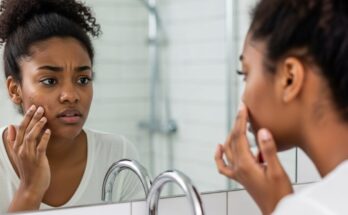
Finding the best facial eczema cream is essential for managing dryness, itching, inflammation, irritation, and damaged skin. Facial eczema requires special attention because the skin on the face is particularly delicate and susceptible to environmental triggers, allergens, and harsh skincare ingredients.
An effective facial eczema cream helps restore the skin’s protective barrier, retain moisture, soothe irritation, and improve overall skin comfort. Whether eczema affects the forehead, cheeks, chin, or areas around the eyes, choosing the right formulation can make a significant difference in managing symptoms.
We recommend gentle, fragrance-free creams containing nourishing and skin-protecting ingredients that support long-term eczema management.
What Is Facial Eczema?
Facial eczema is an inflammatory skin condition that causes dry, itchy, irritated, and sometimes discoloured patches on the face. It can affect adults and children and may develop due to genetic factors, environmental irritants, allergies, or impaired skin barrier function.
Common symptoms of facial eczema include:
- Persistent facial dryness and flaking.
- Itchy and irritated skin.
- Rough or scaly patches.
- Redness or changes in skin colour.
- Increased skin sensitivity.
- Cracked or peeling skin.
- Inflammation around the cheeks, forehead, and eyelids.
Using a suitable moisturising cream for facial eczema can help manage these symptoms while protecting the skin against excessive moisture loss.
Best Facial Eczema Creams for Dry and Sensitive Skin
The most effective facial eczema creams combine moisturising, soothing, and skin barrier-supporting ingredients. We recommend considering the following options based on individual skin sensitivity and eczema severity.
1. CeraVe Moisturising Cream
CeraVe Moisturising Cream is a popular option for dry, sensitive, and eczema-prone skin. Its formulation contains essential ceramides and hyaluronic acid, which help maintain hydration and support the skin’s natural protective barrier.
Key benefits include:
- Provides long-lasting skin hydration.
- Supports skin barrier restoration.
- Helps reduce excessive dryness.
- Features a fragrance-free formulation.
- Suitable for many individuals with sensitive skin.
Its rich texture makes it particularly beneficial for individuals experiencing persistent facial dryness.
2. Aveeno Eczema Therapy Daily Moisturising Cream
Aveeno Eczema Therapy Daily Moisturising Cream contains colloidal oatmeal, an ingredient recognised for its skin-protecting and soothing properties.
This cream helps relieve eczema-related itching, dryness, and irritation while improving moisture retention. Its formulation is particularly useful for individuals seeking gentle, non-steroidal eczema skincare.
3. La Roche-Posay Lipikar AP+M Triple Repair Moisturising Cream
La Roche-Posay Lipikar AP+M is designed for very dry, sensitive, and eczema-prone skin. Ingredients such as shea butter, glycerin, and niacinamide help nourish the skin and support its protective barrier.
Regular application may improve skin softness, reduce dryness, and provide lasting hydration.
4. Vanicream Moisturising Cream
Vanicream Moisturising Cream is an excellent option for individuals with highly sensitive facial skin. It is formulated without common potential irritants such as fragrance, dyes, and lanolin.
Its gentle formulation helps retain moisture and protect dry skin, making it suitable for many individuals with eczema-prone skin.
5. Eucerin Eczema Relief Cream
Eucerin Eczema Relief Cream contains colloidal oatmeal and barrier-supporting ingredients that help relieve itching and dryness associated with eczema.
It provides intensive moisturisation and may help improve the comfort of dry, irritated facial skin when tolerated.
6. Bioderma Atoderm Intensive Baume
Bioderma Atoderm Intensive Baume is a nourishing moisturising balm formulated for very dry and atopic-prone skin. Its rich consistency helps reduce moisture loss and improve skin comfort.
It is particularly beneficial for individuals who require intensive hydration during periods of excessive facial dryness.
Best Ingredients to Look for in Facial Eczema Cream
Choosing a cream with appropriate ingredients is important for managing facial eczema. We recommend prioritising formulations that support the skin barrier without introducing unnecessary irritants.
| Ingredient | Benefits for Facial Eczema |
|---|---|
| Ceramides | Support the skin’s protective barrier. |
| Colloidal oatmeal | Helps soothe itching and irritation. |
| Hyaluronic acid | Attracts water and improves hydration. |
| Glycerin | Helps maintain skin moisture. |
| Petrolatum | Reduces moisture loss and protects dry skin. |
| Shea butter | Softens and nourishes dry skin. |
| Niacinamide | Supports barrier function and may soothe irritation. |
| Panthenol | Provides hydration and improves skin comfort. |
| Dimethicone | Forms a protective barrier against moisture loss. |
Products containing a combination of humectants, emollients, and occlusive ingredients can provide comprehensive moisturising benefits.
Best Facial Eczema Cream for Different Skin Needs
Facial eczema symptoms vary considerably between individuals. Selecting a cream according to specific skin concerns can improve treatment effectiveness and overall comfort.
Best Facial Eczema Cream for Extremely Dry Skin
Thick moisturising creams and ointments containing ceramides, petrolatum, and glycerin are particularly beneficial for extremely dry skin. These ingredients help minimise water loss and maintain lasting hydration.
Best Facial Eczema Cream for Itchy Skin
Creams containing colloidal oatmeal can help soothe eczema-related itching and irritation. Persistent or severe itching may require additional medical treatment to control underlying inflammation.
Best Facial Eczema Cream for Sensitive Skin
Fragrance-free creams with minimal ingredients are generally preferable for sensitive skin. Vanicream and similar gentle moisturisers can help reduce exposure to common skincare irritants.
Best Facial Eczema Cream for Eyelids
The skin around the eyes is exceptionally delicate. We recommend simple, fragrance-free moisturisers or plain petrolatum when tolerated. Medicated creams around the eyelids should only be used under appropriate medical guidance because of the potential risks associated with certain treatments.
Prescription Facial Eczema Creams for Severe Flare-Ups
While moisturising creams are important for daily eczema management, moderate or severe facial eczema may require prescription treatment.
Dermatologists may recommend the following treatments depending on the diagnosis, age, and severity of symptoms:
- Low-potency topical corticosteroids: Help control inflammation during short-term eczema flare-ups.
- Tacrolimus ointment: A non-steroidal prescription treatment that can be useful for sensitive facial areas.
- Pimecrolimus cream: Helps manage eczema-related inflammation and itching.
- Crisaborole ointment: A non-steroidal treatment for eligible patients with mild to moderate atopic dermatitis.
- Ruxolitinib cream: A prescription treatment suitable for certain eligible patients with atopic dermatitis.
Facial corticosteroids should be used cautiously because prolonged or inappropriate application may cause skin thinning and other complications.
Ingredients to Avoid in Facial Eczema Cream
Certain skincare ingredients can aggravate eczema-prone skin and trigger uncomfortable reactions.
We recommend avoiding or limiting exposure to:
- Artificial fragrances and perfumes.
- Essential oils.
- Harsh exfoliating acids.
- High concentrations of denatured alcohol.
- Abrasive exfoliating particles.
- Strong retinoids during active flare-ups.
- Ingredients that have previously caused allergic reactions.
Choosing products labelled fragrance-free, rather than simply unscented, can help minimise unnecessary exposure to potential irritants.
How to Apply Facial Eczema Cream Correctly
Proper application helps maximise the moisturising and protective benefits of facial eczema creams.
Begin by gently cleansing the face with lukewarm water and a mild, fragrance-free cleanser. Pat the skin dry with a soft towel, leaving it slightly damp before applying moisturiser.
Apply the cream evenly without excessive rubbing, paying particular attention to dry and irritated areas. Moisturise at least twice daily and whenever the skin feels dry.
When using prescribed medication, follow the dermatologist’s instructions regarding application frequency, treatment duration, and the order of application with moisturisers.
How to Choose the Best Facial Eczema Cream
We recommend considering ingredient quality, skin sensitivity, eczema severity, and formulation when selecting a facial eczema cream.
An effective product should provide sufficient hydration without causing burning, irritation, or increased inflammation. Testing a small amount on a limited area before widespread application can help identify potential sensitivity.
Individuals experiencing recurring or severe facial eczema should consult a dermatologist to determine whether the symptoms are caused by atopic dermatitis, contact dermatitis, seborrhoeic dermatitis, or another skin condition.
Benefits of Using Facial Eczema Cream Regularly
Consistent use of an appropriate facial eczema cream offers several potential benefits, including improved moisture retention, reduced dryness, greater skin comfort, and stronger skin barrier function.
Regular moisturisation may also reduce the frequency of eczema flare-ups and help protect the skin against environmental irritants. However, moisturisers alone may not adequately control active inflammation in moderate or severe cases.
Combining gentle skincare with appropriate medical treatment provides a more comprehensive approach to long-term eczema management.
When to See a Dermatologist for Facial Eczema
Professional assessment is recommended when facial eczema becomes persistent, painful, increasingly irritated, or unresponsive to regular moisturising creams.
Seek prompt medical attention if the affected skin develops yellow crusting, pus, rapidly spreading redness, painful blisters, fever, or symptoms affecting the eyes.
A dermatologist can identify the underlying cause and recommend a personalised facial eczema treatment plan that addresses inflammation, sensitivity, and skin barrier damage.
FAQs about Best Facial Eczema Cream
1. What Is the Best Facial Eczema Cream?
The best facial eczema cream is a fragrance-free, gentle moisturizer that hydrates sensitive skin, repairs the skin barrier, and reduces dryness. Creams containing ceramides, glycerin, and petrolatum are often recommended for eczema-prone skin.
2. Which Ingredients Should I Look for in a Facial Eczema Cream?
We recommend choosing facial eczema creams containing skin-supporting ingredients such as ceramides, hyaluronic acid, colloidal oatmeal, and glycerin. These ingredients help maintain moisture and soothe irritated skin.
3. Can Facial Eczema Cream Reduce Redness and Itching?
Yes. A suitable eczema cream for the face can relieve dryness and help reduce irritation. However, persistent inflammation may require prescription treatments recommended by a dermatologist.
4. Is Facial Eczema Cream Safe for Sensitive Skin?
Most fragrance-free eczema moisturizers are suitable for sensitive skin. We advise avoiding products containing harsh fragrances, drying alcohols, and irritating exfoliating ingredients.
5. How Often Should I Apply Facial Eczema Cream?
We recommend applying facial eczema moisturizer at least twice daily, particularly after washing your face. Regular moisturizing helps protect the skin barrier and prevent excessive dryness.
6. Can I Use Hydrocortisone Cream for Facial Eczema?
Low-strength hydrocortisone may help control eczema flare-ups. However, facial skin is delicate, so topical steroids should only be used under professional guidance to minimize potential side effects.
7. How Long Does Facial Eczema Cream Take to Work?
Moisturizing creams may provide immediate relief from dryness, while improvements in skin texture can take several days. Persistent or worsening eczema requires medical evaluation.
8. How Do I Choose the Best Facial Eczema Cream?
We recommend selecting a dermatologist-recommended, fragrance-free, hypoallergenic facial eczema cream appropriate for your skin type. Prioritize gentle formulations that deliver lasting hydration without irritating sensitive facial skin.
Conclusion
The best facial eczema cream provides effective hydration, supports skin barrier restoration, and helps relieve dryness, itching, and irritation without exposing delicate facial skin to unnecessary irritants.
Products containing ceramides, colloidal oatmeal, glycerin, hyaluronic acid, and petrolatum are excellent options for daily eczema skincare. We recommend choosing gentle, fragrance-free formulations, maintaining a consistent moisturising routine, and seeking professional guidance when symptoms persist.
With appropriate skincare and personalised treatment, individuals with facial eczema can achieve healthier, better-hydrated, and more comfortable skin while reducing the impact of recurring flare-ups.