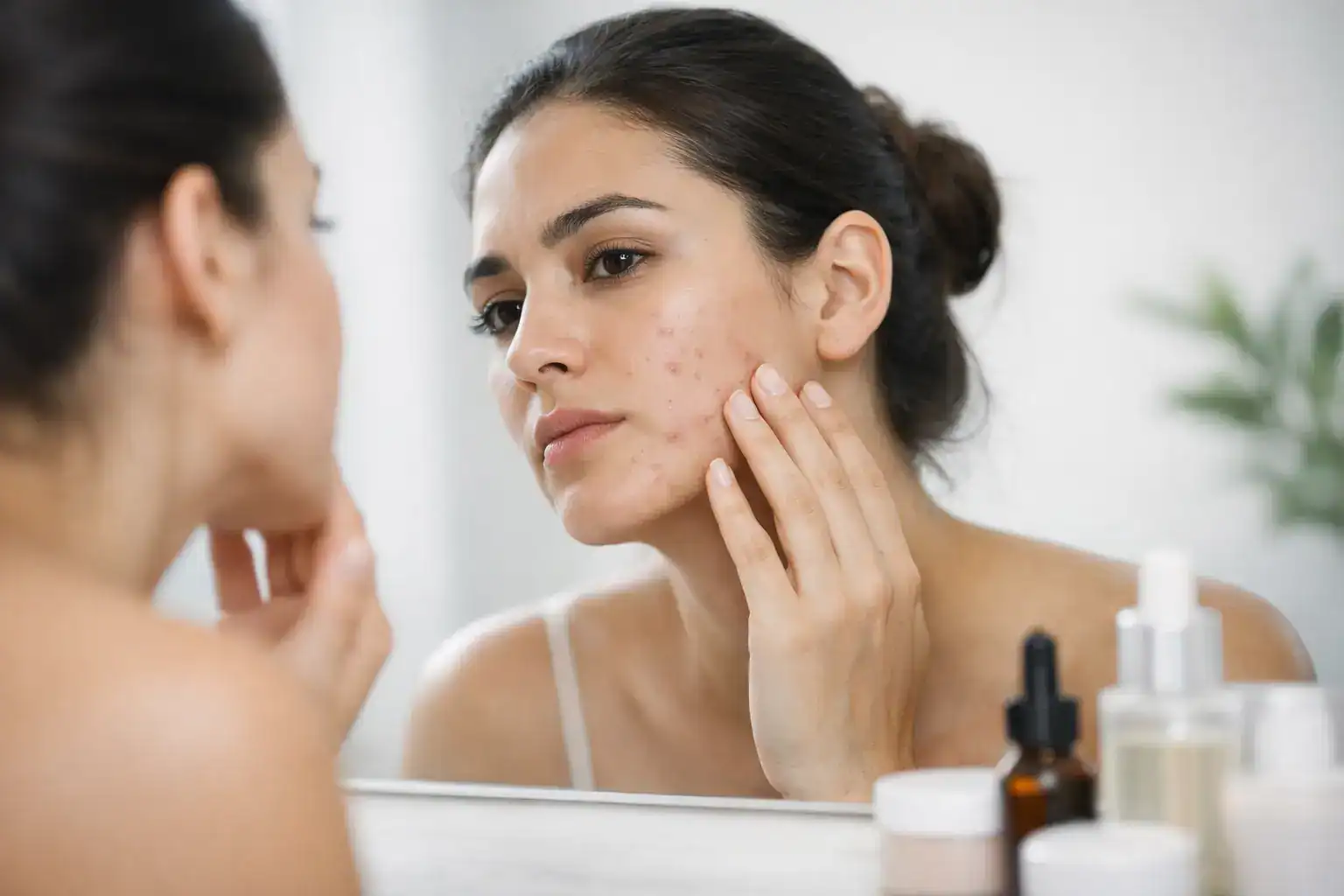
Choosing the right acne scar removal treatment starts with understanding your scars, your skin, and the improvement you want to achieve. A treatment that works well for shallow depressions may offer limited benefit for deep pits or raised scars. The most suitable approach should address your particular concerns while fitting your budget and recovery needs.
When we compare treatments, we should look beyond attractive before-and-after photographs. A clear diagnosis, an experienced practitioner, and a realistic treatment plan provide a stronger foundation for making an informed decision.
Identify Your Acne Scar Type Before Choosing Treatment
Acne scars differ in shape, depth, and texture. We should first establish whether the concern is a change in skin structure or a flat mark left after a breakout.
Common Acne Scar Types
- Ice pick scars: Narrow, deep indentations that resemble small punctures.
- Boxcar scars: Broader depressions with distinct edges, which may be shallow or deep.
- Rolling scars: Depressions that create an uneven, wavy appearance.
- Hypertrophic scars: Raised scars that remain within the original affected area.
- Keloid scars: Raised scars that extend beyond the original injury.
Flat brown, grey, or red marks after acne are not necessarily true scars. Distinguishing discolouration from structural scarring helps prevent choosing treatment for the wrong concern.
During a consultation, we should ask the practitioner to explain which scar types are present and identify the areas each proposed procedure would address. This makes the recommendation easier to understand and compare.
Arrange a Dermatology Consultation Before Booking a Procedure
A consultation should provide a personalised assessment rather than an immediate recommendation for a treatment package. Dermatologists consider scar type, skin tone, existing acne, and treatment goals when developing a plan. Active acne usually needs to be controlled before scar procedures begin to help prevent further scarring.
We should arrive prepared to discuss previous treatments, current skincare products, medications, and any problems experienced after earlier procedures.
Information to Bring to Your Consultation
- A list of current and recently used medications.
- Details of previous acne and scar treatments.
- Any history of unusual scarring or difficult healing.
- The areas that concern you most.
- Your preferred budget and available recovery time.
Clear information helps make the appointment productive. We should also explain whether our main priority is smoother texture, less noticeable individual scars, or a more even complexion.
Compare Acne Scar Treatment Options by Their Purpose
Treatment names alone do not tell us whether a procedure is appropriate. We need to understand what it targets and why the practitioner recommends it.
Treatments for Depressed Acne Scars
Microneedling and laser resurfacing can stimulate skin remodelling and improve the appearance of selected depressed scars. Dermal fillers add volume beneath suitable depressions, although many require repeat treatment to maintain the effect.
Subcision releases fibrous bands beneath tethered scars. TCA CROSS is a focused chemical technique used for selected scars, while punch procedures may be considered for particular deep defects. These approaches require professional assessment and careful selection.
When comparing recommendations, we should ask the practitioner to connect each procedure to a specific finding. “This treatment is popular” offers less useful information than an explanation of why it suits the scars being examined.
Treatments for Raised Acne Scars
Raised scars require a different approach from depressed scars. Options may include corticosteroid injections, selected laser treatments, or other specialist procedures. Keloids can recur, so their management may involve more than one treatment.
We should therefore avoid assuming that a general resurfacing package is suitable for every type of acne scar.
Consider Skin Tone, Sensitivity, and Treatment History
A suitable acne scar treatment plan should account for baseline skin type as well as scar depth and location. Treatment may need to address colour, texture, and volume separately.
For sensitive skin or a history of pigmentation changes, we should ask how those concerns affect the proposed treatment. The discussion should cover preparation, procedure settings, recovery, and follow-up.
Questions About Treatment Suitability
- Why is this procedure appropriate for our skin?
- What complications are relevant to our medical history?
- How will the practitioner manage an unexpected reaction?
- Would a staged approach be more suitable?
- What alternatives should we consider?
The aim is to obtain a clear explanation of the recommendation. A thorough answer should help us understand both the expected benefit and the practical limitations.
Choose a Qualified Practitioner With Relevant Experience
When searching for acne scar removal treatment near me, location is only one consideration. We should also review professional registration, recognised qualifications, and experience treating similar scars.
Ask who will assess the skin, who will perform the procedure, and who will provide follow-up care. These responsibilities should be clear before payment.
What to Look for in a Treatment Provider
- Verifiable professional credentials.
- Experience with the proposed procedure.
- A consultation that includes examination and medical history.
- Written information about risks and aftercare.
- Clear arrangements for follow-up and complications.
Before-and-after photographs can support the discussion, but we should ask whether they show comparable scars and skin tones. Consistent lighting and camera angles make comparisons more useful.
Set Realistic Goals for Acne Scar Improvement
Although “scar removal” is a common search term, treatment generally aims to reduce the visibility of scars. Existing acne scars may persist even when their appearance improves.
We should define what a worthwhile result would look like before starting. For one person, the priority may be less noticeable cheek depressions. For another, it may be improving a small number of prominent scars.
Ask when progress will be reviewed and how the practitioner will assess it. Photographs taken under consistent conditions can make that discussion more objective. Avoid accepting a guaranteed percentage of improvement without a clear explanation of how that estimate was reached.
Compare the Full Acne Scar Treatment Cost
An affordable treatment should be assessed by its total expected cost, rather than the advertised price of one session.
We should request a written estimate that explains the proposed course of care and identifies any separate charges. This helps us compare providers on similar terms.
Costs to Clarify Before Committing
- Consultation and assessment fees.
- The estimated number of sessions.
- Procedure and anaesthetic charges.
- Recommended aftercare products.
- Follow-up appointments.
- Possible maintenance or additional treatment.
We should also ask what happens if the initial course produces less improvement than expected. A transparent plan should explain whether further treatment would be optional and how additional costs would be agreed.
Plan Recovery Around Your Daily Responsibilities
Recovery requirements can influence whether a procedure is practical. Before booking, we should discuss work, travel, exercise, outdoor exposure, and upcoming events with the practitioner.
Ask for written instructions that distinguish expected recovery changes from symptoms requiring medical advice. We should also know whom to contact outside normal clinic hours.
Recovery Details to Confirm
- Expected visible redness, swelling, or peeling.
- Restrictions on makeup and skincare products.
- When normal activities can resume.
- Required follow-up appointments.
- Signs that should prompt a call to the clinic.
A treatment plan is easier to follow when recovery arrangements are understood beforehand.
Understand Why Combination Treatment May Be Suggested
Different scars can coexist in the same area. A combination plan may therefore address separate concerns through different procedures. Dermatology guidance supports tailoring treatment to the individual rather than applying one method to every scar.
We should ask why each component is included, which procedure comes first, and when the results will be reassessed. This prevents a combination package from becoming a list of treatments without a clear purpose.
FAQs about How to Choose Acne Scar Removal Treatment
How do I choose the right acne scar removal treatment?
The best acne scar removal treatment depends on your scar type, skin tone, sensitivity, medical history, and treatment goals. We recommend starting with a professional skin assessment to identify whether you have ice pick, boxcar, rolling, raised, or pigmented acne scars.
Which treatment works best for deep acne scars?
Deep scars may respond better to professional procedures such as microneedling, laser resurfacing, chemical peels, subcision, or TCA CROSS. In some cases, a combination of treatments may provide better improvement than one procedure alone.
Is laser treatment suitable for all skin types?
Not every laser is appropriate for every skin tone. Certain treatments can increase the risk of post-inflammatory hyperpigmentation, particularly in darker skin tones. A qualified dermatologist can recommend safer laser settings or alternative procedures.
What should I consider before choosing a treatment?
Before selecting an acne scar treatment, we suggest considering:
- Type and severity of acne scars
- Skin type and sensitivity
- Expected recovery time
- Treatment cost
- Number of sessions required
- Possible side effects
- Dermatologist experience
Can acne scar creams remove deep scars?
Topical products may improve dark marks, texture, and mild discoloration, but they usually cannot completely remove deep or depressed scars. Professional procedures are often required for more noticeable structural scarring.
Should I see a dermatologist before treatment?
Yes. A dermatologist can evaluate your scars and create a personalised treatment plan while helping reduce the risk of irritation, pigmentation changes, or inappropriate treatment.
Conclusion
To choose acne scar removal treatment, we should begin with an accurate assessment, compare procedures by their intended purpose, and select a qualified practitioner who explains the recommendation clearly.
The strongest decision balances expected improvement, treatment suitability, total cost, and recovery time. With defined goals and a reviewable plan, we can approach treatment with greater clarity and realistic expectations.