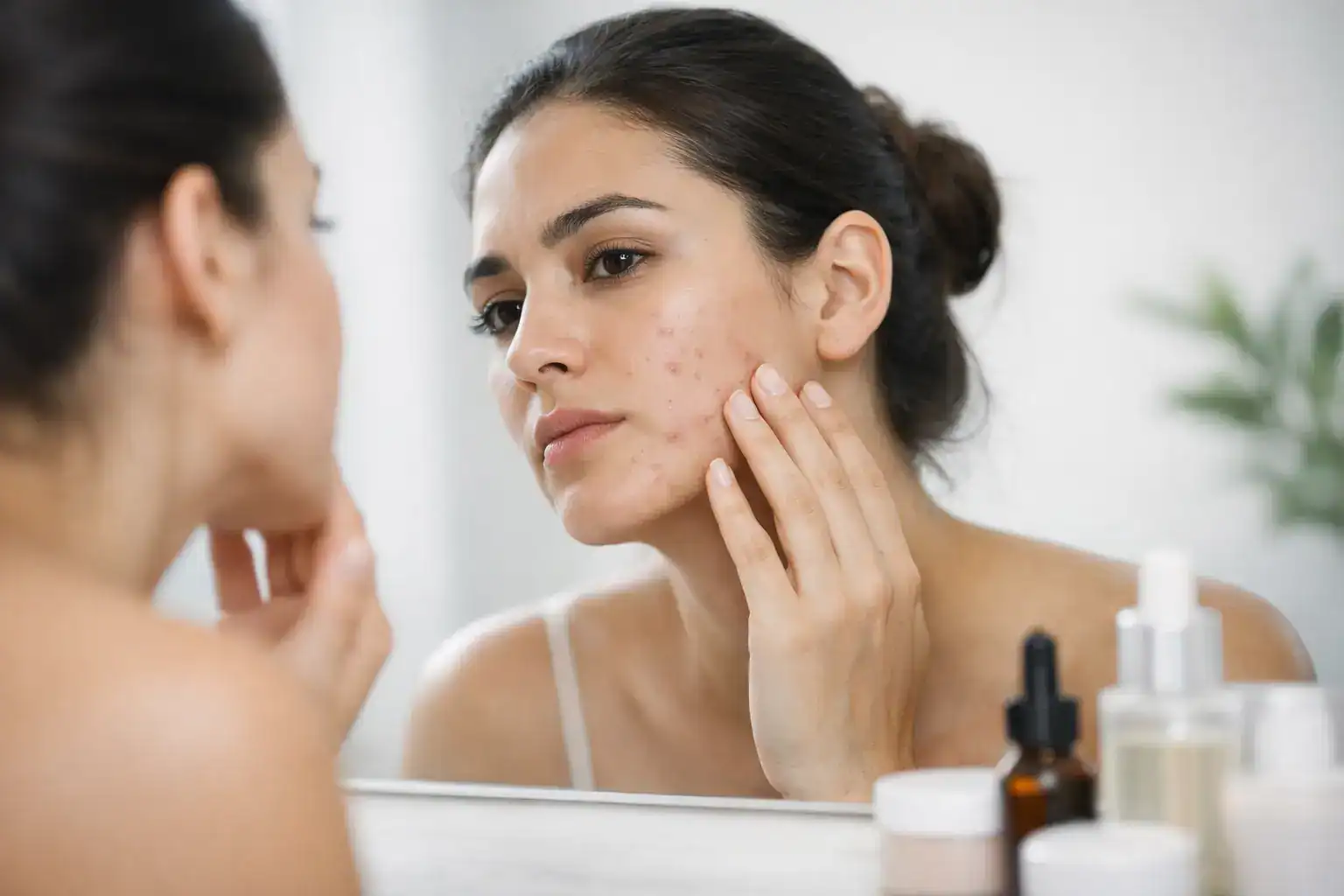
Acne scar removal treatment cost and options depend on the type of scarring, the treatment area, and the procedures needed to improve skin texture. A few shallow depressions require a different approach from widespread, deeply indented scars or raised keloids.
We approach treatment decisions by considering suitability, expected improvement, recovery time, and total cost together. Although “scar removal” is a common search term, most treatments reduce the visibility of scars rather than erase them completely. A personalised plan offers a more realistic route to smoother skin than choosing a procedure solely because it is popular.
Understanding Acne Scars Before Comparing Treatment Costs
Acne can leave both structural scars and lingering colour changes. Identifying the difference helps us avoid spending money on treatments that address the wrong concern.
Depressed acne scars develop when inflammation damages the supporting tissue beneath the skin. Raised scars involve excessive scar tissue. Flat brown or red marks may accompany acne but do not necessarily represent permanent changes in skin texture.
Main Types of Acne Scars
- Ice pick scars: Narrow, deep indentations that extend beneath the skin’s surface.
- Boxcar scars: Round or oval depressions with clearly defined edges.
- Rolling scars: Broad indentations that create an uneven, wavy appearance.
- Hypertrophic scars: Raised scars that remain within the original injury area.
- Keloid scars: Raised growths that extend beyond the original acne lesion.
Several scar types can occur together. Consequently, one procedure may improve some areas while leaving others relatively unchanged.
How Much Does Acne Scar Removal Treatment Cost?
There is no universal price for acne scar treatment. A meaningful estimate requires an assessment of the scars, the proposed technique, and the number of appointments.
As a broad reference, the American Society of Plastic Surgeons lists an average of US$1,829 for skin resurfacing procedures on its laser resurfacing cost page. This is a United States benchmark across resurfacing procedures, rather than a specific quote for acne scars, a guaranteed per-session price, or a price applicable to other countries. Additional charges may also apply.
We should therefore compare written treatment plans, not isolated advertised prices. A lower session fee can become more expensive overall if numerous sessions, separate consultations, or repeat treatments are required.
Factors to Check in an Acne Scar Treatment Quote
Before committing to treatment, establish:
- Treatment coverage: Whether the price covers individual scars, both cheeks, or the full face.
- Session count: The estimated number of appointments and when progress will be reviewed.
- Included services: Consultation, anaesthesia, consumables, and follow-up visits.
- Aftercare expenses: Prescribed products, dressings, or medication.
- Maintenance costs: Whether results may require repeat treatment.
- Recovery requirements: Any time away from work or other activities.
A transparent quote should explain what happens if the initial course produces less improvement than expected.
Acne Scar Removal Treatment Options
Microneedling for Acne Scar Texture
Professional microneedling creates controlled punctures that stimulate skin repair and collagen production. It can improve the appearance of selected depressed scars and uneven texture.
Treatment usually involves a series of appointments rather than an immediate transformation. Redness, swelling, dryness, and temporary sensitivity can follow a session. Results develop gradually as the skin remodels.
For cost comparisons, we should establish whether the quote covers conventional microneedling or another device-based procedure. Different technologies should not be treated as interchangeable simply because they share the word “microneedling.”
Professional assessment remains important, particularly when there is active inflammation, a history of abnormal scarring, or previous treatment complications.
Laser Resurfacing for Depressed Acne Scars
Laser resurfacing is an option for selected depressed scars. Treatment choice depends on scar depth, skin characteristics, and the recovery period the person can accommodate.
Laser procedures vary substantially. We should ask for the exact device and treatment approach, together with an explanation of the expected benefits and risks. The word “laser” alone provides too little information to compare two clinic packages.
The consultation should also clarify whether resurfacing is intended as the main treatment or as a later step after individual deeper scars have been addressed.
Chemical Peels and TCA CROSS
Chemical peels and TCA CROSS are related but distinct approaches. A peel treats a broader skin surface, while TCA CROSS involves carefully applying concentrated trichloroacetic acid to selected scars.
TCA CROSS may be considered for particular depressed scars, including ice pick scars. It requires precise application by an appropriately trained clinician. Potential complications include pigmentation changes and worsening scarring.
When comparing costs, we should check whether treatment is priced per scar, per treatment area, or per appointment. A package described simply as an “acne scar peel” should specify the technique being offered and the scars it is expected to improve. Concentrated acid treatment should not be attempted at home.
Subcision, Fillers, and Scar Surgery
Subcision releases fibrous bands that pull certain depressed scars downward. Dermal fillers add volume beneath suitable indentations, while surgical techniques may address selected deep scars.
These treatments serve different purposes. A procedure that releases tethering cannot be assessed in the same way as one that adds temporary volume or removes an individual scar.
We should ask whether the proposed treatment will be combined with resurfacing, whether filler results are temporary, and what additional appointments may be needed. These details affect the overall budget as much as the initial procedure fee.
Treatment for Raised Acne Scars
Raised acne scars require an approach suited to excessive scar tissue. Options may include injections, silicone products, laser treatment, or other specialist procedures.
A plan designed for depressed scars should not automatically be applied to raised scars. We should discuss recurrence, the number of appointments, and how progress will be measured before choosing treatment.
Choosing Acne Scar Treatment for Sensitive or Darker Skin
Skin sensitivity and skin tone influence treatment planning. Previous reactions, persistent irritation, pigmentation changes, and a tendency to develop keloids should all be discussed during assessment.
We should look for a clinician experienced in treating similar skin tones and scar patterns. Before-and-after photographs can support that discussion, provided the lighting, angles, and treatment details are comparable.
The consultation should explain how pigmentation risks will be managed and whether a staged approach is appropriate. More intensive treatment is not automatically more suitable, particularly when recovery and skin tolerance are central concerns.
Can Skincare Products Replace Acne Scar Procedures?
Topical products have a role in acne management and some pigmentation concerns. Retinoids, for example, may be recommended for acne or mild pigmentation irregularities, depending on the formulation and individual circumstances.
However, choosing a product requires attention to tolerability. Retinoids can irritate the skin, so stronger formulations should not be selected solely because they appear more powerful. We should distinguish a product intended to manage breakouts or colour changes from a procedure intended to address established structural scars.
How to Make Acne Scar Treatment More Affordable
Affordability begins with a clear diagnosis and a defined treatment objective. Spending less on an unsuitable procedure offers little value.
Practical Ways to Manage the Treatment Budget
- Request an itemised estimate before purchasing a course.
- Compare equivalent procedures, including the treatment area and follow-up arrangements.
- Ask about staged treatment if the full plan exceeds the available budget.
- Set a review point before paying for additional sessions.
- Include recovery costs, such as travel and time away from work.
- Clarify package terms, including unused appointments and cancellation policies.
We should also ask which concern the first stage will address: deep indentations, broader texture, raised scars, or colour changes. A specific objective makes the value of treatment easier to assess.
Questions to Ask Before Starting Acne Scar Removal Treatment
A productive consultation should leave us with a clear understanding of the proposed plan.
Essential Consultation Questions
- Which scar types are present?
- Why is this procedure suitable for them?
- What improvement is realistic?
- How many sessions are initially recommended?
- What risks apply to this skin tone and medical history?
- What is the total estimated cost?
- When will results be assessed?
- What alternatives are available within the budget?
These questions help turn a general treatment advertisement into a concrete, reviewable plan.
FAQs about Acne Scar Removal Treatment Cost and Options
1. How much does acne scar removal treatment cost?
The cost of acne scar treatment varies depending on the type of scar, treatment method, number of sessions required, clinic location, and dermatologist’s expertise. Professional procedures generally cost more than topical treatments but may provide more noticeable results.
2. What are the main acne scar removal options?
Common acne scar removal treatments include:
- Chemical peels
- Microneedling
- Laser resurfacing
- Dermal fillers
- Subcision
- TCA CROSS
- Microdermabrasion
- Prescription skincare treatments
3. Which acne scar treatment is most affordable?
Chemical peels, microneedling, and topical treatments are often among the more affordable options. However, the most cost-effective treatment depends on the type and severity of the scars.
4. How many sessions are needed to remove acne scars?
Some people notice improvement after one session, while deeper scars may require multiple treatment sessions. A dermatologist can recommend a treatment schedule after assessing the scars.
5. Does laser treatment permanently remove acne scars?
Laser treatments can significantly improve skin texture and scar appearance, but complete removal cannot always be guaranteed. Results depend on scar type, skin condition, and treatment response.
6. Which treatment is best for deep acne scars?
Deep scars may respond well to subcision, TCA CROSS, laser resurfacing, microneedling, or combination treatments, depending on whether the scars are ice pick, boxcar, or rolling scars.
7. How do I choose the right acne scar treatment?
We recommend consulting a qualified dermatologist who can assess your scar type, skin tone, budget, and treatment goals before recommending the most suitable option.
Conclusion
The best way to compare acne scar removal treatment cost and options is to assess the complete course: the scars being treated, the procedure selected, the likely improvement, and the total financial commitment.
We should prioritise a qualified assessment, transparent pricing, and realistic expectations. A carefully chosen plan provides a stronger basis for improving acne scars than promises of complete removal or a low introductory price.