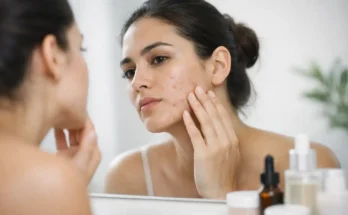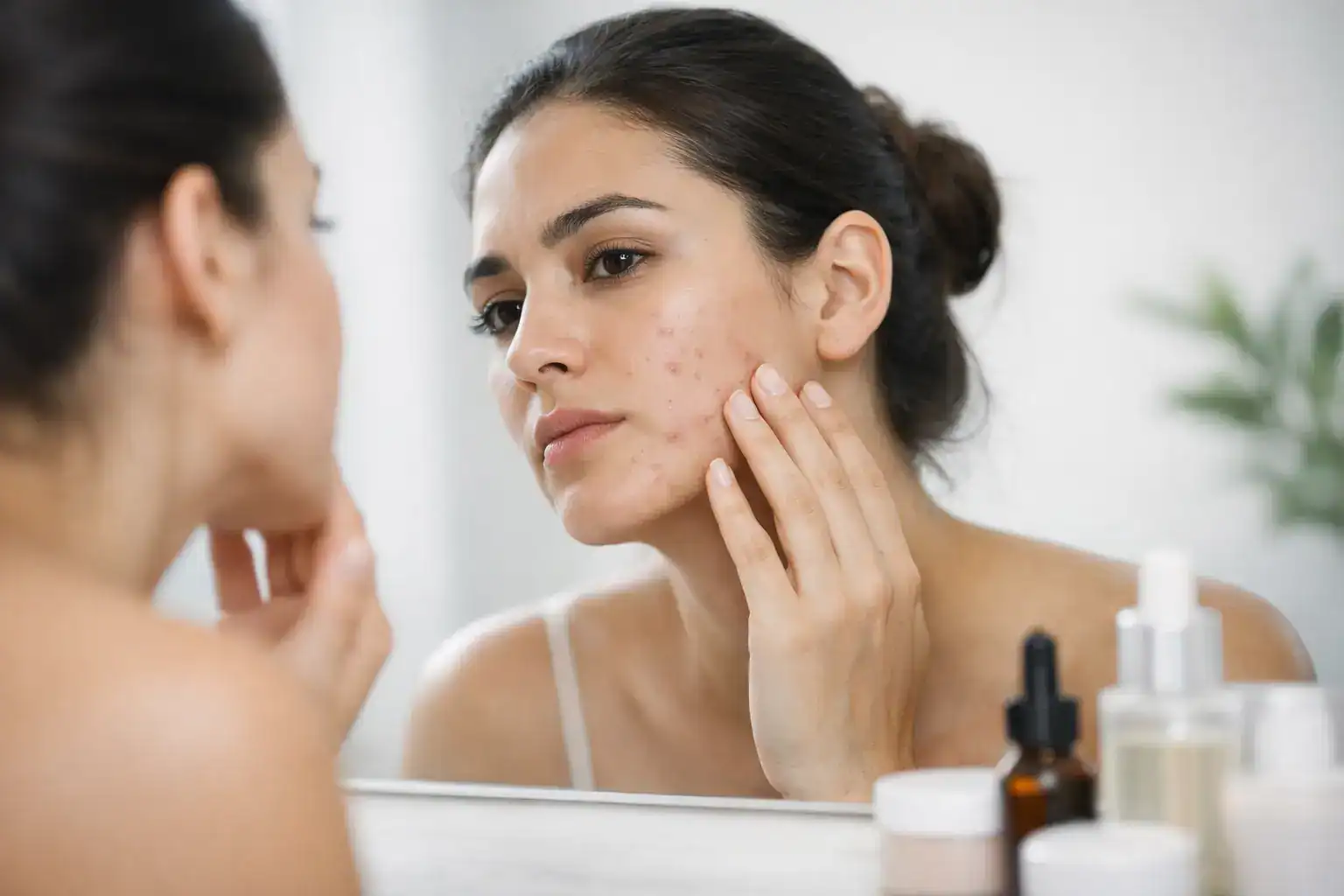
Dermatologist recommended acne scar treatment for boxcar scars begins with matching the procedure to the depth, shape, and structure of each scar. Shallow depressions may benefit from resurfacing, while deeper scars can require targeted surgical techniques. When several scar types occur together, a combination of treatments may offer a more balanced improvement.
We recommend approaching treatment with a clear objective: smoother skin texture and less noticeable depressions. The most suitable plan should account for skin tone, active acne, recovery time, and realistic expectations rather than relying on a single procedure for every scar.
Understanding Boxcar Acne Scars
Boxcar scars are round or oval depressions with clearly defined edges. They belong to the group of atrophic acne scars, which develop when inflammation damages collagen and leaves the skin with insufficient structural support.
Unlike narrow ice-pick scars or rolling scars with sloping borders, boxcar scars have more distinct boundaries. Their appearance can vary considerably: some are relatively shallow, while others extend deeper into the skin.
We distinguish these depressions from post-inflammatory hyperpigmentation. A dark mark represents a change in colour; a boxcar scar represents a change in contour. Both can occur in the same area, but fading pigmentation does not necessarily correct the underlying depression.
How Dermatologists Choose Treatment for Boxcar Scars
A useful assessment goes beyond identifying the general scar category. We recommend discussing which individual scars need targeted correction and which surrounding areas would benefit from broader texture improvement.
Factors That Shape the Treatment Plan
Before recommending a procedure, a dermatologist considers:
- Scar depth and width: Superficial depressions and deep scars may need different approaches.
- Scar structure: Underlying fibrous attachments can influence whether lifting procedures are appropriate.
- Skin tone: The risk of pigmentation changes affects treatment selection.
- Active breakouts: Ongoing acne should be addressed before scar management.
- Recovery and budget: A workable plan must accommodate healing time and the potential need for several sessions.
This assessment helps establish whether resurfacing, lifting, excision, or a staged combination is appropriate. DermNet
Dermatologist Recommended Treatment Options for Boxcar Scars
1. Fractional Laser Resurfacing
Fractional laser resurfacing is an option for improving acne scar texture. Dermatologists use lasers to resurface the skin and encourage collagen formation during healing. Treatment can also soften the transition between a depression and the surrounding surface.
Ablative and non-ablative fractional lasers are among the available approaches. Resurfacing is generally better suited to more superficial scarring; deeper, sharply defined depressions may need another procedure before broader resurfacing.
We recommend asking why a particular laser is suitable for the scar pattern, how much recovery it requires, and whether several sessions are anticipated. The treatment name alone does not establish its suitability for every boxcar scar.
2. Professional Microneedling
Microneedling, also called collagen induction therapy, uses fine needles to create controlled punctures in the skin. The healing response stimulates collagen production and can make acne scars less noticeable.
This approach may be considered when gradual texture improvement is the priority. It can be performed across different skin tones, although individual suitability still requires assessment.
Results develop progressively. Early improvement may become visible within weeks, while fuller changes can take several months. A course of treatments may be necessary.
We recommend discussing professional microneedling as part of the overall scar plan rather than assuming it will completely correct every deep depression.
3. Radiofrequency Microneedling
Radiofrequency microneedling combines needle penetration with heat delivered into the skin. It is used to promote collagen remodelling and may be considered for acne scarring.
However, it requires a specific discussion of benefits and risks. The FDA has reported serious complications with certain uses, including burns, additional scarring, fat loss, disfigurement, and nerve damage.
We recommend asking about the provider’s training, the device being used, and why this procedure is appropriate for the treatment area. Radiofrequency microneedling should not be presented as risk-free or treated as equivalent to standard microneedling.
4. Punch Elevation
Punch elevation is a targeted technique used for selected boxcar scars with sharp edges and a suitable scar base. The procedure releases and raises the depressed base towards the level of the surrounding skin.
Its role differs from resurfacing: it addresses the depth of an individual depression rather than treating a wider surface area.
We recommend asking whether the scar’s base and borders make it a suitable candidate. Punch elevation has a narrower indication than general treatments for acne scar texture, so careful selection matters.
5. Punch Excision
Punch excision removes a selected scar, after which the opening is closed. Excisional techniques may be considered for prominent, deep, or fibrotic scars.
The objective is to replace a conspicuous depression with a less noticeable surgical scar. This distinction is essential: removing an acne scar does not mean the skin will heal without any mark.
We recommend discussing the expected appearance of the closure and whether additional resurfacing would be useful after healing.
6. TCA CROSS
TCA CROSS involves placing a small amount of concentrated trichloroacetic acid directly into selected atrophic scars. The controlled local reaction encourages collagen formation.
It can be used for selected boxcar scars, but suitability depends on scar characteristics and clinician experience. It is different from a peel applied across a broad area.
Complete correction is unlikely with this technique alone. We recommend professional assessment and treatment rather than attempting concentrated acid application at home.
7. Subcision and Dermal Fillers
Subcision divides fibrous bands beneath a depressed scar, allowing the skin to rise. Dermal fillers add volume beneath suitable depressions.
These approaches address underlying attachment or volume loss rather than simply smoothing the surface. They may be useful when the examination identifies these features, including in mixed scar patterns.
We recommend asking which scars the procedure is intended to improve and whether the proposed filler is temporary. Repeat treatment may be needed to maintain volume correction. DermNet
Why Combination Treatment May Be Appropriate
Boxcar scars can differ across the same face. Some may need focal correction, while others contribute to a broader uneven texture.
A combination plan can address scar colour, contour, and volume through different techniques. We recommend requesting a clear explanation of the sequence: which procedure comes first, what it is intended to change, and how healing will be assessed before the next stage.
The goal is a coordinated plan in which each procedure has a defined purpose.
Recovery and Aftercare for Boxcar Scar Treatment
Aftercare should match the procedure performed. Gentle skin care and consistent protection support healing, while the dermatologist’s instructions determine when products and makeup can be resumed.
Essential Aftercare Steps
We recommend following these measures:
- Cleanse as instructed and use the recommended skin care products.
- Apply broad-spectrum, water-resistant SPF 30 or higher to treated skin.
- Avoid tanning and excessive sun exposure during recovery.
- Resume makeup only when advised.
- Attend follow-up appointments and complete the recommended treatment course.
- Continue prescribed acne management to help prevent new scars.
Collagen-related improvement takes time, so the immediate appearance after a procedure does not represent the final result.
Questions to Ask Before Starting Treatment
A consultation should provide enough detail to compare options confidently.
Questions That Clarify the Recommendation
We suggest asking:
- Which scars are suitable for resurfacing, and which need targeted correction?
- What improvement is realistic for the proposed treatment?
- What risks apply to the skin tone and treatment area?
- How much recovery time should be planned?
- How many sessions may be needed?
- What is the anticipated total cost, including follow-up care?
We also recommend sharing current and recent acne treatments so the dermatologist can account for medications when planning procedures.
FAQs about Dermatologist Recommended Acne Scar Treatment for Boxcar Scars
What is the best dermatologist recommended treatment for boxcar scars?
Dermatologists commonly recommend treatments such as fractional laser resurfacing, microneedling, radiofrequency microneedling, chemical peels, dermal fillers, and punch elevation. The best option depends on the depth and severity of the scars.
Can boxcar acne scars be completely removed?
Boxcar scars may not always disappear completely, but professional treatments can significantly improve their depth, texture, and overall appearance.
Is microneedling effective for boxcar scars?
Yes. Microneedling stimulates collagen production and may improve mild to moderate boxcar scars. Deeper scars may require combination treatments.
Are laser treatments good for boxcar acne scars?
Fractional laser treatments can help resurface the skin and stimulate collagen, making them a common option for improving moderate to deep boxcar scars.
How many treatments are needed for boxcar scars?
The number of sessions varies depending on scar severity, skin type, and treatment method. Many patients require multiple sessions for noticeable improvement.
Can dermal fillers treat boxcar scars?
Yes. Certain dermal fillers may temporarily raise depressed scars and create a smoother skin surface, particularly when scars have well-defined edges.
Is acne scar treatment safe for darker skin tones?
Many treatments can be performed safely on darker skin, but careful treatment selection is important because some procedures may increase the risk of post-inflammatory hyperpigmentation.
Should I see a dermatologist for boxcar scars?
Yes. A dermatologist can identify your scar type and recommend a personalized treatment plan based on your skin, scar depth, expectations, and medical history.
Conclusion
Dermatologist recommended acne scar treatment for boxcar scars should reflect the structure of the scarring. Resurfacing, microneedling, focal chemical treatment, and surgical techniques serve different purposes.
We recommend choosing a qualified dermatologist who explains the reasoning behind each procedure, sets realistic expectations, and provides a clear recovery plan. An individualised approach offers the strongest foundation for improving scar visibility while making informed decisions about treatment.