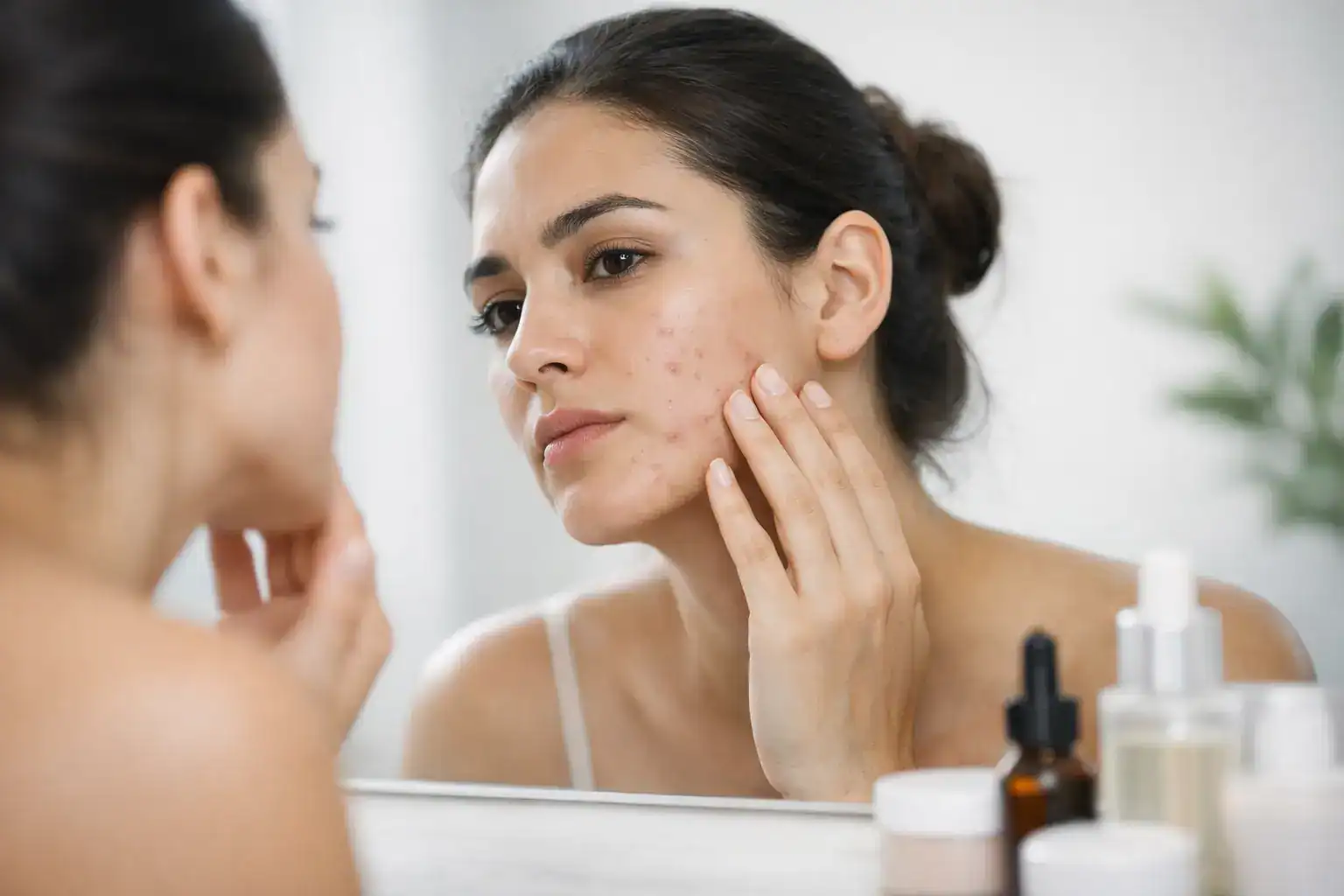
Acne scars can remain long after active breakouts have cleared, creating changes in skin texture, depth, tone, and overall appearance. The most effective dermatologist recommended acne scar treatment depends on the type of scar, its severity, the patient’s skin tone, whether active acne is still present, and the amount of downtime a person can accept.
There is no single acne scar treatment that works best for everyone. Dermatologists frequently create an individualized plan because ice pick scars, rolling scars, boxcar scars, raised scars, and post-acne discoloration respond differently to treatment. In many cases, the best improvement comes from combining treatments rather than relying on one procedure alone.
Before beginning treatment, we recommend distinguishing true acne scars from temporary marks left after acne. Dark or red marks can gradually fade, while structural scars that change the surface of the skin usually require treatments designed to remodel collagen, release scar tissue, resurface the skin, or restore lost volume.
How Dermatologists Choose the Best Acne Scar Treatment
A dermatologist begins by examining the type, depth, location, and number of scars. Skin tone is also important because certain procedures carry a greater risk of unwanted pigmentation changes in some patients.
Treatment planning may also consider current acne activity, previous acne medications, history of keloid formation, sensitivity to pigmentation, budget, recovery time, and expectations.
Active acne should generally be brought under control before extensive scar treatment begins. Continuing breakouts can create new scars while existing scars are being treated, making long-term improvement more difficult. The American Academy of Dermatology notes that acne scar treatment commonly begins after breakouts are controlled and measures are in place to prevent new acne.
A dermatologist may also ask about acne treatments used previously because some medications can affect when certain procedures can safely be performed.
Common Types of Acne Scars
Understanding the scar type is one of the most important steps in choosing treatment. Depressed acne scars develop when the skin does not produce enough collagen during healing. Raised scars develop when excessive scar tissue forms.
Ice pick scars are narrow, deep indentations that extend into the skin and often look like tiny punctures. Because they are deep, ordinary resurfacing alone may not provide sufficient improvement.
Boxcar scars are wider depressions with more defined edges. They may be shallow or deep and often respond to resurfacing, microneedling, surgical techniques, or combination therapy depending on their depth.
Rolling scars create broad, wave-like depressions. They frequently occur when fibrous tissue underneath the skin pulls the surface downward.
Hypertrophic scars are raised scars caused by excessive scar formation. Unlike depressed acne scars, they generally require therapies designed to flatten or soften excessive tissue.
Keloid scars extend beyond the boundaries of the original skin injury and can be particularly difficult to treat because they may recur.
A person can have several scar types at the same time. This is one reason combination treatment is frequently used in dermatology.
Dermatologist Recommended Treatments for Acne Scars
Once the scar pattern has been identified, treatment can be selected according to the structural problem being addressed.
Common dermatologist-guided acne scar treatments include:
- Microneedling: Creates controlled microscopic injuries that stimulate collagen and elastin production. It can improve depressed acne scars gradually and may be appropriate across different skin tones. Multiple sessions are often required.
- Radiofrequency microneedling: Combines microneedling with radiofrequency energy delivered into the skin. The treatment stimulates collagen remodeling and may provide additional improvement in acne scar texture.
- Laser resurfacing: Uses targeted energy to resurface or remodel scarred skin. Different laser technologies vary considerably in intensity, downtime, and suitability for different skin tones.
- Chemical peels: Apply carefully selected chemical solutions to encourage controlled exfoliation and skin renewal. Peel strength must be chosen appropriately because deeper peels can carry greater risks, including pigmentation changes.
- Dermal fillers: Add volume beneath selected depressed scars, making the surface appear smoother. Depending on the filler used, results may be temporary and maintenance treatments may be necessary.
- Subcision: Releases fibrous bands underneath tethered scars so depressed skin can rise toward the surrounding surface. It is particularly relevant for selected rolling or anchored scars.
- Scar surgery or punch techniques: May be considered for individual deep scars that are unlikely to respond adequately to general resurfacing procedures.
- Corticosteroid injections: May be used for certain raised hypertrophic or keloid scars rather than depressed acne scars.
Microneedling for Acne Scars
Microneedling is one of the most widely used procedures for depressed acne scars. During treatment, fine needles create controlled microchannels in the skin, triggering a healing response that encourages new collagen formation.
As collagen remodels, depressed scars can gradually become less noticeable. The improvement occurs over time rather than immediately because the skin needs time to produce and reorganize collagen.
The American Academy of Dermatology describes microneedling as suitable for all skin tones and notes that dermatologists sometimes combine it with radiofrequency, platelet-rich plasma, or other treatments.
Patients typically require multiple treatments rather than a single session. The exact number depends on scar depth, scar type, treatment intensity, and individual response.
Professional microneedling should also be distinguished from aggressive at-home needling. Acne scar procedures require carefully controlled needle depth, sterile technique, appropriate patient selection, and management of potential complications.
Radiofrequency Microneedling for Deeper Acne Scarring
Radiofrequency microneedling combines mechanical needling with controlled radiofrequency energy. The needles penetrate the skin while heat is delivered into targeted tissue, encouraging collagen remodeling below the surface.
This approach may be useful when we want to address acne scar depth while limiting extensive surface injury. The American Academy of Dermatology notes that both conventional radiofrequency and radiofrequency microneedling can be used across skin tones.
Treatment settings should nevertheless be individualized. Skin color, scar pattern, active acne, previous treatments, and tendency toward abnormal scarring should all be considered before treatment.
Laser Treatment for Acne Scars
Laser resurfacing remains an important treatment for selected acne scars. Laser devices can remove or remodel damaged skin while stimulating collagen production during healing.
Different lasers behave differently. Ablative treatments generally create greater controlled surface injury, while non-ablative approaches stimulate deeper remodeling with less surface disruption. Treatment intensity affects both the potential improvement and the recovery period.
Laser treatment requires careful patient selection, particularly in people prone to post-inflammatory hyperpigmentation or keloid formation. Mayo Clinic notes that laser resurfacing can have an increased risk of side effects in people with darker skin or a history of keloids.
This does not mean that people with darker skin cannot receive laser therapy. Rather, the device, wavelength, treatment settings, preparation, and aftercare must be selected carefully by a clinician experienced with the patient’s skin type.
Several sessions may be required, particularly with less aggressive non-ablative treatments. Dermatologists may also combine laser therapy with fillers, scar surgery, or other approaches when scars have several different structural characteristics.
Subcision for Rolling and Tethered Acne Scars
Rolling scars sometimes remain depressed because fibrous bands underneath the skin attach the scar to deeper tissue. Simply resurfacing the upper layers of the skin may not fully correct this tethering.
Subcision is designed to address the underlying attachment. A trained clinician inserts an appropriate instrument beneath the scar and releases the fibrous bands that are pulling the skin downward. Once released, the treated area can rise, and subsequent healing can contribute to additional collagen formation.
Subcision may be combined with microneedling, fillers, laser treatment, or selected peels depending on the scar pattern.
Temporary bruising, swelling, tenderness, pigmentation changes, infection, and other complications are possible, making proper technique and patient selection important.
Dermal Fillers for Depressed Acne Scars
Dermal fillers can improve certain depressed scars by restoring volume underneath them. When the depression is lifted closer to the surrounding skin level, shadows become less prominent and the skin can appear smoother.
Different filling materials have different durations. Some provide temporary improvement and require repeat treatments to maintain the result.
Fillers are not ideal for every type of scar. A deeply tethered rolling scar, for example, may need release with subcision before filler provides the desired improvement.
This demonstrates why determining the mechanical cause of an acne scar is often more useful than simply choosing the newest cosmetic procedure.
Chemical Peels for Acne Scarring
Chemical peels remove controlled layers of damaged skin and encourage renewal. Depending on the chemical used and its concentration, peels range from superficial to considerably deeper procedures.
Mild and medium peels may require a treatment series, while stronger procedures involve more extensive healing and greater potential for side effects.
Chemical peels may improve selected shallow scars, uneven texture, and discoloration. However, peel depth should be chosen conservatively and professionally, especially in patients with darker skin because inappropriate treatment can trigger prolonged post-inflammatory hyperpigmentation. Mayo Clinic specifically notes that pigmentation changes are a potential side effect of deeper peels, particularly in darker skin.
Sun protection and appropriate pre-treatment preparation can also play an important role in reducing complications.
Treatment for Ice Pick Acne Scars
Ice pick scars can be challenging because their deepest portion may extend beyond the level reached effectively by general resurfacing.
A dermatologist may therefore consider targeted techniques rather than treating the entire face uniformly. Selected scars may be addressed with punch procedures or other focal treatments before broader resurfacing is performed.
The final treatment strategy depends on scar depth, scar number, location, skin tone, and whether boxcar or rolling scars are also present.
When several scar types coexist, correcting deeper scars first and then improving overall texture may produce a more balanced result than attempting to treat every scar with the same procedure.
Treatment for Raised Acne Scars and Keloids
Raised acne scars require a fundamentally different treatment strategy from depressed scars.
Because hypertrophic scars and keloids involve excessive scar tissue, procedures intended primarily to stimulate additional collagen are not automatically the best first choice.
Dermatologists may use corticosteroid injections, selected laser treatments, prescription therapies, cryotherapy, or surgical approaches depending on the scar. Combination therapy is common because keloids may recur even after apparently successful treatment.
Anyone with a personal or family history of keloids should mention this during consultation before undergoing cosmetic procedures.
Acne Scar Treatment for Dark Skin
Treating acne scars in darker skin requires attention to both texture and pigmentation.
People with more melanin may experience post-inflammatory hyperpigmentation following skin inflammation or overly aggressive treatment. Because acne scar procedures intentionally create controlled injury, treatment strength and aftercare need to be selected carefully.
Microneedling and radiofrequency microneedling are among the procedures that the American Academy of Dermatology identifies as suitable across skin tones.
Laser treatment and chemical peels can also be considered in appropriate patients, but technique matters significantly. An experienced dermatologist can select treatments that balance meaningful scar improvement against the risk of pigmentation changes.
Sun protection is especially valuable during acne scar treatment because ultraviolet exposure can make discoloration more noticeable and interfere with recovery.
Can Retinoids and Skincare Remove Acne Scars?
Topical skincare can support acne scar management, but expectations should match the type of scarring present.
The American Academy of Dermatology notes that topical retinoids or salicylic acid may make mild acne scarring less noticeable. Mayo Clinic also identifies sun protection and selected topical ingredients, including azelaic acid or hydroxyl acids, as possible components of home care.
However, skincare products generally cannot physically release tethered rolling scars or fully restore volume to deep structural depressions.
Their most important roles may include controlling acne, improving superficial texture, addressing post-acne discoloration, supporting treatment results, and preventing additional damage.
Why Combination Acne Scar Treatment Often Works Better
Acne scarring rarely consists of one perfectly uniform problem.
One person may have tethered rolling scars on the cheeks, several deep ice pick scars, shallow boxcar scars, and post-inflammatory hyperpigmentation at the same time. A single procedure is unlikely to address each feature equally well.
For this reason, dermatologists frequently combine procedures. The American Academy of Dermatology specifically describes treatment plans involving more than one technique, such as scar surgery followed by filler or procedures combined with other collagen-remodeling treatments.
A combination plan may therefore involve releasing tethered scars, treating deep focal scars separately, stimulating collagen across broader areas, and later addressing residual discoloration or surface irregularities.
The objective is not simply to perform more procedures. It is to match each procedure to the specific scar characteristic it is designed to improve.
How Long Does Acne Scar Treatment Take to Work?
Acne scar improvement is usually gradual.
Procedures that stimulate collagen rely on the body’s wound-healing process. New collagen formation and tissue remodeling continue after the visible redness or swelling from treatment has disappeared.
With microneedling, improvement can begin within weeks while fuller results can take several months as collagen develops. Multiple sessions may be required.
Laser resurfacing, radiofrequency treatments, peels, and combination therapies may also require a series of sessions depending on treatment intensity and scar severity.
Rather than expecting completely scar-free skin after one appointment, we recommend evaluating improvement in texture, depth, shadowing, scar visibility, and overall skin uniformity over the course of treatment.
Can Acne Scars Be Completely Removed?
Complete removal is not always realistic. The more practical objective of treatment is generally to make scars less visible, shallower, smoother, or better blended with the surrounding skin.
Some superficial scars may improve substantially. Deep structural scars may remain visible even after significant treatment, although their appearance can often be reduced.
Individual healing response also differs. Two people with similar scars may respond differently to the same procedure because collagen production, skin tone, scar age, depth, and treatment history vary.
Clear expectations before treatment are therefore important.
How to Choose a Dermatologist for Acne Scar Treatment
Acne scar treatment can involve medical, surgical, and cosmetic dermatology techniques. Experience with the patient’s scar type and skin tone is particularly important.
During consultation, we recommend discussing the exact scar diagnosis, treatment alternatives, expected number of sessions, downtime, possible side effects, risk of pigmentation changes, maintenance requirements, expected level of improvement, and whether combination treatment would provide a better result.
Patients with darker skin may also want to ask specifically about the dermatologist’s experience performing the proposed procedure on similar skin tones.
Before-and-after photographs of patients with comparable scar patterns may help establish realistic expectations, although another person’s results cannot guarantee an identical outcome.
How to Prevent New Acne Scars During Treatment
Treating old acne scars while allowing uncontrolled acne to create new ones can undermine progress.
Effective prevention begins with controlling active breakouts. Deep nodules and cysts carry a higher risk of scarring, and picking or scratching acne can further damage the skin.
A dermatologist may therefore treat acne before beginning extensive scar correction.
Gentle skincare is also important. Excessive scrubbing, squeezing lesions, repeatedly changing harsh products, or attempting aggressive home procedures can increase irritation rather than accelerate healing.
Consistent sun protection can reduce the contrast between scarred and surrounding skin and may help limit worsening discoloration.
What to Expect After Professional Acne Scar Treatment
Recovery depends heavily on the procedure.
Some treatments cause temporary redness and swelling with relatively little downtime, while deeper resurfacing procedures can require considerably more healing.
Patients should follow individualized aftercare instructions closely. After laser procedures, for example, the American Academy of Dermatology emphasizes appropriate home care because it can support results and reduce potential complications.
Sun protection is frequently important during recovery. Patients may also receive instructions regarding cleansers, moisturizers, active skincare ingredients, makeup, exercise, medications, and signs of complications that require medical attention.
Trying to accelerate recovery with unapproved acids, scrubs, retinoids, bleaching products, or other irritating ingredients can interfere with healing.
When to See a Dermatologist About Acne Scars
A professional consultation becomes particularly valuable when acne scars are deep, widespread, raised, continuing to develop, associated with persistent pigmentation, or not improving with basic skincare.
Consultation is also important for patients with darker skin who are concerned about post-inflammatory hyperpigmentation, people with a history of keloids, and anyone considering procedures such as laser resurfacing, deep chemical peels, subcision, fillers, or scar surgery.
The consultation should identify exactly what type of scar is present before treatment begins. Treating an ice pick scar as though it were a rolling scar—or a keloid as though it were an atrophic scar—can lead to disappointing results.
Building an Effective Dermatologist Recommended Acne Scar Treatment Plan
The strongest acne scar treatment plan is usually scar-specific rather than procedure-specific.
We first want active acne controlled so that additional scars are not continuously forming. We then identify whether existing scars are depressed, tethered, sharply defined, deep, raised, discolored, or a combination of these features.
From there, treatment can be matched to the underlying problem. Microneedling or radiofrequency microneedling may encourage collagen remodeling. Subcision can release tethered scars. Fillers can restore selected areas of lost volume. Laser resurfacing and chemical peels can improve appropriate forms of texture irregularity. Surgical techniques can address certain deep individual scars, while raised scars require their own treatment strategy.
This personalized approach reflects how dermatologists manage acne scarring in practice: different scars often require different solutions, and combination treatment may provide better overall correction than trying to force every scar into a single treatment method.
FAQs about Dermatologist Recommended Acne Scar Treatment
1. What acne scar treatments do dermatologists commonly recommend?
Dermatologists may recommend chemical peels, microneedling, laser treatments, dermal fillers, subcision, or prescription skincare, depending on the type and severity of acne scars.
2. What is the best treatment for deep acne scars?
Deep ice-pick, boxcar, and rolling scars often require professional procedures. Treatments such as subcision, laser resurfacing, microneedling, or TCA CROSS may be considered after a dermatologist evaluates the skin.
3. Can topical products completely remove acne scars?
Topical products may improve discoloration, texture, and mild scarring, but they generally cannot completely remove deep, indented scars. Ingredients such as retinoids, azelaic acid, and vitamin C may help improve overall skin appearance.
4. How long does acne scar treatment take to work?
Results vary by treatment and scar type. Some people notice gradual improvement after several weeks, while procedures such as microneedling or laser therapy may require multiple sessions over several months.
5. Is dermatologist recommended acne scar treatment safe for dark skin?
Yes, but treatment should be carefully selected. Darker skin tones may have a higher risk of post-inflammatory hyperpigmentation, so dermatologists may adjust laser settings, peel strengths, or treatment methods accordingly.
6. Should active acne be treated before acne scars?
In many cases, yes. Controlling active breakouts can help prevent additional scarring before focusing on scar-reduction treatments.
7. When should we see a dermatologist for acne scars?
We should consider professional evaluation when scars are deep, persistent, worsening, or affecting confidence, or when over-the-counter skincare has not produced satisfactory improvement.
Conclusion
The best plan considers scar type, scar depth, skin tone, active acne, pigmentation risk, keloid history, recovery time, previous treatments, and personal treatment goals. For patients with several types of scarring, a carefully planned combination of procedures may provide the most comprehensive improvement.
Professional assessment is particularly valuable for moderate or severe acne scarring because structural scars often require more than topical skincare. By controlling ongoing acne, choosing treatments suited to each scar type, protecting the skin during recovery, and allowing adequate time for collagen remodeling, we can approach acne scar treatment with realistic expectations and a clear long-term strategy for smoother, more even-looking skin.