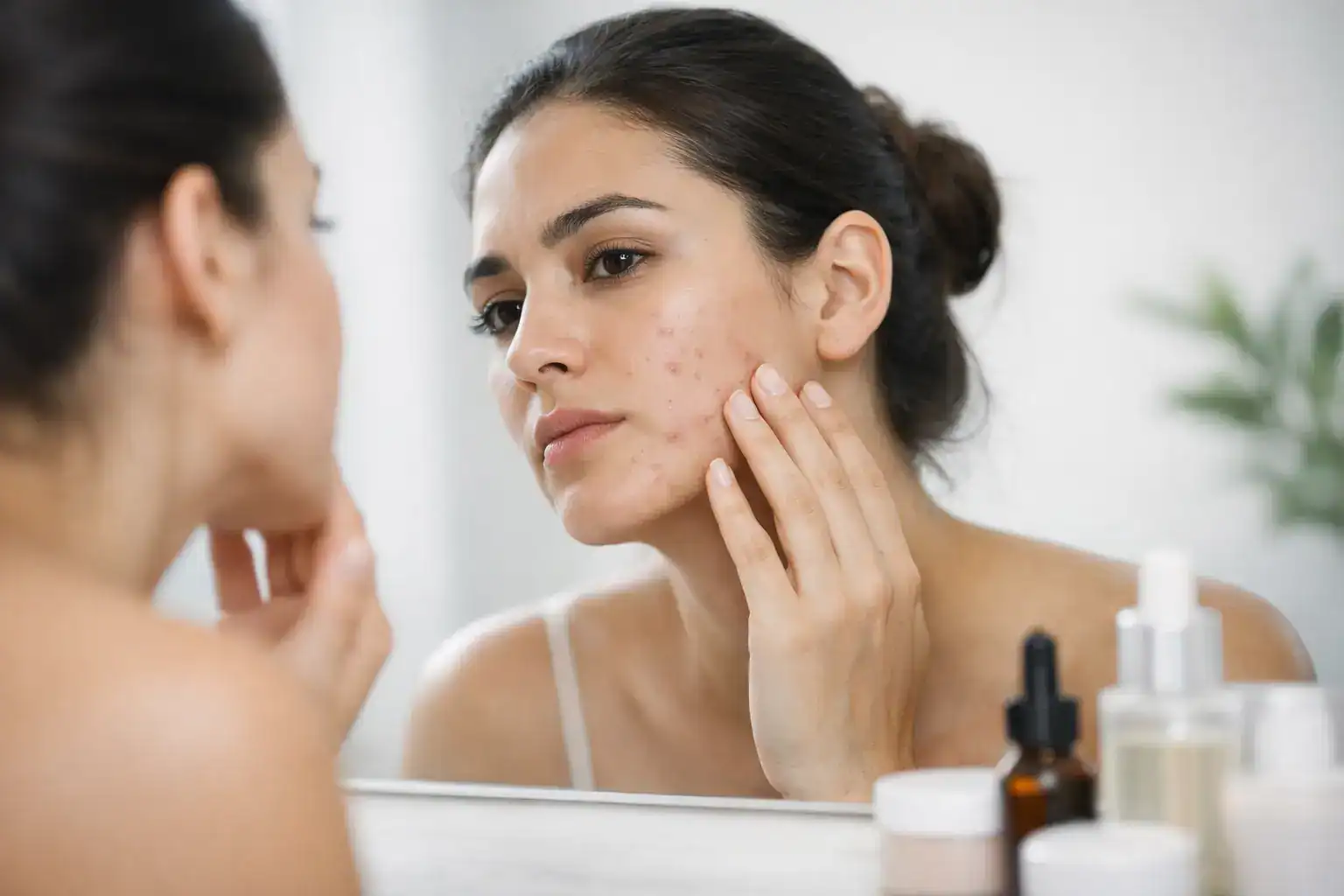
Finding the best acne scar treatment begins with understanding that acne scars are not all the same. Some scars create small, deep pits in the skin, while others appear as wider depressions, uneven texture, or raised tissue. Because each type responds differently, the most effective treatment is usually one that is selected according to the scar type, skin tone, scar depth, active acne, and individual healing response.
We recommend approaching acne scar treatment with realistic expectations. Professional treatments can significantly improve texture and make scars less noticeable, but complete removal is not always possible. Depressed acne scars, in particular, rarely disappear completely on their own.
What Is the Best Acne Scar Treatment?
The best treatment for acne scars depends primarily on whether the scars are depressed, raised, or associated mainly with discoloration. Many people have more than one type of scar, which is why dermatologists may combine multiple procedures rather than relying on a single treatment.
Common acne scar treatments include microneedling, laser resurfacing, chemical peels, dermal fillers, subcision or acne scar surgery, dermabrasion, topical retinoids, salicylic acid, and treatments for raised scars. According to the American Academy of Dermatology, combination treatment may provide better results for some depressed scars because different procedures can address different aspects of the scarring.
Identify the Acne Scar Type Before Choosing Treatment
Selecting treatment becomes easier once we understand the major types of acne scars.
Ice pick scars are narrow, deep indentations that look as though the skin has been punctured with a sharp object. Because they extend deeper into the skin, superficial skincare products alone generally cannot correct them.
Boxcar scars are wider depressions with relatively defined edges. They may be shallow or deep and can create a visibly uneven skin surface.
Rolling scars create broad depressions and a wave-like appearance. Some occur when scar tissue underneath the skin pulls the surface downward.
Hypertrophic scars and keloids are raised rather than depressed. These develop when excessive tissue forms during healing and therefore require a different treatment approach from sunken scars.
Dermatologists distinguish acne scars by type because the classification helps determine which treatment is most appropriate.
Best Professional Treatments for Acne Scars
Professional procedures can target structural damage that skincare products cannot adequately reach. Depending on the severity of the scars, we may need several treatment sessions or a combination approach.
Microneedling for Depressed Acne Scars
Microneedling is one of the most widely used treatments for depressed acne scars. During the procedure, controlled microscopic punctures are created in the skin. This stimulates the body’s healing response and encourages production of collagen and elastin, which can gradually improve scar texture.
Microneedling can also be combined with treatments such as radiofrequency or other dermatologist-selected procedures. The American Academy of Dermatology notes that microneedling and radiofrequency microneedling can be used across skin tones.
Results develop gradually rather than immediately because collagen remodeling takes time.
Laser Treatment for Acne Scars
Laser acne scar treatment can improve uneven texture by resurfacing damaged skin and stimulating collagen production.
Different laser technologies work at different depths and intensities. Some require more downtime, while others involve a series of less aggressive sessions.
Laser treatment should be carefully selected according to skin tone, scar type, medical history, and pigmentation risk. Professional evaluation is particularly important because inappropriate laser settings may increase the chance of unwanted skin-color changes.
Chemical Peels for Acne Scarring
A chemical peel uses a controlled chemical solution to remove or remodel layers of damaged skin. Depending on its strength and formulation, a peel may help improve:
- Mild depressed acne scars
- Uneven skin texture
- Post-acne discoloration
- Dull or rough skin
- Superficial irregularities
Chemical peels are available at different strengths, and mild or medium treatments may require multiple sessions. Dermatologists may also recommend preparation before a peel and careful sun protection afterward to reduce complications such as discoloration.
At-home acids should not be considered equivalent to professionally administered medium or deep chemical peels.
Subcision and Acne Scar Surgery for Deep Scars
Some depressed scars are physically tethered to deeper tissue. In these situations, resurfacing the top layer of skin may not fully address the underlying problem.
Subcision or other forms of acne scar surgery may be considered when scar tissue pulls the skin downward. A dermatologist can release the scar from underlying tissue so that the skin can rise.
Professional acne scar surgery may also involve removing certain scars or lifting depressed areas. Additional treatments such as laser resurfacing may then be used to improve the surrounding texture.
This is one reason why an individualized treatment plan can be more effective than repeatedly trying one procedure on every scar.
Dermal Fillers for Sunken Acne Scars
Dermal fillers can add volume beneath selected depressed scars, making the skin surface appear smoother.
Fillers are particularly useful when volume loss contributes to visible indentation. Depending on the product used, results may be temporary and require future maintenance.
Dermatologists may also combine fillers with procedures that release tethered scars or encourage collagen production. The American Academy of Dermatology notes that filler longevity varies considerably depending on the product.
Dermabrasion for Acne Scars
Dermabrasion is a professional resurfacing procedure that deeply exfoliates the skin. As the treated skin heals, collagen and elastin production can help improve texture and make scars less noticeable.
It is more intensive than ordinary exfoliation and should be performed by an appropriately qualified medical professional.
Topical Treatments for Mild Acne Scarring
Not every person with acne marks requires an invasive procedure. For relatively mild scarring and uneven texture, dermatologists may recommend certain topical treatments.
Ingredients Commonly Used in an Acne Scar Skincare Routine
Useful options may include:
- Topical retinoids to encourage skin-cell turnover and improve mild textural irregularities
- Salicylic acid to exfoliate pores and improve certain mild acne-related changes
- Broad-spectrum sunscreen to protect healing skin and reduce worsening discoloration
- Gentle moisturizers to support the skin barrier
- Dermatologist-selected products for persistent post-acne pigmentation
The American Academy of Dermatology notes that retinoids or salicylic acid may make mild acne scarring less noticeable.
Topical products are less likely to produce dramatic structural improvement in deep ice pick, boxcar, or rolling scars, because these scars involve changes deeper within the skin.
Acne Scars vs Dark Spots: Know the Difference
Many people searching for the best acne scar removal treatment are actually dealing with post-acne discoloration rather than permanent structural scarring.
A true acne scar changes the texture or contour of the skin. It may be sunken, pitted, raised, or irregular.
A flat dark, red, brown, or purple mark left after acne may represent post-inflammatory pigmentation or redness rather than an actual scar.
This distinction matters because treatments for pigmentation are different from treatments designed to rebuild depressed tissue.
Trying aggressive scar procedures when the primary concern is discoloration may expose the skin to unnecessary irritation. A dermatologist can determine whether the concern involves true scarring, pigmentation, or a combination of both.
Best Acne Scar Treatment for Dark Skin
Acne scars can affect every skin tone, but treatment planning for darker skin requires particular attention to pigmentation.
We generally want procedures that improve scars while minimizing unnecessary inflammation because irritation can contribute to post-inflammatory hyperpigmentation.
Microneedling is one option dermatologists can use across different skin tones.
When considering laser resurfacing or chemical peels, treatment intensity should be chosen carefully by a clinician experienced in treating the patient’s skin type.
Daily broad-spectrum sunscreen with SPF 30 or higher is also important because ultraviolet exposure can make discoloration more noticeable.
Combination Treatments May Produce Better Acne Scar Results
For many patients, there is no single universal procedure that qualifies as the best acne scar treatment.
One person may have ice pick scars alongside rolling scars and dark spots. A single technique is unlikely to address all three concerns equally well.
A customized treatment plan might therefore involve:
- Subcision for tethered rolling scars
- Microneedling for overall texture improvement
- Laser resurfacing for selected scars
- Chemical peels for superficial texture and discoloration
- Dermal fillers for appropriate depressed scars
- Treatment directed specifically at raised scars when present
- Topical skincare and sunscreen between professional sessions
Combination treatment allows each procedure to target the problem it is best suited to address. The American Academy of Dermatology similarly notes that dermatologists may use more than one treatment to improve depressed acne scars.
What to Consider Before Starting Acne Scar Treatment
Before undergoing a procedure, we should evaluate more than the appearance of the scars.
Important Factors That Influence Treatment Choice
Consider:
- Whether active acne is still present
New breakouts can create additional scars, so controlling ongoing acne may be an important part of the overall treatment strategy. - The type of acne scar
Ice pick, rolling, boxcar and raised scars often require different techniques. - Scar depth and severity
Superficial irregularities may respond differently from deeply tethered scars. - Skin tone
Certain procedures require additional precautions in people who are prone to pigmentation changes. - Expected downtime
Some treatments cause temporary redness, swelling, peeling or sensitivity. - Number of treatment sessions
Acne scar improvement often develops over a series of procedures rather than one appointment. - Realistic expectations
Treatment usually aims to make scars significantly less noticeable rather than guarantee completely flawless skin.
Why Active Acne Should Be Controlled First
Treating scars while severe acne continues to develop can become an ongoing cycle.
Deep inflammatory acne, including nodules and cysts, is more likely to leave scars. Picking, scratching or squeezing breakouts can also increase inflammation and the chance of scarring.
For this reason, we should consider acne prevention and acne scar correction as connected goals.
A dermatologist may first establish an acne-management plan and then begin scar-focused procedures once breakouts are adequately controlled.
Acne Scar Treatment Aftercare
Good aftercare is an essential part of professional acne scar treatment.
Immediately following treatments such as microneedling, resurfacing procedures or chemical peels, the skin may temporarily become more sensitive. Dermatologists therefore provide individualized instructions to support healing.
How to Protect the Skin After Acne Scar Treatment
We should generally prioritize:
- Following the dermatologist’s aftercare instructions
- Using a gentle cleanser
- Keeping the skin adequately moisturized
- Avoiding unnecessary picking or scratching
- Temporarily avoiding irritating skincare ingredients when instructed
- Wearing broad-spectrum sunscreen
- Avoiding excessive unprotected sun exposure
- Waiting until the skin has healed before introducing strong exfoliating products unless directed otherwise
Proper aftercare can reduce irritation and help protect the results achieved during treatment.
When to See a Dermatologist for Acne Scars
Professional evaluation is especially helpful when scars are:
- Deep or widespread
- Becoming more noticeable
- Raised, painful or itchy
- Associated with persistent active acne
- Accompanied by significant pigmentation
- Not improving with appropriate skincare
- Affecting several areas of the face or body
A dermatologist can examine the skin, identify the exact scar types and determine which combination of treatments is medically appropriate.
This assessment is particularly valuable before procedures such as laser resurfacing, medium or deep chemical peels, dermabrasion, fillers, or acne scar surgery.
How to Get the Best Results From Acne Scar Treatment
Successful acne scar treatment usually requires consistency rather than aggressive treatment all at once.
We achieve better long-term management when we first control active breakouts, accurately identify the scars and choose procedures that address their underlying structure.
Skin also needs sufficient time to heal and remodel between treatments. More intensive treatment does not automatically mean better treatment.
Building an Effective Acne Scar Treatment Plan
A strong approach typically includes:
- Accurate scar assessment
- Control of active acne
- Treatment matched to individual scar types
- A combination of procedures when appropriate
- Consistent sun protection
- Gentle skincare between treatment sessions
- Appropriate recovery time
- Regular professional review of progress
Photographs taken under consistent lighting can also help monitor gradual improvements that may otherwise be difficult to notice from day to day.
FAQs about Best Acne Scar Treatment
1. What is the best acne scar treatment?
The best acne scar treatment depends on the type, depth, and severity of the scars. Common professional options include microneedling, laser resurfacing, chemical peels, subcision, dermal fillers, and TCA CROSS.
2. Can acne scars be completely removed?
Acne scars may not always disappear completely, but the right treatment can significantly improve skin texture, scar depth, and overall appearance.
3. Which treatment is best for deep acne scars?
Deep or indented scars may respond well to treatments such as subcision, fractional laser therapy, microneedling, fillers, or combination therapy.
4. Does microneedling help acne scars?
Yes. Microneedling stimulates collagen production and can improve certain types of depressed acne scars over a series of treatments.
5. Are chemical peels effective for acne scars?
Chemical peels may help improve mild scarring, uneven skin tone, and post-acne discoloration. Their effectiveness depends on the peel strength and scar type.
6. How long does acne scar treatment take to work?
Results vary. Some treatments show gradual improvement over several weeks or months because collagen remodeling takes time.
7. Can dark acne marks be treated?
Yes. Post-acne dark marks can often be improved with sun protection, topical treatments, chemical peels, and other dermatologist-recommended therapies.
8. How do I choose the best acne scar treatment?
A dermatologist can assess your scar type, skin tone, medical history, and treatment goals to recommend an appropriate plan.
9. Can acne scars be treated at home?
Certain skincare products may improve discoloration and mild texture concerns, but deep or persistent acne scars usually require professional treatment.
Conclusion
For mild scarring, topical retinoids, salicylic acid and a carefully designed skincare routine may help improve appearance. For deeper structural scars, professional options such as microneedling, laser resurfacing, chemical peels, dermal fillers, dermabrasion and acne scar surgery or subcision may provide greater improvement.
Because mixed scar patterns are common, we often achieve the most comprehensive results through a personalized combination treatment plan rather than relying on one method alone. By controlling active acne, protecting the skin from excessive sun exposure, choosing treatment according to scar type and following proper aftercare, we can work toward smoother texture, more even-looking skin and scars that are considerably less noticeable.