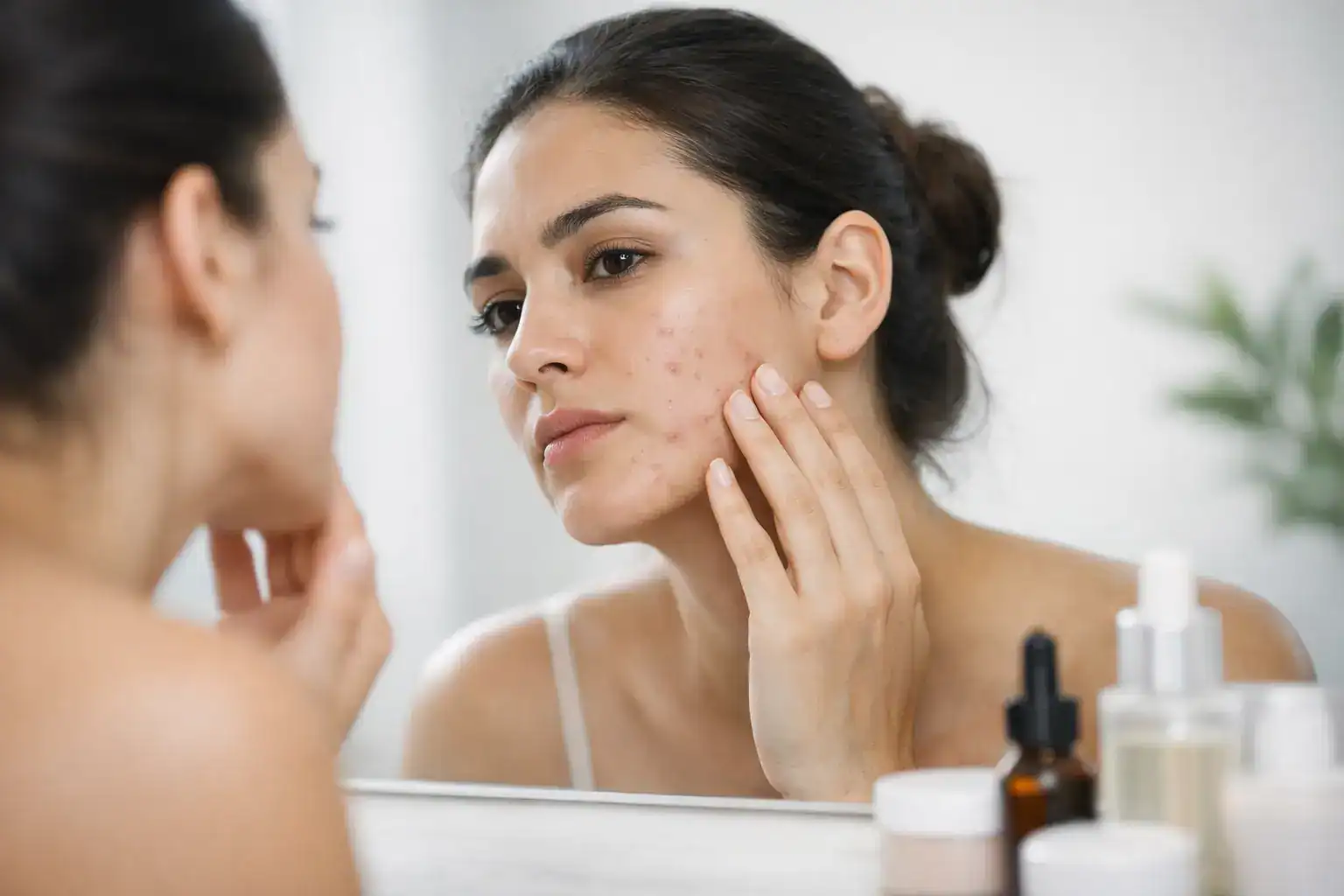
Recurring acne can be frustrating because breakouts may improve temporarily only to return days or weeks later. When acne repeatedly affects the face, chest, back, shoulders, or jawline, a carefully structured treatment plan is usually more effective than constantly switching between skincare products.
With dermatologist recommended acne treatment for recurring breakouts, we focus on controlling existing pimples while also addressing clogged pores, excess oil, inflammation, bacteria, hormonal influences, skin irritation, and other factors that may contribute to repeated flare-ups.
The most effective acne treatment depends on the type of acne present, its severity, the areas affected, previous treatments, skin sensitivity, and whether dark marks or acne scars are developing.
Why Recurring Acne Breakouts Keep Coming Back
Acne develops when hair follicles become clogged with oil, dead skin cells, and other debris. Inflammation and the activity of Cutibacterium acnes, a bacterium naturally found on the skin, can contribute to red, swollen acne lesions.
Recurring acne may happen when the underlying causes remain active even after individual pimples disappear.
Common contributing factors include:
- Excess sebum production
- Clogged pores
- Hormonal fluctuations
- Inflammatory acne
- Inconsistent skincare routines
- Using pore-clogging cosmetic or hair products
- Frequently touching or picking the skin
- Stopping acne treatment too early
- Using overly harsh products that irritate the skin
- Certain medications
- Stress-related changes that may worsen existing acne
For some people, acne may also be concentrated around the chin and jawline, particularly when hormonal influences are involved.
A dermatologist can determine whether recurring breakouts are primarily comedonal, inflammatory, nodular, hormonal, or a combination of several acne types.
Dermatologist Recommended Ingredients for Recurring Acne
Dermatologists often combine several acne treatments because different ingredients target different causes of acne.
Benzoyl Peroxide
Benzoyl peroxide is widely used for inflammatory acne. It reduces acne-associated bacteria and can help decrease red pimples and pustules.
It is available in cleansers, gels, creams, and leave-on treatments.
Lower concentrations may be enough for many people while causing less irritation than stronger products. Dryness, peeling, redness, and bleaching of towels or clothing are possible.
Benzoyl peroxide may also be combined with topical antibiotics to help reduce the risk of antibiotic resistance.
Salicylic Acid
Salicylic acid is a beta hydroxy acid that penetrates oily pores and helps remove dead skin cells.
It can be particularly helpful for:
- Blackheads
- Whiteheads
- Mild clogged pores
- Oily skin
- Recurrent comedonal acne
Regular use may help prevent pores from becoming blocked again.
Because excessive exfoliation may cause irritation, salicylic acid should generally be incorporated carefully rather than combined indiscriminately with several strong exfoliating products.
Topical Retinoids
Topical retinoids are among the most commonly recommended treatments for persistent and recurring acne.
Examples include adapalene, tretinoin, and tazarotene.
Retinoids help normalize skin-cell turnover and prevent pores from becoming clogged. They are particularly valuable for long-term acne control because they help prevent new comedones before they become visible pimples.
Retinoids may initially cause:
- Dryness
- Peeling
- Mild burning
- Redness
- Increased sensitivity
Dermatologists often recommend beginning gradually and using moisturizer to improve tolerance.
Retinoids also increase the importance of daily sun protection.
Pregnancy requires special consideration because topical and oral retinoids are generally avoided during pregnancy. Anyone who is pregnant, planning pregnancy, or breastfeeding should discuss acne treatment with an appropriate healthcare professional.
Azelaic Acid
Azelaic acid can be useful for both acne and the dark marks that frequently remain after breakouts.
It has antibacterial, anti-inflammatory, and pore-clearing properties and may be helpful for people who experience post-inflammatory hyperpigmentation after acne lesions heal.
It is often considered when skin sensitivity, pigmentation concerns, or intolerance to stronger acne treatments is present.
Prescription Acne Treatment for Persistent Breakouts
When over-the-counter products do not adequately control recurring acne, dermatologists may recommend prescription treatment.
Prescription Topical Medications
Prescription topical therapy may include:
- Retinoids
- Benzoyl peroxide combinations
- Antibiotic combinations
- Azelaic acid
- Other acne medications selected according to skin type and acne severity
Combination treatment often works better than relying on one ingredient because acne usually develops through several overlapping mechanisms.
Oral Antibiotics
For moderate or severe inflammatory acne, a dermatologist may prescribe an oral antibiotic for a limited period.
These medications reduce inflammation and bacterial activity.
They are generally used alongside topical treatments such as benzoyl peroxide or retinoids rather than as long-term standalone therapy.
Appropriate antibiotic use is important because unnecessary or prolonged use contributes to antibiotic resistance.
Hormonal Acne Treatment
Some recurring breakouts are strongly influenced by hormones.
Hormonal treatment may be considered for appropriate female patients, particularly when acne:
- Concentrates around the chin and jawline
- Flares around menstrual periods
- Persists despite topical treatment
- Begins or worsens during adulthood
Depending on individual circumstances, healthcare professionals may consider treatments such as certain combined oral contraceptives or spironolactone.
These medications are not appropriate for everyone, so medical history, pregnancy considerations, blood pressure, other medications, and individual risk factors must be reviewed before treatment.
Isotretinoin for Severe or Treatment-Resistant Acne
Oral isotretinoin may be recommended for severe acne, nodular acne, acne that is causing permanent scarring, or persistent acne that has not responded adequately to other therapies.
Isotretinoin reduces oil production and targets several major processes involved in acne development.
However, it requires close medical supervision because it may cause significant side effects and is associated with severe birth-defect risks if pregnancy occurs during treatment.
Patients receiving isotretinoin require appropriate medical monitoring and strict pregnancy-prevention measures where applicable.
It should never be taken without professional supervision.
A Dermatologist Recommended Skincare Routine for Recurring Breakouts
A successful acne routine does not have to contain numerous products. In many cases, consistency with a simple routine is more effective than frequently introducing new active ingredients.
Morning Acne Routine
A practical morning routine may include:
- A gentle cleanser
- A dermatologist-recommended acne treatment such as benzoyl peroxide or another prescribed medication
- A non-comedogenic moisturizer
- Broad-spectrum SPF 30 or higher sunscreen
Sunscreen is particularly important when using retinoids or exfoliating ingredients and when acne leaves dark marks.
Evening Acne Routine
An evening routine may include:
- Gentle cleansing
- A topical retinoid or other prescribed acne medication
- A lightweight moisturizer
People with sensitive skin may need to introduce active treatments gradually.
Using several exfoliating acids, scrubs, alcohol-based toners, retinoids, and benzoyl peroxide simultaneously can irritate the skin barrier and make treatment harder to tolerate.
How to Prevent Recurring Acne Breakouts
Effective acne prevention involves more than treating visible pimples.
Continue Treatment After Acne Improves
A major reason acne returns is that treatment is stopped as soon as the skin clears.
Many acne medications function as maintenance treatments. They prevent new clogged pores and inflammatory lesions from developing.
A dermatologist may therefore recommend continuing selected topical treatments even when breakouts become less frequent.
Choose Non-Comedogenic Products
Skincare, sunscreen, makeup, and hair products labeled non-comedogenic or formulated for acne-prone skin are less likely to clog pores.
Heavy oils or certain styling products can sometimes contribute to breakouts near the hairline, forehead, temples, neck, or back.
Avoid Aggressive Scrubbing
Acne is not caused by dirty skin.
Scrubbing aggressively does not remove acne faster and may increase redness and irritation.
Gentle cleansing is generally preferable.
Avoid Picking Acne Lesions
Picking or squeezing pimples can increase inflammation and raise the risk of:
- Dark marks
- Prolonged redness
- Infection
- Permanent acne scars
Deeper nodules and cysts are especially likely to scar when manipulated.
Treating Dark Spots After Recurring Acne
Repeated breakouts may leave post-inflammatory hyperpigmentation, particularly in people with medium to deep skin tones.
These marks are not the same as permanent acne scars.
Ingredients that may help improve acne-related discoloration include:
- Azelaic acid
- Retinoids
- Selected exfoliating acids
- Niacinamide
- Professional dermatological treatments
Daily sunscreen is also important because ultraviolet exposure can make existing pigmentation appear darker and prolong discoloration.
We generally prioritize controlling active acne first because new breakouts can continually create new marks.
Professional Procedures for Recurring Acne
Some people benefit from in-office dermatological procedures alongside their home treatment routine.
Depending on the condition of the skin, options may include:
Chemical Peels
Superficial chemical peels may help improve clogged pores, active acne, uneven skin tone, and post-acne pigmentation.
The appropriate peeling agent and strength should be selected according to skin type and pigmentation risk.
Comedone Extraction
A dermatologist may professionally remove selected blackheads and whiteheads.
Attempting aggressive extractions at home can damage the skin and increase inflammation.
Corticosteroid Injections
For large, painful inflammatory acne cysts, dermatologists may sometimes inject a small amount of corticosteroid directly into the lesion to rapidly reduce inflammation.
This is primarily used for selected severe lesions rather than routine acne prevention.
How Long Does Dermatologist Acne Treatment Take to Work?
Acne treatment requires patience.
Many topical acne treatments need several weeks of consistent use before noticeable improvement occurs. More substantial improvement may take several months.
During the early stages of treatment, mild dryness, irritation, or temporary worsening may occur with certain medications, particularly retinoids.
Constantly changing products before they have had enough time to work can make it difficult to determine which treatment is effective.
Following a consistent dermatologist-guided plan is generally more productive than repeatedly switching products.
When Should We See a Dermatologist for Recurring Acne?
Professional evaluation becomes particularly important when acne is:
- Painful
- Cystic or nodular
- Frequently recurring
- Causing permanent scars
- Leaving significant dark pigmentation
- Affecting the chest or back extensively
- Not improving with appropriate over-the-counter treatment
- Suddenly becoming severe
- Causing substantial emotional distress
Early treatment of severe inflammatory acne can help reduce the risk of permanent scarring.
A dermatologist can also identify whether a condition that resembles acne—such as folliculitis, rosacea, perioral dermatitis, or another skin disorder—may actually be responsible for persistent bumps.
Choosing the Best Dermatologist Recommended Acne Treatment for Recurring Breakouts
There is no single acne product that works equally well for every person.
The most effective plan usually combines treatments based on the dominant acne pattern.
For example, someone with blackheads and whiteheads may benefit from a topical retinoid and salicylic acid, while inflammatory acne may require benzoyl peroxide, prescription topical medication, or oral therapy.
Hormonal acne may require an entirely different strategy.
The goal is not simply to dry out visible pimples. We aim to establish a routine that:
- Clears existing lesions
- Prevents new clogged pores
- Reduces inflammation
- Protects the skin barrier
- Minimizes pigmentation
- Reduces acne scarring
- Remains practical enough for long-term use
Common Mistakes That Can Make Recurring Acne Worse
Even effective medications may fail when the overall skincare routine repeatedly irritates or congests the skin.
Common mistakes include using too many active ingredients at once, changing products every few days, skipping moisturizer because the skin is oily, applying harsh scrubs, squeezing pimples, sleeping in makeup, and expecting overnight improvement.
Another common mistake is applying treatment only to visible pimples.
Many preventive acne medications work best when applied as directed across the entire acne-prone area because microscopic clogged pores may already be developing before visible acne appears.
Building a Long-Term Acne Maintenance Plan
Recurring acne frequently requires continued maintenance even after the skin improves.
Once acne is controlled, a dermatologist may simplify the routine while maintaining one or more preventive treatments.
For many patients, topical retinoids are valuable maintenance medications because they continually reduce the formation of clogged pores.
Other treatments may be continued depending on acne type, pigmentation concerns, skin sensitivity, and hormonal factors.
A sustainable routine should remain gentle enough for consistent use.
Healthy skin does not need to feel excessively dry, tight, burning, or peeling for acne treatment to be effective.
FAQs about Dermatologist Recommended Acne Treatment for Recurring Breakouts
1. What do dermatologists recommend for recurring acne breakouts?
Dermatologists commonly recommend a combination of benzoyl peroxide, topical retinoids, salicylic acid, or azelaic acid, depending on acne type, skin sensitivity, and severity. Prescription treatments may be considered when over-the-counter products are not enough.
2. Why does my acne keep coming back?
Recurring breakouts may be linked to hormonal changes, excess oil production, clogged pores, bacteria, certain skincare products, stress, or inconsistent treatment. A dermatologist can help identify likely triggers.
3. How long does dermatologist-recommended acne treatment take to work?
Many acne treatments require several weeks of consistent use before noticeable improvement occurs. More significant results may take a few months, depending on the treatment and severity of the acne.
4. What is the best treatment for hormonal recurring acne?
Treatment may include topical retinoids, benzoyl peroxide, azelaic acid, or prescription hormonal therapies when medically appropriate. The best approach depends on the individual’s health history and acne pattern.
5. Should I use a retinoid for recurring breakouts?
Topical retinoids are frequently used to help prevent clogged pores and reduce future breakouts. However, they can cause dryness or irritation and are not appropriate in every situation, including certain pregnancy circumstances.
6. When should I see a dermatologist for recurring acne?
Consider professional evaluation when acne is persistent, painful, cystic, causing scars or dark marks, or not improving with appropriate over-the-counter treatment.
7. Can recurring acne be permanently cured?
Acne often requires ongoing management rather than a one-time cure. A consistent, dermatologist-guided routine can help control breakouts, prevent new lesions, and reduce the risk of scarring.
Final Thoughts
Consistency is critical. We recommend maintaining a gentle skincare routine, using non-comedogenic products, protecting the skin from excessive sun exposure, avoiding picking, and giving properly selected acne treatments enough time to work.
When recurring acne becomes painful, leaves scars, causes substantial pigmentation, or fails to improve with appropriate over-the-counter care, professional dermatological evaluation can help identify the most suitable long-term strategy.
With the right combination of active acne treatment, preventive skincare, and maintenance therapy, recurring breakouts can often be controlled while protecting the skin from unnecessary irritation, discoloration, and permanent scarring.