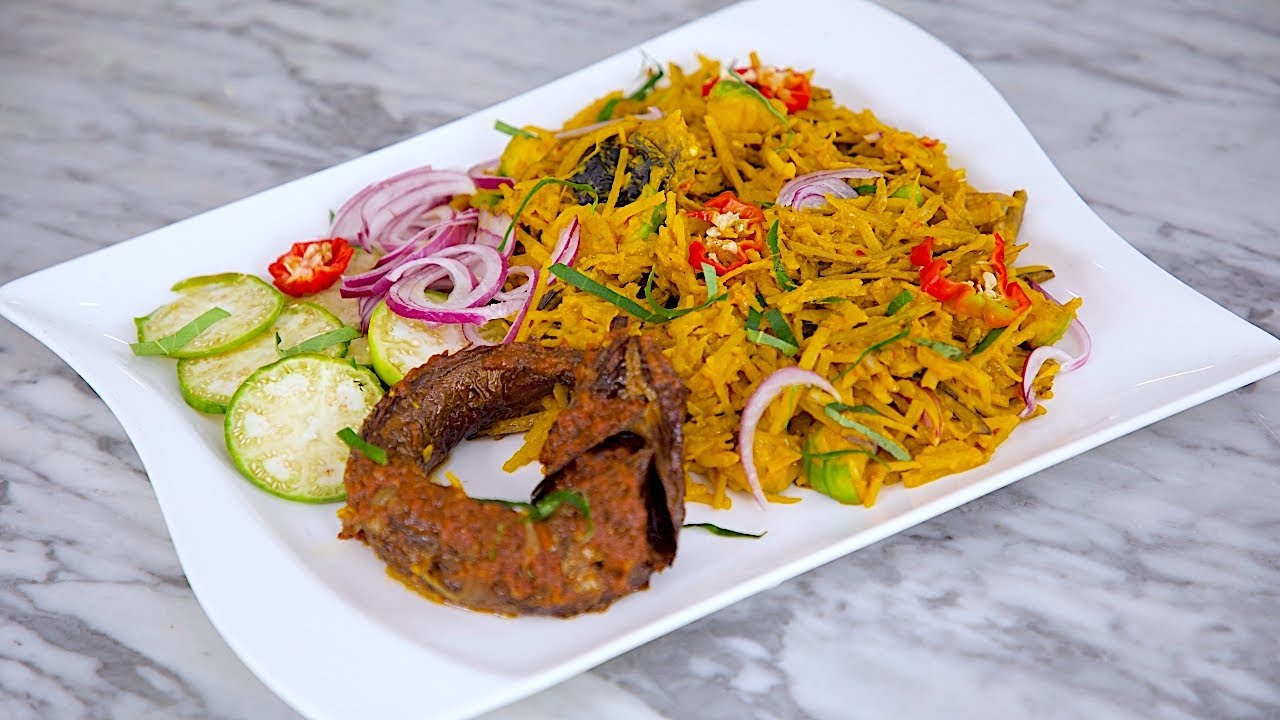
African Salad, popularly known as Abacha, is a traditional Nigerian delicacy made from shredded dried cassava and a rich palm oil dressing. Closely associated with the southeastern part of Nigeria, especially Igbo cuisine, this colourful dish combines soft cassava flakes with ugba (oil bean), palm oil, crayfish, onions, pepper, garden eggs, and traditional seasonings.
When we prepare African Salad correctly, we get an irresistible combination of savoury, spicy, slightly crunchy, and richly seasoned flavours. It can be served as a light meal, appetizer, side dish, or special delicacy for family gatherings and celebrations.
This African Salad recipe explains the ingredients, preparation method, serving ideas, and practical tips we need to make delicious Nigerian Abacha at home.
What Is African Salad (Abacha)?
African Salad is a popular Nigerian dish whose main ingredient is dried shredded cassava, locally called Abacha. Traditionally, cassava tubers are cooked, sliced into thin strips, soaked, washed, and dried before being used to prepare the dish.
Before making our salad, we soften the dried Abacha by soaking it briefly in warm or room-temperature water. It is then combined with a seasoned palm oil mixture and other traditional ingredients.
One of the most distinctive ingredients in authentic African Salad is ugba, also known as ukpaka or African oil bean. Its unique texture and flavour complement the cassava perfectly.
Depending on personal preference and regional variations, we can serve Abacha with fried fish, stockfish, ponmo, garden eggs, onions, vegetables, or boiled eggs.
Ingredients for African Salad Recipe
To prepare a flavourful Nigerian African Salad, we need fresh, properly measured ingredients.
Main Ingredients
- 500 g dried Abacha
- 1 cup ugba (African oil bean)
- ½ to ¾ cup red palm oil
- 1–2 tablespoons ground crayfish
- 1 medium onion, sliced
- Fresh pepper or ground chilli, to taste
- 1 seasoning cube, optional
- Salt, to taste
- 1 teaspoon ground ehuru (calabash nutmeg), optional
- 1–2 tablespoons finely ground traditional potash solution, used carefully
- Warm water for soaking the Abacha
Optional Toppings and Accompaniments
To make our African Salad richer and more satisfying, we can add:
- Fried or grilled fish
- Cooked stockfish
- Cooked ponmo
- Fresh garden eggs
- Garden egg leaves
- Utazi leaves
- Sliced onions
- Boiled eggs
- Extra pepper
- Extra ugba
The toppings we choose will depend on how simple or elaborate we want the finished dish to be.
How to Prepare Abacha Before Making African Salad
Properly preparing the dried cassava is essential because we want the Abacha to become tender without turning mushy.
We place the dried Abacha in a large bowl and pour enough warm water over it to cover the cassava completely. We allow it to soak briefly until the strips become soft and flexible.
We should avoid soaking it for too long. Over-soaking can make the cassava excessively soft and cause it to lose the pleasantly chewy texture that makes African Salad enjoyable.
Once softened, we drain the Abacha thoroughly using a colander. If necessary, we rinse it with clean water and allow excess water to drain completely.
The Abacha should be soft, separate, and slightly chewy, rather than watery.
How to Make African Salad Step by Step
Making African Salad (Abacha) is simple when the ingredients are properly prepared. Follow these steps for a delicious, authentic result.
Step 1: Prepare the Abacha
Soak the dried Abacha (shredded cassava) in warm water for about 5–10 minutes until soft. Drain thoroughly and set aside.
Step 2: Prepare the Palm Oil Mixture
Pour palm oil into a large bowl. Dissolve a small amount of potash (akanwu) in water, strain it, and gradually add the liquid to the palm oil while stirring. Continue mixing until the oil becomes thick and yellowish.
Step 3: Add the Seasonings
Add ground crayfish, pepper, seasoning cube, salt, and ogiri to the palm oil mixture. Stir thoroughly until all the ingredients are well combined.
Step 4: Add the Abacha
Add the drained Abacha to the seasoned palm oil mixture. Toss gently until every strand is evenly coated.
Step 5: Add Other Ingredients
Mix in sliced onions, ugba (oil bean), garden eggs, and chopped utazi leaves. You can also add cooked stockfish, dry fish, or kpomo for extra flavour.
Step 6: Taste and Adjust
Taste the African Salad and adjust the salt, pepper, crayfish, or seasoning if necessary.
Step 7: Serve
Serve your African Salad immediately. Garnish with sliced onions, garden eggs, utazi leaves, and your preferred fish or meat.
For the best flavour, African Salad should have a balanced combination of spicy, savoury, slightly bitter, and rich palm oil flavours.
How to Serve African Salad
African Salad can be served immediately after preparation. We can present it in a bowl or serving plate and garnish it generously for a more traditional appearance.
A typical serving may include:
- Sliced garden eggs
- Fresh onion rings
- Extra ugba
- Chopped garden egg leaves
- Fried fish
- Stockfish
- Ponmo
- Boiled egg
- Fresh or ground pepper
For a particularly satisfying meal, we can serve our Abacha with fried mackerel or another well-seasoned fish. The salty, crispy fish contrasts beautifully with the soft cassava and rich palm oil dressing.
African Salad can be enjoyed on its own, so we do not necessarily need an additional side dish.
Tips for Making the Best African Salad
Although the recipe is straightforward, a few details can significantly improve our final result.
Do Not Over-Soak the Abacha
Abacha should become tender while retaining some structure. If we leave dried cassava in water for too long, it may become excessively soft.
We should therefore check it regularly while soaking.
Drain the Abacha Properly
Excess water can dilute our palm oil dressing and prevent the seasonings from coating the cassava properly. After soaking, we allow the Abacha to drain thoroughly before mixing it with the dressing.
Use Good-Quality Palm Oil
Since palm oil provides much of the flavour and colour of African Salad, good-quality red palm oil makes a noticeable difference.
Fresh palm oil should have a characteristic aroma and vibrant colour without an unpleasant or rancid taste.
Be Careful With Potash
Traditional potash is used in small quantities to modify the palm oil dressing. We should never add excessive amounts. Apart from affecting the taste, too much can make the dish unpleasant.
Use Fresh Ugba
Good-quality ugba adds authenticity and enhances the overall flavour. We should rinse it appropriately before adding it to our dressing, particularly when purchased from an open market.
Adjust the Pepper to Taste
African Salad can be moderately spicy or very hot. We control the amount of pepper based on personal preference and the people we are serving.
Popular Variations of Nigerian African Salad
There is no requirement to prepare every plate of Abacha exactly the same way. Different households and communities use different combinations of ingredients.
African Salad With Fried Fish
Adding fried fish creates a more substantial meal. We can season and fry mackerel, tilapia, croaker, or another preferred fish before serving it alongside the Abacha.
African Salad With Stockfish
Stockfish adds a deeper seafood flavour and traditional character. We soften and cook the stockfish properly before combining or serving it with our salad.
African Salad With Ponmo
Cooked and seasoned ponmo can be chopped into manageable pieces and mixed into the salad or arranged over the finished dish.
Vegetable-Rich African Salad
For additional freshness, we can increase the quantity of garden egg leaves and other appropriate vegetables. The vegetables provide a pleasant contrast to the rich palm oil dressing.
What Does African Salad Taste Like?
A properly prepared African Salad has a complex flavour profile.
The cassava itself has a relatively mild taste, allowing the palm oil, crayfish, pepper, onions, ugba, and spices to provide most of the flavour.
Crayfish gives the dish a savoury seafood depth, while onions provide freshness and slight sharpness. Pepper supplies heat, and ugba contributes its distinctive fermented flavour.
When fish, stockfish, or ponmo is added, the result becomes even richer.
The texture is equally important. Good Abacha should be tender but not mushy, while onions and garden eggs provide contrasting crunch.
How to Store Leftover African Salad
African Salad is best enjoyed fresh, particularly when we have added fresh vegetables and onions.
If we have leftovers, we should transfer them to a clean airtight container and refrigerate promptly. Because the dish may contain several fresh and cooked ingredients, it should not be left at room temperature unnecessarily.
For the best eating experience, we can keep some garnishes separate and add them when we are ready to serve the remaining Abacha.
Freshly prepared African Salad generally offers better texture and flavour than one that has been stored for an extended period.
Common Mistakes to Avoid When Preparing Abacha
One of the easiest mistakes is allowing the cassava to become too soft. Our aim is not to cook the dried Abacha again but simply to rehydrate it until tender.
Another mistake is adding wet Abacha directly to the palm oil dressing. Excess moisture can make the salad watery and reduce its flavour intensity.
We should also avoid overwhelming the dish with seasoning cubes. Traditional ingredients such as crayfish, ugba, pepper, ehuru, and quality palm oil already provide substantial flavour.
Finally, we should balance the ingredients. Too much palm oil can make the salad greasy, while too little may leave the Abacha dry and unevenly seasoned.
Why Abacha Remains a Popular Nigerian Delicacy
African Salad stands out because it turns simple cassava into a colourful and flavour-packed traditional meal.
Its appeal comes from the contrast between ingredients: tender Abacha, rich palm oil, aromatic crayfish, spicy pepper, fresh onions, slightly crunchy garden eggs, and savoury ugba all contribute something different.
It is also highly customizable. We can keep the dish relatively simple or transform it into a substantial meal with fish, stockfish, ponmo, eggs, vegetables, and additional ugba.
For anyone interested in authentic Nigerian cuisine, Abacha is a dish worth learning to prepare correctly.
FAQs about African Salad Recipe
1. What is African Salad?
African Salad, popularly called Abacha, is a traditional Nigerian dish made mainly from dried, shredded cassava. It is especially popular among the Igbo people of southeastern Nigeria.
2. What are the main ingredients in African Salad?
The common ingredients include abacha, palm oil, ugba (oil bean), potash, crayfish, pepper, onions, seasoning, salt, garden eggs, and utazi leaves. Fish or ponmo may also be added.
3. Do I need to cook Abacha before preparing African Salad?
No. Abacha is usually soaked or rinsed in warm water until it becomes soft, then drained thoroughly before mixing with the other ingredients.
4. What does potash do in African Salad?
Potash helps the palm oil thicken and turn into a smooth, creamy sauce. Only a small quantity should be used.
5. Can I make African Salad without potash?
Yes. African Salad can be prepared without potash. However, the texture and appearance of the palm oil mixture may be slightly different.
6. What can I serve with African Salad?
African Salad can be served with fried or smoked fish, ponmo, garden eggs, onions, and fresh vegetables. It can be enjoyed as a snack, appetizer, or main meal.
7. How long can African Salad be stored?
For the best taste and texture, we recommend eating African Salad freshly prepared. Leftovers should be refrigerated in an airtight container and consumed promptly.
8. Is African Salad spicy?
It can be. The level of heat depends on the amount of fresh or ground pepper added, so we can easily adjust it to taste.
Conclusion
The key to excellent African Salad is maintaining the right texture, draining the cassava properly, preparing a balanced palm oil dressing, and using fresh ingredients. Once these fundamentals are right, we can customize the dish with fried fish, stockfish, ponmo, garden eggs, boiled eggs, or traditional vegetables.
Whether we prepare it for a family meal, gathering, celebration, or simply to enjoy a favourite Nigerian delicacy, well-made African Salad delivers the rich colour, distinctive aroma, and satisfying flavour that have made Abacha one of Nigeria’s most recognizable traditional dishes.