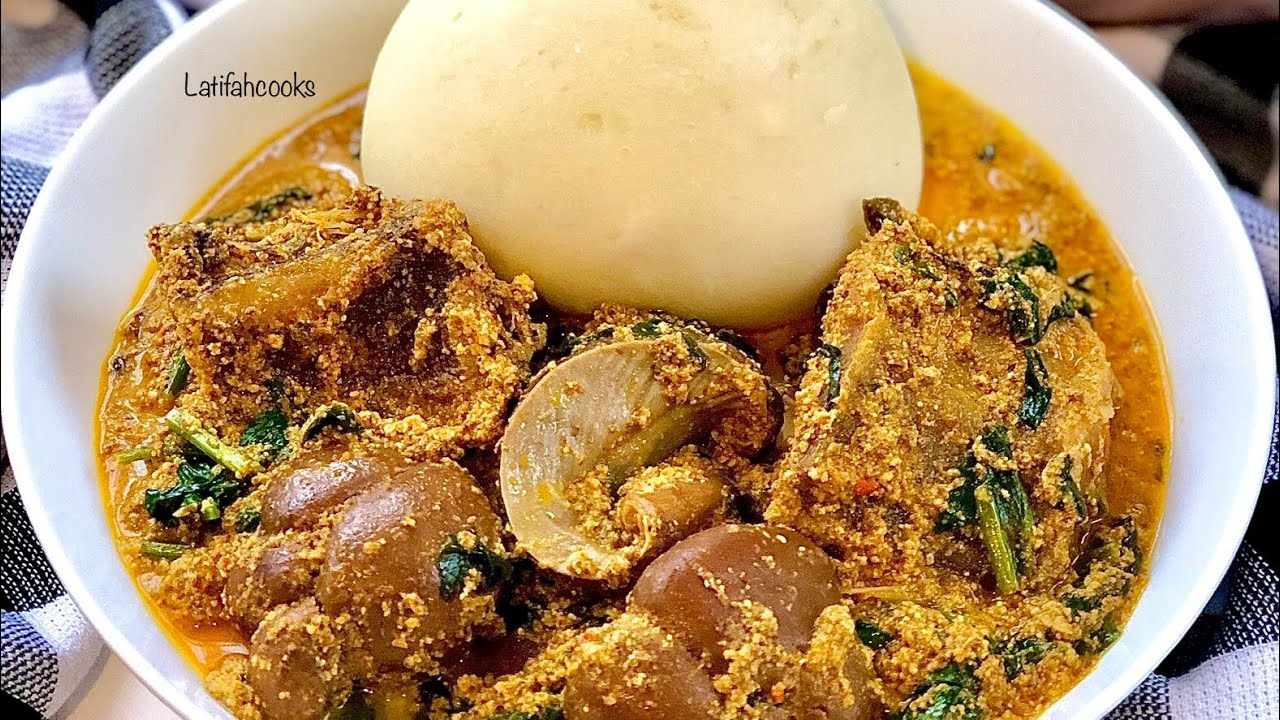
Pounded yam and Egusi soup is one of Nigeria’s most beloved traditional meals. The combination of smooth, stretchy pounded yam and thick, flavourful Egusi soup creates a satisfying dish enjoyed in homes, restaurants, celebrations, and family gatherings across the country. With its rich blend of ground melon seeds, palm oil, vegetables, meat, fish, and Nigerian seasonings, Egusi soup delivers bold flavour in every spoonful.
In this Pounded Yam and Egusi Soup recipe, we prepare both parts of the meal using simple methods that produce an authentic Nigerian taste. We focus on achieving a smooth pounded yam alongside a well-seasoned Egusi soup with a rich texture, delicious aroma, and balanced flavour.
What Is Pounded Yam and Egusi Soup?
Pounded yam is a popular Nigerian swallow traditionally prepared by boiling pieces of white yam until tender and pounding them into a smooth, elastic dough. It has a mild taste that makes it an excellent accompaniment to richly seasoned Nigerian soups.
Egusi soup is made primarily from ground melon seeds known as egusi. These seeds naturally create a thick, slightly nutty soup when cooked with ingredients such as palm oil, peppers, onions, stock, leafy vegetables, meat, and fish.
When we serve them together, the mild pounded yam absorbs the flavourful Egusi soup beautifully, producing a hearty and comforting Nigerian meal.
Ingredients for Pounded Yam and Egusi Soup
Before we start cooking, we prepare all our ingredients. The exact quantities can be adjusted depending on the number of people we are serving.
Ingredients for the Egusi Soup
We will need:
- 2 cups ground Egusi (melon seeds)
- ½–¾ cup palm oil
- 500 g assorted meat, such as beef, goat meat, or tripe
- Smoked or dried fish, cleaned
- Stockfish, soaked and cleaned
- 2–3 cups meat stock
- 1 medium onion
- 2–3 tablespoons ground crayfish
- Fresh pepper or ground chilli, to taste
- 2 seasoning cubes, or according to preference
- Salt, to taste
- Ugu leaves (fluted pumpkin), chopped
- Spinach, if ugu is unavailable
- Water as required
Ingredients for the Pounded Yam
For the traditional version, we need:
- 1 medium white yam tuber
- Water for boiling
Alternatively, we can use pounded yam flour and hot water when fresh yam is unavailable.
How to Prepare Meat and Fish for Egusi Soup
We begin by cleaning the assorted meat thoroughly. We place the meat in a cooking pot and season it with chopped onions, seasoning cubes, salt, and a small amount of water.
We cook the meat over medium heat until it begins to release its natural juices. We then add enough water to continue cooking until the meat becomes tender.
If we are using tougher cuts of meat, they may require additional cooking time.
Next, we add the cleaned stockfish and allow it to soften in the meat stock. The smoked or dried fish can be added later because it generally requires less cooking.
We reserve the flavourful meat stock because it will form an important part of our Egusi soup.
How to Make Egusi Soup Step by Step
There are several traditional methods for preparing Nigerian Egusi soup. This method produces a rich soup with visible Egusi curds and plenty of flavour.
1. Prepare the Ground Egusi
We place the ground melon seeds in a bowl and add a small amount of water. We mix until we have a thick paste.
The mixture should not be watery. Keeping it relatively thick helps the Egusi form attractive clusters as it cooks.
2. Heat the Palm Oil
We place a large cooking pot over medium heat and add the palm oil.
We allow the oil to become hot without bleaching it. Palm oil contributes significantly to the traditional colour, aroma, and flavour of Nigerian Egusi soup.
We add chopped onions and cook briefly until fragrant.
3. Add the Egusi Mixture
We add spoonfuls of the Egusi paste into the hot oil.
Rather than stirring continuously at this stage, we allow the Egusi to cook for a few minutes. This helps it form the characteristic lumps or curds found in many traditional versions of the soup.
We gently turn the mixture and continue cooking until the Egusi begins to look slightly dry and cooked.
4. Add Meat Stock
Next, we gradually add the reserved meat stock.
We stir carefully until the soup reaches our desired consistency. Egusi naturally thickens considerably, so we add liquid gradually instead of pouring in too much water at once.
We allow the soup to simmer so the ground melon seeds can cook properly and absorb the flavours from the stock.
5. Add the Meat and Fish
We return the cooked assorted meat and stockfish to the pot.
We then add the cleaned smoked or dried fish.
At this stage, the soup begins to develop its characteristic rich Nigerian flavour.
We add ground crayfish, pepper, seasoning cubes, and salt according to taste.
We stir carefully, especially when using delicate pieces of fish.
6. Add the Vegetables
Once the Egusi has cooked properly and the soup has reached a thick consistency, we add the chopped ugu leaves.
We stir the vegetables into the soup and allow them to cook briefly.
Ugu does not need excessive cooking. A short cooking period helps preserve its texture, colour, and freshness.
We taste the soup one final time and adjust the seasoning where necessary.
Our Nigerian Egusi soup is now ready.
How to Make Traditional Pounded Yam
Traditional pounded yam requires a good-quality white yam. The quality of the yam plays an important role in producing a smooth and stretchy result.
1. Peel and Cut the Yam
We peel the yam carefully and cut it into medium-sized pieces.
We immediately rinse the pieces thoroughly with clean water.
2. Boil the Yam
We place the yam pieces in a clean pot and cover them with enough water.
We boil until completely soft.
The yam needs to be properly cooked because undercooked yam will be difficult to pound smoothly.
3. Pound the Yam
Traditionally, boiled yam is transferred into a mortar and pounded with a pestle.
We pound continuously while turning the yam until all lumps disappear.
If necessary, we gradually add a small quantity of the hot yam water while pounding. This helps us achieve a softer, smoother texture.
The finished pounded yam should be smooth, elastic, soft, and free from lumps.
How to Make Pounded Yam With Yam Flour
When fresh yam or traditional pounding equipment is unavailable, pounded yam flour provides a convenient alternative.
We bring water to a boil in a clean pot. We reduce the heat and gradually add the pounded yam flour while stirring continuously with a wooden spatula.
We keep mixing until the flour absorbs the water and forms a smooth dough.
If the mixture is too firm, we add small amounts of hot water. We cover the pot briefly and allow the pounded yam to cook before stirring again until smooth.
The goal is a soft but firm consistency that can easily be shaped and dipped into the soup.
How to Achieve the Best Egusi Soup Texture
The consistency of Egusi soup can vary according to personal and regional preferences. Some people prefer thick Egusi soup with large curds, while others prefer a slightly smoother consistency.
For a thicker soup, we use less stock and allow the Egusi to cook gently until excess liquid reduces.
For a lighter consistency, we add small quantities of stock or water gradually.
We avoid adding excessive liquid at once because it can make the soup unnecessarily watery.
Allowing the Egusi enough time to cook is equally important. Properly cooked Egusi develops a pleasant nutty taste and blends beautifully with the meat stock, crayfish, palm oil, and vegetables.
Tips for Making Delicious Pounded Yam and Egusi Soup
A few practical techniques can improve the final result considerably:
- Use fresh ground Egusi for better flavour and aroma.
- Cook the meat until tender before adding it to the soup.
- Use the meat stock instead of plain water whenever possible.
- Add pepper gradually so the soup does not become excessively spicy.
- Do not bleach the palm oil.
- Allow the Egusi enough time to cook properly.
- Add leafy vegetables towards the end of cooking.
- Use good-quality white yam for smooth traditional pounded yam.
- Pound the yam while it is still hot.
- Add liquid gradually when adjusting the consistency of either the soup or pounded yam.
These small details help create the rich taste and texture associated with a well-prepared Pounded Yam and Egusi Soup.
Best Vegetables for Egusi Soup
Ugu, also known as fluted pumpkin leaves, is one of the most popular vegetables used in Nigerian Egusi soup. It contributes colour, flavour, and texture without overpowering the melon seed base.
Where fresh ugu is unavailable, we can use spinach as a convenient substitute.
Other leafy vegetables may also be used depending on regional cooking traditions and personal preference. Whatever vegetable we choose, we add it near the end of cooking to avoid overcooking.
What Meat Can We Use for Egusi Soup?
One of the advantages of Egusi soup is its versatility.
We can prepare it with beef, goat meat, chicken, tripe, cow skin, stockfish, smoked fish, dried fish, or a combination of several proteins.
Using assorted meat gives the soup greater depth because each ingredient contributes a different texture and flavour.
For an especially rich pot of Egusi soup, we can combine beef or goat meat with stockfish and smoked fish.
What to Serve With Egusi Soup
Although pounded yam is one of the most popular accompaniments, Egusi soup works with several Nigerian swallows.
We can serve it with:
- Eba
- Fufu
- Semo
- Amala
- Wheat swallow
- Plantain swallow
Pounded yam remains an excellent choice because its smooth texture complements the richness of Egusi soup without competing with its flavours.
How to Serve Pounded Yam and Egusi Soup
We serve the Egusi soup hot in a bowl or plate with generous portions of meat and fish.
We shape the freshly prepared pounded yam into individual portions and place it beside the soup.
To eat the meal traditionally, we take a small portion of pounded yam with clean fingers, shape it gently, create a slight indentation, and use it to scoop the Egusi soup.
The combination gives us the smoothness of the yam, nuttiness of the Egusi, richness of palm oil, savouriness of meat stock, freshness of vegetables, and depth of Nigerian spices in a single bite.
How to Store Leftover Egusi Soup
Egusi soup is excellent for preparing ahead because its flavour remains rich after storage.
We allow leftover soup to cool before transferring it to an airtight container. It can then be kept refrigerated for short-term storage or frozen when we want to preserve it longer.
When reheating, we warm only the portion required and add a very small amount of water or stock if the soup has become too thick.
We heat it thoroughly before serving.
Pounded yam, however, is generally best enjoyed freshly prepared because refrigeration can alter its soft and stretchy texture.
Common Mistakes to Avoid When Making Egusi Soup
Even a simple Egusi Soup recipe can produce disappointing results when important cooking steps are overlooked.
Adding too much water can create a thin soup without the rich texture expected from Egusi. We therefore add liquid gradually.
Another common mistake is rushing the cooking process. Ground Egusi needs sufficient cooking time to develop its flavour fully.
We also avoid overwhelming the soup with seasoning. Crayfish, stockfish, smoked fish, meat stock, seasoning cubes, and salt all contribute savouriness, so we taste before adding additional salt.
Finally, we avoid cooking the vegetables for too long. Adding them near the end keeps the soup colourful and prevents the leaves from becoming excessively soft.
Why Pounded Yam and Egusi Soup Remains a Nigerian Favourite
Few Nigerian dishes combine richness, texture, and comfort as effectively as Pounded Yam and Egusi Soup.
The smooth pounded yam provides the perfect base for the thick melon seed soup, while palm oil, crayfish, peppers, vegetables, fish, and meat create layers of traditional Nigerian flavour.
The dish is also highly adaptable. We can change the choice of meat, fish, vegetables, pepper level, and soup consistency while still retaining the distinctive character of Egusi soup.
FAQs about Pounded Yam and Egusi Soup Recipe
What is pounded yam and egusi soup?
Pounded yam and egusi soup is a popular Nigerian meal consisting of smooth, stretchy pounded yam served with a rich soup made primarily from ground melon seeds, vegetables, palm oil, spices, and protein.
What is Egusi soup made from?
Egusi soup is traditionally prepared with ground egusi (melon seeds), palm oil, peppers, onions, leafy vegetables, seasoning, and stock. Meat, fish, stockfish, or assorted meats can also be added.
How do we make pounded yam?
We make traditional pounded yam by boiling peeled yam until soft and pounding it until it becomes smooth, elastic, and lump-free. Yam flour can also be used as a quicker alternative.
What vegetables can we use in Egusi soup?
Popular options include ugu (fluted pumpkin leaves), spinach, bitter leaf, or other suitable leafy greens.
How do we thicken Egusi soup?
Ground egusi naturally thickens the soup. We can achieve a thicker consistency by using more egusi or allowing the soup to simmer until excess liquid reduces.
What can we serve with Egusi soup besides pounded yam?
Egusi soup pairs well with eba, fufu, semovita, amala, wheat swallow, or rice.
How should we store leftover Egusi soup?
We should allow the soup to cool before transferring it into an airtight container. It can be refrigerated for short-term storage or frozen for longer preservation.
Is pounded yam and Egusi soup spicy?
It can be mild or spicy depending on the amount and type of pepper we use.
Conclusion
This Pounded Yam and Egusi Soup recipe gives us a straightforward way to prepare one of Nigeria’s most iconic meals at home. By cooking our meat until tender, using flavourful stock, allowing the ground Egusi to cook properly, adding fresh vegetables at the right stage, and preparing smooth pounded yam, we can achieve a satisfying traditional meal.
Whether served for lunch, dinner, a family gathering, or a special occasion, Nigerian Pounded Yam and Egusi Soup delivers the hearty texture and bold flavours that make Nigerian cuisine so distinctive.
With properly cooked Egusi soup, tender assorted meat, smoked fish, fresh vegetables, and smooth pounded yam on the plate, we have a complete Nigerian classic that is filling, flavourful, and deeply satisfying.