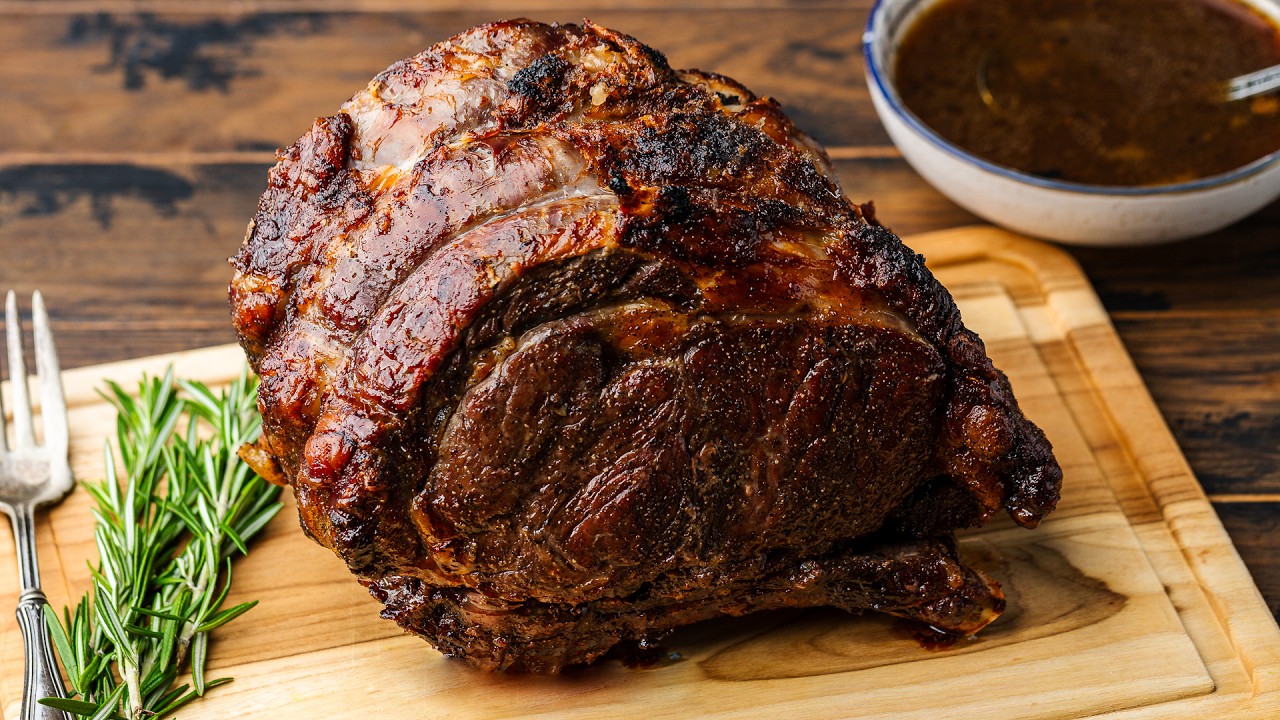
A Traeger prime rib recipe is one of the best ways to prepare a rich, tender, and deeply flavorful roast with a beautiful smoky crust and juicy center. Prime rib is already a premium cut of beef, but when it is cooked slowly on a Traeger pellet grill, it develops a bold wood-fired flavor that makes it perfect for holidays, family dinners, Christmas meals, Thanksgiving gatherings, Sunday roasts, and special celebrations.
This guide walks through everything needed to make a perfect Traeger prime rib, from selecting the right roast to seasoning, smoking, checking temperature, resting, slicing, and serving. With the right method, we can achieve a prime rib that is smoky on the outside, buttery inside, and cooked exactly to the preferred level of doneness.
Ingredients You’ll Need for Traeger Prime Rib
To make a flavorful and juicy Traeger smoked prime rib, we need simple ingredients that enhance the natural richness of the beef without overpowering it.
Main Ingredients
- 1 bone-in or boneless prime rib roast, 5 to 7 pounds
- 3 tablespoons kosher salt
- 2 tablespoons black pepper, freshly ground
- 2 tablespoons garlic powder
- 1 tablespoon onion powder
- 1 tablespoon smoked paprika
- 1 tablespoon fresh rosemary, finely chopped
- 1 tablespoon fresh thyme, finely chopped
- 2 teaspoons dried parsley
- 1 teaspoon mustard powder
- 4 tablespoons softened butter
- 2 tablespoons olive oil
- 4 to 6 garlic cloves, minced
- 1 tablespoon Worcestershire sauce
- Optional: 1 teaspoon crushed red pepper flakes for mild heat
Recommended Wood Pellets
For the best Traeger prime rib flavor, we can use wood pellets that pair well with beef. Hickory gives a strong smoky taste, oak provides a balanced smoke, cherry adds mild sweetness and color, while mesquite creates a bold barbecue flavor. A blend of oak and hickory works especially well for prime rib because it gives the roast a strong but not overwhelming smoky finish.
Choosing the Best Prime Rib for Smoking
The quality of the roast matters when making a Traeger prime rib roast. A well-marbled cut gives better flavor, tenderness, and juiciness. Prime grade beef is excellent because it has more internal fat, but choice grade can also produce a delicious result when cooked properly.
A bone-in prime rib usually offers deeper flavor because the bones help protect the meat during cooking. A boneless prime rib is easier to season, slice, and serve. Both options work well on a Traeger grill. For a more dramatic presentation, bone-in prime rib is ideal. For convenience, boneless prime rib is a great choice.
A good serving estimate is about 1 pound of bone-in prime rib per person or ¾ pound of boneless prime rib per person. This allows enough meat for generous portions and possible leftovers.
Preparing the Prime Rib Before Smoking
Before seasoning, we should remove the prime rib from the refrigerator and allow it to sit at room temperature for about 1 to 2 hours. This helps the roast cook more evenly from edge to center. A cold roast placed directly on the grill may cook unevenly, leaving the outside done while the center takes much longer to reach temperature.
Next, pat the roast dry with paper towels. A dry surface helps the seasoning stick better and supports the formation of a flavorful crust. If there is a thick layer of fat on top, trim it lightly, but do not remove all the fat. A thin fat cap helps keep the roast moist and adds flavor as it cooks.
How to Season Prime Rib for the Traeger
For a bold and flavorful Traeger smoked prime rib recipe, seasoning should be generous. Prime rib is a thick cut of beef, so the seasoning needs to cover every side properly.
In a small bowl, mix the softened butter, olive oil, minced garlic, Worcestershire sauce, rosemary, thyme, parsley, kosher salt, black pepper, garlic powder, onion powder, smoked paprika, mustard powder, and optional red pepper flakes. Stir until it forms a thick herb butter paste.
Rub the mixture all over the prime rib, including the sides and ends. Make sure the seasoning gets into every surface. If using a bone-in roast, season around the bones as well. For deeper flavor, the seasoned roast can be placed uncovered in the refrigerator for several hours or overnight. This dry-brining step helps the salt penetrate the meat and improves the crust.
Preheating the Traeger Grill
Set the Traeger grill to 225°F and allow it to preheat with the lid closed for about 15 minutes. This low temperature is ideal for smoking prime rib because it allows the meat to cook slowly while absorbing wood-fired flavor.
Low and slow cooking helps create a tender roast with an even pink center. It also reduces the risk of overcooking the outer layers before the center reaches the desired temperature.
Step-by-Step Guide to Making Traeger Prime Rib
Step 1: Place the Prime Rib on the Traeger
Place the seasoned prime rib directly on the grill grates with the fat side facing up. Positioning the fat side up allows the fat to slowly render and baste the roast while it cooks.
Insert a meat probe into the thickest part of the roast, avoiding the bone if using bone-in prime rib. Accurate temperature tracking is very important because prime rib can move from perfect to overdone quickly.
Step 2: Smoke the Prime Rib at 225°F
Smoke the prime rib at 225°F until the internal temperature reaches about 115°F for rare, 120°F for medium-rare, or 125°F for medium before searing. Cooking time depends on the size of the roast, but a 5 to 7 pound prime rib usually takes around 3 to 4 hours at this temperature.
During this stage, avoid opening the lid too often. Every time the grill is opened, heat escapes and cooking time increases. Let the Traeger maintain a steady temperature so the roast cooks evenly.
Step 3: Remove and Rest Before Searing
Once the prime rib reaches the target internal temperature for the smoking stage, remove it from the grill and place it on a cutting board or tray. Tent it loosely with foil while increasing the Traeger temperature.
Set the Traeger to 450°F or the highest available setting. Allow it to fully preheat. This final high-heat sear creates a beautiful crust on the outside of the roast while keeping the inside juicy and tender.
Step 4: Sear the Prime Rib
Return the prime rib to the hot Traeger and sear it for about 10 to 15 minutes, turning as needed to develop an even crust. Watch the internal temperature closely during this step.
For medium-rare, remove the roast when it reaches about 130°F to 135°F. For medium, remove it around 140°F. The temperature will continue to rise slightly while resting.
Step 5: Rest the Prime Rib
Resting is one of the most important steps in this Traeger prime rib recipe. Let the roast rest for 20 to 30 minutes before slicing. Resting allows the juices to redistribute throughout the meat. Cutting too early can cause the juices to run out, leaving the roast less tender.
Keep the prime rib loosely covered with foil during the resting period. Do not wrap it tightly, as this can soften the crust.
Prime Rib Internal Temperature Guide
Use a meat thermometer for the most accurate results.
- Rare: 120°F to 125°F final temperature
- Medium-rare: 130°F to 135°F final temperature
- Medium: 140°F to 145°F final temperature
- Medium-well: 150°F to 155°F final temperature
For the best texture and juiciness, medium-rare is the most recommended doneness for prime rib. It keeps the meat tender, pink, and flavorful without drying it out.
How to Slice Traeger Prime Rib
After resting, place the roast on a stable cutting board. If using a bone-in roast, carefully cut along the bones to separate them from the meat. The bones can be served on the side or saved for stock.
Slice the prime rib against the grain into thick or medium slices. Cutting against the grain shortens the muscle fibers and makes each bite more tender. For a holiday-style presentation, thicker slices look impressive. For buffet serving, thinner slices are easier to portion.
Best Side Dishes for Traeger Prime Rib
A rich smoked prime rib pairs well with classic and hearty side dishes. Creamy mashed potatoes, roasted garlic potatoes, grilled asparagus, honey-glazed carrots, smoked mac and cheese, Caesar salad, Yorkshire pudding, sautéed mushrooms, and dinner rolls all work beautifully.
For sauces, serve the prime rib with au jus, creamy horseradish sauce, garlic butter, or a red wine reduction. These sauces add extra flavor without covering the natural taste of the beef.
Tips for the Best Traeger Smoked Prime Rib
Use a meat thermometer instead of relying only on cooking time. Prime rib thickness, grill temperature, outdoor weather, and bone structure can all affect how fast the roast cooks.
Season generously because prime rib is a large cut of meat. A light seasoning may not be enough to flavor each slice properly.
Rest the meat before slicing. This keeps the roast juicy and improves the final texture.
Smoke at a low temperature first, then finish with high heat. This reverse-sear method gives the prime rib an even interior and a flavorful crust.
Do not overcook the roast. Prime rib is best when it remains tender and juicy, especially at medium-rare or medium doneness.
How to Store Leftover Prime Rib
Store leftover prime rib in an airtight container in the refrigerator for up to 3 to 4 days. To keep it juicy, slice only what is needed and store the rest as a larger piece when possible.
For reheating, place the prime rib in a low oven with a small amount of beef broth or au jus. Cover it with foil and warm gently until heated through. Avoid high heat because it can dry out the meat.
Leftover prime rib can be used for sandwiches, beef sliders, tacos, fried rice, steak salads, omelets, pasta, or loaded baked potatoes.
FAQs about Traeger Prime Rib Recipe
1. What temperature should we cook prime rib on a Traeger?
We should cook prime rib low and slow at around 225°F until it reaches the desired internal temperature. For a final sear, we can increase the Traeger temperature to 450°F.
2. How long does prime rib take on a Traeger?
Prime rib usually takes about 3 to 4 hours, depending on the size of the roast and the preferred doneness. We should always use a meat thermometer for accuracy.
3. What internal temperature is best for prime rib?
For medium-rare, we should remove the prime rib at about 120°F to 125°F, then let it rest. The temperature will rise slightly while resting.
4. Should we season prime rib overnight?
Yes, seasoning the prime rib overnight helps the flavors absorb deeper into the meat. A simple mix of salt, pepper, garlic, herbs, and olive oil works very well.
5. Why is resting important after cooking prime rib?
Resting allows the juices to redistribute throughout the meat. We should let the prime rib rest for about 20 to 30 minutes before slicing for a tender and juicy result.
Final Thoughts
This Traeger prime rib recipe delivers a tender, smoky, and beautifully seasoned roast with a juicy center and rich crust. By using a low-and-slow smoking method followed by a hot sear, we create the perfect balance of wood-fired flavor, tenderness, and presentation. Whether prepared for a holiday feast, family dinner, or special celebration, this smoked prime rib is a standout dish that brings restaurant-quality results straight from the Traeger grill.