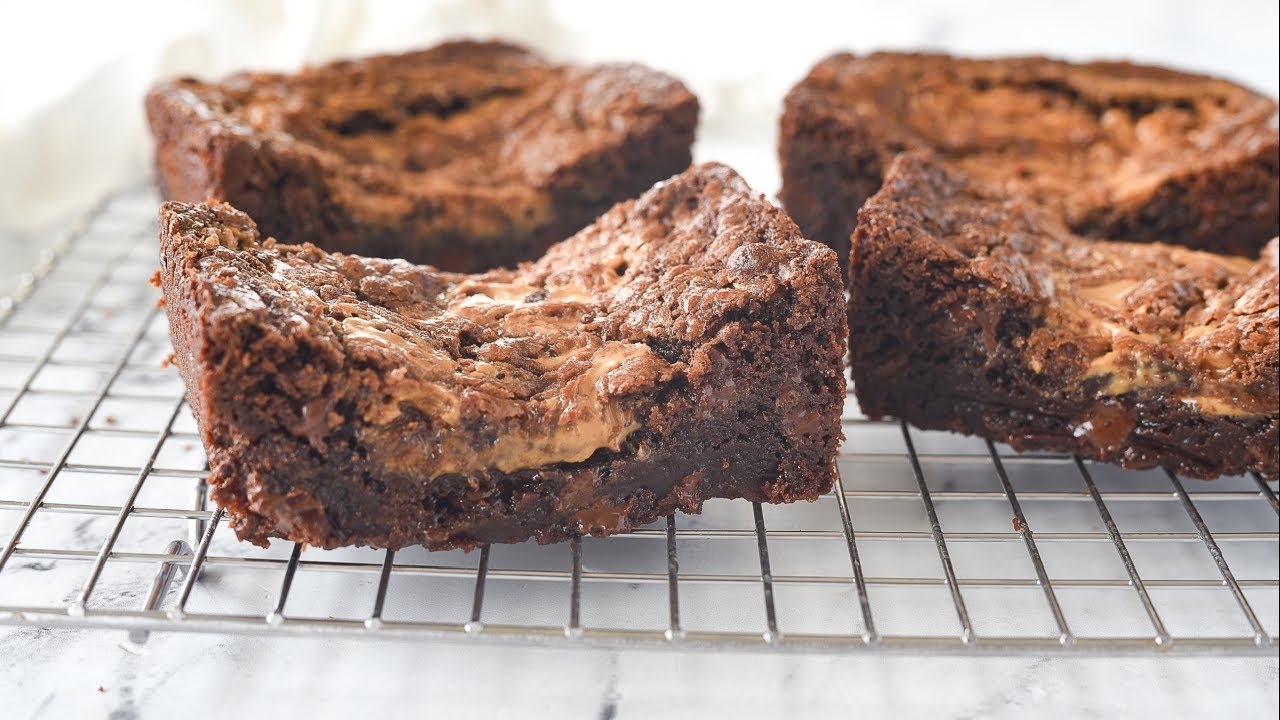
Peanut Butter Brownies Recipe: Peanut butter brownies are the perfect dessert when we want something rich, fudgy, nutty, and deeply satisfying. This recipe brings together the intense chocolate flavor of classic homemade brownies with the creamy, slightly salty richness of peanut butter. The result is a soft, chewy, bakery-style brownie with beautiful peanut butter swirls, a moist center, and crisp edges that make every bite irresistible.
This peanut butter brownies recipe is ideal for family desserts, bake sales, lunchbox treats, weekend baking, parties, holidays, and anytime we want a simple chocolate dessert that feels special. With basic pantry ingredients and a straightforward method, we can create brownies that taste homemade, look impressive, and deliver the perfect balance of chocolate and peanut butter.
Ingredients You’ll Need for Peanut Butter Brownies
To make the best homemade peanut butter brownies, we need simple ingredients that work together to create a rich, moist, and flavorful dessert.
For the Brownie Batter
- 1 cup unsalted butter, melted
- 1 cup granulated sugar
- 1 cup light brown sugar, packed
- 4 large eggs, room temperature
- 2 teaspoons vanilla extract
- 1 cup all-purpose flour
- 1 cup unsweetened cocoa powder
- ½ teaspoon salt
- ½ teaspoon baking powder
- 1 cup semi-sweet chocolate chips
For the Peanut Butter Swirl
- ¾ cup creamy peanut butter
- 3 tablespoons powdered sugar
- 1 tablespoon melted butter
- ½ teaspoon vanilla extract
- A pinch of salt, if using unsalted peanut butter
Best Peanut Butter to Use for Brownies
For this recipe, creamy peanut butter gives the smoothest swirl and the best texture. Regular shelf-stable peanut butter works better than natural peanut butter because it blends more evenly and does not separate as much during baking. Natural peanut butter can be used, but it should be stirred very well before measuring so the oil and peanut paste are fully combined.
Creamy peanut butter creates a soft ribbon throughout the brownies, while crunchy peanut butter adds little bits of texture. For a more classic brownie, creamy peanut butter is the best choice. For extra crunch, we can use crunchy peanut butter or sprinkle chopped peanuts over the top before baking.
How to Prepare the Baking Pan
Before mixing the batter, we prepare the baking pan properly so the brownies lift out cleanly after baking. A 9×13-inch baking pan works well for this recipe because it gives us thick but not overly heavy brownies.
Line the pan with parchment paper, leaving extra paper hanging over the sides. This makes it easy to lift the brownies out once they cool. Lightly grease the parchment paper with butter or nonstick spray. This small step helps prevent sticking and keeps the brownie edges neat when slicing.
Preheat the oven to 350°F / 175°C. A properly heated oven helps the brownies bake evenly and develop that soft, fudgy center with a slightly crackly top.
Step-by-Step Guide to Making Peanut Butter Brownies
Step 1: Melt the Butter
In a large mixing bowl, add the melted butter while it is warm but not extremely hot. Warm melted butter helps dissolve the sugars slightly, which gives the brownies a glossy top and chewy texture.
We should avoid using cold butter because it will not blend as smoothly into the sugars. Melted butter is one of the secrets to making fudgy peanut butter brownies instead of dry, cake-like brownies.
Step 2: Mix the Sugars
Add the granulated sugar and brown sugar to the melted butter. Whisk until the mixture looks smooth, thick, and slightly glossy. Brown sugar adds moisture and chewiness, while granulated sugar helps create the classic brownie crust on top.
This combination gives the brownies a rich texture with deep sweetness. Mixing the sugars properly at this stage helps improve the final structure of the brownies.
Step 3: Add the Eggs and Vanilla
Add the eggs one at a time, whisking well after each addition. Then stir in the vanilla extract. Eggs help bind the brownie batter and give the brownies their dense, fudgy bite.
Room-temperature eggs mix more smoothly into the batter, giving us a better texture. If the eggs are too cold, the melted butter may firm up slightly, making the batter less smooth.
Whisk the mixture until it becomes thick and shiny. This helps create that beautiful brownie top after baking.
Step 4: Combine the Dry Ingredients
In a separate bowl, whisk together the all-purpose flour, unsweetened cocoa powder, salt, and baking powder. Mixing the dry ingredients separately helps distribute the cocoa powder and baking powder evenly.
Cocoa powder gives the brownies their bold chocolate flavor, while a small amount of baking powder gives just enough lift without making the brownies too cakey. Salt balances the sweetness and makes the chocolate and peanut butter flavors stronger.
Step 5: Fold the Dry Ingredients into the Wet Mixture
Add the dry ingredients to the wet mixture. Use a spatula to gently fold everything together until just combined. Do not overmix the batter. Overmixing can develop too much gluten in the flour, which may make the brownies tough instead of soft and fudgy.
The batter should be thick, smooth, and rich. A few small streaks of flour are fine at first, but continue folding gently until no dry patches remain.
Step 6: Add the Chocolate Chips
Fold in the semi-sweet chocolate chips. These melt slightly during baking and create pockets of chocolate throughout the brownies. Semi-sweet chocolate works well because it adds richness without making the brownies overly sweet.
For deeper chocolate flavor, we can use dark chocolate chips. For a sweeter brownie, milk chocolate chips can be used. A mix of chocolate chips and chopped chocolate also creates a more bakery-style texture.
Step 7: Make the Peanut Butter Swirl Mixture
In a small bowl, combine the creamy peanut butter, powdered sugar, melted butter, vanilla extract, and a pinch of salt. Stir until smooth and creamy.
The powdered sugar slightly thickens the peanut butter and helps it hold its shape while baking. The melted butter makes the swirl softer and easier to spread. This mixture should be smooth enough to dollop over the brownie batter but thick enough not to disappear into the brownies.
Step 8: Spread the Brownie Batter in the Pan
Pour the brownie batter into the prepared pan. Use a spatula to spread it evenly into the corners. Since the batter is thick, take a moment to level the top so the brownies bake evenly.
A smooth, even layer helps every slice have the right balance of brownie and peanut butter swirl.
Step 9: Add the Peanut Butter Swirl
Drop spoonfuls of the peanut butter mixture over the top of the brownie batter. Space the spoonfuls across the pan so every slice gets some peanut butter.
Use a butter knife or skewer to gently swirl the peanut butter into the brownie batter. Move the knife in soft curves, dragging the peanut butter through the chocolate batter without fully mixing it in. The goal is to create visible ribbons of peanut butter on top.
Do not over-swirl. Too much mixing will blend the peanut butter into the batter instead of creating that beautiful marbled effect.
Step 10: Bake the Peanut Butter Brownies
Place the pan in the preheated oven and bake for 30 to 35 minutes. The brownies are ready when the edges are set, the top looks slightly shiny and crackly, and a toothpick inserted near the center comes out with moist crumbs.
Avoid baking until the toothpick comes out completely clean. That usually means the brownies are overbaked. For fudgy brownies, moist crumbs are exactly what we want.
The center may look slightly soft when removed from the oven, but it will continue to set as the brownies cool.
How to Know When Peanut Butter Brownies Are Done
The best peanut butter brownies should be fully baked around the edges and soft in the center. Look for these signs:
- The edges pull slightly away from the pan.
- The top looks set and lightly crackled.
- The peanut butter swirl looks slightly firm.
- A toothpick comes out with moist crumbs, not wet batter.
If the toothpick has raw batter on it, bake for another 3 to 5 minutes and check again. If the toothpick comes out completely dry, the brownies may be overbaked.
Cooling and Slicing the Brownies
Let the brownies cool in the pan for at least 30 to 45 minutes. For cleaner slices, allow them to cool completely. Brownies continue to firm up as they rest, and slicing too early can make them fall apart.
Once cooled, lift the brownies out using the parchment paper. Place them on a cutting board and slice with a sharp knife. For neat cuts, wipe the knife clean between slices.
For extra clean bakery-style squares, chill the brownies for 20 to 30 minutes before cutting.
Tips for Fudgy Peanut Butter Brownies
To make the brownies extra fudgy, use melted butter, avoid overmixing, and do not overbake. The texture should be dense, moist, and chewy, not dry or crumbly.
Using both brown sugar and granulated sugar gives the best balance of moisture and structure. The cocoa powder brings strong chocolate flavor, while the chocolate chips add melted richness inside the brownies.
The peanut butter swirl should sit partly on top and partly inside the batter. This gives the brownies a creamy peanut butter layer without making them too heavy.
Delicious Variations for Peanut Butter Brownies
We can customize this peanut butter brownies recipe in several delicious ways.
For peanut butter cup brownies, press chopped peanut butter cups into the top before baking. They melt slightly and create a candy-like topping.
For double chocolate peanut butter brownies, add extra chocolate chunks or drizzle melted chocolate over the cooled brownies.
For salted peanut butter brownies, sprinkle flaky sea salt over the top before baking. The salt balances the sweetness and makes the chocolate flavor stronger.
For crunchy peanut brownies, add chopped roasted peanuts to the batter or sprinkle them over the peanut butter swirl.
For extra thick brownies, bake the recipe in a slightly smaller pan and increase the baking time as needed.
How to Store Peanut Butter Brownies
Store cooled brownies in an airtight container at room temperature for up to 4 days. Keep them in a cool, dry place away from direct sunlight.
For longer storage, refrigerate them for up to 1 week. Chilled brownies become firmer and extra fudgy, which many people enjoy.
To freeze, wrap individual brownie squares in plastic wrap and place them in a freezer-safe bag or container. Freeze for up to 2 months. Thaw at room temperature before serving.
How to Serve Peanut Butter Brownies
These brownies are delicious on their own, but they can also be served with toppings for a richer dessert. Add a scoop of vanilla ice cream, drizzle with warm chocolate sauce, or serve with whipped cream.
For a party platter, cut the brownies into small squares and arrange them with fresh strawberries, chocolate chips, or mini peanut butter cups. For a warm dessert, microwave one brownie for a few seconds until slightly soft and gooey.
They also pair beautifully with milk, coffee, hot chocolate, or a cold glass of creamy peanut butter smoothie.
Common Mistakes to Avoid
One common mistake is overbaking the brownies. Brownies should not be baked like cake. They need a soft, moist center to stay fudgy.
Another mistake is overmixing the batter after adding the flour. Gentle folding keeps the brownies tender.
Using oily, separated peanut butter without stirring it properly can also affect the swirl. The peanut butter should be smooth and consistent before adding it to the brownie batter.
Finally, slicing the brownies too soon can make them messy. Cooling allows the chocolate and peanut butter layers to set properly.
FAQs about Peanut Butter Brownies Recipe
1. Can we use natural peanut butter for peanut butter brownies?
Yes, we can use natural peanut butter, but it must be well-stirred before adding it to the batter. Natural peanut butter often separates, so mixing the oil back in helps create a smooth texture. For thicker, richer brownies, creamy peanut butter usually works best.
2. How do we make peanut butter brownies fudgy?
To make peanut butter brownies fudgy, we should avoid overbaking them. The center should look slightly soft when removed from the oven, as the brownies will continue to set while cooling. Using enough butter, eggs, and chocolate also helps create a moist, dense texture.
3. Can we add chocolate chips to peanut butter brownies?
Yes, chocolate chips are a great addition. We can fold them into the brownie batter before baking or sprinkle them on top. Semi-sweet, dark chocolate, or milk chocolate chips all work well, depending on how sweet we want the brownies to taste.
4. How do we store peanut butter brownies?
Peanut butter brownies can be stored in an airtight container at room temperature for about 3 days. For longer storage, we can refrigerate them for up to a week. To keep them soft, place parchment paper between layers if stacking.
5. Can peanut butter brownies be frozen?
Yes, peanut butter brownies freeze well. We should let them cool completely, cut them into squares, and wrap them tightly before placing them in a freezer-safe bag or container. They can be frozen for up to 2 months and thawed at room temperature before serving.
Final Thoughts
This peanut butter brownies recipe gives us everything we want in a homemade dessert: rich chocolate flavor, creamy peanut butter swirls, chewy edges, and a soft fudgy center. It is simple enough for everyday baking yet impressive enough for special occasions.
With the right ingredients, gentle mixing, careful swirling, and proper baking time, we can make brownies that taste rich, look beautiful, and satisfy every chocolate and peanut butter craving. These brownies are perfect for sharing, gifting, storing, and enjoying whenever we want a deeply comforting homemade treat.