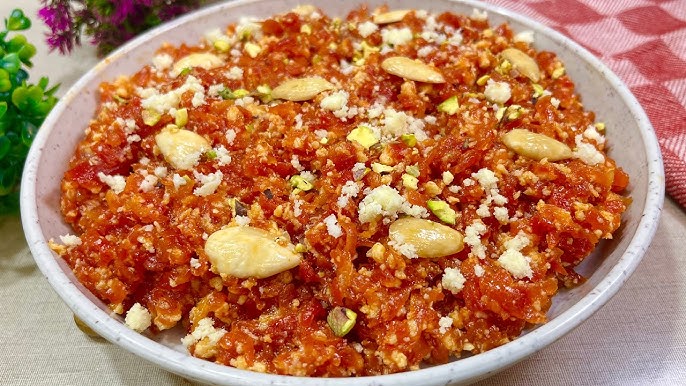
Gajar Ka Halwa Recipe: Gajar Ka Halwa is one of the most loved Indian desserts, known for its rich taste, soft texture, and deeply satisfying aroma. Made with fresh carrots, milk, ghee, sugar, and cardamom, this classic sweet dish is a staple during festivals, family gatherings, and special occasions. Its bright color, creamy consistency, and luxurious flavor make it a timeless dessert that never loses its appeal.
This traditional sweet is simple at its core, yet the final result feels indulgent and celebratory. When prepared properly, every spoonful offers the perfect balance of natural carrot sweetness, slow-cooked milk richness, and the delicate crunch of nuts. Whether served warm in winter or enjoyed as a comforting dessert after a hearty meal, Gajar Ka Halwa remains a favorite across generations.
Ingredients You’ll Need for Gajar Ka Halwa
To make a flavorful and authentic Gajar Ka Halwa recipe, we need fresh ingredients that contribute to its signature richness and aroma.
Main Ingredients
- 1 kg red or regular carrots, grated
- 1 litre full-fat milk
- 4 to 5 tablespoons ghee
- ¾ cup sugar
- ¼ cup khoya or mawa for added richness
- ½ teaspoon cardamom powder
Dry Fruits and Garnish
- 10 to 12 cashews, chopped
- 10 to 12 almonds, sliced
- 1 tablespoon raisins
- 8 to 10 pistachios, sliced
- A few strands of saffron optional
These ingredients combine to create the classic taste of homemade halwa. The quality of carrots and milk plays a major role, so using fresh produce and full-fat dairy gives the best results.
How to Choose the Best Carrots for Gajar Ka Halwa
The foundation of an excellent Gajar Ka Halwa recipe lies in the carrots. Tender, juicy, and naturally sweet carrots work best. In many traditional versions, red winter carrots are preferred because they have a deeper sweetness and vibrant color. If red carrots are unavailable, fresh orange carrots can also produce excellent results.
We should avoid carrots that feel dry, fibrous, or overly thick, as they may affect the smoothness of the halwa. Fresh carrots with a firm texture and bright appearance will cook down beautifully and absorb the richness of milk and ghee more effectively.
Preparation Before Cooking
Before starting, we need to prepare all ingredients properly. Wash the carrots thoroughly, peel them lightly, and grate them using a medium grater. Fine grating helps the halwa cook faster and creates a softer texture. Measure the milk, sugar, ghee, and cardamom in advance so the cooking process remains smooth and organized.
If we are using nuts and raisins, it is helpful to chop them before turning on the heat. Keeping every ingredient ready ensures that the halwa cooks evenly without interruption.
Step-by-Step Guide to Make Gajar Ka Halwa
Step 1: Grate the Carrots Properly
Take the peeled carrots and grate them evenly. Discard the hard core if it feels too tough or woody. Uniformly grated carrots ensure even cooking and prevent the halwa from becoming stringy.
Freshly grated carrots release moisture naturally, which helps them soften during cooking. This is an important stage because the texture of the finished halwa depends greatly on how the carrots are prepared in the beginning.
Step 2: Boil the Milk
Pour the full-fat milk into a deep, heavy-bottomed pan and bring it to a gentle boil. Using a heavy pan prevents the milk from burning and allows the halwa to cook slowly and evenly.
Once the milk starts simmering, add the grated carrots. Stir well so the carrots are fully coated and mixed into the milk. This begins the traditional slow-cooking process that gives Gajar Ka Halwa its rich body and depth of flavor.
Step 3: Cook the Carrots in Milk
Cook the grated carrots in the milk over medium heat. Stir regularly to prevent sticking, especially at the bottom of the pan. As the milk reduces, the carrots will soften and absorb the creamy richness.
This stage takes time, but it defines the quality of the dessert. The carrots should become tender while the milk thickens gradually. Slow cooking helps the natural sweetness of the carrots develop fully, making the halwa more flavorful and balanced.
Step 4: Let the Milk Reduce Completely
Continue cooking until most of the milk evaporates. At this point, the mixture will thicken significantly, and the carrots will appear glossy and soft. This is the stage where the dessert starts taking on its classic halwa consistency.
We should keep stirring consistently so the mixture does not catch at the base of the pan. Proper reduction creates a dense, luscious texture that makes the halwa taste authentic and homemade.
Step 5: Add Sugar
Once the milk has nearly dried up, add the sugar. After adding sugar, the mixture will loosen again because the sugar releases moisture. This is completely normal.
Cook the halwa further until the extra liquid evaporates. Stir often and patiently. The sugar blends into the carrots and milk solids, intensifying the sweetness and giving the dessert its characteristic glossy finish.
Step 6: Add Ghee for Richness
Add ghee to the pan and mix thoroughly. Ghee transforms the halwa by deepening its flavor and improving its mouthfeel. It also helps the mixture cook to the right texture and prevents dryness.
At this stage, the halwa begins to smell incredibly rich and fragrant. The ghee coats the carrots beautifully, making the dessert soft, luxurious, and more satisfying.
Step 7: Add Khoya and Cardamom
Crumble in the khoya or mawa and sprinkle the cardamom powder. Mix well so everything is distributed evenly. Khoya gives the halwa a richer texture and a more festive taste, while cardamom adds the warm, unmistakable aroma associated with traditional Indian sweets.
Cook for a few more minutes until the halwa thickens well and starts leaving the sides of the pan slightly. This indicates that the dessert is done and ready for the final touch.
Step 8: Fry the Nuts and Raisins
In a small pan, heat a little ghee and lightly fry the cashews, almonds, and raisins. Once they turn golden and aromatic, add them to the halwa.
This final addition brings contrast to the dessert. The softness of the cooked carrots pairs beautifully with the light crunch of nuts and the sweetness of plump raisins. Garnish with pistachios and saffron if desired.
Tips for Making the Best Gajar Ka Halwa
A truly memorable Gajar Ka Halwa recipe comes down to careful cooking and simple technique. Using full-fat milk produces a creamier and richer halwa. Cooking slowly over medium or low heat allows the carrots to soften fully and absorb every bit of flavor.
Avoid rushing the milk reduction stage. If the milk is not reduced properly, the halwa may feel watery or undercooked. We should also avoid adding sugar too early, because it can slow down the cooking of the carrots. Sugar should go in only after the carrots are tender and most of the milk has evaporated.
Adding khoya is optional, but it gives the dessert a festive, restaurant-style richness. Cardamom should be used in moderation so it enhances the dessert without overpowering the natural carrot flavor.
Why Homemade Gajar Ka Halwa Tastes Better
Homemade Gajar Ka Halwa offers freshness, depth, and authenticity that packaged desserts cannot match. We can control the sweetness, richness, and texture exactly the way we prefer. The aroma of slowly cooking carrots and milk, combined with the richness of ghee and the warmth of cardamom, creates a dessert that feels both comforting and luxurious.
Making it at home also allows us to use better ingredients and serve it fresh. Fresh halwa has a softness and fragrance that stands out immediately, making it ideal for family meals, festive dining, or special winter evenings.
Serving Suggestions for Gajar Ka Halwa
Gajar Ka Halwa is best served warm, as this highlights its creamy texture and rich aroma. It can be enjoyed on its own or paired with a scoop of vanilla ice cream for a delicious contrast of hot and cold. Some also enjoy it chilled, especially when the halwa has thickened further after refrigeration.
For festive serving, garnish with extra pistachios, silvered almonds, and a touch of saffron. Small dessert bowls or elegant serving cups make it look even more appealing for guests.
How to Store Gajar Ka Halwa
Once cooled, transfer the halwa to an airtight container and refrigerate it. It stays fresh for 3 to 5 days when stored properly. Before serving, reheat gently in a pan or microwave with a small spoon of milk or ghee if needed to restore its soft texture.
This dessert can also be made ahead for celebrations, which makes it highly practical. In fact, many people find that the flavor deepens slightly after resting for several hours.
Common Mistakes to Avoid
One common mistake is using too little milk or not allowing enough time for the carrots to cook fully. Another is adding sugar too early, which can leave the carrots slightly firm. Cooking on very high heat may also cause burning or uneven texture.
We should also avoid using too much ghee at once, as balance matters. The goal is a halwa that feels rich and smooth, not greasy. Careful stirring and patient reduction are the keys to getting it right.
FAQs about Gajar Ka Halwa Recipe
1. What is Gajar Ka Halwa?
Gajar Ka Halwa is a rich and traditional Indian dessert made with grated carrots, milk, sugar, and ghee. It is slow-cooked until soft, fragrant, and naturally sweet.
2. Which carrots are best for Gajar Ka Halwa?
Fresh, tender, and naturally sweet red or orange carrots work best. Juicy carrots give the halwa a better texture and deeper flavor.
3. Can we make Gajar Ka Halwa without khoya?
Yes. We can prepare it without khoya and still get a delicious result. Khoya simply makes the dessert richer and more indulgent.
4. Why is my Gajar Ka Halwa too watery?
This usually happens when the milk has not reduced enough or the carrots released excess moisture. Continue cooking on low heat until the liquid evaporates and the mixture thickens.
5. How do we make Gajar Ka Halwa taste rich?
Using full-fat milk, ghee, cardamom, nuts, and optionally khoya helps create a rich, authentic taste. Slow cooking also improves the flavor.
6. Can we reduce the sugar in this recipe?
Yes. We can adjust the sugar to suit our taste, especially if the carrots are already very sweet. Taste as we cook and add gradually if needed.
7. How long does Gajar Ka Halwa last?
It can be stored in an airtight container in the refrigerator for about 3 to 5 days. Reheat gently before serving.
8. What can we serve with Gajar Ka Halwa?
Gajar Ka Halwa is delicious on its own, but we can also serve it with chopped nuts, a little cream, vanilla ice cream, or a scoop of rabri for extra richness.
Conclusion
Gajar Ka Halwa is more than just a dessert. It is a deeply comforting dish that brings together the sweetness of carrots, the richness of milk, the aroma of cardamom, and the indulgence of ghee in one beautiful preparation. Its traditional charm, simple ingredients, and luxurious flavor make it one of the finest desserts to prepare at home.
When cooked with patience and the right method, this Gajar Ka Halwa recipe delivers outstanding results every time. It is perfect for festive occasions, family dinners, celebrations, or any moment that deserves a warm and memorable sweet dish. Rich, fragrant, and irresistibly satisfying, this classic dessert always earns its place at the table.