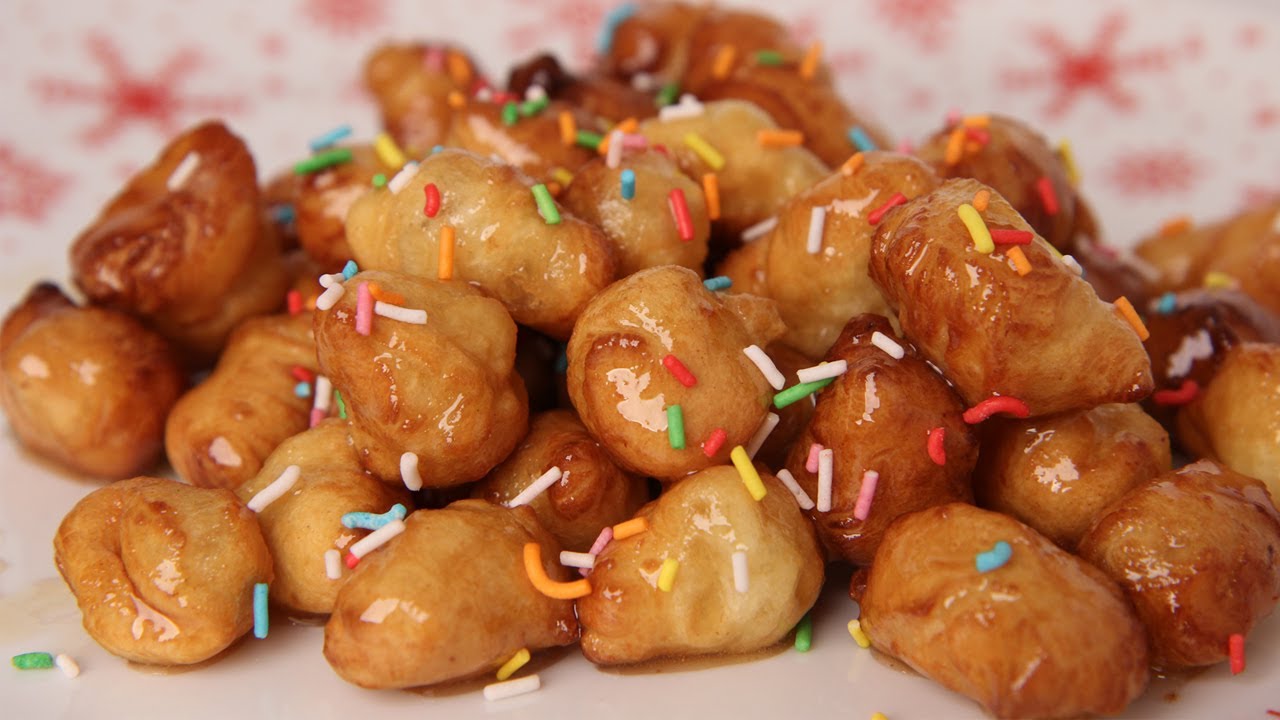
Struffoli Recipe: Struffoli are tiny, golden balls of deep-fried dough that are lightly sweetened and usually coated in a sticky, fragrant honey glaze. These delightful little treats are crispy on the outside and soft on the inside, forming a beautiful mound that resembles a festive wreath when served. Traditionally, Struffoli are associated with Italian Christmas celebrations, especially in Southern Italy, where they are a staple in holiday households. Each bite-sized piece packs just enough sweetness to be satisfying without being overwhelming.
Struffoli aren’t just a dessert—they’re a statement of love and festivity. Families often gather in the kitchen to prepare them together, turning the process into a cherished annual ritual. With their vibrant colors and sweet aroma, Struffoli can instantly bring holiday cheer to any table.
Origin and Cultural Significance
Struffoli have deep roots in Neapolitan tradition, dating back centuries. Their origins are believed to trace back to ancient Greece, but they truly found their identity in Naples, Italy. The name “Struffoli” comes from the Greek word “strongoulos,” meaning “rounded,” which perfectly describes their shape.
Over the years, Struffoli have taken on various forms and names throughout Italy. In some regions, they’re known as “cicerchiata” or “pignolata,” but the essence remains the same—small balls of fried dough held together with honey and decorated with festive sprinkles or candied fruit.
More than just a treat, Struffoli symbolize unity and abundance. They’re often served during Christmas and Easter, meant to be shared with family and friends as a sign of goodwill and celebration.
Ingredients Needed
Essential Ingredients
Making authentic Struffoli requires a few basic ingredients. Here’s what you’ll need:
- 2 cups all-purpose flour
- 3 large eggs
- 1 tablespoon sugar
- 1 tablespoon unsalted butter (softened)
- 1 teaspoon vanilla extract
- 1 pinch of salt
- Zest of 1 lemon (or orange, if preferred)
- 1/2 cup honey
- Vegetable oil for frying
Each ingredient plays a vital role. The eggs bind the dough together, while the zest adds a subtle citrusy note that brightens up the flavor. The butter ensures tenderness, and the sugar gives the dough a touch of sweetness even before the honey glaze is added.
Optional Add-ins for Extra Flavor
To take your Struffoli to the next level, you can add:
- Anise extract or liqueur (like Sambuca or Limoncello)
- Candied orange or lemon peel
- Colorful nonpareil sprinkles
- Chopped nuts (almonds or hazelnuts)
- Cinnamon or nutmeg for a warm spice twist
These optional ingredients let you customize your Struffoli and add personal flair. Want them more citrusy? Add extra zest. Want a richer texture? Toss in some crushed nuts. It’s your festive masterpiece—make it shine your way!
Equipment and Tools
Kitchen Tools Required
While Struffoli aren’t complicated to make, having the right tools makes the process smoother and safer:
- Mixing bowls (medium and large)
- Whisk or hand mixer
- Rolling pin
- Knife or dough cutter
- Slotted spoon
- Large frying pan or deep fryer
- Paper towels (for draining)
- Wooden spoon or spatula
- Serving platter or plate
The mixing bowls and rolling pin help with dough preparation, while the slotted spoon is essential for safely removing the fried dough from hot oil. Paper towels will absorb excess oil, keeping your Struffoli from turning soggy.
Substitutes for Common Equipment
Don’t have a deep fryer? No problem. A heavy-bottomed pot or skillet will do the trick. Just ensure you maintain a steady oil temperature between 350°F and 375°F. No rolling pin? Use a clean wine bottle or any cylindrical object in your kitchen. The idea is to get the dough thin enough to form uniform pieces.
Even if you lack some specialized tools, improvisation goes a long way. With a little creativity, making Struffoli can be both easy and fun.
Step-by-Step Guide to Making Struffoli
Step 1: Preparing the Dough
Start by combining the eggs, sugar, butter, vanilla extract, lemon zest, and salt in a large mixing bowl. Whisk or mix until smooth. Slowly add flour, one scoop at a time, mixing as you go. When it becomes too thick for a whisk, use your hands to knead the dough until it’s soft but not sticky. If it’s too sticky, add a bit more flour; too dry, sprinkle in a teaspoon of water.
Knead the dough for about 5–7 minutes until it becomes smooth and elastic. Wrap it in plastic wrap and let it rest at room temperature for 30 minutes. This rest period allows the gluten to relax, making the dough easier to roll and shape.
The dough should be pliable but not overly soft—it should hold its shape without sticking to your fingers.
Step 2: Rolling and Cutting the Dough
Once the dough has rested, it’s time to shape it. Lightly flour your work surface and roll out the dough into a flat sheet about 1/4 inch thick. You don’t want it too thick—remember, these will puff up during frying.
Next, divide the dough into long ropes about the width of your finger. Think of it like making pasta. Cut these ropes into small, bite-sized pieces—each about the size of a marble. They don’t need to be perfect, but uniform size ensures even frying.
At this point, you can roll each piece into a ball with your palms, but it’s optional. Many traditional recipes simply leave the pieces as small squares or nuggets. Place the cut dough on a floured tray, making sure they’re not sticking together.
This step is all about precision and patience. Don’t rush it. The better you prep your dough balls, the more beautiful your final Struffoli will look.
Step 3: Frying the Dough Balls
Heat about 2 inches of vegetable oil in a large frying pan or deep pot to 350°F (use a thermometer if you have one). You’ll know it’s ready when a small piece of dough dropped in bubbles and floats within a few seconds.
Fry the dough balls in batches—don’t overcrowd the pan. Fry each batch for about 2–3 minutes or until golden brown. Use a slotted spoon to turn them occasionally, ensuring they cook evenly on all sides.
Once fried, transfer the dough balls to a paper towel-lined plate to drain excess oil. They should be crispy on the outside and pillowy on the inside. Repeat until all your dough is fried and cooled slightly.
Safety tip: Always be cautious when frying—hot oil can splatter, so keep children and pets away from the cooking area.
Step 4: Preparing the Honey Syrup
While your Struffoli are cooling, prepare the honey glaze. In a large saucepan over low heat, combine 1/2 cup of honey with 2 tablespoons of sugar (optional for a slightly thicker syrup). Stir until the mixture becomes warm and runny but not boiling.
Add a splash of orange or lemon juice for brightness, or a teaspoon of anise liqueur for a traditional flavor. This will make your glaze even more fragrant and tasty.
Once your syrup is ready, remove from heat. Immediately proceed to the next step—timing is everything when it comes to coating the Struffoli.
Step 5: Coating and Assembling
Now comes the fun part! Place the fried dough balls into the warm honey syrup and gently stir with a wooden spoon or spatula to coat them thoroughly. Be careful not to break or smash them.
Transfer the honey-coated Struffoli to a serving platter, forming a mound or wreath shape. This isn’t just for looks—it’s traditional and helps trap the honey in between the pieces.
Before the honey hardens, sprinkle generously with colorful nonpareils, candied fruit, chopped nuts, or even chocolate chips if you like. The final touch makes them look like festive ornaments—bright, cheerful, and absolutely mouth-watering.
Let the Struffoli sit for 30–60 minutes so the honey sets slightly before serving. They’re best enjoyed fresh but can be kept for several days if stored properly.
Tips and Tricks for Perfect Struffoli
Avoiding Common Mistakes
Making Struffoli is fairly straightforward, but here are some common pitfalls to avoid:
- Don’t overwork the dough – It’ll get tough.
- Keep the oil hot but not smoking – 350°F is your sweet spot.
- Fry in batches – Overcrowding drops the oil temp and causes greasy results.
- Don’t let the honey boil – It will caramelize and lose its sticky texture.
- Serve at room temperature – Warm honey can make the mound collapse.
Enhancing the Texture and Flavor
Want lighter, crispier Struffoli? Add a splash of white wine or limoncello to your dough for a richer, airy texture. For flavor, lemon zest is classic—but orange zest and a touch of cinnamon give it a warm twist.
Using a neutral oil like sunflower or canola helps the flavor shine. And if you want to switch things up, a drizzle of dark chocolate or caramel adds an indulgent spin.
How to Serve Struffoli
Presentation Ideas
Struffoli are as much a feast for the eyes as they are for the taste buds. Traditional Italian families often present them in the shape of a wreath, which symbolizes unity and celebration—perfect for holidays like Christmas or Easter. To create this shape, arrange the honey-coated dough balls in a circle on a platter, leaving the center open like a donut. Press them gently so they hold their form as the honey sets.
If you’re looking to impress guests, consider serving Struffoli in individual cupcake liners for a modern, portion-controlled twist. Stack them high in a pyramid on a decorative cake stand for dramatic effect, or mold them into a heart or star shape using a greased cookie cutter as a guide.
Add festive touches with:
- Multi-colored sprinkles
- Silver dragees for sparkle
- Edible gold leaf for elegance
- Candied citrus slices around the base
Not only does this make your dessert table pop, but it also highlights the celebratory nature of this classic treat.
Perfect Pairings
Struffoli pair wonderfully with a range of beverages and sides. Since they’re sweet and honey-rich, pairing them with something light or slightly bitter creates a perfect balance. Try:
- Espresso or cappuccino – for a classic Italian finish
- Vin Santo or Moscato – for a sweet wine complement
- Spiced tea – for a cozy afternoon treat
- Greek yogurt – for a tangy contrast at breakfast
For holiday brunches, consider serving Struffoli alongside a fresh fruit salad or a platter of cheeses and cured meats. The sweet-savory contrast is always a crowd-pleaser.
Storing and Preserving Struffoli
Best Practices for Freshness
Struffoli taste best within the first 1–2 days of making them, while the outside is still crisp and the honey is sticky but not soggy. If you’re planning ahead, store them properly to preserve texture and flavor.
- Use an airtight container to prevent them from absorbing moisture in the air.
- Store at room temperature, never in the fridge—cold air makes them hard and chewy.
- Line the bottom of your container with parchment paper to avoid sticking.
- Keep away from direct sunlight or heat, which can cause the honey to melt or crystallize.
If you’ve decorated them with perishable toppings like fresh fruit, make sure to consume them within 24 hours for the best taste and appearance.
Freezing and Reheating Tips
Though not traditional, you can freeze Struffoli—but do so before coating them in honey. Freeze the fried dough balls in a single layer on a baking sheet, then transfer to a zip-top freezer bag. They’ll keep for up to 1 month.
To reheat:
- Thaw completely at room temperature.
- Bake at 300°F for about 5–7 minutes to restore crispness.
- Prepare fresh honey syrup and coat as usual before serving.
This method helps preserve the crunch and avoids a soggy mess.
FAQs about Struffoli Recipe
1. Can I bake Struffoli instead of frying?
Yes, you can bake them at 375°F for about 10–12 minutes or until golden. However, they won’t have the same crisp texture as the traditional fried version.
2. What kind of honey is best for Struffoli?
Use mild-flavored honey like clover or orange blossom. Strong varieties like buckwheat can overpower the other flavors.
3. How long can Struffoli be stored?
Struffoli can be stored in an airtight container at room temperature for up to 5 days. They’re best within the first 2 days for ideal texture.
4. Are there any gluten-free alternatives?
Yes, you can use a gluten-free all-purpose flour blend. Just ensure it contains xanthan gum or add it separately for binding.
5. Can I make Struffoli without a deep fryer?
Absolutely! Use a deep, heavy-bottomed skillet or saucepan with at least 2 inches of oil. A kitchen thermometer helps maintain the correct temperature.
Conclusion
Struffoli is more than just a dessert—it’s a joyful expression of tradition, family, and celebration. From kneading the dough to forming the final honey-glazed mountain of sweetness, every step is a chance to create something beautiful and memorable. Whether you’re following an old family recipe or trying it for the first time, Struffoli has a way of bringing people together.
With their golden hue, delightful crunch, and fragrant honey coating, these Italian treats are perfect for holidays, special occasions, or simply when you want to indulge in something homemade and heartwarming. Roll up your sleeves, grab a mixing bowl, and let the aroma of Struffoli fill your kitchen with love and sweetness.