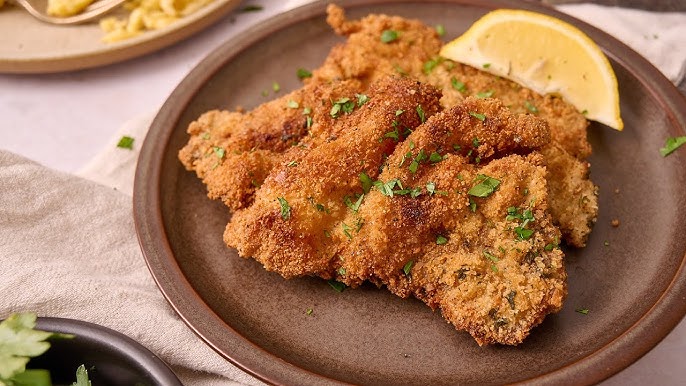
Wiener Schnitzel Recipe: Wiener Schnitzel is more than just a meal—it’s a culinary icon. This traditional Austrian dish is made from thin slices of veal, lightly breaded and fried until golden and crispy. The name “Wiener Schnitzel” translates directly to “Viennese cutlet,” and it’s protected by Austrian law: to be labeled as such, the dish must be made with veal. Any variation using pork or chicken can’t officially carry the name, though those versions are still delicious.
Imagine biting into a perfectly fried schnitzel—crisp on the outside, juicy and tender on the inside. It’s the kind of dish that feels both luxurious and comforting at once. Whether you’re sitting in a street café in Vienna or recreating the experience at home, the Wiener Schnitzel has a way of making any meal feel special. It’s incredibly simple, yet it requires precision and care to do right.
History and Origin
Wiener Schnitzel’s origin is steeped in a blend of culinary legend and cultural pride. Many believe the dish was introduced to Austria from Italy in the 19th century, closely related to the Milanese dish “cotoletta alla milanese.” However, the Viennese adapted it into their own unique tradition, focusing on specific preparation methods and presentation.
In Austria, it’s more than food—it’s part of their heritage. Traditionally served with a wedge of lemon, parsley potatoes, or cucumber salad, Wiener Schnitzel is often featured in family gatherings, holidays, and local festivals. It represents the perfect harmony between elegance and simplicity.
Ingredients for Authentic Wiener Schnitzel
Key Ingredients List
Before you roll up your sleeves and get cooking, gather the essentials. To make a truly authentic Wiener Schnitzel, you’ll need:
- 4 veal cutlets (about 150g each)
- Salt and freshly ground black pepper
- All-purpose flour (for dredging)
- 2 large eggs (lightly beaten)
- Plain breadcrumbs (preferably homemade)
- Butter or clarified butter (for frying)
- Lemon wedges (for garnish)
Let’s talk about the flour, eggs, and breadcrumbs—these form the “holy trinity” of breading. Use plain white breadcrumbs for an authentic texture. Avoid panko or seasoned types; they just won’t give you that delicate, Austrian crispiness. As for the butter, clarified butter is ideal because it can withstand higher frying temperatures without burning. It also adds that irresistible golden hue and rich flavor.
Tips for Selecting the Best Veal
Veal is the heart of a Wiener Schnitzel. Look for veal that is pale pink, with minimal fat marbling. Ask your butcher for veal topside or leg cutlets—they’re lean and tender, perfect for this dish.
Here’s a pro tip: don’t skimp on quality. A good schnitzel starts with good meat. If veal is hard to find, you can substitute with pork or chicken, but remember, only the veal version is a true Wiener Schnitzel.
Another thing to keep in mind is the thickness. The cutlets should be sliced thin—about 1/4 inch is ideal. If they’re too thick, they won’t cook evenly, and you’ll miss out on that signature balance between crispy coating and tender interior.
Essential Equipment You’ll Need
Kitchen Tools Checklist
You don’t need fancy gadgets to make Wiener Schnitzel, but having the right tools makes all the difference. Here’s what you’ll need:
- Meat mallet (for pounding the veal)
- Three shallow bowls (for breading)
- Large skillet or frying pan (preferably non-stick)
- Tongs or a slotted spatula (for turning the schnitzel)
- Paper towels (for draining excess oil)
- Meat thermometer (optional, for checking doneness)
A sturdy meat mallet is crucial. You want to pound the veal evenly without tearing it apart. The three bowls help streamline the breading process and keep things organized. And when it comes to frying, a wide skillet gives you enough room to let the schnitzels cook without crowding.
Why the Right Equipment Matters
Using the right tools ensures you get that crispy, golden crust without overcooking or under-seasoning. A poor-quality skillet might lead to uneven frying, soggy schnitzels, or worse—burnt coating. And without a proper mallet, you could end up with cutlets that are thick in some areas and thin in others, which affects texture and taste.
Think of these tools as your culinary sidekicks. With them, you’re not just making a dish—you’re crafting a masterpiece. Plus, the right setup makes the whole process smoother and less stressful.
Preparing the Meat
How to Properly Tenderize Veal
Tenderizing is not optional—it’s a must. Lay your veal cutlets between two sheets of plastic wrap or parchment paper. Using the flat side of the mallet, gently pound the meat until it’s about 1/4 inch thick. Don’t go full Hulk mode—you want to tenderize, not destroy.
Pounding the veal ensures even cooking and tender bites. The thinner the cutlet, the quicker it cooks, and the more crisp your outer layer becomes. Plus, you’re building that perfect texture balance Wiener Schnitzel is famous for.
Slicing and Trimming Techniques
Your butcher might do the slicing for you, but if you’re prepping from scratch, aim for uniformity. Trim away excess fat and sinew, and try to keep the shape neat—oval or teardrop-shaped cutlets are traditional.
Clean edges aren’t just for aesthetics—they help the breading stick better and fry more evenly. With veal that’s pounded flat and trimmed neatly, you’re now ready to move on to the most delicate and defining part: the breading.
Breading the Schnitzel
The Classic Three-Step Breading Process
Here’s where precision matters. Lay out your three shallow bowls:
- Flour: Lightly coat the veal to help the egg stick.
- Eggs: Dip the floured cutlet into beaten eggs.
- Breadcrumbs: Press gently into plain white breadcrumbs—do NOT pat it down.
You want the coating to be light and airy, almost like it’s loosely hugging the veal. That’s how you get the puffed, crispy finish that makes a true Wiener Schnitzel stand apart.
Tips for Achieving Perfect Coating
Never press the breadcrumbs too hard—they should cling without compacting. Also, don’t let the cutlets sit around after breading. Fry them immediately, so the coating doesn’t soak up moisture and get soggy.
Want an extra crispy schnitzel? Let your breadcrumbs sit out for a few hours before using. Slightly stale crumbs absorb less oil and give a better crunch. And always season the flour with a pinch of salt and pepper to layer the flavor from the start.
Frying the Schnitzel
Choosing the Right Oil
Frying is where the magic happens, so choosing the right oil is critical. Traditionally, clarified butter (also called Butterschmalz) is the gold standard. It has a high smoke point, delivers a rich, nutty flavor, and gives the schnitzel that golden, appetizing color. But if you can’t get your hands on clarified butter, sunflower oil or canola oil are excellent alternatives due to their neutral taste and high smoke points.
Avoid olive oil or any strong-flavored oils—they can overpower the subtle flavors of the schnitzel. And don’t even think about deep-frying. A true Wiener Schnitzel is pan-fried in a generous amount of oil or butter, but it should never be submerged.
Make sure to preheat your oil properly. Use medium-high heat and test it by dropping a breadcrumb into the pan. If it sizzles immediately, your oil is ready. If it smokes or burns quickly, it’s too hot and needs to cool a bit.
How to Fry to Golden Perfection
Place one schnitzel in the hot pan at a time—don’t overcrowd. This ensures even cooking and helps the schnitzel fry, not steam. Use a spoon to gently baste the top of the schnitzel with the hot oil during cooking. This keeps the breading light and puffed while cooking the top evenly.
Cook each side for about 2 to 3 minutes until it turns golden brown. Flip carefully using tongs or a slotted spatula to prevent breaking the crust. Once done, transfer to a paper towel-lined plate to drain excess oil.
Here’s the trick: don’t stack them. Stacking makes the crispy crust go soggy. If you’re cooking multiple pieces, keep them warm in the oven on a baking rack at 200°F (90°C) while finishing the rest.
Serving Suggestions
Traditional Side Dishes
The classic Wiener Schnitzel deserves equally iconic sides. In Austria, it’s traditionally served with:
- Petersilienkartoffeln (Parsley Potatoes): Boiled potatoes tossed with melted butter and chopped parsley.
- Gurkensalat (Cucumber Salad): Thinly sliced cucumbers in a sweet-sour dill vinaigrette.
- Lingonberry Jam: Adds a sweet and tart contrast to the savory schnitzel.
- Lemon wedges: A squeeze of lemon just before the first bite enhances flavor and adds freshness.
These sides are not just tasty—they balance the richness of the schnitzel and bring freshness and acidity to your plate. If you’re hosting a meal and want to keep it authentically Austrian, stick with these companions.
Modern Twists on the Classic Plate
While purists might stick with traditional sides, there’s room for creativity:
- Arugula Salad with Cherry Tomatoes and Shaved Parmesan
- German Potato Salad (with bacon and vinegar)
- Roasted vegetables like asparagus, carrots, or Brussels sprouts
For a heartier meal, some people serve schnitzel over buttered spaetzle or with mushroom cream sauce. While that veers into Jägerschnitzel territory (a German variant), it’s still a satisfying fusion that many love.
Storing and Reheating Tips
Best Practices for Storage
Got leftovers? No worries. Schnitzel stores well if you handle it right.
- Refrigerate: Place cooled schnitzel in an airtight container with parchment paper between layers to prevent sticking.
- Freeze: Wrap each piece individually in plastic wrap and then foil. Store for up to 2 months in the freezer.
Avoid putting hot schnitzel directly into a container—this traps steam and makes it soggy. Let it cool completely on a wire rack first.
Label your containers with the date so you can keep track of freshness. And remember: schnitzel is always best fresh, but proper storage can extend its deliciousness.
Reheating Without Losing Crispiness
The biggest fear? Losing that glorious crisp. Here’s how to bring it back:
- Oven Method (Best): Preheat oven to 375°F (190°C). Place schnitzel on a wire rack set over a baking sheet. Bake for 10–15 minutes until heated through and crispy.
- Stovetop (Quick): Heat a small amount of oil in a non-stick pan over medium heat. Re-fry the schnitzel for 2–3 minutes on each side.
- Avoid microwaves. They turn your crispy crust into rubbery disappointment.
Use foil loosely tented over the schnitzel in the oven to prevent over-browning if needed. This way, you’ll enjoy a next-day schnitzel almost as good as the original.
Common Mistakes to Avoid
Breading Blunders
Let’s talk about what can go wrong (and how to avoid it):
- Skipping the flour step: This is crucial for helping the egg stick.
- Over-beating the eggs: Creates a watery coating that doesn’t cling well.
- Pressing the breadcrumbs: This compacts the crust instead of making it light and bubbly.
- Letting the breaded schnitzel sit too long: The coating absorbs moisture and turns soggy.
Breading should be a quick and gentle process. Think of it like layering a puff jacket on the veal—not compressing it into submission.
Overcooking the Veal
Veal is tender, but it’s also lean—meaning it dries out fast. Keep a close eye while frying. Once the schnitzel turns golden brown, it’s likely ready.
Using a meat thermometer can help: veal should reach an internal temperature of about 145°F (63°C). But trust your eyes and your instincts too. A schnitzel should be light, moist, and golden—not dark brown and leathery.
Nutritional Information
Caloric Breakdown
Let’s get real—Wiener Schnitzel is not exactly diet food. But knowing the nutritional facts can help you make informed choices.
| Component | Estimated Value (per 1 cutlet) |
|---|---|
| Calories | ~400-500 kcal |
| Protein | 25-30g |
| Fat | 20-25g |
| Carbohydrates | 20-30g |
| Fiber | 1g |
| Sodium | 300-400mg |
These numbers depend on the size of the cutlet and how much oil it absorbs. Frying in clarified butter adds richness and calories, while using leaner oil and dabbing excess oil with paper towels can cut down the fat content.
Healthier Substitutes
Looking for a lighter take? Try these alternatives:
- Use chicken breast instead of veal – leaner and lower in calories.
- Air-fry instead of pan-fry – you’ll sacrifice some crispiness, but drastically cut down on fat.
- Use whole wheat flour and breadcrumbs for added fiber.
- Serve with a light salad instead of potatoes.
You don’t have to give up Wiener Schnitzel—you can just make it work for your lifestyle.
Variations of the Wiener Schnitzel
Pork Schnitzel
If veal isn’t your thing—or it’s hard to find—pork is the most popular alternative. Known as Schnitzel Wiener Art in Germany (meaning “Viennese-style schnitzel”), it uses thin slices of pork loin or pork tenderloin instead of veal. The preparation remains nearly identical: pound the meat thin, dredge in flour, dip in egg, coat in breadcrumbs, and fry until golden brown.
Pork schnitzel is slightly heartier in flavor and has a more robust texture. It’s also more budget-friendly, making it a weeknight favorite in many households. Just be sure to trim the pork well to remove any chewy bits or sinew.
Some enthusiasts argue that pork actually holds its own better in terms of juiciness when fried. If you’re cooking for a crowd or kids, pork schnitzel is a reliable, delicious option that doesn’t stray too far from the original.
Chicken Schnitzel
Looking for something even leaner and lighter? Enter the chicken schnitzel. This version swaps out veal or pork for boneless, skinless chicken breasts. When prepared correctly, it’s still crispy, golden, and bursting with flavor.
Slice the chicken breasts horizontally to make thin cutlets, or pound them flat. Be sure they’re evenly sized to avoid overcooking. Chicken schnitzel is especially popular in modern kitchens and health-conscious homes because it’s lower in fat and calories, yet still deeply satisfying.
You can even get creative—add a bit of garlic or Parmesan to the breadcrumbs for extra flavor, or serve it with a spicy dipping sauce for a bold twist. The versatility of chicken schnitzel makes it perfect for weeknight dinners, lunchbox leftovers, or even as a sandwich filling.
Pairing the Schnitzel with Drinks
Best Wines and Beers
Pairing drinks with schnitzel enhances the whole dining experience. Because Wiener Schnitzel has a rich, savory flavor with a crisp crust, the best drink pairings are those that cleanse the palate and complement the dish without overpowering it.
Wine Pairings:
- Grüner Veltliner (Austria’s flagship white wine): Crisp and slightly peppery, it balances the richness of the schnitzel beautifully.
- Riesling: Choose a dry or off-dry version. It’s light, fruity, and refreshing.
- Pinot Blanc or Sauvignon Blanc: These whites bring out the delicate flavors of the veal without clashing.
Beer Pairings:
- Pilsner: Light, crisp, and bubbly—perfect for cutting through the fried coating.
- Helles Lager: Mild and malty, it complements the meat without overshadowing it.
- Weissbier (Wheat beer): Its fruity, yeasty notes pair nicely with the buttery crust.
Non-Alcoholic Pairings
Not into alcohol? No problem. Try these tasty options:
- Sparkling apple cider – adds a bit of sweetness and fizz.
- Lemon soda or homemade lemonade – tartness balances the dish’s richness.
- Iced herbal tea with mint or citrus – refreshing and not too sweet.
No matter your preference, there’s a drink out there to make your schnitzel meal complete.
Hosting a Schnitzel Night
Tips for a Themed Dinner Party
Why not take your love for schnitzel to the next level by hosting a schnitzel night? It’s a fun way to bring people together, and you don’t have to be a professional chef to pull it off. Here’s how to make it unforgettable:
- Decor: Channel Vienna vibes—use blue and white checkered napkins, rustic tableware, and fresh flowers.
- Music: Play traditional Austrian folk music or classical pieces by Mozart to set the mood.
- Menu: Offer veal, pork, and chicken schnitzel options. Add sides like parsley potatoes, cucumber salad, and red cabbage slaw.
Encourage guests to help with breading or even set up a schnitzel “bar” where people can customize their toppings—think lemon wedges, sauces, or jams. It’s interactive, memorable, and delicious.
Decoration and Ambiance Ideas
Set the scene for your schnitzel soirée with cozy lighting and a simple yet elegant table setup. Use natural wood cutting boards for serving, small ceramic bowls for condiments, and linen napkins for a homey touch.
Add a few framed photos or postcards of Vienna for a travel-inspired feel. Light some candles and let the smell of freshly fried schnitzel fill the room. Trust us, your guests won’t want to leave.
Cooking Tips from Austrian Chefs
Secrets to Authentic Taste
What do Austrian chefs do differently when preparing Wiener Schnitzel? They stick to tradition, but they also have a few clever techniques:
- Use day-old breadcrumbs: Slightly stale crumbs absorb less oil and fry better.
- Don’t salt the meat directly: It draws out moisture and affects crispiness. Instead, season the flour and egg wash.
- Swirl the pan: Gently move the pan while frying to let the schnitzel “swim” in the oil for an even, bubbly crust.
These tricks might seem small, but they add up to a professional finish. It’s not just about the ingredients—it’s about respecting the process.
Home Cooks vs. Professional Techniques
Professional kitchens use top-notch veal, precise thermometers, and giant fryers. But you don’t need that to make magic at home. What matters most is preparation, patience, and technique.
Home cooks can elevate their schnitzel game by practicing these fundamentals:
- Take the time to properly pound the meat.
- Keep oil temperature consistent.
- Drain schnitzel on a rack, not just paper towels.
Even if it’s your first time, following these tips will help you get restaurant-quality results right in your kitchen.
FAQs about Wiener Schnitzel Recipe
What is the difference between schnitzel and Wiener schnitzel?
Schnitzel is a general term for breaded and fried meat cutlets. “Wiener schnitzel” refers specifically to veal schnitzel prepared in the traditional Austrian style. By law, only schnitzels made with veal can be called “Wiener schnitzel.”
Can I use pork or chicken instead of veal?
Yes! Pork and chicken are popular alternatives. Just note that only the veal version is considered a true Wiener schnitzel. Pork schnitzel is sometimes labeled “Wiener Art” (Viennese style), and chicken schnitzel is a leaner, equally tasty variation.
How do I keep the coating from falling off?
Make sure to dry the meat before breading, and follow the flour → egg → breadcrumbs process without pressing the coating too hard. Fry immediately after breading to prevent the crust from absorbing moisture.
Is it okay to bake instead of fry?
You can bake schnitzel, but you won’t get the same crispy texture as frying. For a healthier option, consider using an air fryer, which preserves much of the crunch while using less oil.
What sauce goes best with Wiener schnitzel?
Traditionally, Wiener schnitzel is served without sauce, but you can pair it with lemon wedges, lingonberry jam, or even a light mushroom gravy if you’re going for a Jägerschnitzel-style twist.
Conclusion
We also explored side dishes, drink pairings, modern twists, and insider chef tips to help you take your schnitzel game from basic to unforgettable. Whether you’re cooking for yourself, your family, or a schnitzel-themed dinner party, this guide has equipped you with everything you need to succeed.
Wiener Schnitzel isn’t just a meal—it’s a culinary tradition. It’s about honoring simplicity, mastering technique, and enjoying good food with good company. The next time you’re in the mood for comfort food with a European flair, reach for this recipe and get cooking.
And remember: crispiness is king. Respect the schnitzel, and it’ll love you back.