White Asparagus Recipe: White asparagus is one of those luxurious vegetables that pops up every spring, especially cherished in European kitchens. Unlike its green cousin, white asparagus grows underground, shielded from sunlight. This technique prevents photosynthesis, which is why it retains its pale, ivory color. But more than just its color, white asparagus boasts a uniquely delicate flavor—mild, slightly bitter, and oh-so-tender when cooked just right.
If you’ve never tried cooking white asparagus at home, you’re in for a treat. Whether you want to impress guests at a dinner party or enjoy a sophisticated weeknight side, this white asparagus recipe will walk you through every step, from selecting the right spears to serving them like a pro.
Ready to bring a touch of gourmet to your table? Let’s dive in!
What Is White Asparagus?
White asparagus is the same species as green asparagus, but it’s grown using a technique called “etiolation.” Farmers cover the spears with soil or black plastic to block out sunlight, which prevents chlorophyll from forming. This method not only gives the asparagus its ghostly color but also creates a subtler, milder flavor.
Texture-wise, white asparagus is thicker and woodier than green asparagus, requiring careful peeling and slightly longer cooking times. It’s most popular in Europe—especially in Germany, the Netherlands, and France—where it’s considered a seasonal delicacy.
If you’re used to green asparagus, white asparagus might feel like a completely different vegetable—but in the best way. It’s refined, elegant, and the kind of ingredient that elevates any meal.
Why White Asparagus Is Special
So what makes white asparagus such a culinary gem? For starters, it’s not available year-round, which instantly gives it an exclusive feel. In countries like Germany, its arrival kicks off a celebration called “Spargelzeit,” or Asparagus Season. That’s how much people look forward to it!
The labor-intensive growing method—keeping the spears buried and harvesting them by hand—also adds to its value. And taste-wise, it’s more delicate and less grassy than green asparagus, with a slightly nutty finish.
If you’ve only had green asparagus before, white asparagus offers a whole new experience. It’s perfect with buttery sauces, silky hollandaise, or simply seasoned and served with a squeeze of lemon.
Health Benefits of White Asparagus
Not only is white asparagus delicious—it’s also good for you. Packed with nutrients and low in calories, it’s a healthy choice for any meal. Here’s what it brings to the table:
- Rich in antioxidants – helps reduce inflammation and supports immune function.
- High in fiber – aids digestion and keeps you feeling full.
- Loaded with vitamins – particularly Vitamin C, Vitamin K, and folate.
- Natural diuretic – can help flush excess fluids and toxins.
Whether you’re eating it for health or for pleasure (or both), white asparagus is a smart addition to your plate.
Where to Buy White Asparagus
White asparagus can be a bit tricky to find, especially if you live outside of Europe. But during the spring season (usually April to June), many gourmet markets and specialty stores stock it. You can also look in:
- International grocery stores (especially German or French markets)
- Farmers markets in spring
- Online produce delivery services
When buying, go for firm, straight stalks with closed tips. Avoid limp or rubbery spears—they’re past their prime.
How to Choose Fresh White Asparagus
Here’s what to look for when picking the best bunch:
- Firmness: The spears should feel solid, not bendy.
- Tips: Look for tightly closed tips, not frayed or opened ones.
- Color: Pure white without any browning or green tinges.
- Moist Base: The cut end should be moist, not dried out.
Pro tip: Gently squeeze the ends. If they squeak a little, they’re fresh!
Seasonality: When Is White Asparagus in Season?
White asparagus has a very short window of availability, which adds to its charm. It’s typically harvested from mid-April to late June in most parts of Europe. This short season gives it that “get-it-while-you-can” appeal.
Outside of Europe, the availability depends on imports or local growers who use similar growing methods. So keep an eye out in springtime, and grab it while it’s fresh!
List of Ingredients You’ll Need
Let’s keep it simple and classic. Here are the basic ingredients you’ll need for the perfect white asparagus dish:
- 2 lbs (900g) fresh white asparagus
- 1 tablespoon sugar
- 1 tablespoon salt
- Juice of half a lemon
- 2 tablespoons unsalted butter
- Optional: chopped parsley, hollandaise sauce, boiled potatoes, or sliced ham for serving
Optional but great for flavor:
- Bay leaf or a slice of lemon in the cooking water
- Dash of white wine vinegar
These ingredients keep the flavors clean and allow the asparagus to shine.
Essential Kitchen Tools
Before you begin, make sure you have the following tools:
- Vegetable peeler (preferably Y-peeler)
- Sharp knife
- Cutting board
- Large pot (wide enough to lay asparagus flat)
- Slotted spoon or tongs
- Serving plate or platter
- Optional: asparagus pot (tall and narrow)
Having the right tools makes the whole process easier and more enjoyable.
Step-by-Step Guide to Prepare White Asparagus
This is where the magic happens. Follow these steps carefully for perfectly tender, flavorful white asparagus.
Step 1: Washing and Peeling
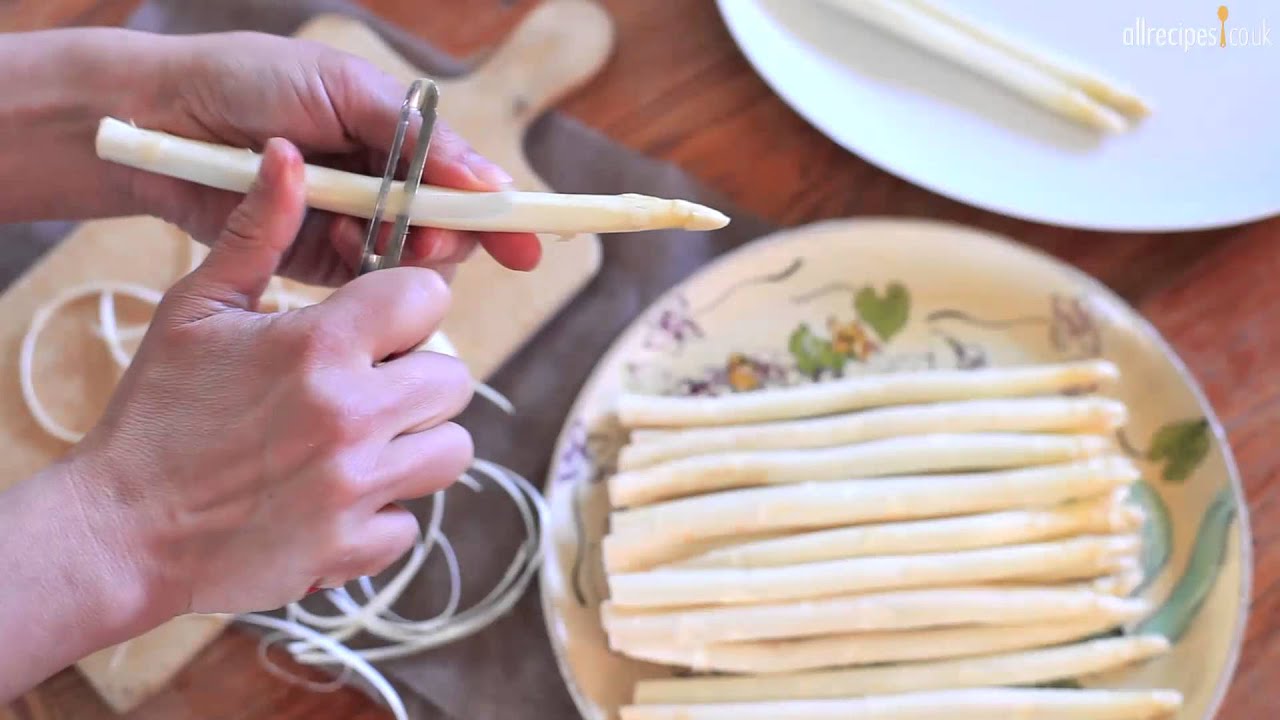
Rinse the white asparagus thoroughly under cold running water to remove any dirt or sand. Using a vegetable peeler, peel each spear from just below the tip down to the base. White asparagus has a thicker, tougher skin than green asparagus, so peeling is essential for a tender result.
Step 2: Trimming the Ends
Cut off about ½ to 1 inch from the bottom of each spear. The ends are often fibrous and won’t soften during cooking, so trimming ensures an evenly tender texture.
Step 3: Boiling in Salted Water
Bring a wide pot of water to a gentle boil and season it generously with salt. Carefully add the asparagus spears and cook for 8–12 minutes, depending on thickness. They should be tender when pierced with a knife but not falling apart.
Step 4: Blanching for Brightness
Once cooked, transfer the asparagus immediately to a bowl of ice water. This stops the cooking process and helps maintain a clean, appealing color and delicate texture. Drain well after a minute or two.
Step 5: Optional Roasting or Grilling
For extra flavor, toss the boiled asparagus with olive oil, salt, and pepper. Roast in a 400°F (200°C) oven for 10–12 minutes or grill over medium heat until lightly golden. Serve warm with butter, lemon, or your favorite sauce.
Classic Sauce Pairings for White Asparagus
The beauty of white asparagus lies in its simplicity, but pairing it with the right sauce? That’s where the magic really happens. While the spears are delicious on their own, sauces elevate them to gourmet-level status. Here are some classic sauce pairings that complement the delicate, slightly bitter flavor of white asparagus:
1. Hollandaise Sauce
This creamy, buttery sauce is the classic pairing—especially in European kitchens. It’s made with egg yolks, melted butter, and a touch of lemon juice, resulting in a silky finish that coats the asparagus perfectly.
Quick tip: If making hollandaise from scratch sounds intimidating, don’t worry. There are quick blender versions that taste just as rich and velvety without all the fuss.
2. Brown Butter Sauce
This one’s simple, rustic, and packed with nutty flavor. Melt butter in a pan until it begins to brown and releases a toasty aroma. Drizzle over your white asparagus and finish with a sprinkle of sea salt and fresh parsley.
3. Vinaigrette
For a lighter option, try a tangy vinaigrette made with white wine vinegar, Dijon mustard, olive oil, and a pinch of sugar. This version is great for serving white asparagus cold or as part of a salad.
Serving Suggestions
You’ve cooked the asparagus perfectly—now how should you serve it? Here are a few ideas that make the most of this spring delicacy:
1. Traditional German Style
- Arrange spears on a plate
- Drizzle with hollandaise sauce
- Serve with boiled new potatoes and sliced Black Forest ham
It’s simple, hearty, and incredibly satisfying. This version is a staple in German homes during Spargelzeit (asparagus season).
2. As a Side Dish
White asparagus pairs beautifully with:
- Grilled salmon or trout
- Roast chicken
- Pan-seared steak
- Pasta primavera
Because it’s mild, it works well with just about any protein.
3. In Salads or Pasta
Chop cooked asparagus into bite-sized pieces and toss it into a salad with arugula, radishes, and a lemon vinaigrette. Or mix into a creamy pasta dish for an elegant touch.
The texture of white asparagus adds a great contrast to soft ingredients like goat cheese or ricotta.
Tips for Perfectly Cooked White Asparagus
Cooking white asparagus may look intimidating at first, but once you get the hang of it, it’s a breeze. Here are some essential tips to make sure your dish turns out perfectly every time:
- Always peel thoroughly – the outer layer is too fibrous to eat and will ruin the texture if left on.
- Use a large, wide pot – so the spears can lie flat and cook evenly.
- Flavor the cooking water – salt, sugar, lemon juice, and butter make a huge difference.
- Cook gently – don’t let the water boil too hard. A soft simmer preserves texture and flavor.
- Don’t overcook – test a spear after 8 minutes. It should be tender but still have structure.
- Serve immediately – white asparagus tastes best fresh and hot from the pot.
Following these tips ensures that you’re not just cooking asparagus—you’re creating a restaurant-worthy dish.
Common Mistakes to Avoid
Even though white asparagus is simple to cook, a few common mistakes can mess things up. Here’s what not to do:
- Skipping the peeling – we’ve said it before, and we’ll say it again: don’t skip this step.
- Boiling in plain water – it leaves the asparagus bland. Use lemon, salt, sugar, and butter for depth.
- Overcooking – mushy asparagus isn’t pleasant. Keep it firm and tender.
- Using limp or old asparagus – fresh is best. Check for firmness and moist ends before buying.
- Not trimming the ends – the woody part at the bottom doesn’t soften when cooked.
By avoiding these mistakes, you’ll be well on your way to asparagus perfection.
Storage Tips for Leftover Asparagus
Have some spears left over? No worries. Here’s how to store and reuse them:
Storing Cooked Asparagus:
- Refrigerator: Place in an airtight container and store for up to 3 days.
- Avoid freezing: It turns mushy when thawed.
Reheating Tips:
- Gently warm in a pan with a touch of butter or olive oil.
- Microwave with a splash of water and cover with a damp paper towel.
- Avoid high heat—it can overcook the already delicate spears.
Using Leftovers Creatively:
- Slice into omelets or scrambled eggs
- Add to a quiche or frittata
- Use in sandwiches with cheese and mustard
- Blend into a creamy soup with potatoes and herbs
White asparagus might be seasonal, but with smart storage and creativity, you can enjoy it a few days longer.
FAQs about White Asparagus Recipe
1. Can I use green asparagus instead of white in this recipe?
Technically yes, but they’re not the same. Green asparagus is thinner and doesn’t need peeling. It has a more earthy, grassy flavor. White asparagus is milder and requires more prep, but offers a completely different culinary experience.
2. How do I know when white asparagus is cooked perfectly?
Insert a knife or skewer into the thickest part—it should slide in easily but the spear should still hold its shape. Usually, 8–12 minutes of gentle boiling is perfect.
3. What can I serve with white asparagus for a complete meal?
Try boiled new potatoes, slices of ham or prosciutto, and a generous ladle of hollandaise sauce. Grilled fish or roast chicken also pair beautifully.
4. Is white asparagus available year-round?
No, it’s a seasonal vegetable usually available from mid-April to late June. That short window is what makes it so special.
5. Can I roast white asparagus instead of boiling it?
Absolutely! Just peel it thoroughly, drizzle with olive oil, season, and roast at 400°F (200°C) for 15–20 minutes. It brings out a sweet, nutty flavor that’s amazing.
Conclusion
White asparagus isn’t just a vegetable—it’s a seasonal experience. With its mild flavor, elegant appearance, and versatility in the kitchen, it deserves a spot on your spring menu. Whether you’re cooking a fancy dinner or a simple side, this step-by-step guide gives you everything you need to turn this gourmet veggie into a flavorful dish that’s both beautiful and satisfying.
From selecting the freshest spears to serving them with rich hollandaise or drizzling them with brown butter, every step is a chance to elevate your meal. Don’t let the peeling or prep work scare you—once you taste your perfectly cooked white asparagus, you’ll know it was all worth it.
Try it this spring. Impress your friends. Or just enjoy it solo with a glass of wine. Either way, white asparagus is your new favorite seasonal star.