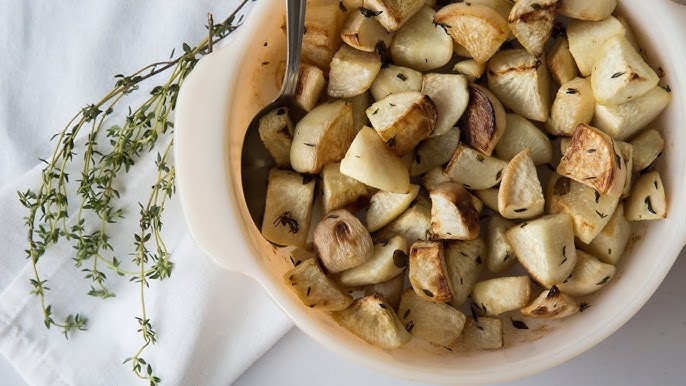
Turnip Recipe: Looking for a fresh, flavorful, and healthy side dish? This turnip recipe has everything you need to fall in love with this underrated veggie.
In this guide, you’ll learn not only how to make a delicious turnip dish, but also how to pick the best turnips, prepare them properly, and turn them into a show-stopping side.
We’re diving into the easiest and tastiest way to cook turnips—roasted with garlic butter. Whether you’re new to cooking or a kitchen pro, this simple step-by-step recipe will have you coming back for seconds.
What Are Turnips?
Turnips are root vegetables that look a little like white beets or large radishes. They have a mild flavor that leans slightly sweet when cooked and a bit peppery when raw. These round, bulbous veggies belong to the cruciferous family, which includes broccoli, cauliflower, and cabbage. The tops (turnip greens) are also edible and loaded with nutrients.
Turnips are incredibly versatile—they can be roasted, mashed, boiled, steamed, or even eaten raw in salads. Their adaptability and affordability make them a smart addition to any meal. Plus, when roasted, they caramelize beautifully and develop a deep, rich flavor that even picky eaters can appreciate.
Why Cook with Turnips?
Turnips may not be the first vegetable that comes to mind when planning dinner, but they absolutely should be. Here’s why:
- Budget-friendly: Turnips are inexpensive and available almost year-round.
- Versatile: You can mash them like potatoes, roast them, or throw them into soups and stews.
- Low in Calories: They’re perfect for anyone watching their calorie intake.
- Kid-approved (when cooked right!): Roasting turnips brings out a sweetness that makes them more appealing to younger eaters.
Most people who claim they don’t like turnips have simply never had them prepared well. When cooked with the right flavors, especially garlic and butter, turnips are shockingly delicious.
Health Benefits of Turnips
Turnips pack a powerful nutritional punch. Here’s what makes them worth putting on your plate:
- Rich in Fiber: Great for digestion and gut health.
- High in Vitamin C: Supports a strong immune system and glowing skin.
- Low Glycemic Index: Helps manage blood sugar levels.
- Antioxidants: Contains glucosinolates, compounds believed to reduce inflammation and protect against certain cancers.
- Supports Weight Loss: Low in calories and high in fiber, making you feel full longer.
If you’re trying to eat cleaner or add more vegetables to your meals, turnips are a top-tier choice.
Best Types of Turnips for Cooking
Not all turnips are created equal. For the best flavor and texture in your cooking, go for:
- Baby Turnips: Small, tender, and sweet. No need to peel them.
- Purple Top White Globe: The most common variety with a white body and purple top. Great for roasting and mashing.
- Tokyo Turnips (Hakurei): Mild, sweet flavor and can be eaten raw or cooked.
Avoid older, oversized turnips, which can be woody or bitter. Stick to small to medium-sized ones for the best experience.
How to Choose Fresh Turnips
Here’s what to look for when picking turnips at the store or farmer’s market:
- Smooth Skin: Free of cracks, wrinkles, or soft spots.
- Heavy for Size: Indicates moisture and freshness.
- No Odor: Turnips should smell fresh—not funky or sour.
- Bright Green Tops (if attached): Fresh, vibrant greens are a good sign of recently harvested roots.
Fresh turnips make all the difference. Older turnips tend to be dry, fibrous, or bitter.
How to Store Turnips Properly
Proper storage keeps your turnips fresh and flavorful for weeks.
- Remove Greens Immediately: They draw moisture from the root.
- Refrigerate Unwashed: Store turnips in a plastic bag in the fridge crisper drawer.
- Use Within 2–3 Weeks: For the best flavor and texture.
Turnip greens can be stored separately and used in stir-fries or soups. Don’t toss them!
Kitchen Tools You’ll Need
To make this turnip recipe as smooth as butter, gather these kitchen tools:
- Sharp knife
- Cutting board
- Vegetable peeler
- Mixing bowl
- Baking sheet
- Parchment paper or foil
- Oven mitts
- Small saucepan (for garlic butter)
- Spatula or spoon
Having the right tools prepped makes the whole process easier and more enjoyable.
Ingredients You’ll Need for This Turnip Recipe
Simple Turnip Dish Ingredients
- 4 medium turnips
- 3 tablespoons unsalted butter
- 4 garlic cloves (minced)
- 1 tablespoon olive oil
- 1 teaspoon salt (or to taste)
- ½ teaspoon black pepper
- 1 teaspoon dried thyme or rosemary (optional)
- Fresh parsley (for garnish)
Optional Add-ins
- Parmesan cheese (sprinkled before roasting)
- Lemon zest (for brightness)
- Crushed red pepper flakes (for a little heat)
- Honey drizzle (for a sweet twist)
Feel free to experiment and make the recipe your own.
Prepping Turnips for Cooking
Washing
Always wash your turnips thoroughly under cold water. Even if you’re peeling them, it’s good hygiene to rinse off any dirt.
Peeling
Use a vegetable peeler to remove the thin skin, especially if using mature turnips. Baby turnips can be left unpeeled if the skin is tender.
Cutting
Cut turnips into evenly sized cubes (about 1-inch pieces). Uniform size ensures they cook at the same rate.
Step-by-Step Turnip Recipe (Roasted Garlic Butter Turnips)
Step 1: Wash and Peel Turnips
Place your turnips under cold water and scrub off any dirt. Use a vegetable peeler to remove the outer skin. Set them aside on a cutting board.
Step 2: Cut into Even Cubes
Slice the peeled turnips in half, then into quarters, and finally into 1-inch cubes. Try to keep the pieces uniform to ensure even roasting.
Step 3: Preheat the Oven
Preheat your oven to 400°F (200°C). Line a baking sheet with parchment paper or aluminum foil for easy cleanup.
Step 4: Prepare Garlic Butter Mixture
In a small saucepan over medium heat, melt the butter. Add minced garlic and cook for about 1–2 minutes until fragrant. Turn off the heat and mix in the olive oil, salt, pepper, and herbs.
Step 5: Toss Turnips in the Mixture
Place your cubed turnips in a mixing bowl. Pour the garlic butter over them and toss until all pieces are well-coated.
Step 6: Roast in the Oven
Spread the turnips out on the baking sheet in a single layer. Roast for 30–35 minutes, flipping halfway through, until golden brown and fork-tender.
Step 7: Garnish and Serve
Once done, sprinkle with fresh parsley or Parmesan if desired. Serve warm with your favorite main dish.
Turnip Cooking Tips for Perfect Texture
Getting turnips just right can be tricky at first, but these tips will help you avoid mushy or overly bitter results:
- Don’t overcrowd the pan: If the turnips are too close together on the baking sheet, they’ll steam instead of roast. Always leave a little space between each cube for that perfect golden-brown edge.
- Dry them thoroughly after washing: Wet turnips won’t crisp up. Pat them dry before tossing them in oil or butter.
- Use high heat: Roasting at 400°F or higher helps caramelize the natural sugars in turnips and brings out their sweet side.
- Stir halfway through roasting: Flip or stir the turnips around the 15–20 minute mark to ensure they brown evenly.
- Balance flavors: Turnips can be a bit earthy or bitter, especially when overcooked. Balancing with garlic, butter, herbs, or a splash of lemon juice makes all the difference.
If your turnips still taste a bit bitter, try blanching them for a few minutes before roasting. It softens the flavor without losing that satisfying texture.
Alternative Turnip Recipes
Once you’ve mastered roasted turnips, try one of these tasty variations to change things up throughout the week.
Mashed Turnips
A low-carb alternative to mashed potatoes:
- Boil cubed turnips in salted water for 15–20 minutes.
- Drain and mash with butter, cream, salt, and pepper.
- Optional: Mix in roasted garlic or grated Parmesan for extra flavor.
Turnip Gratin
A creamy, cheesy side dish that’s great for holidays:
- Slice turnips thinly and layer in a baking dish.
- Add a simple white sauce (butter, flour, milk) and cheese.
- Bake at 375°F until golden and bubbling.
Turnip Fries
Crispy on the outside, soft inside:
- Cut turnips into fry-shaped sticks.
- Toss in oil, garlic powder, paprika, and salt.
- Bake at 425°F for 25–30 minutes, flipping once.
These recipes can be enjoyed alone or served with proteins like chicken, beef, or fish.
Common Mistakes to Avoid When Cooking Turnips
Even though turnips are simple to cook, a few common errors can ruin the dish. Here’s what to watch out for:
- Using overgrown or old turnips: These are often bitter and woody. Always choose small to medium-sized turnips for the best flavor.
- Skipping seasoning: Turnips need seasoning to shine. Salt, pepper, and a bit of fat (like butter or olive oil) bring out their natural sweetness.
- Peeling too thickly: The outer skin is thin, so don’t peel off too much. You’ll waste the best part!
- Under or overcooking: Undercooked turnips can be tough and bitter, while overcooked turnips turn to mush. Check for doneness by piercing with a fork—they should be soft but still hold their shape.
- Serving blandly: Use toppings like herbs, cheese, or lemon juice to add brightness and complexity.
Avoiding these mistakes makes a huge difference in your final dish.
Serving Suggestions
Roasted turnips are super flexible and can be paired with all sorts of meals. Here are some ideas to get your creativity flowing:
- With grilled meats: Serve alongside grilled chicken, steak, or lamb for a hearty dinner.
- As a holiday side dish: Turnips are a great addition to Thanksgiving or Christmas dinners.
- Topped with eggs: Serve roasted turnips with a fried or poached egg for a delicious breakfast or brunch.
- On top of salads: Cold roasted turnips add texture and flavor to grain bowls and green salads.
- Next to creamy dips: Turnip fries pair wonderfully with garlic aioli or sour cream-based dips.
Presentation tip: Serve them in a rustic bowl with a sprinkle of fresh parsley or chives for an Instagram-worthy plate.
Pairing Turnips with Other Ingredients
The beauty of turnips is how well they pair with a wide range of flavors. Try mixing them with:
- Carrots or parsnips: These sweet root veggies complement turnips perfectly.
- Apples: Roast apples and turnips together for a sweet-savory twist.
- Bacon or pancetta: Add crispy bits for extra crunch and flavor.
- Cheese: Sharp cheeses like goat cheese or Parmesan add contrast.
- Fresh herbs: Thyme, rosemary, or sage enhance the earthy tones of turnips.
They’re like the blank canvas of the veggie world—ready to soak up whatever flavors you love most.
Storing and Reheating Cooked Turnips
Made a big batch? No problem! Roasted turnips store well and are easy to reheat.
Storing
- In the fridge: Store in an airtight container for up to 4 days.
- In the freezer: While not ideal (they can get mushy), you can freeze them for up to 2 months. Reheat from frozen in the oven.
Reheating
- Oven (best method): Reheat at 350°F for 10–15 minutes to bring back the crispy texture.
- Air fryer: Perfect for reviving crispiness—just 3–5 minutes at 375°F.
- Microwave: Works for speed, but the turnips may turn soft. Try reheating in 30-second bursts.
Avoid reheating more than once to keep the flavor and texture intact.
FAQs about Turnip Recipe
Q1: Can I eat turnip skin?
Yes! Baby turnips have tender skin you don’t need to peel. For older, larger turnips, peeling is recommended because the skin can be tough.
Q2: Do turnips taste like potatoes?
Not exactly. They’re a bit more peppery and earthy, but when roasted or mashed, they have a texture similar to potatoes and absorb flavors well.
Q3: Can I substitute turnips for potatoes in recipes?
Absolutely! Use turnips in place of potatoes in soups, stews, or mashes. They’re lower in carbs and add a unique flavor twist.
Q4: Why are my turnips bitter?
Bitterness can come from using overripe or old turnips. Also, undercooking can make bitterness more noticeable. Try roasting with sweet or acidic ingredients like apples or lemon juice to balance it.
Q5: Are turnip greens edible?
Yes! Don’t toss them. Turnip greens are delicious sautéed with garlic and olive oil or added to soups and stews.
Conclusion
Turnips might not be the trendiest vegetable in the market, but they absolutely deserve a spot in your kitchen. With their mild flavor, impressive nutrition profile, and versatility, turnips are a hidden gem waiting to be rediscovered. This roasted garlic butter turnip recipe is just the beginning—you can mash them, gratin them, or even turn them into fries!
Next time you’re in the produce aisle, grab a few fresh turnips and give this recipe a try. It’s a perfect side dish for family dinners, holiday spreads, or just a cozy night at home. Don’t be surprised if you end up adding them to your regular rotation.