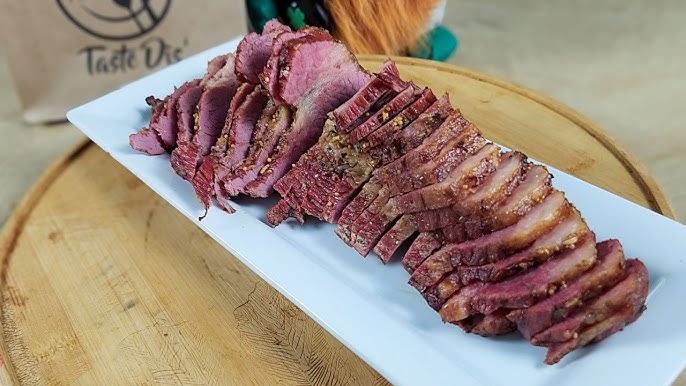
Traeger Beef Brisket Recipe: If there’s one dish that separates backyard beginners from true BBQ masters, it’s brisket. And when you cook it on a Traeger pellet grill? That’s where magic happens. Smoking a beef brisket on a Traeger isn’t just cooking—it’s an experience. The smell of hardwood smoke drifting through the air, the slow transformation of a tough cut into something melt-in-your-mouth tender… it’s unforgettable.
But here’s the truth: brisket can be intimidating. It’s big. It’s expensive. And it takes patience. One wrong move and you’re chewing on something that feels more like leather than luxury. Sound familiar? Don’t worry—you’re in the right place.
This step-by-step Traeger beef brisket recipe is designed to walk you through everything—from choosing the right cut to slicing it perfectly. No guesswork. No complicated chef jargon. Just clear, practical instructions you can follow confidently.
Whether you’re cooking for a backyard party, a holiday gathering, or just because you crave authentic Texas-style BBQ, this guide will help you nail it. We’ll talk about the right ingredients, exact temperatures, timing tips, and insider tricks that make all the difference.
Ready to turn that brisket into a smoky masterpiece? Let’s fire up the Traeger and get started.
Why Traeger Is Perfect for Smoking Beef Brisket
Let’s be honest—brisket demands consistency. And that’s exactly where a Traeger pellet grill shines. Traditional charcoal smokers require constant monitoring. You adjust vents, add coals, and babysit temperatures for hours. It’s rewarding, sure, but it’s also exhausting.
Traeger changes the game.
A Traeger pellet grill works like a wood-fired oven combined with a smoker. It automatically feeds hardwood pellets into a firepot, maintaining steady heat throughout the cook. That means you get that authentic smoky flavor without constantly hovering over the grill.
Why does this matter for brisket?
Because brisket thrives on stability. It needs low and slow cooking—typically around 225°F—for 10 to 15 hours. Temperature swings can dry it out or cook it unevenly. Traeger’s digital controller keeps the heat steady, so you can focus on flavor instead of firefighting.
Another big advantage? Hardwood pellet variety. Want bold hickory flavor? Go for it. Prefer milder oak or a slightly sweet cherry blend? Easy. You can customize your smoke profile without complicated setups.
Plus, Traeger grills are beginner-friendly. If this is your first brisket, you won’t feel overwhelmed. And if you’re experienced, you’ll appreciate the precision.
In short, Traeger gives you:
- Consistent low temperatures
- Authentic wood-fired flavor
- Easy temperature control
- Less stress, better results
When it comes to brisket, control equals confidence. And confidence equals delicious BBQ.
Understanding Beef Brisket: Cuts, Grades, and What to Buy
Before you even think about seasoning or smoking, you need to understand what you’re working with. Brisket isn’t just “a big piece of meat.” It’s a specific cut from the lower chest of the cow, and it’s naturally tough because it’s a heavily used muscle. But when cooked correctly? It becomes unbelievably tender.
Flat Cut vs. Point Cut
There are two main parts of a whole brisket:
- Flat (First Cut): Leaner and more uniform in shape. Great for slicing.
- Point (Second Cut): Thicker and more marbled with fat. Perfect for burnt ends.
Most BBQ lovers recommend buying a whole packer brisket, which includes both the flat and the point. Why? Because the fat from the point helps keep everything juicy during the long smoke.
If you’re cooking for a crowd, a full packer (usually 12–16 pounds) is ideal. Cooking for fewer people? You can use just the flat, but keep in mind it’s slightly less forgiving.
USDA Grades Explained
Quality matters. Look for:
- Prime: Highest marbling, most tender, best choice.
- Choice: Great balance of quality and price.
- Select: Leaner, less forgiving.
If your budget allows, go Prime. That extra marbling melts during the cook and keeps the brisket juicy.
When choosing your brisket, look for:
- Even thickness
- Good fat cap (about ¼ inch)
- Flexible feel when you pick it up
Think of it like choosing a watermelon—you want it to feel right. That flexibility often signals good marbling inside.
Choosing the right brisket is half the battle. Start strong, and the rest becomes much easier.
Essential Equipment for Smoking Brisket on a Traeger
You don’t need a professional BBQ trailer to cook incredible brisket—but you do need the right tools. Brisket is a long cook, and preparation makes everything smoother.
Here’s what you’ll want:
- Traeger Pellet Grill
- Hardwood Pellets (Hickory, Oak, or Blend)
- Meat Thermometer (Instant-read and Probe)
- Butcher Paper or Heavy-Duty Aluminum Foil
- Sharp Slicing Knife
- Large Cutting Board
- Disposable Gloves (Optional but Helpful)
The most important tool? A reliable meat thermometer. Never rely solely on time. Brisket is done based on internal temperature and feel—not the clock.
Butcher paper is often preferred over foil because it allows the brisket to breathe while still retaining moisture. This helps preserve that beautiful bark on the outside.
Preparation is like setting the stage before a performance. When everything’s ready, you can focus on perfecting the cook instead of scrambling for tools mid-smoke.
Ingredients You’ll Need for the Perfect Traeger Brisket
Great brisket doesn’t require complicated ingredients. In fact, simplicity often produces the best results.
Brisket
- 12–16 lb whole packer beef brisket
Dry Rub Ingredients
- 2 tablespoons coarse kosher salt
- 2 tablespoons coarse black pepper
- 1 tablespoon garlic powder
- 1 tablespoon onion powder
- 1 teaspoon smoked paprika (optional)
Texas-style brisket is famously simple—just salt and pepper. But adding garlic and onion powder gives it a subtle boost without overpowering the beef.
Optional Spritz
- Apple cider vinegar + water (50/50 mix)
or - Beef broth
The spritz helps keep the surface moist during the smoke and enhances bark formation.
Remember, brisket is about highlighting beef flavor—not masking it. Keep the seasoning balanced and let the smoke do the talking.
Preparing the Brisket: Trimming and Prepping Like a Pro
Trimming brisket might feel intimidating, but think of it like sculpting. You’re shaping the meat so it cooks evenly and absorbs smoke properly.
Start by placing the brisket on a large cutting board, fat side up. You’ll notice a thick layer of fat called the fat cap. Trim it down to about ¼ inch thickness. Too much fat prevents seasoning from penetrating. Too little can cause dryness.
Next, remove any:
- Hard, waxy fat (it won’t render)
- Loose or thin flaps of meat
- Silver skin
Keep the shape aerodynamic—rounded edges cook more evenly than sharp corners.
Why trim at all? Because excess fat blocks smoke and seasoning. Proper trimming ensures:
- Even cooking
- Better bark formation
- Improved presentation
Take your time here. Good trimming sets the foundation for great brisket.
Pat the brisket dry with paper towels before seasoning. Moisture can prevent the rub from sticking properly.
Preparation might not be glamorous, but it’s where championship brisket begins.
How to Season Brisket for Maximum Flavor
Seasoning brisket is where personality meets technique. You’ve chosen a beautiful cut of beef. You’ve trimmed it carefully. Now it’s time to layer in flavor—and this step matters more than people think.
Here’s the golden rule: brisket loves simplicity.
Unlike ribs or chicken, brisket doesn’t need sugary rubs or complicated spice blends. The goal isn’t to overpower the beef. It’s to enhance it. That’s why traditional Texas-style brisket uses a simple 50/50 blend of coarse kosher salt and coarse black pepper.
Start by lightly coating the brisket with a binder if you prefer—yellow mustard or olive oil works well. Don’t worry, you won’t taste it. It simply helps the seasoning stick evenly.
Now apply your rub generously. And yes—generously. This is a large cut of meat. It can handle it.
Make sure to:
- Season all sides evenly
- Press (don’t rub) the seasoning into the meat
- Pay attention to the edges
Why press instead of rub? Because rubbing can cause clumping and uneven coverage. Pressing creates a uniform crust.
After seasoning, let the brisket sit at room temperature for about 30–45 minutes while the Traeger preheats. This allows the salt to begin drawing moisture to the surface, helping form that legendary bark during the smoke.
Some pitmasters prefer seasoning overnight and refrigerating uncovered. That works too. It deepens flavor and slightly dries the surface, which improves bark formation.
Think of seasoning as building a foundation. You’re not just adding spice—you’re setting the stage for smoke, heat, and time to do their magic.
Setting Up Your Traeger Grill for Low and Slow Cooking
Before the brisket hits the grates, your Traeger needs to be dialed in properly. Brisket isn’t a “wing it” type of cook. Precision matters.
Start by filling the hopper with high-quality hardwood pellets. Oak is a classic choice for brisket because it provides a balanced smoke flavor—strong but not overwhelming. Hickory offers a bolder taste, while a blend (oak + cherry, for example) adds subtle sweetness and color.
Choosing the Right Pellets
Here’s a quick comparison:
| Pellet Type | Flavor Profile | Best For |
|---|---|---|
| Oak | Medium, classic BBQ | Traditional brisket |
| Hickory | Strong, smoky | Bold Texas flavor |
| Cherry | Mild, slightly sweet | Enhanced bark color |
| Mesquite | Intense, earthy | Experienced pitmasters |
Avoid low-quality pellets—they produce inconsistent heat and weaker smoke.
Temperature Settings
Set your Traeger to 225°F. This is the sweet spot for low and slow brisket cooking.
Allow the grill to fully preheat for at least 15–20 minutes. Stable temperature from the beginning prevents early cooking inconsistencies.
Place a water pan inside if your grill allows it. This adds moisture to the environment, helping prevent surface drying during the long cook.
Consistency is everything. Once the grill is steady at 225°F, you’re ready for the brisket.
Step-by-Step Guide to Smoking Brisket on a Traeger
Now we’re getting to the heart of it. This is where patience pays off.
Step 1: Place the Brisket on the Grill
Put the brisket on the grill grate fat side down (this helps protect the meat from direct heat). Insert a meat probe into the thickest part of the flat.
Close the lid. Let the smoke begin.
Resist the urge to constantly open the lid. Every time you do, heat escapes and cooking time extends.
Step 2: Smoke at 225°F Until the Stall (Internal Temp 160–165°F)
This usually takes 6–8 hours, depending on size.
During this stage:
- Avoid frequent flipping
- Spritz lightly every 60–90 minutes (optional)
- Monitor internal temperature
Around 160°F, you’ll notice something strange—the temperature stops rising.
Welcome to the stall.
Step 3: Wrap the Brisket
Once the brisket reaches 160–165°F and the bark looks dark and set, wrap it tightly in butcher paper or foil.
Butcher paper preserves bark better. Foil speeds up cooking but softens the crust.
Return the wrapped brisket to the Traeger.
Step 4: Continue Cooking Until 203°F Internal
Keep smoking at 225°F until internal temperature reaches 200–203°F.
But here’s the real test: probe tenderness.
Insert a thermometer probe into the meat. It should slide in like warm butter. That’s when you know it’s ready.
Step 5: Remove and Rest
Take the brisket off the grill. Don’t slice yet. Resting is critical.
More on that next.
How Long to Smoke a Brisket on a Traeger
Brisket timing depends on weight, but here’s a reliable rule:
1 to 1.5 hours per pound at 225°F
For example:
- 10 lb brisket = 10–15 hours
- 14 lb brisket = 14–18 hours
However, never cook strictly by time. Cook by temperature and feel.
Factors that affect cook time:
- Meat thickness
- Outdoor weather
- Pellet efficiency
- Grill calibration
Cold weather can extend cooking time. Wind can affect heat stability. That’s why monitoring internal temperature is essential.
If you’re planning for a gathering, start early. Brisket holds well in a cooler for hours, so finishing early is better than rushing.
Low and slow isn’t just a method—it’s a mindset. Patience equals tenderness.
Understanding the Brisket Stall: What It Is and How to Beat It
The stall confuses first-time brisket cooks. One minute the temperature is rising steadily. The next? It freezes around 160°F for hours.
What’s happening?
As brisket cooks, moisture evaporates from the surface. That evaporation cools the meat—similar to how sweat cools your skin. This cooling effect slows temperature increase.
That’s the stall.
Wrapping the brisket (also called the Texas Crutch) reduces evaporation and pushes through the stall faster.
You have three options:
- Wait it out (No wrap) – Best bark, longest cook
- Wrap in butcher paper – Balanced bark + moisture
- Wrap in foil – Fastest cook, softer bark
Most Traeger users prefer butcher paper. It’s breathable yet protective.
The stall isn’t a problem. It’s part of the process. Once you understand it, you stop panicking and trust the cook.
Resting the Brisket: The Secret to Juicy Slices
If you slice brisket immediately after cooking, you’ll lose precious juices. Resting allows those juices to redistribute throughout the meat.
After removing from the grill:
- Keep it wrapped
- Place it in a cooler or insulated container
- Let it rest for 1–2 hours (minimum 1 hour)
This step improves:
- Tenderness
- Moisture retention
- Flavor balance
Think of it like letting a steak rest—but on a bigger scale.
Skipping the rest is like baking a cake and cutting it while it’s still collapsing. Don’t rush perfection.
How to Slice Brisket Properly
Slicing brisket incorrectly can ruin hours of work.
First rule: slice against the grain.
The grain refers to muscle fiber direction. Cutting against it shortens fibers, making each bite tender.
Separate the point and flat before slicing. The grain runs differently in each section.
Use a long, sharp slicing knife. Make smooth, confident cuts about pencil thickness.
Too thin? It falls apart.
Too thick? It feels chewy.
Aim for balance.
Good slicing isn’t just presentation—it’s texture control.
Common Mistakes to Avoid When Smoking Brisket
Even experienced cooks slip up. Avoid these pitfalls:
- Cooking at too high temperature
- Skipping trimming
- Under-seasoning
- Not wrapping at the right time
- Skipping the rest period
- Slicing with the grain
Another big mistake? Panicking during the stall.
Stay patient. Trust your thermometer. Let the Traeger do its job.
Brisket rewards calm, steady cooking—not constant adjustments.
Best Side Dishes to Serve with Traeger Brisket
Brisket is rich and smoky. Pair it with sides that complement—not compete.
Great options include:
- Creamy coleslaw
- Smoked baked beans
- Mac and cheese
- Cornbread
- Pickles and onions
- Potato salad
Balance is key. Add something creamy, something tangy, and something fresh.
BBQ is about experience—not just meat.
Storage and Reheating Tips
Got leftovers? Lucky you.
Wrap brisket tightly in foil or airtight containers. Refrigerate up to 4 days.
For longer storage, vacuum seal and freeze up to 3 months.
To reheat:
- Warm in oven at 250°F
- Keep wrapped
- Add a splash of beef broth
Avoid microwaving—it dries out meat quickly.
Low and slow works for reheating too.
FAQs about Traeger Beef Brisket Recipe
1. What is the best temperature to smoke brisket on a Traeger?
225°F is ideal for low-and-slow smoking. This temperature allows the connective tissue to break down gradually, resulting in tender, juicy brisket with deep smoky flavor.
2. Should I smoke brisket fat side up or down?
For pellet grills like Traeger, cooking fat side down is recommended. The fat layer acts as a shield, protecting the meat from direct heat coming from below and helping prevent the brisket from drying out.
3. Do I have to wrap brisket?
Wrapping is optional, but highly beneficial. Wrapping in butcher paper or foil helps the brisket push through the stall, reduces moisture loss, and speeds up the cooking process while keeping the meat tender.
4. How do I know when brisket is done?
Brisket is ready when the internal temperature reaches about 200–203°F and a probe slides in with little resistance, similar to inserting it into soft butter. Tenderness matters more than exact temperature.
5. Can I cook brisket overnight on a Traeger?
Yes. Traeger grills are designed to hold steady temperatures, making overnight cooks possible. Use a reliable meat probe, ensure the pellet hopper is full, and monitor remotely for best results.
Conclusion
Cooking a Traeger beef brisket isn’t complicated—but it requires patience, preparation, and precision. From choosing the right cut to resting before slicing, every step plays a role in the final result.
With the right ingredients, steady 225°F heat, proper wrapping, and enough rest time, you can transform a tough cut into something extraordinary.
Brisket isn’t just food. It’s an event. A conversation starter. A slow-smoked symbol of backyard mastery.
Fire up your Traeger, trust the process, and let the smoke work its magic.