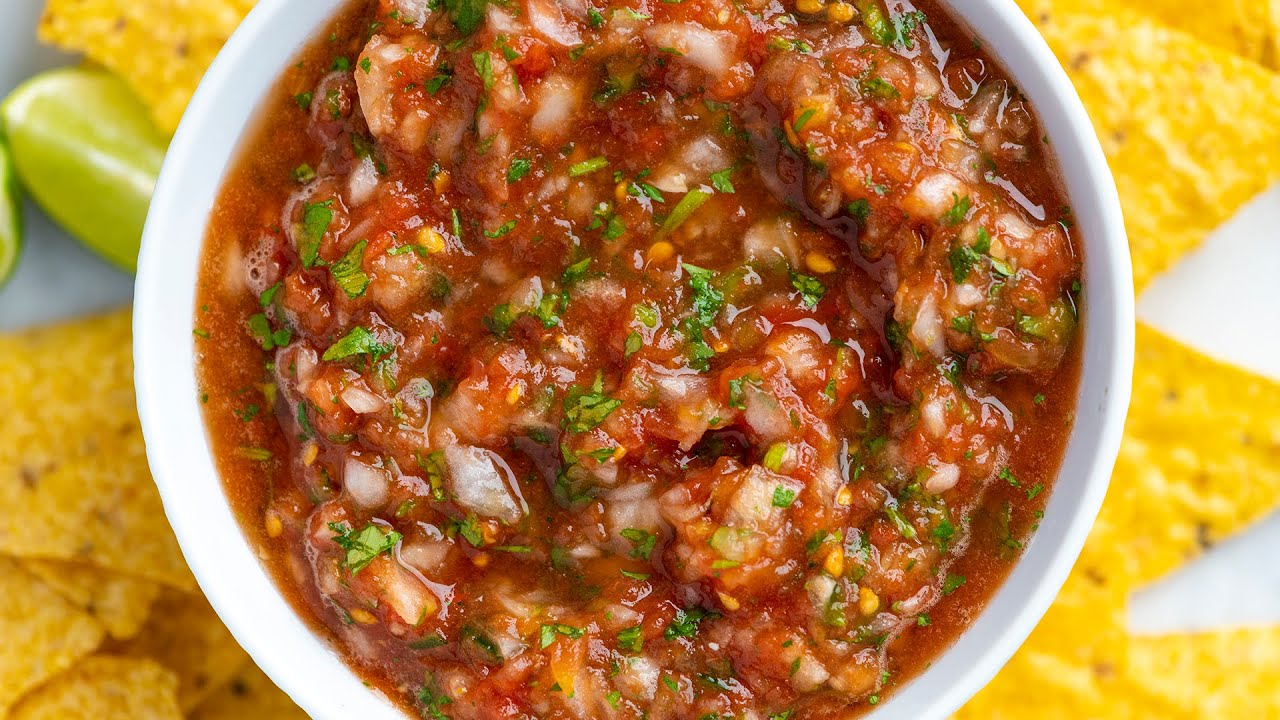
Tomato Salsa Recipe: There’s something magical about a bowl of freshly made tomato salsa sitting on the table. It’s vibrant, colorful, and bursting with flavor. The moment you dip a crunchy tortilla chip into it, you experience that perfect balance of tangy tomatoes, zesty lime, crisp onions, and a hint of heat from fresh chilies. It’s simple, yet incredibly satisfying.
Tomato salsa isn’t just a dip—it’s a flavor enhancer. You can spoon it over grilled chicken, tacos, burritos, scrambled eggs, or even baked potatoes. It transforms ordinary dishes into something exciting. The beauty of salsa lies in its freshness. Unlike heavy sauces or creamy dips, salsa feels light, refreshing, and guilt-free.
If you’ve ever relied on store-bought salsa, you might be surprised by how easy it is to make at home. Fresh ingredients, a sharp knife, and about 15 minutes are all you need. No preservatives. No artificial flavors. Just real, wholesome goodness.
In this comprehensive guide, you’ll learn everything from selecting the best tomatoes to mastering the perfect seasoning balance. Whether you prefer your salsa mild and chunky or fiery and smooth, this step-by-step recipe will help you create a restaurant-quality tomato salsa right in your own kitchen. Ready to dive in? Let’s get chopping.
The Origin and Popularity of Tomato Salsa
Tomato salsa has deep roots in Mexican cuisine. The word “salsa” literally means “sauce” in Spanish, and its history dates back hundreds of years. Ancient civilizations like the Aztecs combined tomatoes, chili peppers, and herbs to create early versions of what we now call salsa. These ingredients were native to the region, making salsa one of the most authentic and traditional condiments in Latin American cooking.
Over time, salsa traveled across borders and became popular worldwide. In the United States, it gained massive popularity alongside Mexican dishes such as tacos, nachos, and fajitas. Today, salsa often outsells ketchup in grocery stores—a testament to its universal appeal.
Why is it so loved? Because it’s versatile. You can make it chunky or smooth, spicy or mild, raw or roasted. It adapts to personal preferences and cultural tastes. Plus, it complements both casual snacks and elegant meals.
Salsa also fits modern dietary trends. It’s naturally vegan, gluten-free, and low in calories. In an era where people seek fresh, clean eating options, tomato salsa checks all the boxes.
From street food vendors in Mexico to upscale restaurants in major cities, tomato salsa remains a staple. And the best part? You don’t need professional skills to make it. With the right ingredients and guidance, you can recreate this timeless classic at home.
Why Homemade Tomato Salsa is Better Than Store-Bought
Let’s be honest—store-bought salsa is convenient. You twist open a jar, and it’s ready to go. But have you ever looked at the ingredient list? Preservatives, added sugars, artificial flavors, and sometimes even thickeners sneak into the mix. Homemade tomato salsa, on the other hand, is pure and simple.
When you make salsa at home, you control everything. Want it extra spicy? Add more jalapeños. Prefer it tangy? Squeeze in more lime juice. Watching your sodium intake? Reduce the salt. You’re the boss of the flavor profile.
Another huge advantage is freshness. Freshly chopped tomatoes and herbs deliver a brightness that jarred salsa just can’t replicate. The flavors are more vibrant, the texture is crisp, and the aroma is irresistible. It’s like comparing fresh lemonade to bottled concentrate—there’s simply no contest.
Cost is another factor. Making salsa at home can be more economical, especially if tomatoes are in season. A few basic ingredients can yield a generous bowl that feeds a crowd.
And let’s not forget the satisfaction. There’s something rewarding about serving a dish you prepared from scratch. Guests often ask, “Did you make this?” And when you say yes, it feels good. Homemade tomato salsa isn’t just food—it’s an experience.
Health Benefits of Tomato Salsa
Tomato salsa isn’t just about flavor—it’s a nutritional powerhouse hiding in plain sight. Think about it: a bowl filled with fresh tomatoes, onions, cilantro, lime juice, and chilies. Every spoonful delivers vitamins, antioxidants, and natural goodness without loading your body with unnecessary fats or sugars. It’s one of those rare foods that tastes indulgent but supports a healthy lifestyle at the same time.
Tomatoes, the star ingredient, are rich in vitamin C, potassium, folate, and vitamin K. They’re also packed with lycopene, a powerful antioxidant that gives tomatoes their vibrant red color. Lycopene has been studied for its potential role in supporting heart health and protecting cells from damage. In simple terms, those juicy red cubes in your salsa are doing more than pleasing your taste buds—they’re nourishing your body.
Onions add another layer of benefits. They contain antioxidants and compounds that may support immune health. Cilantro brings vitamins A and K, while fresh lime juice adds a boost of vitamin C. Even chili peppers contribute capsaicin, which may help support metabolism.
Here’s the best part: tomato salsa is naturally low in calories and fat. A typical serving contains fewer than 50 calories, making it a smart choice for anyone watching their weight. Instead of heavy, creamy dips, salsa provides bold flavor without guilt.
If you’re looking for a snack that feels exciting but aligns with clean eating goals, tomato salsa is a winner. It’s fresh, nutrient-rich, and incredibly satisfying. Who knew something so simple could be so good for you?
Choosing the Right Tomatoes for Salsa
The quality of your salsa depends heavily on your tomatoes. Think of tomatoes as the foundation of a house—if they’re weak, everything else suffers. Choosing the right variety can make the difference between watery, bland salsa and a thick, flavorful masterpiece.
Roma Tomatoes vs. Regular Tomatoes
Roma tomatoes are often considered the gold standard for salsa. Why? They’re firm, less watery, and have fewer seeds compared to round slicing tomatoes. This means your salsa will be thicker and more concentrated in flavor. Roma tomatoes also have a slightly sweet yet balanced taste that works beautifully with lime and chili.
Regular tomatoes, on the other hand, are juicier. While they can absolutely be used, you may need to remove some seeds and excess liquid to prevent watery salsa. If you prefer a chunkier, juicy style, these might work in your favor.
Fresh vs. Canned Tomatoes
Fresh tomatoes are ideal for traditional pico de gallo-style salsa. Their crisp texture creates that signature fresh bite. However, canned tomatoes can be useful when fresh tomatoes are out of season. Fire-roasted canned tomatoes, in particular, add a smoky depth that’s perfect for blended salsa varieties.
The key is ripeness. Choose tomatoes that are bright red, slightly firm, and fragrant. Avoid overly soft or pale ones. When tomatoes are in season, your salsa will taste sweeter and more vibrant.
In short, great salsa starts with great tomatoes. Don’t rush this step—it sets the tone for everything that follows.
Essential Ingredients You’ll Need
Creating perfect tomato salsa doesn’t require a long shopping list. In fact, simplicity is its superpower. With just a handful of fresh ingredients, you can achieve bold, authentic flavor.
Fresh Produce
Here’s your core list:
- 4–5 ripe Roma tomatoes (finely chopped)
- 1 small red onion (finely diced)
- 1–2 fresh jalapeño peppers (minced, seeds removed for less heat)
- ¼ cup fresh cilantro (chopped)
- Juice of 1–2 fresh limes
Each ingredient plays a role. Tomatoes provide sweetness and body. Onion adds crunch and sharpness. Jalapeño introduces heat. Cilantro brings freshness. Lime ties everything together with acidity.
Herbs and Seasonings
- ½ teaspoon salt (adjust to taste)
- ¼ teaspoon black pepper
- Optional: pinch of garlic powder or finely minced fresh garlic
Salt enhances the natural sweetness of tomatoes, while pepper adds subtle depth.
Optional Add-Ons for Extra Flavor
Want to customize? Try these:
- Diced avocado for creaminess
- Corn kernels for sweetness
- Mango chunks for a fruity twist
- A splash of olive oil for richness
Salsa is flexible. You can stick to the classic version or experiment depending on your mood.
Kitchen Tools Required
You don’t need fancy equipment to make tomato salsa. That’s part of its charm. A few basic tools will do the job perfectly.
- Sharp chef’s knife
- Cutting board
- Mixing bowl
- Spoon for stirring
- Citrus juicer (optional)
- Food processor (only if making smooth salsa)
A sharp knife is crucial. Clean cuts prevent tomatoes from becoming mushy. Take your time while chopping—uniform pieces ensure balanced texture in every bite.
If you prefer restaurant-style smooth salsa, a food processor or blender can help. However, for traditional pico de gallo, hand chopping is the way to go.
Step-by-Step Guide to Making Tomato Salsa
Ready to bring everything together? Follow these simple steps.
Step 1: Preparing the Tomatoes
Wash your tomatoes thoroughly. Remove the stems and dice them into small, even pieces. If they’re very juicy, gently squeeze out excess liquid or remove some seeds. This keeps your salsa from becoming watery.
Step 2: Chopping the Vegetables
Finely dice the onion and jalapeño. The smaller the pieces, the more evenly the flavors distribute. Chop the cilantro just before mixing to maintain freshness.
Step 3: Mixing the Ingredients
In a large bowl, combine tomatoes, onion, jalapeño, and cilantro. Squeeze fresh lime juice over the mixture. Sprinkle salt and pepper evenly.
Step 4: Adjusting Seasoning
Taste your salsa. Need more tang? Add lime. Want more heat? Add jalapeño. Too spicy? Add extra tomato. Balance is everything.
Step 5: Letting the Flavors Marinate
Allow the salsa to sit for at least 20–30 minutes before serving. This resting time lets the flavors blend beautifully. It’s like letting tea steep—the longer it rests (within reason), the deeper the flavor.
And just like that, you have fresh homemade tomato salsa ready to enjoy.
Different Variations of Tomato Salsa
Tomato salsa is wonderfully adaptable. Once you master the basic recipe, you can experiment freely.
Spicy Salsa
Add serrano peppers or a pinch of cayenne for serious heat.
Mild Salsa
Remove all seeds from jalapeños and reduce quantity.
Roasted Tomato Salsa
Roast tomatoes, garlic, and peppers before blending. This adds smoky depth.
Chunky vs. Smooth Salsa
Chunky salsa offers texture and freshness. Smooth salsa feels restaurant-style and works well as a pourable sauce.
Each version brings a unique personality to the table.
Common Mistakes to Avoid
- Using unripe tomatoes
- Adding too much salt at once
- Skipping the resting time
- Not balancing acidity
Small adjustments can elevate your salsa from average to exceptional.
How to Store Tomato Salsa Properly
Store salsa in an airtight container in the refrigerator. It stays fresh for 3–4 days. Stir before serving, as natural juices may separate.
Avoid leaving it at room temperature for long periods.
Serving Suggestions and Pairings
Tomato salsa pairs beautifully with:
- Tortilla chips
- Tacos and burritos
- Grilled chicken or fish
- Scrambled eggs
- Nachos
It also works as a fresh topping for salads and rice bowls.
Tips for Making Restaurant-Style Salsa
- Use very ripe tomatoes
- Blend slightly for smoother texture
- Add a small pinch of sugar if tomatoes lack sweetness
- Chill before serving
Presentation matters too—serve in a colorful bowl and garnish with fresh cilantro.
Nutritional Information (Per Serving Approximation)
| Nutrient | Amount |
|---|---|
| Calories | 35–45 |
| Carbohydrates | 8g |
| Fiber | 2g |
| Protein | 1g |
| Fat | 0g |
| Vitamin C | 20% DV |
FAQs about Tomato Salsa Recipe
1. Can I freeze tomato salsa?
Yes, tomato salsa can be frozen, but the texture may change after thawing due to the high water content of tomatoes. For the best taste and consistency, salsa is best enjoyed fresh.
2. How do I make salsa less spicy?
To reduce heat, remove the seeds and membranes from the chilies before chopping. You can also use fewer peppers or choose milder varieties.
3. Can I use lemon instead of lime?
Yes, lemon juice can be used as a substitute. However, lime juice offers a more traditional and slightly sharper flavor commonly associated with salsa.
4. Why is my salsa watery?
Watery salsa usually results from tomatoes with excess juice. Removing the seeds and draining chopped tomatoes before mixing helps achieve a thicker consistency.
5. How long should salsa rest before serving?
Allow the salsa to rest for at least 20–30 minutes. This resting time helps the flavors blend and develop for a more balanced taste.
Conclusion
Tomato salsa is proof that simple ingredients can create extraordinary flavor. Fresh, vibrant, and endlessly customizable, it’s a staple every home cook should master. Whether you’re hosting a party or preparing a quiet family dinner, this easy step-by-step tomato salsa recipe delivers freshness in every bite. Once you make it from scratch, there’s no going back to store-bought jars.