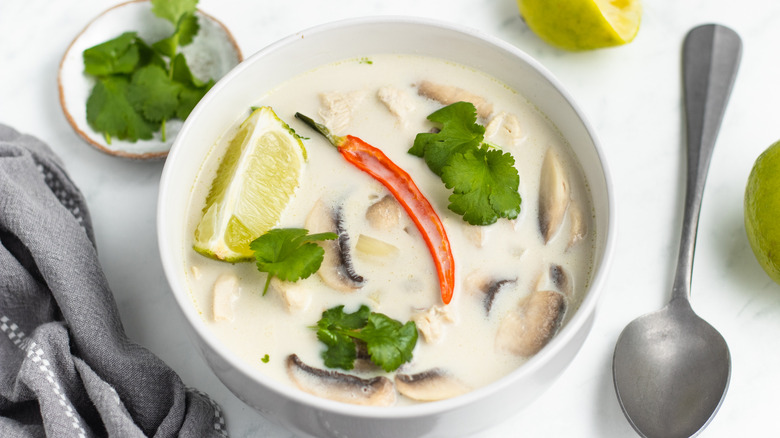
Tom Kha Recipe: Tom Kha is a rich and aromatic Thai soup that’s become a beloved comfort food around the world. Known for its unique balance of creamy coconut milk, tangy lime, and fragrant herbs, Tom Kha brings together the complexity of Thai cuisine in a single bowl. “Tom” refers to boiling, while “Kha” translates to galangal—a root similar to ginger and a key ingredient that gives this soup its signature flavor. Whether you’re a fan of Thai food or just exploring global flavors, Tom Kha is a must-try dish that will transport your taste buds straight to Thailand.
Traditionally, Tom Kha is made with chicken (Tom Kha Gai), but it’s also commonly enjoyed with shrimp, tofu, or mushrooms. The creamy broth infused with lemongrass, kaffir lime leaves, and chili peppers creates a delightful contrast of spicy, sour, salty, and sweet—everything Thai food is famous for. It’s one of those dishes where each spoonful offers a layered taste experience.
What makes Tom Kha particularly appealing is its versatility. You can make it as light or rich as you prefer, tone down the spice, or load it up with vegetables or proteins depending on your preferences. It’s also fairly quick to prepare, making it a perfect choice for weeknight dinners or a warming dish on a chilly day.
Origins and Cultural Significance
Tom Kha originated in central Thailand and has deep cultural roots in Thai home cooking. It’s traditionally served as a starter or part of a larger meal shared with family. While you can now find Tom Kha in Thai restaurants worldwide, making it at home allows you to experience the heart and soul of Thai culinary tradition.
In Thai culture, food is deeply connected to hospitality and wellness. The ingredients used in Tom Kha—especially galangal, lemongrass, and lime—are not only flavorful but also valued for their medicinal properties. They’re believed to aid digestion, reduce inflammation, and boost immunity. So, enjoying a bowl of Tom Kha isn’t just about taste—it’s also about nourishment and tradition.
Key Ingredients in Tom Kha
Traditional Thai Ingredients Explained
To create an authentic Tom Kha, you’ll need several specific ingredients that form the soul of Thai flavor:
- Galangal: The star of the dish. It has a citrusy, pine-like aroma that’s more intense than ginger.
- Lemongrass: Adds a zesty, fresh flavor. You’ll want to bruise the stalks to release the oils before simmering.
- Kaffir Lime Leaves: Offer a unique floral and citrusy aroma. Tear them gently to release flavor.
- Thai Chilies: For a fiery kick. You can adjust the number based on your heat tolerance.
- Coconut Milk: This forms the creamy base of the soup and balances the spice.
- Fish Sauce: Adds umami and saltiness. It’s a cornerstone in Thai cooking.
- Lime Juice: Introduces acidity to balance the coconut’s richness.
- Mushrooms and Chicken (or other proteins): These absorb the broth and provide substance.
Each ingredient plays a distinct role. Together, they create the complex harmony of flavors that define Tom Kha.
Substitutions for Hard-to-Find Items
Living outside of Southeast Asia might mean you can’t always find galangal or kaffir lime leaves at your local grocery store. But don’t worry—you can still get close to the authentic taste with smart substitutions:
- Galangal: Substitute with fresh ginger if necessary, though the flavor won’t be exactly the same.
- Kaffir Lime Leaves: Use lime zest as a last resort, or try frozen leaves from Asian grocery stores.
- Thai Chilies: Bird’s eye chilies are traditional, but serrano or even crushed red pepper flakes can work.
- Fish Sauce: For vegetarians or vegans, use soy sauce or tamari with a bit of seaweed or mushroom broth for umami.
The key is to balance flavors. Even with substitutions, aim to retain the soup’s essential elements: creamy, tangy, spicy, and aromatic.
Preparing Your Kitchen
Essential Tools and Utensils
Before diving into the cooking, make sure you have the right tools. While Tom Kha doesn’t require any high-tech equipment, a few kitchen basics will make the process smoother:
- Large Saucepan or Stockpot: You’ll need a pot big enough to allow the ingredients to infuse properly.
- Sharp Knife and Cutting Board: For chopping herbs and proteins.
- Strainer or Slotted Spoon: To remove herbs like lemongrass and kaffir lime leaves before serving.
- Ladle: Makes serving the soup easier and cleaner.
- Measuring Cups and Spoons: Accuracy matters when balancing flavors.
Having these items ready not only speeds up your prep but also enhances your cooking experience.
Tips for Efficient Preparation
Efficiency in the kitchen often comes down to mise en place—a French term meaning “everything in its place.” Here’s how you can prepare like a pro:
- Wash and chop all vegetables and herbs before heating the pot.
- Measure out sauces and seasonings into small bowls.
- Keep proteins cut and ready to drop into the broth.
This level of prep helps you stay focused and reduces the chances of overcooking delicate ingredients like chicken or mushrooms.
Step-by-Step Tom Kha Recipe
Step 1 – Gathering Ingredients
Here’s what you’ll need for a traditional Tom Kha Gai (serves 4):
- 2 cups chicken broth
- 1 can (13.5 oz) coconut milk
- 1 stalk lemongrass, sliced and bruised
- 4-5 slices galangal
- 3-4 kaffir lime leaves, torn
- 200g boneless chicken breast or thighs, sliced thin
- 1 cup mushrooms (straw, oyster, or button)
- 2-3 Thai chilies (whole or sliced)
- 2 tbsp fish sauce
- 1 tbsp lime juice
- 1 tsp sugar (optional)
- Fresh cilantro and chili oil for garnish
Now that you’ve got everything lined up, it’s time to start cooking.
Step 2 – Preparing the Base (Broth)
The heart of Tom Kha lies in its broth. This is where all the deep, aromatic flavors are born. Begin by combining the chicken broth and half of the coconut milk in a large saucepan. Bring the mixture to a gentle simmer over medium heat.
Once it’s warm, add your galangal slices, bruised lemongrass, and torn kaffir lime leaves. These three herbs are the holy trinity of Thai soups, and their essential oils will start releasing as they heat up. Let them simmer for about 10–15 minutes, but keep the heat gentle—you don’t want to boil and risk curdling the coconut milk.
This stage is all about infusing the broth. You’ll notice the aroma transforming into a rich, exotic scent that’s hard to resist. Stir occasionally and avoid rushing this process; patience here rewards you later.
For a more intense flavor, some Thai cooks simmer the herbs in plain chicken stock for 15 minutes before adding coconut milk. That gives you extra control over the balance between creamy and herbaceous notes.
At the end of this step, you’ll want to strain out the herbs if you prefer a smooth soup base. However, many people leave them in for aesthetics and continued infusion—they’re not typically eaten, though.
Step 3 – Cooking Proteins and Vegetables
Now that your broth is fragrant and flavorful, it’s time to add the main ingredients. Drop in the thinly sliced chicken and let it poach gently in the broth. This ensures the meat remains tender and juicy rather than becoming rubbery.
Add the mushrooms at the same time—oyster or straw mushrooms are ideal as they soak up flavors beautifully. Stir gently and let everything cook for about 8–10 minutes or until the chicken is cooked through.
At this point, you can taste the broth and adjust seasoning. Add the fish sauce, lime juice, and sugar if using. The lime juice adds tang, while fish sauce brings the saltiness and umami punch. Sugar can help balance the acidity if it feels too sharp.
Some prefer to add the second half of the coconut milk now, making the soup richer and creamier at the end. It also prevents the milk from splitting during the earlier simmering stage.
Lastly, toss in the Thai chilies—whole if you prefer mild heat, sliced if you like it hot. Let them infuse the soup for just a couple of minutes.
Step 4 – Final Flavor Enhancements
This is where your soup turns into something magical. Once the proteins and veggies are cooked and the soup is properly seasoned, it’s time for the finishing touches.
Remove the pan from heat and let it cool slightly before adding more lime juice if needed. This preserves its brightness and prevents bitterness. Adjust the saltiness with a splash more fish sauce if required. Thai cooking is all about balance—taste as you go and trust your palate.
Garnish with fresh cilantro for a burst of freshness and color. Some people love a drizzle of chili oil for extra heat and a beautiful red swirl on top.
You can also serve with a wedge of lime and extra herbs on the side, allowing each person to customize their bowl.
And there you have it—authentic, homemade Tom Kha ready to be devoured!
Serving Suggestions
What to Serve with Tom Kha
Tom Kha is satisfying on its own, but it can also be the centerpiece of a full Thai meal. Here are some perfect pairings:
- Steamed Jasmine Rice: A traditional accompaniment that balances the soup’s richness.
- Thai Spring Rolls: Light and crispy, they complement the creamy texture of the soup.
- Papaya Salad (Som Tum): Adds a crunchy, spicy, and sour contrast.
- Sticky Rice: Great for soaking up every last drop of the broth.
You can even serve Tom Kha in small bowls as a starter for a multi-course Thai dinner. It’s warm, welcoming, and instantly makes any meal feel special.
Garnishes and Presentation Tips
Presentation matters, especially with a soup as visually appealing as Tom Kha. Serve it in a ceramic bowl with fresh herbs floating on top and maybe a chili slice or two for color.
Offer condiments on the side—extra lime wedges, sliced chilies, or chili oil—so guests can adjust the flavor to their liking. A sprig of cilantro or Thai basil adds that restaurant-style finish.
For a unique twist, serve Tom Kha in a coconut shell for extra flair. It’s not only Instagram-worthy but enhances the tropical feel of the dish.
Storing and Reheating Tips
How to Store Leftovers
Made too much Tom Kha? No problem—this soup stores surprisingly well if done correctly. Once your soup has cooled to room temperature, transfer it into an airtight container. It will keep in the refrigerator for up to 3-4 days without losing too much flavor.
Here are a few tips to ensure freshness:
- Store the soup without garnishes like fresh herbs or lime juice. Add those only when you reheat and serve.
- Use glass containers for better preservation, as coconut milk can sometimes take on a taste from plastic.
- Label your container with the date to avoid forgetting how long it’s been stored.
If you’re planning to freeze it, that’s possible too—just know that coconut milk can sometimes separate upon thawing. Stir it well while reheating to bring it back to its creamy consistency.
Best Way to Reheat Without Losing Flavor
Reheating Tom Kha needs a little care to avoid curdling or overcooking the ingredients. Follow these steps:
- Stovetop Method: Pour the desired amount into a small saucepan and reheat gently over medium-low heat. Stir frequently and avoid boiling. This method helps preserve the soup’s texture and taste best.
- Microwave Method: Use a microwave-safe bowl, cover with a microwave lid (not airtight), and heat in 30-second intervals, stirring in between. Again, avoid overheating.
Always add fresh herbs and lime juice after reheating—not before—to maintain brightness and aroma. You might also want to add a splash of coconut milk or broth to refresh the soup’s creaminess.
Health Benefits of Tom Kha
Nutritional Highlights
Tom Kha isn’t just delicious—it’s also full of nutrients that can support your overall health. Here’s what makes it good for you:
- Coconut Milk: Rich in healthy fats (especially lauric acid), it provides energy and supports brain function.
- Galangal and Lemongrass: Both have anti-inflammatory and antimicrobial properties, often used in natural remedies.
- Chicken or Tofu: Excellent sources of protein that make this soup filling and muscle-supportive.
- Lime Juice: High in vitamin C, boosting your immune system and aiding digestion.
A typical serving of Tom Kha (without rice) contains around 200-300 calories, depending on the protein used. It’s low in carbs but packed with flavor, which makes it a satisfying option for people watching their carb intake.
Ideal for Special Diets?
Tom Kha is very flexible and can easily fit into various dietary lifestyles:
- Gluten-Free: Naturally gluten-free if you use certified gluten-free fish sauce or soy alternatives.
- Dairy-Free: Thanks to coconut milk, it’s perfect for people avoiding dairy.
- Keto-Friendly: Low in carbs and high in fat—ideal for ketogenic diets.
- Paleo: With clean ingredients and no processed elements, it aligns well with Paleo guidelines.
- Vegan/Vegetarian: Simply replace chicken with tofu or mushrooms and use soy sauce or coconut aminos instead of fish sauce.
It’s a soup that nourishes the body while delighting the palate, making it a rare blend of comfort food and functional nutrition.
Common Mistakes to Avoid
Overcooking the Coconut Milk
One of the most common errors people make is boiling the soup too vigorously. Coconut milk is delicate, and boiling it can cause it to separate, creating an oily layer on top and a grainy texture.
To prevent this:
- Always simmer gently, never boil.
- Add the second half of the coconut milk at the end, off the heat.
- Stir frequently and avoid using high heat at any point.
The goal is to maintain a smooth, velvety broth that delivers that luxurious mouthfeel without breaking.
Skipping Key Herbs
You might be tempted to leave out ingredients like galangal, kaffir lime leaves, or lemongrass if they’re not easily available—but this can drastically alter the taste.
These herbs are what give Tom Kha its signature flavor. Substitutes can work in a pinch, but nothing beats the real deal. If possible:
- Visit an Asian grocery store or order online to get authentic herbs.
- Buy in bulk and freeze extras—they keep well for months.
Skipping these elements makes the soup taste like a generic coconut broth instead of a true Thai masterpiece.
Variations and Modern Twists
Vegan or Vegetarian Versions
Tom Kha can easily be made meat-free without sacrificing flavor. Here’s how:
- Protein: Use tofu, tempeh, or even chickpeas.
- Broth: Vegetable stock works just fine.
- Umami: Replace fish sauce with soy sauce, tamari, or a blend of mushroom broth and a bit of seaweed.
Add more mushrooms and greens like baby spinach or bok choy for added nutrients and texture. The result? A hearty, satisfying vegan soup that’s just as comforting.
Regional Thai Adaptations
While Tom Kha Gai (chicken) is the most well-known version, there are regional spins across Thailand:
- Tom Kha Goong: Uses shrimp instead of chicken. It’s slightly sweeter and more oceanic in flavor.
- Tom Kha Het: A vegetarian version loaded with mushrooms.
- Northern Thai Style: Sometimes spicier, using fermented fish sauce or more herbs.
You can also experiment with fusion ideas—add ramen noodles, use seared scallops, or drizzle with truffle oil for a gourmet twist.
FAQs about Tom Kha Recipe
Q1: Can I make Tom Kha ahead of time?
Yes, Tom Kha stores well for up to 3–4 days. Just be sure to reheat gently and add fresh herbs after warming.
Q2: What is the difference between Tom Kha and Tom Yum?
Tom Yum is a clear, spicy, and sour soup, while Tom Kha is creamier due to the addition of coconut milk.
Q3: Can I freeze Tom Kha?
Yes, but freeze before adding herbs and lime juice. Stir well after reheating to fix any separation in the coconut milk.
Q4: Is Tom Kha spicy?
It can be! But you can control the heat by adjusting the number of chilies you use—or leave them out for a mild version.
Q5: What’s the best substitute for galangal?
Fresh ginger is the closest substitute, though it lacks the citrusy-pine flavor of galangal.
Conclusion
Tom Kha is more than just a soup—it’s a bowl full of heritage, healing, and flavor. With its creamy texture, aromatic herbs, and soul-warming qualities, it’s a dish that hits all the right notes. Whether you’re new to Thai cooking or a seasoned home chef, mastering Tom Kha is a delicious way to bring authentic Thai flavors into your kitchen. Don’t be afraid to experiment, taste as you go, and most importantly, enjoy the journey.