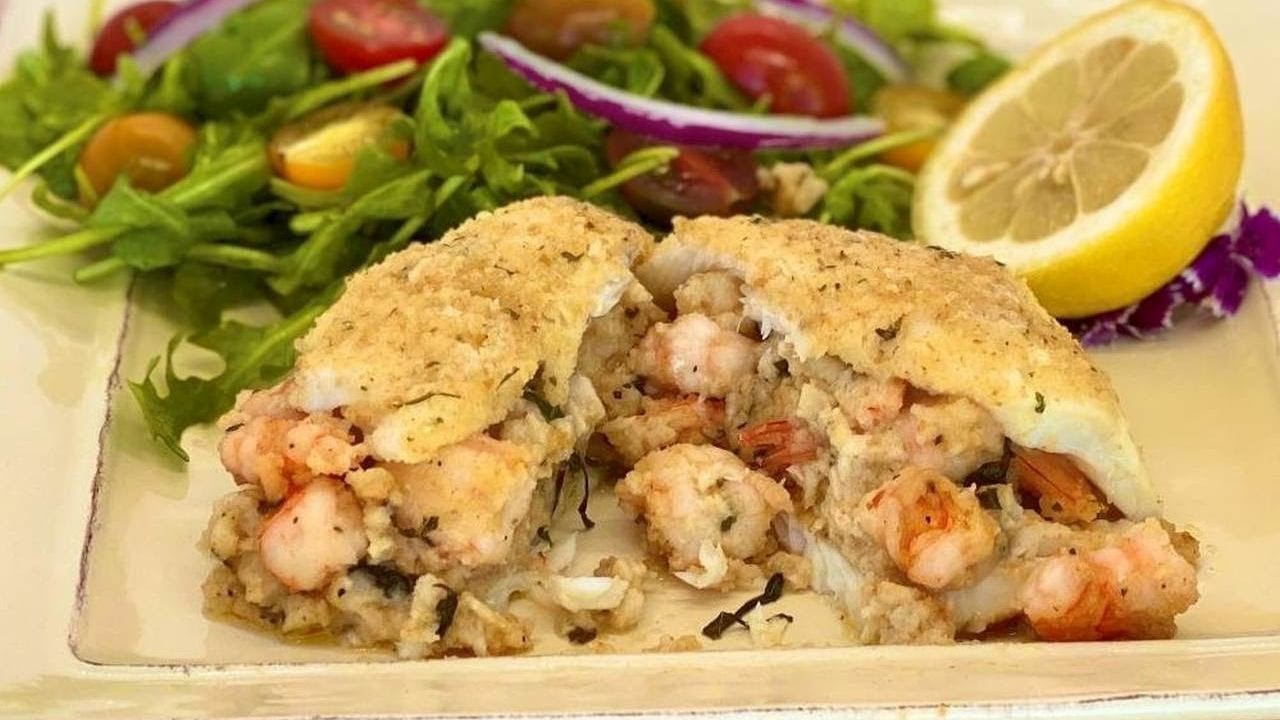
Stuffed Flounder Recipe: If you’re a seafood fan and love trying new flavors, then stuffed flounder should absolutely be on your must-cook list. This dish is an elegant yet easy-to-make meal that combines the delicate flavor of flounder with a rich, savory stuffing—usually made with crab meat, breadcrumbs, herbs, and spices.
Whether you’re cooking for a family dinner, holiday, or just craving something fresh and flavorful, this recipe is sure to impress. What makes it even better? It looks like something you’d get at a fancy restaurant, but you can totally make it at home without stress.
What Is Flounder?
Flounder is a flat, lean fish found in oceans all around the world. It has a mild, slightly sweet flavor and a tender, flaky texture, making it a perfect canvas for stuffing. Its low-fat content and ability to absorb flavor from seasonings and stuffing make it ideal for recipes where the filling does a lot of the flavor work.
You’ll often find it in fillet form at the market, but if you get a whole flounder, it’s not hard to clean and prep for cooking. Whether it’s wild-caught or farm-raised, flounder brings a subtle, elegant taste to the plate. And when you stuff it? That’s when the magic happens.
Why Stuffed Flounder Is a Seafood Favorite
Stuffed flounder isn’t just delicious—it’s a whole experience. The idea of combining soft, flaky fish with a rich seafood or bread-based stuffing adds a contrast in texture and flavor that’s absolutely mouthwatering. Plus, you can customize the stuffing to suit your taste. Want crab? Go for it. Shrimp? Sure. Like it cheesy? Add a bit of parmesan.
From a nutritional standpoint, it’s also a winner. Flounder is high in protein, low in fat, and when combined with nutrient-rich ingredients like herbs, seafood, and even veggies, it becomes a balanced meal.
Choosing the Right Flounder for Stuffing
Not all flounder is created equal. When making stuffed flounder, your choice of fish matters.
- Fresh is Best: Whenever possible, opt for fresh fillets. Look for firm, moist flesh with no “fishy” smell.
- Frozen Works Too: If you’re using frozen flounder, make sure it’s fully thawed and patted dry before cooking.
- Thickness Counts: Thicker fillets are easier to stuff and hold their shape better during cooking. If you’re buying a whole fish, make sure it’s large enough to butterfly and fill.
Also, keep in mind that flounder is a delicate fish, so handle it gently during preparation to avoid tearing.
Ingredients You’ll Need
Here’s your go-to list for this mouthwatering stuffed flounder recipe:
Main Ingredients:
- 4 flounder fillets (fresh or fully thawed)
- 1 tablespoon olive oil
- Salt and pepper (to taste)
- Paprika (optional, for color)
Seafood Stuffing:
- 8 oz lump crab meat (or shrimp, scallops, or a mix)
- 1/2 cup breadcrumbs (panko or seasoned)
- 2 tablespoons mayonnaise or Greek yogurt (for creaminess)
- 1 tablespoon Dijon mustard
- 1 tablespoon lemon juice
- 1 egg (light binder)
- 2 tablespoons chopped parsley
- 1 clove garlic, minced
- 1/4 cup finely chopped onion
- Optional: dash of hot sauce or Old Bay seasoning
Topping (Optional):
- 2 tablespoons melted butter
- Fresh herbs for garnish
- Lemon wedges for serving
Feel free to substitute ingredients based on dietary needs. For gluten-free, use gluten-free breadcrumbs. For dairy-free, skip the mayo or use an alternative.
Tools and Equipment
You don’t need a fancy kitchen setup for this recipe. Here’s what you’ll want to have ready:
- Cutting board
- Sharp knife
- Mixing bowls
- Baking dish (glass or ceramic preferred)
- Spatula or spoon
- Aluminum foil (optional for covering)
- Meat thermometer (optional, but helpful for doneness)
Having everything prepped and laid out before you start cooking makes the process smoother and more enjoyable.
How to Prepare the Flounder for Stuffing
Before stuffing, your flounder fillets need to be properly prepped:
- Rinse and Dry: Lightly rinse the fillets in cold water and pat dry with paper towels.
- Check for Bones: Run your fingers along the flesh and remove any pin bones using tweezers.
- Butterfly if Needed: If your fillets are thick enough, make a shallow cut lengthwise to create a pocket for stuffing.
- Season: Lightly season both sides of the fillet with salt, pepper, and a touch of paprika for color.
You’re now ready for the fun part—adding the stuffing!
Making the Perfect Seafood Stuffing
Now, let’s talk about the real flavor bomb in this recipe—the seafood stuffing. This is where you can really make the dish your own. The most common choice is lump crab meat, but you can also use cooked shrimp, scallops, or even a combo of seafood for a richer flavor. The goal is to create a moist, flavorful, and slightly textured mixture that holds together well but isn’t too wet.
Here’s how to make it step by step:
- Sauté Your Aromatics: Heat a bit of olive oil or butter in a pan and sauté the chopped onion and garlic until they’re soft and translucent. This adds a sweet, savory base to your stuffing.
- Combine the Base Ingredients: In a bowl, gently mix your seafood, sautéed aromatics, breadcrumbs, egg, mayo (or Greek yogurt), lemon juice, and mustard.
- Season Well: Add salt, pepper, and a sprinkle of your favorite seafood seasoning. Old Bay, Cajun, or even a pinch of chili flakes can elevate the taste.
- Mix Gently: Be careful not to break up the crab meat too much. You want some chunkiness in the stuffing for texture.
- Adjust the Moisture: If it’s too wet, add a bit more breadcrumbs. Too dry? A touch more mayo or a splash of lemon juice will do the trick.
Once your stuffing is ready, give it a quick taste (before adding raw egg if you’re concerned about food safety). It should be savory, slightly tangy, and rich with seafood flavor.
Step-by-Step Guide to Making Stuffed Flounder
Alright, now for the main event—assembling and baking your stuffed flounder. Here’s a complete walkthrough:
Step 1: Preheat Your Oven
Set your oven to 375°F (190°C) so it’s ready when you are.
Step 2: Lay Out the Fillets
On a clean surface or cutting board, lay each flounder fillet flat. If you butterflied them, gently open up the center pocket.
Step 3: Add the Stuffing
Using a spoon, carefully scoop a generous amount of seafood stuffing onto the middle of each fillet. Don’t overstuff—just enough so it’s full but not bursting.
Step 4: Roll or Fold
- If your fillets are large and flat, roll them up with the stuffing inside and place them seam-side down in a greased baking dish.
- If you butterflied the fillets, fold the top over the stuffing to “close” it.
Step 5: Secure if Needed
If the fillet is thick or tends to open up, you can secure it with a toothpick or kitchen twine. Just remember to remove them before serving!
Step 6: Brush with Butter
Brush the tops with melted butter or olive oil to help with browning and add a little richness. You can also sprinkle a pinch of paprika for a golden finish.
Step 7: Bake
Place the dish in your preheated oven and bake for about 20–25 minutes, depending on the thickness of your fillets.
Cooking Methods for Stuffed Flounder
While baking is the most common and foolproof method for stuffed flounder, there are a few other ways to cook it:
1. Baking (Recommended)
- Easiest method with minimal babysitting
- Keeps the fish moist and the stuffing intact
- Great for serving a crowd
2. Pan-Searing + Oven Finishing
- Sear the fillet (stuffed side up) in a hot pan for 2–3 minutes
- Transfer the pan to the oven to finish cooking
- Results in a crispier exterior
3. Grilling (Advanced)
- Works well if you have thick fillets and a good grill pan
- Use foil packets to prevent the stuffing from falling out
- Adds a smoky flavor to the dish
Each method has its own perks, but baking is the safest bet for even cooking and easy cleanup.
Baking Time and Temperature
The ideal temperature for baking stuffed flounder is 375°F (190°C). Depending on how thick your fish and stuffing are, bake it for about 20–25 minutes.
How to Know It’s Done:
- The fish should flake easily with a fork.
- The internal temperature should reach 145°F (63°C).
- The stuffing should be hot all the way through and slightly golden on top.
If you’re using cheese or breadcrumbs on top, feel free to broil it for the last 2–3 minutes for a golden crust—just keep a close eye on it!
Serving Suggestions
Stuffed flounder is rich and flavorful, so pairing it with lighter, fresher sides works best. Here are a few crowd-pleasers:
Best Side Dishes:
- Steamed or roasted vegetables (asparagus, green beans, carrots)
- Lemon herb rice or wild rice
- Garlic mashed potatoes or cauliflower mash
- Simple garden salad with vinaigrette
- Buttery dinner rolls
Presentation Tips:
- Serve with a lemon wedge or drizzle with fresh lemon juice before serving.
- Garnish with parsley or dill for a burst of color.
- Plate over a bed of rice or next to vibrant veggies to make it pop.
This dish looks as good as it tastes—so don’t be afraid to make it look restaurant-quality at home.
Tips for a Restaurant-Style Stuffed Flounder
Want to make it feel like a meal from a 5-star seafood restaurant? Here are some pro tips:
- Use lump crab meat instead of imitation—it makes a big difference in flavor and texture.
- Add a splash of white wine or seafood stock to the bottom of the baking dish to keep the fish extra moist.
- Finish with a drizzle of lemon butter sauce for that restaurant-style richness.
- Add fresh herbs like dill or chives into the stuffing and as garnish.
- Serve with presentation in mind: use white plates and stack or layer sides creatively.
Common Mistakes to Avoid
Even though this recipe is fairly simple, there are a few common mistakes that can trip you up if you’re not careful. Here’s what to watch out for when making stuffed flounder:
1. Overstuffing the Fillets
It might be tempting to load up each flounder with as much stuffing as possible—but don’t go overboard. Overstuffing can cause the filling to spill out during baking, leading to a messy presentation and uneven cooking. Aim for just enough to fill the fillet comfortably without bulging.
2. Skipping the Seasoning
Fish is mild in flavor and needs proper seasoning to shine. Make sure to season both the fish and the stuffing. A little salt, pepper, lemon juice, or even paprika goes a long way. Don’t forget fresh herbs like parsley, dill, or thyme to add a fresh pop.
3. Using Dry or Watery Stuffing
Stuffing that’s too dry will fall apart, while overly wet stuffing can make your dish soggy. Aim for a texture that’s moist enough to hold together but not dripping. If your mixture feels off, add a little more breadcrumbs or a small splash of lemon juice to balance it out.
4. Overcooking the Fish
Flounder is a delicate fish and doesn’t take long to cook. Leaving it in the oven too long can dry it out and ruin the soft texture. Keep a close eye on the timer and check doneness with a fork or a thermometer.
5. Forgetting to Rest
Letting the stuffed flounder rest for a few minutes after taking it out of the oven allows the juices to settle and makes the flavors more pronounced. Just a 3-5 minute rest makes a noticeable difference.
Storage and Reheating
So, what if you have leftovers? Stuffed flounder stores and reheats pretty well if done right.
Storing:
- Allow the dish to cool completely.
- Place leftovers in an airtight container.
- Refrigerate for up to 2–3 days.
- For longer storage, freeze individual portions (wrapped in plastic wrap, then foil) for up to 1 month.
Reheating:
- Oven (Best Method): Preheat your oven to 325°F (165°C). Place the stuffed flounder in a covered baking dish and heat for 15–20 minutes or until warmed through.
- Microwave (Quick Method): Use short bursts (1-minute intervals) at 50% power to avoid overcooking the fish.
- Skillet: Heat gently over low heat with a splash of broth or water and cover to retain moisture.
Avoid reheating it too long or at high temperatures, as it may dry out the fish and ruin the texture of the stuffing.
FAQs about Stuffed Flounder Recipe
1. Can I use a different type of fish for this recipe?
Yes! While flounder is perfect because of its mild flavor and flat shape, you can also use tilapia, sole, or haddock. Just make sure the fillets are thick enough to roll or stuff.
2. Is this recipe gluten-free?
Not by default, but you can easily make it gluten-free by using gluten-free breadcrumbs and ensuring all your other ingredients (like mustard and seasonings) are certified gluten-free.
3. Can I prepare stuffed flounder ahead of time?
Absolutely. You can prep and stuff the fillets a few hours in advance, cover them with foil, and refrigerate. When you’re ready, just bake as directed. It’s a great make-ahead dish for dinner parties!
4. What’s the best type of stuffing to use?
Crabmeat is the classic choice, but feel free to get creative. Shrimp, scallops, or a mix of seafood work well. You can even add cooked spinach, cheese, or mushrooms for extra flavor.
5. How do I make it spicier?
Add a pinch of cayenne pepper, a dash of hot sauce, or finely chopped jalapeños to your stuffing mixture. You can also sprinkle a bit of spicy seasoning on top before baking for extra kick.
Conclusion
If you’re looking to create a seafood dish that feels fancy but is easy to pull off at home, stuffed flounder is the way to go. It’s flavorful, healthy, and highly customizable. From the flaky, tender fish to the rich, savory stuffing, each bite delivers comfort and elegance all in one.
What’s even better is how flexible this recipe is. You can swap out the stuffing ingredients to suit your taste or dietary needs, try different herbs and spices, and experiment with presentation. Whether you’re a beginner in the kitchen or a confident home chef, this dish will not disappoint.
So next time you’re craving something a little special, skip the restaurant. Turn your kitchen into your own coastal getaway with this delicious stuffed flounder recipe.