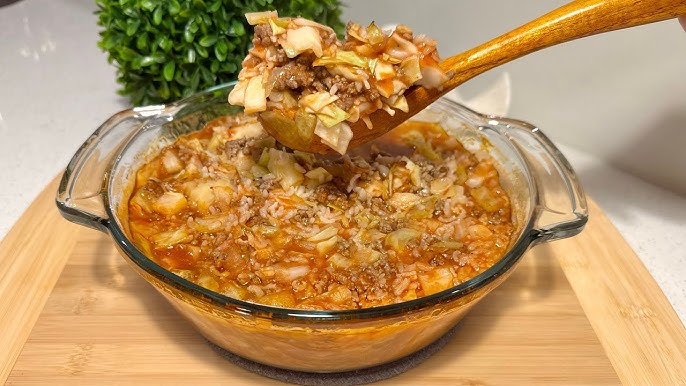
Stuffed Cabbage Casserole Recipe: There’s something deeply comforting about a warm, bubbling casserole dish fresh out of the oven. And when it’s packed with tender cabbage, juicy ground meat, perfectly cooked rice, and a rich tomato sauce, you’ve got yourself a classic comfort dish that hits all the right notes—stuffed cabbage casserole. This hearty, family-friendly meal brings all the cozy flavors of traditional stuffed cabbage rolls without the extra time or effort. No rolling, no fuss—just layer, bake, and enjoy!
Whether you’re looking for a cozy weeknight dinner, a dish to feed a crowd, or an easy make-ahead meal, this recipe has you covered. And the best part? It’s incredibly flexible. You can tweak it to match your dietary needs, play with different flavors, or just use up what you already have in your pantry.
Ingredients You’ll Need
Before we dive into the steps, let’s get our ingredient list ready. Here’s everything you’ll need to bring this dish to life:
Meat & Protein
- 1 lb ground beef (85/15 or leaner)
- Optional: ½ lb ground pork or ground turkey for extra flavor or lower fat
Vegetables & Produce
- 1 medium head of green cabbage, chopped into bite-sized pieces
- 1 medium onion, diced
- 2–3 garlic cloves, minced
- Optional: 1 bell pepper, diced (adds sweetness and color)
Grains & Fillers
- 1 cup uncooked white rice (or brown rice if preferred)
- Optional: Cauliflower rice for a low-carb version
Sauces & Liquids
- 1 (15 oz) can of tomato sauce
- 1 (14.5 oz) can of diced tomatoes
- ½ cup water or beef broth
- Optional: 1 tbsp Worcestershire sauce for depth
Seasonings & Herbs
- Salt and pepper to taste
- 1 tsp paprika
- 1 tsp dried oregano
- ½ tsp dried thyme
- Optional: red pepper flakes for a spicy kick
Optional Add-ins
- Shredded mozzarella or cheddar cheese for topping
- Fresh parsley for garnish
- Sour cream for serving
Organizing all your ingredients before cooking makes the process smoother and more enjoyable. Once everything is chopped, measured, and ready to go, you’ll move through the recipe effortlessly.
Kitchen Equipment Required
No fancy gadgets needed here—just some kitchen basics:
- Large skillet or sauté pan
- Large pot (for cabbage blanching, if needed)
- 9×13-inch baking dish or casserole dish
- Knife and cutting board
- Measuring cups and spoons
- Foil for covering during baking
With this simple set of tools, you’ll be all set to whip up your stuffed cabbage casserole without a hitch.
How to Prepare the Ingredients
Before assembling the casserole, it’s important to get your components ready.
Prepping the Cabbage
Chop your cabbage into bite-sized chunks. If you want the cabbage to be softer in the final dish, you can blanch it in boiling water for 5 minutes. Otherwise, raw cabbage will cook down nicely during baking.
Cooking the Ground Meat
In a skillet, cook the ground beef (and pork or turkey if using) until browned. Drain excess fat to avoid a greasy casserole. Set aside.
Cooking the Rice
Cook your rice according to package instructions. You can use leftover rice too! Just make sure it’s not overly mushy.
Making the Tomato Sauce
In the same skillet where you cooked the meat, sauté onions and garlic until translucent. Add tomato sauce, diced tomatoes, water (or broth), and seasonings. Let it simmer for 10 minutes to blend the flavors.
Step-by-Step Guide to Making Stuffed Cabbage Casserole
Let’s put everything together!
Step 1: Preheat the Oven
Set your oven to 375°F (190°C). This gives you the perfect temperature for bubbling, golden perfection.
Step 2: Sauté Aromatics
In a large skillet, heat a bit of oil and sauté the onions and garlic until soft and fragrant. This builds the flavor base for your sauce.
Step 3: Brown the Meat
Add ground beef (and pork if using) to the skillet and cook until browned. Season with a little salt, pepper, and paprika. Drain off the excess fat.
Step 4: Cook the Cabbage
If you haven’t already pre-softened your cabbage, sauté it briefly in the same pan. This helps it start breaking down and ensures a softer texture in the casserole.
Step 5: Combine Rice, Meat, and Sauce
In a large bowl, mix the cooked rice, browned meat, half of the tomato sauce mixture, and sautéed cabbage. Stir everything until well combined.
Step 6: Layering the Casserole
In a greased 9×13″ baking dish:
- Add half of the cabbage/meat/rice mix
- Pour a little tomato sauce over
- Add the rest of the mix
- Top with remaining sauce
- Optional: Sprinkle cheese on top
Step 7: Bake to Perfection
Cover the dish with foil and bake for 45 minutes. Then, remove foil and bake uncovered for an additional 10-15 minutes to let the top crisp up and the cheese (if using) melt beautifully.
Step 8: Let it Rest Before Serving
Let the casserole sit for 10–15 minutes before serving. This helps it set and makes it easier to cut into neat squares.
Tips for the Best Cabbage Casserole
Making stuffed cabbage casserole isn’t just about tossing ingredients together—it’s also about creating layers of flavor and the perfect texture. Here are some helpful tips to elevate your casserole from good to downright unforgettable.
Flavor Boosters
Want to amp up the flavor? Consider adding a tablespoon of Worcestershire sauce to your tomato base. It adds a savory umami depth that brings out the best in the beef and cabbage. A dash of smoked paprika or a pinch of nutmeg also works wonders, especially in meat-heavy dishes like this.
Don’t forget to season in layers. When you’re cooking your onions, meat, cabbage, and sauce, season each one lightly as you go. This builds balanced flavor throughout the dish instead of relying on a single seasoning dump at the end.
Texture Tips
If you like your casserole with a bit of crunch, don’t overcook the cabbage beforehand. Let it soften slightly in the oven rather than turning it into mush. On the flip side, if you’re a fan of extra-tender cabbage, blanch it before adding it to the dish or cook it longer during the sauté stage.
Want a creamier texture? Add a couple of tablespoons of sour cream or Greek yogurt into the rice mixture before layering. It gives the casserole a more luxurious mouthfeel.
Preventing a Watery Casserole
One of the most common problems with cabbage casseroles is excess moisture. Here’s how to avoid that:
- Drain cooked cabbage well if you blanch it.
- Don’t overdo the broth or liquid in the sauce.
- Let the casserole rest after baking—it thickens as it cools slightly.
With these tips, your casserole will have that perfect, hearty texture every time.
Substitution Ideas
This recipe is super adaptable, so don’t stress if you’re missing an ingredient or following a specific diet.
Vegetarian Version
Skip the meat and load up on sautéed mushrooms, lentils, or a plant-based meat substitute like Beyond Meat or black beans. Add a touch of soy sauce or Worcestershire for that savory depth meat usually gives.
Low-Carb/Keto Options
Replace rice with cauliflower rice to make the dish low-carb or keto-friendly. You won’t miss the rice at all, and the cauliflower blends seamlessly with the other ingredients. Also, use sugar-free tomato sauce to cut down on hidden carbs.
Meat Alternatives
Not into beef? No problem. Try any of the following:
- Ground turkey or chicken (lighter and leaner)
- Italian sausage (for a flavorful twist)
- A mix of ground meats for extra richness
Feel free to experiment—you might find your new favorite combo!
Make-Ahead and Storage Tips
This dish is practically made for meal prep, so it’s perfect for busy families or anyone who likes to cook ahead.
Refrigeration Guidelines
Once fully cooked, let the casserole cool to room temperature. Store in an airtight container or cover the baking dish with foil and refrigerate for up to 4–5 days. The flavors deepen over time, making leftovers even tastier.
Freezing Instructions
You can freeze stuffed cabbage casserole either before or after baking.
- Before baking: Assemble it in a freezer-safe dish, cover tightly with foil, and freeze for up to 3 months. Thaw overnight in the fridge and bake as directed.
- After baking: Let it cool, then portion it into freezer-safe containers. Reheat in the microwave or oven straight from frozen—just add a splash of water or sauce to keep it moist.
Reheating Tips
To reheat in the oven, cover the casserole dish with foil and warm it at 350°F (175°C) for about 20–25 minutes. In the microwave, cover your portion with a damp paper towel and heat in 1-minute intervals until warm.
Serving Suggestions
Stuffed cabbage casserole is a hearty main dish, but you can definitely pair it with a few sides to round out the meal.
What to Serve With It
- Crusty bread or garlic toast – perfect for soaking up that tomato sauce.
- Green salad – a light, fresh contrast to the richness of the casserole.
- Roasted vegetables – like carrots, Brussels sprouts, or green beans.
Garnishing Ideas
Top with a dollop of sour cream, a sprinkle of fresh parsley, or a dash of Parmesan cheese to make each plate look and taste like something from your favorite cozy diner.
Nutritional Information
Here’s a general breakdown for 1 serving of this casserole (based on 8 servings total):
| Nutrient | Amount |
|---|---|
| Calories | ~350–400 |
| Protein | 20–25g |
| Carbohydrates | 25–30g |
| Fat | 15–20g |
| Fiber | 4–6g |
| Sugar | 5–7g |
Note: Nutrition varies depending on specific ingredients used (e.g. full-fat beef vs. lean turkey, white rice vs. cauliflower rice).
Common Mistakes to Avoid
Even the easiest recipes have their traps. Here’s what to look out for:
Overcooking the Cabbage
Cabbage can go from tender to mushy pretty quickly. To keep a bit of texture, don’t overcook it during the prep phase. It continues cooking in the oven.
Using Uncooked Rice
Always pre-cook your rice (unless you’re using instant rice). Raw rice won’t have enough time to cook properly in the oven and can leave you with a crunchy, underdone mess.
Not Enough Seasoning
Cabbage, rice, and meat all benefit from seasoning. Don’t be shy with your salt, pepper, and herbs. Taste each component as you go.
Stuffed Cabbage Casserole vs Traditional Stuffed Cabbage Rolls
You might be wondering: how does this differ from traditional stuffed cabbage rolls?
Key Differences
- No rolling required – Say goodbye to the time-consuming task of wrapping individual cabbage leaves.
- Faster to assemble – The casserole comes together in a single dish, making prep and cleanup easier.
- Same great taste – You get the same delicious mix of cabbage, meat, rice, and sauce—just in a simpler, quicker format.
Why the Casserole is Easier
This is the lazy (and genius) version of a beloved classic. All the flavor, none of the fuss. It’s a busy cook’s dream!
Kids and Picky Eaters: How to Make It More Appealing
Got a picky eater at home? No worries—this stuffed cabbage casserole can be adjusted to suit even the fussiest taste buds.
Mild Seasoning Tips
Keep the spices simple. Skip the red pepper flakes or strong herbs like thyme if your child isn’t into bold flavors. Use just salt, a little pepper, and perhaps a pinch of garlic powder for a mild, comforting taste.
Also, using a sweeter tomato sauce can help. Some store-bought sauces or a dash of sugar added to homemade sauce can balance the acidity and make the dish more kid-friendly.
Fun Ways to Serve
Kids eat with their eyes first! Try these tricks:
- Top with melted cheese to add a creamy texture.
- Serve in small muffin-sized portions by baking in a cupcake tin.
- Let them customize their portion with favorite toppings like shredded cheese, sour cream, or croutons.
Involving your kids in the kitchen is another win. Let them stir the rice or sprinkle cheese on top—they’re more likely to eat what they help make!
How to Double or Halve the Recipe
Making this casserole for a big family dinner or just cooking for two? Here’s how to scale it.
Doubling the Recipe
- Use a larger baking dish or two 9×13-inch pans.
- Increase ingredients proportionally.
- Baking time may extend by 10–15 minutes—make sure it’s heated through and bubbling.
Halving the Recipe
- Use an 8×8-inch square dish or smaller casserole.
- Halve each ingredient measurement.
- Reduce baking time slightly—check at the 30-minute mark.
Scaling this recipe is easy, and the results are just as delicious, no matter how much or little you make.
FAQs about Stuffed Cabbage Casserole Recipe
1. Can I use purple cabbage instead of green?
Yes, but keep in mind that purple cabbage may bleed color into the dish and turn things a bit blue. The flavor is similar, though green cabbage is more traditional and softens more easily when baked.
2. How long does it last in the fridge?
Stuffed cabbage casserole will stay fresh in the refrigerator for 4–5 days if stored in an airtight container. It’s perfect for meal prepping lunches or quick dinners during the week.
3. Is this recipe gluten-free?
Yes—as long as you use gluten-free tomato sauces and seasonings. Double-check your labels to ensure everything is free of hidden gluten.
4. Can I make this in a slow cooker?
Absolutely! Just layer the ingredients in the slow cooker and cook on low for 6–7 hours or high for 3–4 hours. It’s great for busy days when you want dinner ready by evening.
5. What’s the best meat substitute for a vegetarian version?
Lentils, chopped mushrooms, or plant-based crumbles like Beyond Meat work great. You can also add beans for extra protein and heartiness.
Conclusion
Stuffed cabbage casserole is the perfect dish when you want something hearty, comforting, and absolutely full of flavor—without spending hours in the kitchen. It takes the best parts of traditional cabbage rolls and transforms them into a no-fuss, layered casserole that’s ideal for weeknight dinners, meal prep, or feeding a crowd.
With just a few simple ingredients—ground meat, cabbage, rice, and tomato sauce—you can create a satisfying dish that everyone at the table will love. Add in your own twist with cheese, spices, or even meat alternatives, and you’ve got a truly customizable classic that never gets old.
So next time you’re craving something warm and filling, give this stuffed cabbage casserole a try. It’s an old-school comfort food that’s made for modern kitchens.