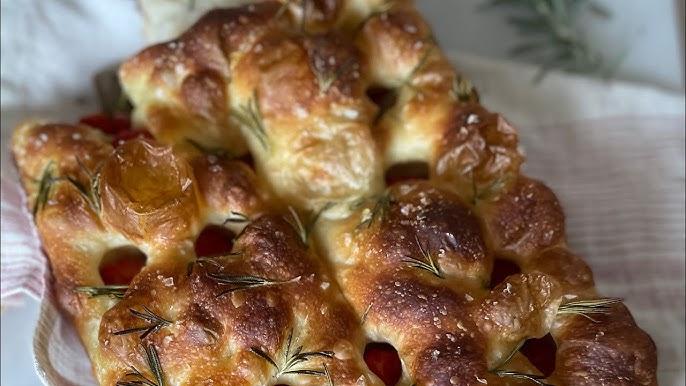
Sourdough Focaccia Bread Recipe: Sourdough focaccia is one of those irresistible breads that’s crusty on the outside, airy and chewy on the inside, and drenched in rich olive oil. It’s simple, yet utterly indulgent. If you love sourdough but want something you can share easily or pair with almost anything—this focaccia recipe is your new favorite.
In this full guide, we’ll walk you through everything step-by-step so you can master the art of sourdough focaccia, even if it’s your first time.
Let’s roll up our sleeves and get baking!
What is Sourdough Focaccia?
Sourdough focaccia is a variation of traditional Italian focaccia, made using a natural sourdough starter instead of commercial yeast. That means it ferments slowly, resulting in a richer, more complex flavor. It’s fluffy, chewy, and slightly tangy—perfect for tearing and dipping, or even making gourmet sandwiches.
Unlike classic focaccia, which uses instant yeast and rises quickly, sourdough focaccia develops flavor over time. The long fermentation gives it depth, while olive oil ensures the crust gets that signature golden crisp.
If you’ve baked sourdough loaves before, you’ll find focaccia refreshingly low-maintenance. And if you haven’t? Don’t worry—I’ve got you covered every step of the way.
Why Make Sourdough Focaccia at Home?
Let’s be real—nothing beats the taste (or smell!) of freshly baked focaccia. Baking it at home means you control everything: the ingredients, the fermentation, and the flavor. Here’s why homemade is best:
- Fresh and Preservative-Free: Store-bought bread often includes preservatives. Homemade is 100% clean.
- Better Texture: With your own hands and tools, you can get that perfect airy crumb.
- Customizable: Add herbs, cheese, garlic, tomatoes—whatever you crave.
- Satisfying: Watching your dough transform and rise is genuinely rewarding.
- Sourdough Benefits: Natural fermentation can be easier on digestion and lower on the glycemic index.
Plus, it’s cheaper than artisan bakery loaves and way more fun to make!
The Unique Charm of Sourdough
Sourdough isn’t just a baking trend—it’s a tradition that dates back thousands of years. Using wild yeast and bacteria from your sourdough starter, the dough ferments naturally over time. That gives sourdough its signature tang and digestibility.
Focaccia made with sourdough starter gets a bit more personality. It’s got:
- A subtle, complex sourness
- Better keeping qualities
- A slightly chewy texture with big, beautiful holes (if done right)
While it takes longer than using instant yeast, it’s totally worth it.
Tools You’ll Need
Before you get started, make sure you have the following tools on hand:
Essential Tools
- Mixing bowls – At least two, one large for mixing and one for resting
- Kitchen scale – Accuracy matters in sourdough baking
- Bench scraper or dough scraper – Makes handling sticky dough much easier
- Bench knife – Great for dividing and shaping dough
- Baking tray or sheet pan – A rimmed, nonstick tray is ideal
- Plastic wrap or damp towel – For covering the dough while resting
- Olive oil brush (optional) – For brushing on that golden olive oil finish
Having the right tools makes your baking smoother and much less frustrating, especially with high-hydration dough like focaccia.
Ingredients You’ll Need
Here’s a complete breakdown of what you’ll need for your sourdough focaccia:
Main Ingredients:
- 500g bread flour (high-protein)
- 100g active sourdough starter (100% hydration)
- 10g salt
- 20g olive oil (plus more for topping and pan)
- 375g water (room temperature)
Optional Toppings:
- Sea salt flakes
- Fresh rosemary
- Cherry tomatoes
- Garlic cloves
- Caramelized onions
- Olives
- Cheese
Substitution Tips:
- You can use all-purpose flour, but the bread won’t be as chewy or airy.
- Try infused olive oils (like garlic or chili) for extra flavor.
- Add herbs or spices directly to the dough for subtle seasoning.
Choosing the Right Flour
Flour is the backbone of any bread. For focaccia, high-protein bread flour is your best bet. It gives the dough strength and structure, allowing for that open crumb and fluffy bite.
You can also blend in a little whole wheat flour (up to 20%) for a nutty twist. Avoid cake or pastry flour—it doesn’t have enough protein to support sourdough fermentation.
Want to go rustic? Mix in semolina or spelt flour. Just remember, the more whole grains you add, the denser your bread might be. Balance is key.
Preparing Your Sourdough Starter
Your starter is the star of the show. If it’s not active, your dough won’t rise properly.
Here’s how to prep it:
- Feed it 4–6 hours before mixing: Use a 1:1:1 ratio (starter:flour:water).
- Check if it’s ready: It should double in size, look bubbly, and pass the float test (drop a spoonful in water—if it floats, it’s good to go).
- Use a 100% hydration starter: That means equal parts flour and water by weight.
If your starter has been in the fridge for a while, give it a few feedings over a couple of days to wake it up.
Step-by-Step Guide to Making Sourdough Focaccia
Let’s get into the full process. This method is broken into manageable parts so you don’t get overwhelmed.
Step 1: Mixing the Dough
In a large bowl, combine sourdough starter, warm water, olive oil, and salt. Add bread flour and mix until a shaggy, sticky dough forms. Use your hands or a spatula to ensure all the flour is hydrated. The dough should feel loose and elastic, which helps create focaccia’s airy crumb.
Step 2: Bulk Fermentation
Cover the bowl and let the dough rest at room temperature for several hours. During this time, the dough will rise and develop flavor. Look for visible bubbles and a slight increase in volume, not a full double. Temperature affects timing, so be patient.
Step 3: Stretch and Folds
During bulk fermentation, perform stretch-and-folds every 30 minutes for the first 1–2 hours. Gently pull one side of the dough up and fold it over itself, rotating the bowl between folds. This strengthens gluten without kneading and helps trap air for a light texture.
Step 4: Cold Proofing
Once the dough is strong and bubbly, transfer it to an oiled container, cover tightly, and refrigerate for 12–24 hours. Cold proofing slows fermentation, deepens flavor, and makes the dough easier to handle when shaping and baking later.
Shaping and Preparing the Dough for Baking
After the cold fermentation, your dough should be puffed up and full of beautiful air bubbles. Now comes the fun part—shaping it into that signature focaccia form.
Here’s what to do:
- Remove the dough from the fridge and let it sit at room temperature for about 1–2 hours. This helps wake it up after the chill and makes it easier to handle.
- Generously oil your baking tray (a 9×13 inch pan works great). Don’t skimp here—this oil creates that golden, crispy crust that makes focaccia unforgettable.
- Gently transfer the dough into the tray. Be careful not to deflate it too much. You want to preserve the air bubbles for that open crumb.
- With oiled fingers, gently stretch the dough to fit the shape of your tray. Don’t force it—if it resists, let it rest for 10 minutes, then try again.
- Once it’s stretched, cover it loosely with a damp towel or plastic wrap, and let it proof at room temp until it’s noticeably puffy—this can take 1–3 hours, depending on the temperature.
At this stage, you should see a light, airy dough that jiggles when you move the tray. This is your signal that it’s ready to top and bake.
Adding Toppings and Flavors
This is where you can get really creative. The beauty of focaccia is how well it takes on flavor—from simple sea salt to more gourmet combinations.
Classic Topping Ideas:
- Fresh rosemary & flaky sea salt – a timeless combo
- Garlic & olive oil – punchy and aromatic
- Cherry tomatoes & basil – sweet and fresh
Creative Combinations:
- Caramelized onion, thyme, and goat cheese
- Kalamata olives and sun-dried tomatoes
- Thinly sliced red onion and za’atar
- Crushed red pepper and garlic confit
How to Add Them:
- Once your dough has finished its final proof, drizzle olive oil generously over the top.
- Using oiled fingertips, dimple the dough by pressing down gently all over. This is what gives focaccia its signature look.
- Sprinkle your toppings evenly, pressing them slightly into the dough so they stick.
- Finish with a touch more olive oil and flaky sea salt.
These toppings bake right into the crust, enhancing both flavor and texture. The more olive oil you use, the richer and crispier the outer crust becomes.
Baking Your Focaccia to Golden Perfection
Now it’s time to get baking. Preheat your oven to 450°F (232°C). Make sure it’s fully heated before putting your bread in—this high temperature is key for achieving a crispy, golden crust.
Baking Tips:
- Place your tray on the middle rack for even baking.
- Bake for 25–30 minutes, or until the top is deep golden brown and crispy.
- Keep an eye on it during the last 5 minutes to avoid over-browning.
Optional Pro Tip:
For an extra crispy bottom, place the pan on a preheated pizza stone or baking steel. It acts like a hotplate and gives the bottom crust that bakery-style crunch.
Once baked, remove it from the oven and let it cool in the pan for about 5 minutes. Then carefully transfer it to a wire rack.
Don’t skip this resting step—it lets steam escape so your focaccia doesn’t get soggy.
Troubleshooting Common Issues
If your focaccia didn’t turn out exactly how you expected, don’t sweat it! Here are some common problems and how to fix them next time:
Flat or Dense Focaccia?
- Your starter might not have been active enough.
- The dough may have been under-fermented.
- You may have deflated it too much during shaping.
Too Sour?
- Over-fermented dough or too long in the fridge.
- Try reducing fridge time or using starter sooner after feeding.
Sticky Dough That’s Hard to Handle?
- It’s a high-hydration dough—this is normal.
- Keep your hands and tools lightly oiled.
- Use a bench scraper to manage it.
Bland Flavor?
- Use quality olive oil and sea salt.
- Consider adding herbs, garlic, or a flavored oil drizzle.
Storing and Reheating Focaccia
Focaccia is best eaten the day it’s baked, but it can stay fresh for a few days if stored properly.
Storage Tips:
- Keep it in an airtight container at room temp for up to 2 days.
- For longer storage, freeze slices in a ziplock bag. Reheat in oven or toaster oven.
Reheating:
- Preheat your oven to 350°F (177°C).
- Wrap focaccia in foil and warm for 10–15 minutes.
- For a crispier texture, remove the foil for the last 5 minutes.
Avoid microwaving—it tends to make the texture rubbery.
Tips for the Best Focaccia Every Time
Want bakery-style focaccia consistently? Here are a few pro tips:
- Use a well-fed starter – always check for signs of activity.
- Don’t rush fermentation – the longer, the better the flavor.
- High hydration = airy crumb – embrace the stickiness!
- Use good olive oil – it’s a main ingredient, not just a drizzle.
- Let the dough rest if it resists stretching – gluten needs time to relax.
- Top right before baking – keeps herbs and veggies fresh.
Baking is part science, part art—don’t be afraid to experiment and make it your own.
FAQs about Sourdough Focaccia Bread Recipe
1. Can I use sourdough discard to make focaccia?
Yes! Sourdough discard can be used, though you may need to add a little commercial yeast for leavening if the discard is inactive.
2. What’s the best pan to use for focaccia?
A heavy metal baking tray or cast iron sheet works great. Avoid glass pans—they don’t crisp the bottom as well.
3. How long can I cold-proof the dough?
Up to 48 hours is fine. The flavor deepens the longer it ferments in the fridge, but watch for over-proofing.
4. Can I freeze baked focaccia?
Absolutely. Slice it, freeze it, and toast or bake to reheat. It stays fresh in the freezer for up to 1 month.
5. How do I make gluten-free sourdough focaccia?
You’ll need a gluten-free starter and blend of gluten-free flours like rice, buckwheat, and tapioca. The texture will be different, but still delicious.
Conclusion
Sourdough focaccia might seem intimidating at first, but once you get the hang of it, it’s one of the most rewarding and fun breads to bake. From the satisfying dimples to the rich olive oil crust, every step of the process is worth it.
Whether you’re baking for family, prepping for a party, or just feeding your carb cravings—this bread always delivers. Follow the steps, trust your dough, and enjoy the delicious results.
And don’t forget… it’s okay to make mistakes. Each bake is a step closer to perfection.