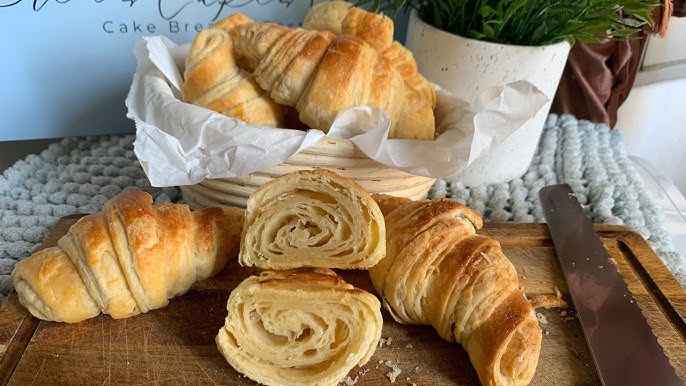
Sourdough Croissant Recipe: Is there anything better than the smell of buttery, flaky croissants straight from the oven? Now imagine that croissant made with a tangy, fermented sourdough starter—giving it a depth of flavor that’s unmatched.
This is not your average baking session; this is an artisan project. A labor of love. But don’t worry, this step-by-step sourdough croissant recipe is going to walk you through everything from your flour choices to that final, golden bake.
Why Sourdough Croissants?
Sourdough croissants are the ultimate fusion of classic French technique and the complex, natural flavors of wild fermentation. If you’ve made sourdough bread before, you know it’s more than just baking—it’s an experience. Adding that same process to croissants brings buttery layers to life with a signature sour tang that elevates every bite.
These croissants aren’t just tasty—they’re digestively friendlier. The long fermentation helps break down gluten and sugars, making them easier on the stomach. And let’s not forget: you’re skipping commercial yeast altogether, giving your body and taste buds something truly unique.
Benefits of Using Sourdough Starter Instead of Yeast
Why go through all the effort to use sourdough starter instead of yeast? It all comes down to flavor, health benefits, and pride. Here are the standout reasons:
- Flavor Depth: Sourdough brings complexity—mild tanginess, slight sweetness, and a rich, nutty background.
- Better Digestion: Fermentation partially breaks down gluten and phytic acid.
- No Need for Commercial Yeast: Perfect for those avoiding processed additives.
- Longer Freshness: These croissants will stay soft and flavorful longer.
Yes, the timeline is longer—but the results are totally worth it.
What Makes Croissants Challenging Yet Rewarding
Making croissants isn’t just about following a recipe. It’s about patience, timing, and precision. Croissant dough is delicate. Too warm, and the butter melts; too cold, and it cracks. Lamination—the technique of folding butter into dough—is what gives croissants their iconic flaky texture. And while it’s easy to mess up, it’s incredibly satisfying when you get it right.
The sourdough aspect adds another layer of complexity. You’re working with a living culture. You need to listen to it, feed it, and allow it the time it needs. But when everything aligns? You’ll create croissants so beautiful and delicious, people won’t believe you made them yourself.
Essential Ingredients You’ll Need
Creating sourdough croissants means starting with the best ingredients. Don’t compromise here—quality matters.
Flour Selection
Use unbleached, all-purpose flour or bread flour for the best structure. If you’re aiming for a more tender crumb, mix a bit of pastry flour in.
- 500g unbleached all-purpose flour
- Optional: 10% pastry flour for extra tenderness
Sourdough Starter
Your starter should be active and bubbly—fed about 4–6 hours before you begin mixing the dough.
- 150g active sourdough starter (100% hydration)
Butter Quality
Use high-fat European-style butter (at least 82% fat) for best lamination.
- 280g cold European butter for lamination
- 30g softened butter for the dough
Milk, Sugar & Salt
- 200ml whole milk (room temperature)
- 50g granulated sugar
- 10g fine sea salt
- 1 egg (for egg wash)
Tools You’ll Need in Your Kitchen
A successful bake depends not just on ingredients, but also on having the right tools:
- Rolling pin
- Kitchen scale
- Bench scraper
- Sharp knife or pizza cutter
- Pastry brush
- Mixing bowls
- Parchment paper
- Ruler (optional but helpful for precision)
- Baking sheet
Step-by-Step Sourdough Croissant Recipe
Now for the main event. Here’s your complete, beginner-friendly guide to making sourdough croissants from scratch. This process spans 2–3 days, so make sure you plan ahead.
Step 1: Preparing the Sourdough Starter
Feed your starter 4–6 hours before you plan to make the dough. It should double in size, smell pleasantly sour, and pass the float test. (Drop a spoonful into water—it should float.)
If your starter isn’t active, your dough will be sluggish and underdeveloped. This is the foundation—don’t rush it.
Step 2: Mixing the Dough
In a mixing bowl, combine:
- 500g flour
- 200ml milk
- 50g sugar
- 30g softened butter
- 150g active sourdough starter
- 10g salt
Mix until combined but not fully kneaded. Let it rest for 30 minutes (autolyse), then knead gently until smooth. You don’t want to overwork the dough—this is a tender pastry.
Cover and bulk ferment at room temp (21–24°C) for 4–6 hours, until it has risen by about 50%. Then, refrigerate overnight to develop flavor and make it easier to laminate.
Step 3: Overnight Cold Rest
After bulk fermentation, refrigerate your dough overnight (at least 8–12 hours). Cold dough is easier to laminate and helps keep the butter from melting.
Step 4: Preparing the Butter Block
Cut 280g of butter into slices and place between two sheets of parchment paper. Pound it flat using a rolling pin until it forms a 6-inch square, about 1/2 inch thick. Chill it, but make sure it’s pliable—not rock solid.
Step 5: Laminating the Dough
Roll out the chilled dough into a 12-inch square. Place your butter block diagonally in the center like a diamond. Fold the corners of the dough over the butter to enclose it like an envelope. Pinch the seams shut.
Then, roll the dough into a rectangle, about 8×24 inches.
Step 6: First Fold (Single Fold)
Fold the dough into thirds like a letter (this is a single fold). Wrap in plastic and refrigerate for 30–45 minutes.
Step 7: Second Fold (Double Fold)
Roll the dough out again and perform a book fold—fold both ends toward the center, then fold in half again like a book. This creates more layers.
Wrap and chill again.
Step 8: Third Fold (Single Fold)
Repeat the single fold one more time. Wrap and chill for at least 2 hours before shaping.
Step 9: Cutting and Shaping the Croissants
Roll out the dough to about 1/4 inch thick. Cut into long triangles (base about 3.5 inches wide). Starting at the base, roll tightly to the tip. Bend the ends slightly to form a crescent.
Place on a lined baking sheet.
Step 10: Final Proof
Proof the croissants at 24–26°C (covered) for 4–6 hours. They should jiggle slightly and appear puffed. Don’t rush this—under-proofed croissants won’t rise properly in the oven.
Step 11: Baking the Croissants
Preheat oven to 200°C (392°F). Beat one egg with a splash of milk and gently brush over the croissants.
Bake for 20–25 minutes or until deeply golden and crisp.
Step 12: Cooling and Serving
Let them cool for 15–20 minutes on a wire rack. The internal crumb continues to set during this time. Serve warm or room temp, with jam, butter, or on their own.
Tips for a Perfect Lamination
Laminating croissant dough is an art, and when done right, it yields those iconic layers that make croissants irresistible. But it’s also where most people stumble. Here’s how to set yourself up for lamination success:
- Keep it cold: Your dough and butter must stay cold at all times. Warm butter will seep into the dough, ruining the layers. Chill your dough for at least 30 minutes between folds.
- Even pressure: Use a firm, steady pressure when rolling out the dough. Don’t press too hard or fast. You’re coaxing—not smashing—the butter into place.
- Butter pliability: If the butter is too hard, it will crack and break through the dough. Too soft, and it’ll melt or squish out. Aim for butter that’s cool but flexible—around 16°C (60°F) is ideal.
- Flour your surface lightly: Use just enough flour to prevent sticking. Too much can toughen the dough or make it harder for the layers to bond.
Each fold is your opportunity to create thin, even layers of dough and butter. Take your time. Don’t rush it.
Common Mistakes to Avoid
Baking sourdough croissants is not about perfection; it’s about learning. Still, knowing what to avoid will save you hours of frustration:
- Underdeveloped starter: Your sourdough starter needs to be mature and active. If it’s not rising properly, your croissants won’t either.
- Over-proofing or under-proofing: Over-proofed croissants will collapse. Under-proofed ones will be dense. Look for that “jiggle” and puffiness as signs of readiness.
- Poor butter lamination: If your butter leaks out during baking, chances are you didn’t chill enough or rolled too aggressively.
- Too much flour on the surface: Extra flour can get trapped in layers, causing uneven texture. Brush excess off as you go.
- Baking too early or too late: Wait for full proof before baking. Impatience can destroy all your hard work.
Treat each stage with care, and you’ll end up with a croissant that’s crunchy, airy, and beautifully golden.
How to Store Sourdough Croissants
Fresh croissants are best the day they’re baked, but you can store them and enjoy them later, too. Here’s how:
- At room temperature: Keep them in an airtight container for up to 2 days. Reheat in a 175°C (350°F) oven for 5–7 minutes to restore crispness.
- In the fridge: Not recommended. Refrigeration can make croissants stale faster by altering their moisture content.
- Freezing (before or after baking):
- Freeze shaped but unbaked croissants on a tray. Once frozen, transfer to a bag. Defrost overnight in the fridge, then proof and bake.
- Or freeze baked croissants, then reheat directly from frozen in the oven at 175°C (350°F) for 10–12 minutes.
Can You Freeze Them?
Absolutely. In fact, freezing your croissants before baking is a great way to have freshly baked pastries any day of the week. Here’s a simple method:
- Shape the croissants after the final lamination step.
- Place them on a tray lined with parchment paper and freeze until solid.
- Transfer to a freezer-safe bag or container.
- When ready to bake, remove from freezer the night before, place on a tray, and proof in the fridge overnight or at room temp until doubled in size.
This make-ahead trick is perfect for busy mornings or brunch guests. You get all the flavor, none of the last-minute stress.
How Long Does It Take from Start to Finish?
One of the most important things to understand about sourdough croissants is the timeline. They’re not quick, but they’re absolutely worth it. Here’s a breakdown:
- Starter feed & activation: 4–6 hours
- Dough mixing & bulk fermentation: 4–6 hours
- Overnight cold rest: 8–12 hours
- Lamination & folds: 2–3 hours with resting
- Shaping & final proof: 4–6 hours
- Baking & cooling: 30–40 minutes
Total: 24–36 hours depending on ambient temperature and schedule. Plan accordingly and give yourself grace—it’s a project, not a rush job.
Nutritional Breakdown (Per Croissant)
Let’s get a general idea of what’s inside a standard sourdough croissant:
| Nutrient | Approximate Amount |
|---|---|
| Calories | 290–350 kcal |
| Carbohydrates | 32g |
| Protein | 6g |
| Fat | 18–20g |
| Sugar | 4–6g |
| Fiber | 1g |
| Sodium | 250–300mg |
Note: These values will vary depending on your ingredients, size of the croissants, and baking method.
Serving Suggestions
Once baked, your croissants are like blank canvases for flavor:
- Plain & warm with coffee (a classic!)
- With homemade jam or marmalade
- Filled with chocolate, almond paste, or ham & cheese before baking
- Split & stuffed with egg, cheese, and herbs for a next-level breakfast sandwich
- Turn leftovers into bread pudding or croissant French toast
These are incredibly versatile. One batch can serve many different meals or moods.
FAQs about Sourdough Croissant Recipe
1. Can I make sourdough croissants without a stand mixer?
Yes! Mix and knead by hand until the dough is smooth. It takes more effort, but it’s 100% doable and just as rewarding.
2. What kind of flour works best for croissants?
Unbleached all-purpose flour or bread flour works well. Some bakers also add a bit of pastry flour for a softer texture.
3. Why is my butter leaking during baking?
This usually happens due to warm dough or over-handling during lamination. Always keep your dough and butter cold.
4. Can I add fillings to sourdough croissants?
Yes! You can add chocolate, almond cream, or savory fillings like ham and cheese—just add them during shaping.
5. Do I need to feed my starter every day for this recipe?
Not necessarily. Feed it the day before or at least 4–6 hours ahead. Just make sure it’s active, bubbly, and ready to leaven your dough.
Conclusion
Making sourdough croissants isn’t just a baking task—it’s an adventure. From nurturing your starter to layering in butter with precision, this recipe invites you to slow down and enjoy the process. And the result? A buttery, flaky, tangy masterpiece you’ll be proud to call your own.
Once you’ve made them once, you’ll never look at store-bought croissants the same way again. Whether you share them with friends or keep them all to yourself (no judgment), these sourdough croissants are pure joy baked into every bite.