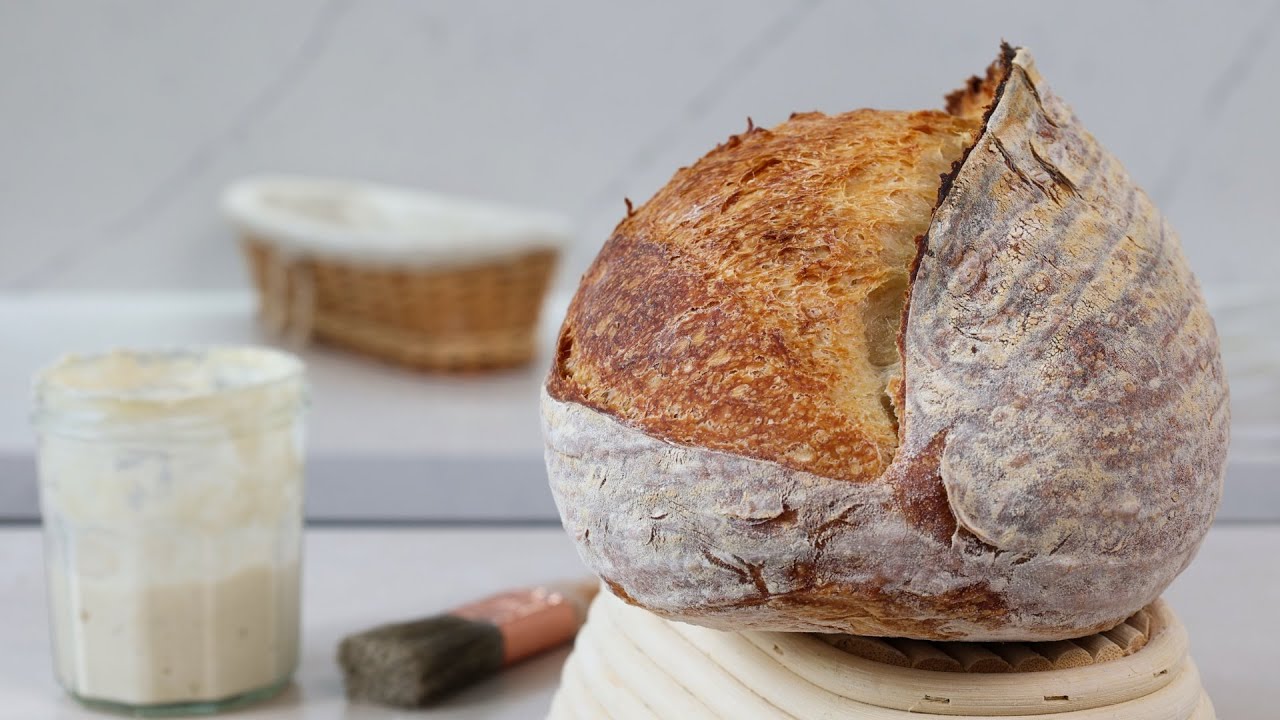
Sourdough Bread Recipe: There’s something magical about baking your own sourdough bread. It’s not just a trend — it’s a skill, an art, and for many, a therapeutic ritual.
Whether you’re looking to eat healthier, become more self-sufficient, or just impress your friends, this guide is your go-to for baking sourdough from scratch.
We’ll walk you through every detail, from crafting a bubbly starter to pulling a golden, crackly loaf out of the oven. Ready to bake? Let’s dive in.
What is Sourdough Bread?
Sourdough is a type of bread made through the natural fermentation of dough using wild yeast and lactic acid bacteria. Unlike bread made with commercial yeast, sourdough gets its rise and distinct tangy flavor from this natural process. The dough ferments slowly over time, creating deep flavor, texture, and nutrition.
It’s believed that sourdough dates back to ancient Egypt, making it one of the oldest forms of leavened bread in human history. Because it doesn’t rely on store-bought yeast, sourdough bread was the norm for thousands of years before instant yeast was even a thing.
Why Choose Sourdough Over Regular Bread?
Great question! Sourdough isn’t just another baking trend. It’s a better, smarter way to enjoy bread. Here’s why:
- No commercial yeast: This makes it perfect for people with mild yeast sensitivities.
- Long fermentation = better digestion: The extended fermentation process breaks down gluten and phytic acid, making the bread easier on the gut.
- Lower glycemic index: Sourdough digests more slowly than regular bread, keeping blood sugar levels more stable.
- Unmatched flavor and texture: That crusty outside and soft, chewy center? Pure perfection.
If you’ve been disappointed by store-bought loaves that go stale in a day or taste like cardboard, sourdough will change the game for you.
Health Benefits of Sourdough Bread
Beyond taste and tradition, sourdough bread packs a surprising punch when it comes to health:
- Better gut health: Thanks to beneficial bacteria, sourdough acts as a natural probiotic.
- Improved nutrient absorption: The fermentation process neutralizes antinutrients, allowing your body to absorb more iron, magnesium, and zinc.
- Easier on blood sugar: Sourdough has a lower glycemic index, meaning it won’t spike your blood sugar like white bread does.
- Rich in antioxidants: The acids and fermentation produce compounds that support heart and cellular health.
So yes — it’s not just bread. It’s functional food.
The Science Behind Sourdough Fermentation
Sourdough fermentation is a fascinating symbiotic relationship between wild yeast and lactic acid bacteria. These microorganisms naturally exist in flour and the air around us. When you mix flour and water, wild yeast and bacteria begin to feed, grow, and release gases — mainly carbon dioxide — which causes the dough to rise.
Lactic acid bacteria also produce acids that give sourdough its signature tang. This process can take hours to days, depending on temperature and hydration, but the slow nature of sourdough is what sets it apart. It develops flavor gradually and forms complex gluten structures that lead to that airy, chewy crumb.
Essential Tools You’ll Need
Let’s keep it simple. You don’t need a high-end kitchen to bake amazing sourdough, but a few tools will help:
- Mixing bowls (glass or stainless steel)
- Kitchen scale (for accuracy)
- Banneton basket or bowl lined with a towel
- Dutch oven (or cast iron pot with a lid)
- Bench scraper
- Lame or sharp razor for scoring
- Thermometer (optional, but helpful)
- Clean towel or plastic wrap
- Proofing container or jar for starter
These basics will set you up for success. You can always upgrade your gear later.
List of Ingredients You’ll Need
Here’s everything you’ll need — don’t worry, the list is short and sweet.
For the Starter:
- Whole wheat flour (or rye flour for best results)
- Filtered or spring water
For the Dough:
- 500g bread flour (or mix of all-purpose and whole wheat)
- 350g water (70% hydration)
- 100g active sourdough starter (fed and bubbly)
- 10g sea salt
That’s it. Just four ingredients — flour, water, salt, and starter. The magic lies in how they come together.
How to Make a Sourdough Starter (From Scratch)
Creating a sourdough starter from scratch is simple, but it takes patience.
Day 1:
- Mix 50g whole wheat flour and 50g filtered water in a clean jar. Stir until no dry flour remains. Loosely cover.
Day 2–3:
- Discard half of the mixture, feed with 50g flour and 50g water.
- You might see bubbles and smell a little sourness. That’s a good sign.
Day 4–6:
- Continue feeding daily. Discard and feed again.
- By day 5 or 6, your starter should be doubling in size within 4–6 hours after feeding.
Tip: Use a rubber band to mark the level after feeding to track its rise.
When it consistently doubles and smells pleasant (like yogurt or green apples), your starter is ready to use.
How to Store and Maintain Your Starter
Once your starter is active, keep it happy:
- Daily baking? Feed it daily and keep it at room temperature.
- Occasional baking? Store it in the fridge and feed once a week.
Before using your starter in a recipe, feed it 4–6 hours beforehand so it’s active and bubbly.
To revive a sleepy starter from the fridge, just feed it a few times over a couple of days at room temp.
Step-by-Step Guide to Make Sourdough Bread
Now comes the fun part — baking your loaf! Each step is essential, so don’t rush. Take your time, enjoy the process, and remember — sourdough is all about patience.
Step 1: Mixing the Dough
In a large bowl, combine bread flour and water. Mix until no dry flour remains. The dough will look rough and shaggy—this is normal. Cover the bowl and let it rest.
Step 2: Autolyse (Resting the Dough)
Let the dough rest for 30–60 minutes. This allows the flour to fully hydrate and begins gluten development naturally, making the dough easier to handle later.
Step 3: Adding Salt and Starter
Add active sourdough starter and salt to the dough. Gently pinch and fold the dough until everything is fully incorporated. The dough should feel smoother and slightly elastic.
Step 4: Bulk Fermentation and Stretch & Folds
Cover the dough and let it ferment at room temperature for 3–5 hours. During the first 2 hours, perform stretch-and-folds every 30 minutes by gently stretching the dough and folding it over itself. This builds strength and structure.
Step 5: Shaping the Dough
Turn the dough onto a lightly floured surface. Gently shape it into a round or oval loaf without knocking out too much air. Let it rest for 15–20 minutes, then do a final shape and place it seam-side up in a floured proofing basket or bowl.
Step 6: Proofing (Cold or Room Temperature)
For room-temperature proofing, rest for 2–3 hours. For better flavor and texture, refrigerate overnight (8–16 hours). Cold proofing also makes scoring easier.
Step 7: Scoring the Dough
Preheat your oven with a Dutch oven inside. Turn the dough onto parchment paper and score the top with a sharp blade. This controls how the bread expands while baking.
Step 8: Baking Your Sourdough
Bake at 230°C (450°F) covered for 20 minutes, then uncover and bake another 20–25 minutes until deeply golden. Cool completely before slicing for best results.
Sourdough Baking Tips for Beginners
Let’s be real: sourdough baking has a learning curve. But don’t stress — everyone starts somewhere. Here are a few tried-and-true tips to level up your game:
- Use a scale. Measuring by weight is more accurate than cups.
- Don’t rush the fermentation. Time and temperature are everything.
- Hydration matters. Beginners should aim for 70% hydration until they get used to handling sticky dough.
- Watch the dough, not the clock. Temperature, flour type, and starter strength affect rise time.
- Practice makes perfect. Your first loaf won’t be bakery-worthy — and that’s okay!
Think of it like learning an instrument. It takes repetition, observation, and patience.
Common Mistakes to Avoid
Even experienced bakers slip up sometimes. Here are the most common sourdough blunders and how to steer clear:
- Underproofing: Dough hasn’t risen enough; the bread will be dense.
- Overproofing: Dough rises too long and collapses; you’ll get a pancake loaf.
- Cutting too soon: Always let the bread cool completely before slicing.
- Flat dough: This could be weak gluten, overhydration, or too much starter.
- Cold starter: If your starter isn’t active and bubbly, your dough won’t rise properly.
Fixing these issues just takes practice — so don’t give up!
Storing and Keeping Sourdough Bread Fresh
Sourdough has a naturally longer shelf life than most breads, but it still needs proper storage:
- Room Temperature (Best for 2–3 days):
- Wrap in a clean kitchen towel or store in a paper bag.
- Avoid plastic — it softens the crust.
- Long-Term Storage:
- Slice the loaf and freeze individual slices in a zip-top bag.
- Toast directly from frozen when needed.
Avoid refrigerating your loaf — it’ll dry out faster than you think.
Ways to Use Leftover Sourdough Bread
Sourdough is just as good the next day — and the next. In fact, stale sourdough is perfect for:
- French toast – that tang + egg combo? Chef’s kiss.
- Croutons – cube, toss with oil & herbs, and bake.
- Bread pudding – soak, bake, and dessert it up.
- Sourdough stuffing – great for holidays.
- Grilled cheese or paninis – crisp on the outside, gooey inside.
Don’t waste a crumb — sourdough is gold, even on day four.
FAQs about Sourdough Bread Recipe
1. How do I know if my sourdough starter is ready?
Your starter is ready when it doubles in size within 4–6 hours after feeding and has a bubbly, slightly sour aroma. Drop a spoonful in water — if it floats, it’s good to go!
2. Can I use all-purpose flour instead of bread flour?
Yes, but bread flour gives a better structure due to its higher protein content. If using all-purpose, expect a slightly softer crumb.
3. Why is my dough so sticky?
Sticky dough is common, especially with high hydration. Try using wet hands, a bench scraper, and avoid over-flouring.
4. Can I skip the overnight cold proof?
You can, but you’ll miss out on flavor and structure. The cold proof helps your dough develop complex flavor and makes scoring easier.
5. How often should I feed my starter if I don’t bake every day?
Store it in the fridge and feed it once a week. Before baking, bring it out, feed it a few times at room temp, and wait until it’s bubbly and active.
Final Thoughts
Baking sourdough bread is more than just following a recipe — it’s about understanding the process, experimenting, and connecting with tradition. It may feel overwhelming at first, but each loaf teaches you something new.
Start simple. Embrace the imperfect loaves. And above all, enjoy the journey. With this guide, you’ve got everything you need to become your own sourdough baker — no fancy tools or pro skills required.
Ready to roll up your sleeves and get baking?