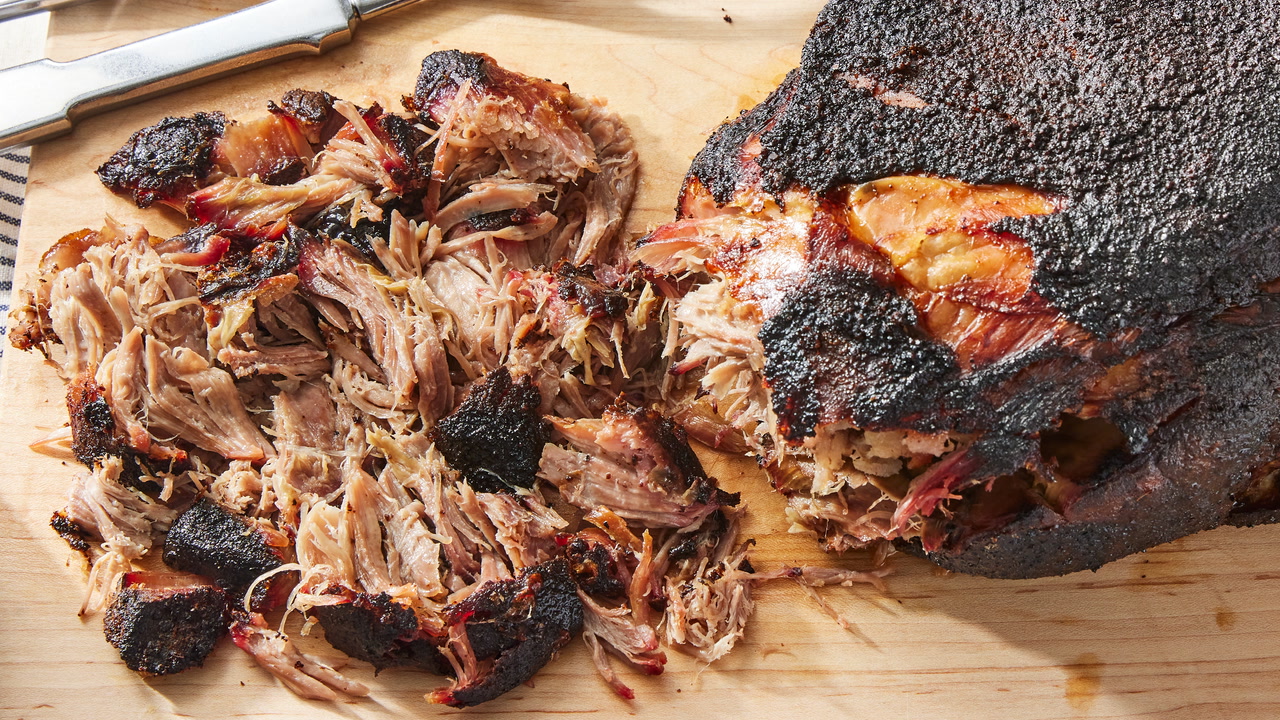
Smoked Pork Butt Recipe: There’s something almost magical about slow-smoked pork butt. The crusty bark, the juicy tenderness, and the bold smoky flavor—it’s the kind of food that brings people together.
Whether you’re a BBQ beginner or looking to up your smoking game, this guide will walk you through everything you need to know to master smoked pork butt at home.
What Is Pork Butt?
Despite the name, pork butt doesn’t come from the rear of the pig. It actually comes from the upper part of the shoulder, above the picnic shoulder cut. This well-marbled, fatty cut is perfect for slow smoking because the fat breaks down over time, making the meat ultra tender.
Difference Between Pork Butt and Pork Shoulder
- Pork Butt (a.k.a. Boston Butt): Thicker, more marbled, usually includes a bone, ideal for pulled pork.
- Pork Shoulder: Slightly leaner, often sold with skin on, better for roasting.
If you’re aiming for fall-apart tender pulled pork, pork butt is the gold standard.
Why Smoke Pork Butt?
Smoking pork butt is more than just cooking meat—it’s a process. The slow cooking allows the connective tissue to melt into the meat, giving it that signature juicy texture. The smoke infuses the meat with a deep, rich flavor that can’t be replicated by any other cooking method. Plus, it’s a forgiving cut—perfect for long, slow cooks without drying out.
Essential Equipment for Smoking Pork Butt
You don’t need to spend a fortune to smoke great pork butt, but having the right gear helps a lot.
Types of Smokers You Can Use
- Offset Smoker: Classic choice, gives great flavor.
- Electric Smoker: Easier temperature control.
- Pellet Smoker: Perfect for beginners and consistent smoke.
- Charcoal Smoker: Traditional and flavorful but needs babysitting.
Thermometer Importance
You can’t rely on time alone when smoking meat. A dual-probe digital thermometer will help you monitor both the smoker temperature and the meat’s internal temp.
Ingredients You’ll Need
Here’s your essential grocery list:
- 1 pork butt (6–8 pounds) – Bone-in preferred
- Yellow mustard or olive oil – For binding the rub
- Dry rub seasoning – Homemade or store-bought
- Apple cider vinegar or apple juice – For spritzing
- Wood chips or pellets – Hickory, apple, cherry, or a blend
- Aluminum foil or butcher paper – For wrapping
- Salt & pepper – Base seasoning
Optional:
- Brown sugar – Adds caramelization
- Garlic powder, onion powder, paprika, chili powder – Flavor depth
- BBQ sauce – For serving
How to Choose the Right Cut of Pork Butt
Look for a cut with:
- Marbling: Fat = flavor.
- Bone-in: Adds flavor and helps retain moisture.
- Uniform Shape: Even cooking.
Bone-in vs. Boneless Pork Butt
- Bone-in: More flavor and moisture, traditional choice.
- Boneless: Easier to handle and shred, but may cook slightly faster.
Prepping the Pork Butt
Before it hits the smoker, the pork butt needs a little love.
Trimming Fat
- Leave about 1/4 inch of fat cap.
- Trim off any hard fat—it won’t render.
Dry Brining or Marinade?
- Dry Brining: Sprinkle salt over the pork 12–24 hours before smoking. It draws out moisture and reabsorbs it, leading to juicier meat.
- Optional Marinade: You can marinate overnight in apple juice, vinegar, and seasonings if you prefer more tang.
Best Pork Butt Rub (Homemade Rub Recipe)
Skip the store-bought stuff. A homemade rub adds bold flavor and lets you control the ingredients.
Dry Rub Ingredients
- 1/4 cup brown sugar
- 2 tbsp paprika (smoked or sweet)
- 1 tbsp black pepper
- 1 tbsp kosher salt
- 1 tbsp garlic powder
- 1 tbsp onion powder
- 1 tsp cayenne (optional for heat)
- 1 tsp chili powder
Applying the Rub
- Rub pork butt with mustard or oil to bind.
- Generously coat all sides with dry rub.
- Let it sit at room temp for 30–60 minutes or refrigerate overnight.
Setting Up Your Smoker
The smoker is your best friend in this journey.
Ideal Smoking Temperature
- 225°F to 250°F is the sweet spot.
- Low and slow breaks down the tough tissues beautifully.
Best Wood for Smoking Pork Butt
- Hickory: Strong, smoky flavor (classic BBQ).
- Apple: Slightly sweet and mild.
- Cherry: Rich color and mild fruitiness.
- Oak: Bold and earthy, great for layering flavors.
Mix and match to your preference!
Step-by-Step Smoking Process
Let’s get into the actual smoking process:
Step 1: Preheat the Smoker
Preheat your smoker to 225–250°F (107–120°C). Use hardwoods like hickory, oak, or apple for balanced smoke. Let the smoker run until the smoke is clean and steady.
Step 2: Smoking the First Stage (Unwrapped)
Place the seasoned pork butt fat-side up on the smoker grates. Smoke unwrapped for several hours, allowing a deep bark to form. During this stage, the meat absorbs most of the smoke and develops flavor. Keep the lid closed as much as possible to maintain consistent heat.
Step 3: Wrapping the Pork Butt (Texas Crutch Method)
When the internal temperature reaches about 160–170°F and the meat enters the “stall,” wrap it tightly in foil or butcher paper. This helps retain moisture and speeds up cooking. You may add a small splash of apple juice or broth before sealing.
Step 4: Final Smoking Stage
Return the wrapped pork butt to the smoker and continue cooking until it becomes tender. The meat should feel soft when probed, indicating the connective tissue has broken down.
Step 5: Checking Internal Temperature
The pork butt is done when it reaches around 195–205°F (90–96°C) and a thermometer slides in easily. Remove from the smoker and let it rest, still wrapped, for at least 30–45 minutes before pulling or slicing.
The Stall – What It Is and How to Deal With It
If you’ve never smoked pork butt before, you’ll probably panic the first time you hit “the stall.” Here’s the truth: it’s completely normal.
What is the stall?
The stall is a point during smoking (usually around 150°F–165°F internal temp) where the meat’s temperature just… stops rising. This can last several hours and happens because the moisture from the meat is evaporating, cooling the surface—kind of like sweating.
How to Power Through the Stall:
- Be patient – The stall will pass naturally with enough time.
- Use the Texas Crutch – Wrapping the pork butt in foil or butcher paper traps moisture and speeds up cooking.
- Avoid increasing heat too much – Stick to your low-and-slow approach.
If you’re using a thermometer and everything is steady, don’t worry. Your pork will get through the stall and keep cooking to perfection.
Resting the Smoked Pork Butt
Once the pork butt hits 203°F internally, resist the urge to cut into it right away. Resting is a crucial step that lets the juices redistribute through the meat, making every bite tender and moist.
How to Rest Properly:
- Remove the pork from the smoker.
- Leave it wrapped.
- Place it in a cooler (no ice) or a turned-off oven for at least 1 hour, ideally 2.
- Keep the temperature stable (wrap it in a towel if using a cooler).
Skipping the rest will make your pulled pork drier than it should be. This step locks in all your hard-earned flavor and moisture.
How to Shred Smoked Pork Butt
After a good rest, it’s time for the fun part—pulling that pork.
Tips for Shredding:
- Use meat claws, two forks, or even your hands (if it’s cool enough).
- Pull apart the fibers gently—don’t mash it.
- Remove large fat pieces or gristle as you go.
- Mix in some of the juice from the foil or paper for added flavor.
If done right, the meat will practically fall apart. It should be tender, juicy, and smoky with that deep red smoke ring.
Serving Suggestions
Smoked pork butt is super versatile. You can go classic, creative, or anywhere in between.
Classic Pulled Pork Sandwiches
- Pile high on a brioche or potato bun
- Add coleslaw, pickles, and BBQ sauce
- Toast the bun for extra crunch
Other Serving Ideas
- Pulled pork tacos with pineapple salsa
- BBQ pulled pork nachos
- Stuffed baked potatoes
- Pulled pork mac and cheese
- Pork sliders for party snacks
And don’t forget sides:
| Great Side Dishes |
|---|
| Cornbread |
| Mac and cheese |
| Baked beans |
| Potato salad |
| Pickles & coleslaw |
| Grilled corn on the cob |
Storing and Reheating Leftovers
Smoked pork butt stores like a champ and tastes just as good the next day.
Storing
- Refrigerate: Store in airtight container with some juices, up to 4 days.
- Freeze: Portion into freezer bags (with a splash of juice), up to 3 months.
Reheating
- Oven: Wrap in foil and reheat at 300°F until warm.
- Skillet: Reheat on low with a splash of broth or juice.
- Microwave: Use only if you must. Cover to keep moisture in.
Pro tip: Mix with a bit of BBQ sauce during reheating to restore that just-smoked flavor.
Troubleshooting Common Issues
Even seasoned pitmasters run into issues sometimes. Here’s how to handle common problems.
Dry Pork
- Caused by overcooking or under-resting.
- Solution: Always rest the meat and monitor internal temp closely.
Bitter Flavor
- Often due to too much smoke or dirty smoke.
- Solution: Keep clean smoke (thin blue, not thick white), and don’t overload wood.
No Bark Formation
- Could be from wrapping too early or a wet surface.
- Solution: Let the rub dry before smoking and wait until 165°F to wrap.
Didn’t Shred Easily
- Likely undercooked (didn’t reach 200–205°F).
- Solution: Keep it on the smoker longer and check internal temp often.
Smoked Pork Butt Recipe (Printable Recipe Card)
Here’s a summarized version of the recipe for quick reference:
| Ingredient | Amount |
|---|---|
| Pork butt (bone-in) | 6–8 lbs |
| Mustard or oil (for binding) | 2 tbsp |
| Dry rub | 1/2 cup |
| Apple cider vinegar or juice | 1 cup (for spritzing) |
| Wood chips/pellets | As needed |
| Foil or butcher paper | For wrapping |
Instructions:
- Trim and season pork butt.
- Preheat smoker to 225°F.
- Smoke until 165°F, spritzing every hour.
- Wrap and continue smoking until 203°F.
- Rest wrapped for 1–2 hours.
- Shred and serve.
FAQs about Smoked Pork Butt Recipe
1. How long does it take to smoke a pork butt at 225°F?
It takes about 1.5 to 2 hours per pound. A 7-lb pork butt may take around 12–14 hours.
2. Can I smoke pork butt a day ahead?
Absolutely. Just store it in the fridge and reheat with juices to preserve moisture and flavor.
3. What’s the best wood for smoking pork butt?
Hickory is the most popular, but apple and cherry are great for a milder smoke. You can blend them too.
4. Do I need to wrap the pork butt?
Wrapping helps speed up the cook and retain moisture, especially during the stall. Use foil or butcher paper.
5. Is pork butt the same as pulled pork?
Not exactly. Pork butt is the cut of meat; pulled pork is the final dish made by shredding the smoked pork butt.
Conclusion
There you have it—your full guide to crafting the perfect smoked pork butt at home. It may take time, patience, and a bit of smoke in your eyes, but the result is 100% worth it. That first bite of tender, juicy, smoky pulled pork will make you forget all about the hours it took to get there.
Whether you’re making it for a family cookout, game day feast, or just because—you’ve got all the tools to crush it. So fire up that smoker, grab your pork butt, and get ready to impress everyone who gets a taste.