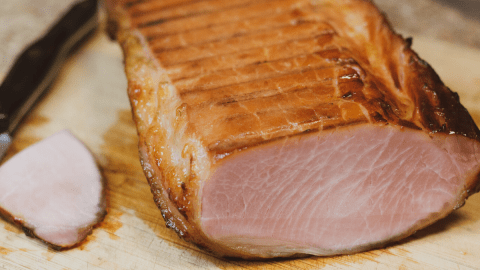
Smoked Canadian Bacon Recipe: If you’ve ever ordered Eggs Benedict at a brunch spot or layered a breakfast sandwich with thick, juicy pork slices, chances are you’ve tasted Canadian bacon. But what exactly is it? Unlike traditional American bacon, which comes from pork belly and is known for its streaky fat and crispy texture, Canadian bacon is made from the lean pork loin. That means it’s meatier, less fatty, and sliced into round medallions instead of long strips.
Think of Canadian bacon as the elegant cousin of regular bacon. It’s tender, mildly smoky, and packed with savory flavor without being overly greasy. Because it comes from the loin, it resembles ham more than streaky bacon, yet it carries a distinct taste that sets it apart. It’s typically cured, sometimes smoked, and fully cooked before it ever hits your frying pan.
When you make homemade smoked Canadian bacon, you control every aspect of the process—from seasoning to smoke intensity. Store-bought versions often contain preservatives and added water, which can dilute flavor and alter texture. Crafting it yourself allows you to create a richer, more natural taste. The result? A beautifully balanced cut of pork that’s smoky, slightly sweet, and irresistibly satisfying.
Making it from scratch may sound intimidating, but once you break it down step by step, it becomes surprisingly manageable. With the right ingredients, proper curing, and careful smoking, you’ll produce restaurant-quality Canadian bacon in your own backyard.
Difference Between Canadian Bacon and Regular Bacon
The biggest distinction lies in the cut of meat. Traditional bacon is taken from the pork belly, a fatty section that produces crispy, streaky strips when cooked. Canadian bacon, on the other hand, comes from the pork loin, which is significantly leaner. This difference alone changes everything—from flavor and texture to cooking methods.
Regular bacon is known for its high fat content. When fried, the fat renders and creates that iconic crispiness. Canadian bacon doesn’t behave the same way. Because it’s leaner, it stays tender and juicy rather than crisp and brittle. It’s typically sliced thicker, almost like a small ham steak.
Another difference is preparation. American bacon is usually cured and smoked, then sold raw. Canadian bacon is cured and often fully cooked during the smoking process, meaning you can eat it as-is or quickly reheat it.
Nutritionally, Canadian bacon is generally lower in fat and calories compared to regular bacon. For those who want the smoky, salty experience without the heavy grease, it’s an appealing alternative. Yet despite being leaner, it doesn’t sacrifice flavor—especially when you smoke it yourself.
Why Smoking Enhances Canadian Bacon
Smoking transforms pork loin from simple cured meat into something layered and complex. The smoke infuses the surface with aromatic compounds that deepen flavor and add character. It’s like turning up the volume on taste.
When wood smolders at low temperatures, it releases compounds that cling to the meat’s surface. These compounds create that distinctive smoky aroma we all crave. They also help develop a subtle bark—a slightly darker exterior that adds texture and visual appeal.
Beyond flavor, smoking helps preserve the meat. Historically, smoking was used as a method of preservation before refrigeration existed. Today, we use it primarily for flavor, but that preservation effect still adds to the shelf life.
Different woods create different flavor profiles. Applewood offers a mild sweetness. Hickory delivers a stronger, more traditional smoky punch. Maple adds a subtle caramel-like note. Choosing your wood is like selecting spices for a dish—it defines the personality of your bacon.
When done correctly, smoking produces Canadian bacon that is tender inside, lightly smoky outside, and perfectly balanced. It’s not overpowering. It’s refined, layered, and incredibly satisfying.
Ingredients You’ll Need
Essential Ingredients
Before you fire up the smoker, you need the right ingredients. Precision matters here because curing involves specific ratios to ensure both flavor and food safety.
Here’s what you’ll need:
- 4–5 pounds pork loin (boneless, trimmed)
- 1 gallon cold water
- 1 cup kosher salt
- 1 cup brown sugar
- 1 tablespoon pink curing salt (Prague Powder #1)
- 1 tablespoon black pepper
- 2 teaspoons garlic powder
- 2 teaspoons onion powder
The pork loin is the star of the show. Choose one that’s fresh, firm, and evenly shaped for consistent curing and smoking. Kosher salt is preferred because it dissolves evenly and doesn’t contain anti-caking agents. Brown sugar balances the saltiness with a gentle sweetness.
Pink curing salt is crucial. It contains sodium nitrite, which prevents bacterial growth and gives cured meat its characteristic pink color. Do not substitute regular salt for curing salt. The measurement must be accurate.
The spices add subtle layers without overpowering the natural pork flavor. Black pepper brings warmth. Garlic and onion powder contribute savory depth.
With these ingredients alone, you can create a beautifully balanced Canadian bacon that rivals professional smokehouses.
Optional Flavor Enhancers
Want to elevate your smoked Canadian bacon even further? A few optional additions can customize the flavor profile.
Consider adding:
- 2 tablespoons maple syrup
- 1 tablespoon cracked coriander seeds
- 1 teaspoon smoked paprika
- 2–3 bay leaves
- Red pepper flakes for mild heat
Maple syrup pairs beautifully with pork. It enhances sweetness and complements apple or maple wood smoke. Coriander introduces a subtle citrus note, while smoked paprika intensifies smokiness without overwhelming the palate.
Bay leaves add aromatic complexity during curing. Red pepper flakes provide a gentle kick that lingers without dominating.
Think of these enhancers as tuning knobs. You don’t need them, but they allow you to shape your bacon’s personality. Whether you prefer classic, sweet, or slightly spicy, small adjustments can make a noticeable difference.
Equipment Required for Smoking Canadian Bacon
Choosing the Right Smoker
You don’t need commercial equipment to make professional-quality smoked Canadian bacon. However, having the right smoker makes the process smoother and more consistent.
You can use:
- Electric smoker
- Pellet smoker
- Charcoal smoker
- Offset smoker
- Even a charcoal grill set up for indirect heat
Pellet smokers are particularly user-friendly because they maintain steady temperatures automatically. Electric smokers are great for beginners since they require minimal monitoring. Charcoal and offset smokers provide deeper smoke flavor but demand more attention.
Consistency is key. Canadian bacon should be smoked at 225°F (107°C) for best results. A smoker that maintains stable temperatures ensures even cooking and prevents drying out.
A reliable meat thermometer is non-negotiable. You must monitor internal temperature precisely to achieve safe and juicy results.
Wood Selection for the Best Flavor
Wood choice defines your final flavor. Mild woods like apple, cherry, and maple are ideal for Canadian bacon because they complement the lean pork loin without overpowering it.
Hickory offers a stronger, traditional smoky flavor. Use it sparingly or blend it with fruitwood for balance.
Avoid overly intense woods like mesquite unless you prefer bold smoke. Canadian bacon shines with subtlety. The goal is harmony, not dominance.
Selecting the right wood is like choosing background music. It shouldn’t drown out the main performance—it should enhance it.
Preparing the Pork Loin
Trimming and Portioning
Preparation is where craftsmanship begins. A well-prepared pork loin ensures even curing, balanced flavor, and consistent texture throughout the smoking process. Start by placing the pork loin on a clean cutting board and inspecting it carefully. You’ll often notice a thin layer of silver skin or excess fat along one side. While Canadian bacon is lean by nature, trimming off excess fat helps the cure penetrate evenly and prevents chewy sections after smoking.
Use a sharp boning knife and gently slide it under the silver skin, angling the blade slightly upward to avoid removing too much meat. Think of it like peeling tape from a surface—you want to remove just the unwanted layer without damaging what’s underneath. Removing this membrane allows the brine to fully interact with the meat fibers, which improves both flavor absorption and final tenderness.
If your pork loin is especially large, you may cut it into two equal sections. Smaller portions cure more evenly and are easier to handle inside the smoker. Uniform thickness is important. Uneven pieces may cure inconsistently, leaving some areas saltier than others.
At this stage, you’re setting the foundation. Careful trimming and thoughtful portioning ensure that every slice later on will look beautiful, cook evenly, and taste balanced. It’s a small effort that makes a noticeable difference in the final product.
Applying the Cure Properly
The curing process is where science meets flavor. In a large container, combine cold water, kosher salt, brown sugar, curing salt, and your selected spices. Stir thoroughly until everything dissolves completely. This brine should be clear with no visible granules at the bottom.
Submerge the pork loin fully in the brine. If needed, place a plate on top to keep it completely immersed. The meat must stay below the liquid surface to cure evenly. Refrigerate the container at 34–40°F during the curing process.
Curing is not just about seasoning; it’s about transformation. The salt draws moisture from the meat, then reabsorbs it along with dissolved flavors. Meanwhile, the curing salt prevents harmful bacteria growth and develops that signature rosy color. Without proper curing, the meat would simply taste like roasted pork, not authentic Canadian bacon.
Precision matters. Measure ingredients accurately, especially curing salt. Too little can affect preservation; too much can impact safety. Follow recommended quantities carefully.
By the end of this stage, the pork loin will have absorbed a balanced blend of salt, sweetness, and spice—ready for smoking.
The Curing Process Explained
How Long to Cure Canadian Bacon
Patience is essential. For a 4–5 pound pork loin, curing typically takes 5 to 7 days in the refrigerator. Thicker cuts may require a full week. During this time, flip the meat once per day to ensure even exposure to the brine.
You might wonder, why so long? Curing isn’t surface seasoning—it’s a gradual penetration into the meat’s interior. The salt and curing agents slowly migrate inward, ensuring uniform preservation and flavor distribution.
Rushing this stage leads to uneven results. The center may remain under-cured while the outer layers become overly salty. Think of curing like marinating, but deeper and more deliberate. It’s about giving time for transformation.
You’ll notice the pork becoming slightly firmer as it cures. That’s normal. The salt tightens the muscle fibers and alters the texture in preparation for smoking.
How to Know When It’s Ready
After 5–7 days, the pork should feel firm yet pliable. Remove it from the brine and rinse thoroughly under cold water to remove excess salt from the surface. This step prevents an overly salty exterior.
To test readiness, slice a thin piece from the end and cook it quickly in a skillet. Taste it. If it’s balanced—savory with a hint of sweetness—it’s ready. If too salty, soak the loin in cold water for one to two hours, then test again.
This taste test is your quality control checkpoint. It ensures that once smoked, your Canadian bacon will be perfectly seasoned rather than overpowering.
Step-by-Step Guide to Smoking Canadian Bacon
Step 1 – Rinsing and Drying
After rinsing the cured pork loin, pat it completely dry with paper towels. Then place it on a wire rack in the refrigerator, uncovered, for 12–24 hours. This step forms what’s called a pellicle—a slightly tacky surface layer.
Why is this important? Smoke adheres better to a dry, tacky surface. Without a pellicle, smoke flavor won’t cling properly, and you’ll miss that deep, rich smokiness.
The surface will feel slightly sticky when ready. That’s your signal. This seemingly small step significantly enhances flavor absorption.
Step 2 – Preheating the Smoker
Preheat your smoker to 225°F (107°C). Add your chosen wood—apple or maple are excellent choices for balanced sweetness.
Allow the smoker to stabilize before placing the pork inside. Consistent temperature is critical. Fluctuations can lead to uneven cooking and moisture loss.
Place the pork loin directly on the grate, leaving space around it for proper air circulation. Insert a meat thermometer into the thickest part.
Step 3 – Smoking to the Perfect Internal Temperature
Smoke the pork loin until it reaches an internal temperature of 145°F (63°C). This typically takes 2.5 to 4 hours depending on thickness and smoker type.
Avoid rushing by increasing heat. Low and slow preserves moisture and allows smoke to develop gradually. You’ll notice the exterior deepening into a rich amber hue.
Once it reaches temperature, remove it promptly. Overcooking can dry out the lean meat.
The result should be tender, lightly smoky, and beautifully colored Canadian bacon.
Resting, Slicing, and Storing
Proper Resting Techniques
After smoking, let the pork rest for at least 20–30 minutes. Resting allows juices to redistribute evenly throughout the meat. Cutting too soon causes moisture loss.
During resting, internal temperature may rise slightly. That’s normal. Place it loosely tented with foil, but avoid wrapping tightly to prevent steaming the exterior.
Best Storage Practices
Once cooled completely, wrap tightly in plastic wrap or vacuum seal. Refrigerate for up to 7 days or freeze for up to 2 months.
Slice thin or thick depending on preference. For breakfast sandwiches, thicker slices work well. For pizza toppings, thinner cuts are ideal.
Proper storage maintains freshness and preserves that carefully developed smoky flavor.
Serving Ideas and Recipe Variations
Breakfast Classics
Canadian bacon shines in breakfast dishes. Layer it in Eggs Benedict, breakfast sandwiches, or alongside scrambled eggs. Because it’s lean, it reheats quickly without becoming greasy.
Pan-sear slices lightly for caramelized edges, or warm them gently in the oven. Its balanced flavor pairs beautifully with eggs, cheese, and toasted English muffins.
Creative Culinary Uses
Beyond breakfast, use smoked Canadian bacon in pizzas, salads, pasta dishes, and wraps. Dice it into omelets or add it to creamy soups for depth.
You can even glaze it lightly with maple syrup and broil for a sweet-savory twist. Its versatility makes it a staple ingredient worth preparing in bulk.
FAQs about Smoked Canadian Bacon Recipe
1. What is smoked Canadian bacon?
Smoked Canadian bacon is a lean, cured pork product usually made from the pork loin. Unlike regular bacon, it is meatier, less fatty, and often served in round slices.
2. Is Canadian bacon already cooked?
Most smoked Canadian bacon is fully cooked during the curing and smoking process. However, always check the package or recipe instructions before serving.
3. What wood is best for smoking Canadian bacon?
Mild woods such as apple, cherry, or maple are popular because they add a slightly sweet smoky flavor without overpowering the meat.
4. How long does it take to smoke Canadian bacon?
Smoking time depends on the thickness of the pork loin and smoker temperature. In most recipes, it takes 2 to 4 hours at a low temperature until the internal temperature is safe.
5. What internal temperature should smoked Canadian bacon reach?
For best results, cook it until the internal temperature reaches 145°F (63°C), then let it rest before slicing.
6. Can I make smoked Canadian bacon without a smoker?
Yes. We can use an oven with a small amount of liquid smoke or smoked seasoning, though the flavor will not be exactly the same as traditional smoking.
7. How do I store smoked Canadian bacon?
Store it in an airtight container in the refrigerator for up to 4 to 5 days. It can also be frozen for longer storage.
8. How can I serve smoked Canadian bacon?
It is delicious in breakfast sandwiches, eggs, pizza, salads, pasta, or casseroles. It can also be served on its own as a protein-rich breakfast side.
Conclusion
Making smoked Canadian bacon at home transforms a simple pork loin into a flavorful, professional-quality product. By carefully trimming, curing, drying, and smoking at controlled temperatures, you create a balanced, tender, and smoky delicacy that surpasses store-bought alternatives. The process requires patience and precision, but the reward is unmatched flavor and satisfaction.
Once you taste homemade Canadian bacon, it’s hard to go back. Every slice reflects craftsmanship, control, and culinary care.