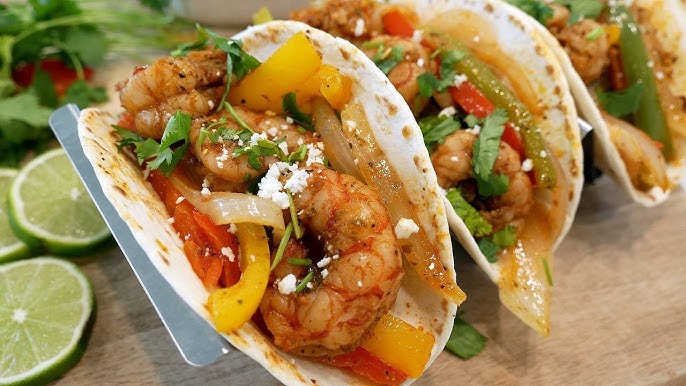
Shrimp Fajitas Recipe: There’s something undeniably exciting about the sizzle of fajitas coming fresh off the skillet, especially when shrimp is the star of the show.
Whether you’re planning a family dinner, a weekend feast, or just craving something vibrant and flavorful, shrimp fajitas deliver every time.
This step-by-step guide walks you through everything from ingredients to serving, making sure your dish turns out better than any restaurant version.
What Makes Shrimp Fajitas So Popular?
Shrimp fajitas have carved out their place in the hall of fame of Tex-Mex cuisine. But why are they so well-loved? First off, shrimp cook super fast, which means you can whip up a gourmet-looking meal in under 30 minutes. Then there’s the flavor – smoky, zesty, juicy, and just the right amount of spice. Combined with bell peppers, onions, and warm tortillas, the contrast of textures and flavors is pure bliss.
Also, shrimp fajitas are incredibly customizable. From the marinade to the toppings, you can tweak the recipe to match your taste buds or dietary needs. Want it low-carb? Ditch the tortillas. Want it vegetarian? Swap the shrimp for tofu. This dish offers flexibility without compromising flavor.
Lastly, the presentation of fajitas – sizzling, steamy, and colorful – is always impressive. Whether you’re cooking for guests or just for yourself, it feels like a special occasion every time.
Why You’ll Love This Recipe
- Quick to Make: You’ll go from raw ingredients to a plate full of deliciousness in about 30 minutes.
- Healthy & Light: Packed with lean protein and colorful veggies, it’s a meal that feels indulgent but is actually good for you.
- Bold Flavors: The combination of spices, garlic, lime, and charred vegetables is simply irresistible.
- Minimal Cleanup: Everything cooks in one skillet. That’s right—less mess, more flavor.
- Great for Meal Prep: These reheat beautifully and make a perfect lunch for the next day.
Ingredients You’ll Need
For the Shrimp Marinade
Creating the right marinade is key to shrimp that’s juicy and full of flavor. Here’s what you’ll need:
- 1 lb large shrimp (peeled and deveined)
- 2 tablespoons olive oil
- 2 cloves garlic, minced
- Juice of 1 lime
- 1 teaspoon chili powder
- 1 teaspoon smoked paprika
- ½ teaspoon cumin
- ½ teaspoon onion powder
- Salt and black pepper to taste
Each ingredient plays a critical role. The olive oil keeps the shrimp moist while grilling, lime juice adds a citrusy punch, and the spices build the classic fajita flavor. Don’t skimp on marinating time—it’s the magic moment when all those flavors soak in.
For the Fajitas
Now, let’s talk about the rest of the dish—the fajitas themselves:
- 1 red bell pepper, sliced
- 1 green bell pepper, sliced
- 1 yellow bell pepper, sliced
- 1 large red onion, sliced
- 1 tablespoon olive oil
- Flour or corn tortillas
- Optional toppings: sour cream, guacamole, salsa, chopped cilantro, shredded cheese, lime wedges
These ingredients come together in harmony. The peppers and onions bring sweetness and crunch, while the tortillas act as the cozy home for all that flavor. And toppings? That’s where you get to personalize. Want creamy? Add avocado. Want tangy? Go wild with lime.
Kitchen Tools Required
Basic Tools You’ll Need
You don’t need fancy equipment to make shrimp fajitas, but a few essentials will make the job easier:
- Large skillet or cast iron pan: This helps get the high heat needed to sear the shrimp and veggies.
- Mixing bowl: For marinating the shrimp.
- Tongs or spatula: For stirring and flipping ingredients.
- Knife and cutting board: For prepping all those fresh ingredients.
A good skillet, especially cast iron, can make all the difference. It retains heat well and gives you that authentic fajita char.
Optional But Helpful Tools
If you want to go the extra mile, here are a few bonus tools:
- Citrus press: Makes squeezing limes a breeze.
- Grill pan: For those smoky grill marks without stepping outside.
- Tortilla warmer: Keeps your tortillas hot and soft while you finish cooking everything else.
You can definitely make do with what you have, but if you’re serious about fajitas, these tools add a nice touch.
Step-by-Step Cooking Instructions
Step 1: Preparing the Shrimp Marinade
This is where the flavor begins. Toss your peeled and deveined shrimp into a mixing bowl. Add olive oil, garlic, lime juice, and all the spices—chili powder, smoked paprika, cumin, onion powder, salt, and pepper.
Mix everything well, making sure each shrimp is evenly coated. Cover the bowl and let the shrimp marinate in the fridge for at least 15–30 minutes. If you have more time, let them sit for an hour.
Why marinate? Shrimp are like little flavor sponges. This step ensures they soak up all the bold spices and citrus before they hit the heat. Just don’t overdo it—too much time in acid (lime juice) can start to “cook” the shrimp like ceviche.
Step 2: Slicing the Veggies
While your shrimp is soaking up that flavorful marinade, it’s the perfect time to prep your vegetables. For classic shrimp fajitas, bell peppers and onions are the dynamic duo. They bring color, texture, and a sweet, slightly smoky flavor that pairs perfectly with the seasoned shrimp.
Here’s what you’ll need to do:
- Slice 1 red, 1 green, and 1 yellow bell pepper into long, thin strips.
- Slice 1 large red onion in the same way—long slices that’ll cook evenly.
Keep your slices uniform. This ensures they cook at the same rate and gives you a better presentation. You’re looking for that sweet spot where the veggies are tender-crisp, not mushy. If you’re prepping ahead, store them in a sealed container in the fridge for up to 24 hours.
Optional add-ins:
- Jalapeños for extra heat
- Zucchini or mushrooms for added volume and variety
These veggies are not just a filler—they’re an essential part of the fajita experience. That colorful medley, once charred and softened, offers the perfect contrast to your spicy shrimp.
Step 3: Cooking the Shrimp
Now comes the fun part—cooking those marinated shrimp. Grab your favorite skillet (cast iron if you have one) and heat it over medium-high heat. Once it’s hot, add a little olive oil to coat the surface.
Place the shrimp in the skillet in a single layer. Let them cook for about 1.5 to 2 minutes per side, depending on their size. You’ll know they’re done when they curl into a ‘C’ shape and turn opaque with a slightly golden edge.
Tips for perfect shrimp:
- Don’t overcrowd the pan. If needed, cook them in batches.
- Don’t overcook! Overcooked shrimp become rubbery fast.
- Let them sear — resist the urge to flip too soon.
Once the shrimp are cooked through, transfer them to a plate and set aside. They’ll continue to cook slightly from residual heat, so it’s better to err on the side of just done.
Step 4: Sautéing the Vegetables
Without cleaning the pan (you want all those yummy bits left from the shrimp), add a little more oil if needed, then toss in your sliced peppers and onions.
Cook over medium-high heat, stirring occasionally. You want a nice balance between softness and char—around 6 to 8 minutes should do the trick. The edges should blister a little, and the onions should become sweet and slightly caramelized.
For extra flavor, sprinkle a bit of the leftover marinade or seasoning blend over the veggies while they cook. This infuses the entire dish with cohesive spice and brightness.
Optional: add a splash of lime juice or soy sauce near the end for an added layer of tang and umami.
Once the veggies are done, reduce the heat and add the shrimp back to the pan. Toss everything together to mix those beautiful flavors. Let it all cook for another 1–2 minutes just to warm the shrimp back up.
Step 5: Assembling the Fajitas
Warm your tortillas—either in a dry skillet for 30 seconds on each side or by wrapping them in foil and placing them in the oven at 350°F (175°C) for 10 minutes.
Now, it’s time to build your fajitas. Lay a warm tortilla flat and add a generous helping of shrimp and veggies. Top with your favorite extras like:
- Sour cream
- Guacamole or sliced avocado
- Fresh cilantro
- Shredded cheese
- Salsa or pico de gallo
- Lime wedges for squeezing
There’s no wrong way to do it—just pile it high and enjoy the explosion of textures and flavors in every bite.
Tips for the Best Shrimp Fajitas
Choosing the Right Shrimp
Always go for large or jumbo shrimp. They’re meatier and hold up better under high heat. Whether you choose fresh or frozen, ensure they’re peeled and deveined. If you’re using frozen shrimp, thaw them completely and pat them dry before marinating.
Avoid pre-cooked shrimp—they’ll become rubbery when reheated. You want raw shrimp so they can soak up the seasoning and cook perfectly in your pan.
Marinating Time and Tricks
Marinate your shrimp for 15–30 minutes max. Too long, and the lime juice can start breaking down the shrimp, giving them a mushy texture.
A pro tip? Reserve a small portion of your marinade before adding raw shrimp. Then drizzle it over your cooked veggies while they sauté. That way, you layer the flavor from start to finish.
Customization Options
Make It Spicy or Mild
Shrimp fajitas are incredibly versatile, and one of the best things about this dish is how easily you can adjust the heat level. If you like things mild, stick to paprika, garlic, and a bit of cumin. But if you’re a fan of spice, there are several ways to kick things up:
- Add cayenne pepper to your spice mix.
- Include sliced jalapeños or serrano peppers with your sautéed vegetables.
- Top with a spicy salsa like chipotle or habanero-based blends.
For a smoky heat, chipotle peppers in adobo sauce are amazing. Just chop one or two and stir them into your shrimp before cooking. The smoky-sweet heat adds a whole new layer of flavor.
If you’re cooking for a group with different spice tolerances, keep the base recipe mild and serve hot sauces or spicy toppings on the side so everyone can customize their own fajita.
Add-ons and Toppings
Once you’ve nailed the basics, it’s time to level up with toppings. These little extras can elevate your fajitas from good to unforgettable. Try some of these:
- Guacamole or avocado slices: Creamy contrast to the spice
- Sour cream or Greek yogurt: Adds a cool, tangy finish
- Shredded cheese: Melts beautifully into warm tortillas
- Fresh cilantro: A burst of herbal brightness
- Pickled onions or jalapeños: For tang and crunch
- Salsa, pico de gallo, or corn salsa: Fresh and zesty toppings to lighten the dish
Want to go even further? Try adding rice, black beans, or even grilled pineapple chunks for a sweet-savory twist. Shrimp fajitas are a playground for your palate, and there’s no limit to how creative you can get.
Storing and Reheating Leftovers
Best Practices for Storage
Shrimp fajitas make excellent leftovers if stored properly. Here’s how to keep everything tasting fresh:
- Store shrimp and veggies separately from tortillas to prevent sogginess.
- Place cooled shrimp and vegetables in airtight containers.
- Refrigerate for up to 3 days.
- Keep toppings like sour cream, guacamole, and salsa in separate containers.
You can also freeze the cooked shrimp and veggies if you want to make a big batch and save some for later. Just let them cool completely, then transfer to freezer-safe bags or containers. They’ll keep for up to 2 months.
Reheating Without Losing Flavor
Reheating shrimp can be tricky—they cook fast and dry out even faster. Follow these tips to keep them juicy:
- Skillet method: Heat a pan over medium heat, add a splash of water or broth, then toss in the shrimp and veggies until just warmed through.
- Microwave method: Use a microwave-safe container, cover loosely, and heat in 30-second intervals, stirring in between.
- Oven method: Preheat oven to 300°F (150°C), place shrimp and veggies in a covered baking dish, and warm for 10–15 minutes.
Avoid overcooking during reheating. You want everything hot, not sizzling.
Nutritional Information
Here’s a general breakdown per serving (without toppings and assuming a recipe makes 4 servings):
| Nutrient | Amount |
|---|---|
| Calories | 320 |
| Protein | 28g |
| Fat | 14g |
| Carbohydrates | 18g |
| Fiber | 4g |
| Sugar | 5g |
| Sodium | 550mg |
These values can change depending on portion sizes, added toppings, and the type of tortillas you use. For a lower-calorie version, skip the tortillas and serve your shrimp fajitas over a bed of lettuce or in lettuce wraps.
FAQs about Shrimp Fajitas Recipe
Can I use frozen shrimp for fajitas?
Yes! Just make sure to thaw them completely and pat them dry before marinating to avoid excess moisture, which can steam the shrimp instead of searing them.
What’s the best way to reheat shrimp fajitas?
Use a skillet over medium heat with a splash of water or broth for the best results. This method keeps the shrimp juicy and the veggies vibrant.
Are shrimp fajitas healthy?
Absolutely! They’re low in fat, high in protein, and packed with vegetables. Choose whole-grain or low-carb tortillas for an even healthier option.
Can I make this recipe in the oven?
Yes. You can roast the shrimp and vegetables at 425°F (220°C) for 10–15 minutes. Just keep an eye on them to avoid overcooking.
What tortillas are best for fajitas?
Both flour and corn tortillas work. Flour tortillas are softer and more flexible, while corn tortillas are gluten-free and offer a traditional flavor.
Conclusion
Shrimp fajitas are the kind of meal that delivers big on flavor with minimal effort. With just a few fresh ingredients and a hot skillet, you can serve up a sizzling, restaurant-worthy dinner in under 30 minutes. Whether you’re craving something bold and spicy or fresh and zesty, this dish hits all the right notes.
So next time you’re in the mood for something exciting yet easy, give this shrimp fajitas recipe a try. It’s the perfect mix of healthy, hearty, and completely satisfying.