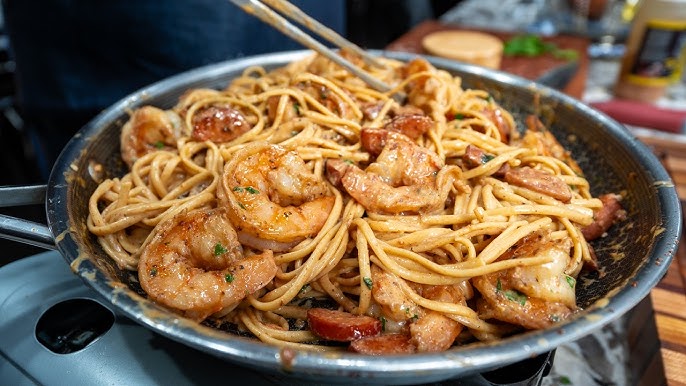
Shrimp and Linguine Recipe: Shrimp and linguine is that perfect “I want something fancy but easy” dish. It’s quick, packed with flavor, and feels like something you’d order at a seaside Italian restaurant—minus the price tag. Whether you’re trying to impress guests or just craving something good after a long day, this dish delivers every time.
Let’s dive into everything you need to know to make this stunning shrimp and linguine recipe from scratch—including a full list of ingredients, a step-by-step breakdown, and expert-level tips to bring restaurant-quality results into your home kitchen.
Ingredients You’ll Need
Before we fire up the stove, you need to gather the essentials. One of the best things about shrimp and linguine is how simple the ingredients are—most of them are pantry staples!
Shrimp Ingredients
The star of the show is shrimp, of course. It’s sweet, juicy, and cooks in minutes.
Here’s what you need:
- 1 lb large shrimp (peeled and deveined)
- 1 tbsp olive oil
- 1/2 tsp salt
- 1/4 tsp black pepper
- 1/2 tsp red pepper flakes (optional, for heat)
- 1 tsp lemon zest
You can use either fresh or frozen shrimp, but if you’re going with frozen, make sure it’s fully thawed and patted dry. Dry shrimp = better sear = more flavor.
Pro Tip: If you’re buying shell-on shrimp, remove the shell but leave the tail on for a more elegant presentation.
Linguine Pasta Ingredients
No surprise here—you need linguine! It’s flat and slightly wider than spaghetti, which makes it perfect for soaking up buttery, garlicky sauces.
You’ll need:
- 12 oz linguine pasta
- Salt (for boiling water)
Always cook pasta in salted water. It’s your one chance to season it from the inside out.
Bonus Tip: Save about 1/2 cup of pasta water before draining—it’s liquid gold for adjusting your sauce later.
Sauce Ingredients
Here’s where the magic happens. The sauce is simple, but it delivers major flavor thanks to garlic, butter, lemon, and a few herbs.
Ingredients:
- 3 tbsp unsalted butter
- 2 tbsp olive oil
- 4 cloves garlic (minced)
- Juice of 1 lemon
- 1/2 tsp chili flakes (optional)
- 1/4 cup chopped parsley
- Salt & pepper to taste
The butter adds richness, the olive oil brings body, and the garlic… well, garlic makes everything better.
Optional Add-ins
Want to upgrade your shrimp linguine? Toss in a few extras!
- Vegetables: Cherry tomatoes, spinach, mushrooms, or asparagus work beautifully.
- Cheese: Freshly grated parmesan or pecorino adds a savory finish.
- Cream: For a richer sauce, stir in 1/4 cup heavy cream at the end.
Step-by-Step Cooking Guide
Let’s get cooking! This process is simple, but timing is everything to make sure each element shines.
Step 1: Preparing the Shrimp
If you bought shrimp that’s not cleaned yet, now’s the time to peel and devein them. You can leave the tails on for presentation or take them off—your call.
How to do it:
- Rinse the shrimp under cold water.
- Peel the shell and use a small knife to cut a shallow line down the back.
- Remove the dark vein.
- Pat dry with paper towels.
Next, season the shrimp with salt, pepper, lemon zest, and a bit of chili flakes if you want a little kick. Set aside while you prep the pasta.
Step 2: Boiling the Linguine
Bring a large pot of salted water to a rolling boil. Add your linguine and cook according to package instructions until al dente—firm to the bite.
Don’t forget: Save some pasta water before draining.
Drain the pasta and toss it with a teaspoon of olive oil to prevent sticking.
Step 3: Making the Garlic Butter Sauce
In a large skillet, melt the butter with olive oil over medium heat. Once hot, add the minced garlic and chili flakes.
Let the garlic sizzle until fragrant—about 30–45 seconds. Don’t burn it! Burnt garlic = bitter sauce.
Add the lemon juice and a splash of reserved pasta water. Let everything simmer for a minute to combine.
Step 4: Cooking the Shrimp
Add the seasoned shrimp to the skillet in a single layer. Cook for 2–3 minutes on each side until they turn pink and slightly golden.
Avoid overcooking—shrimp cook quickly, and rubbery shrimp can ruin your dish.
Once cooked, remove them from the pan and set aside briefly so they don’t continue cooking in the heat.
Step 5: Combining Shrimp, Pasta, and Sauce
Add the drained linguine into the skillet with the sauce. Toss everything together using tongs, adding more pasta water if needed to loosen up the sauce.
Return the shrimp to the pan and toss again. Sprinkle with chopped parsley and more lemon juice if desired.
Top with freshly grated parmesan, and boom—you’re done.
Tips and Tricks for the Perfect Dish
Getting shrimp and linguine just right can take a little finesse, but these kitchen tips will have you cooking like a pro in no time.
Cooking Shrimp Without Overcooking
Shrimp is one of those ingredients that can go from perfect to rubbery in less than a minute. Here’s how to make sure that never happens:
- Keep an eye on the color – Raw shrimp is gray and translucent. When it’s cooked, it turns pink and opaque. As soon as it hits that mark, take it off the heat.
- Don’t overcrowd the pan – Cook shrimp in a single layer so they sear instead of steam.
- Residual heat is real – Shrimp will keep cooking even after they’re off the burner. If you’re adding them back into a hot pan with the pasta, reduce the heat or turn it off to avoid overcooking.
If you’re ever unsure, pull one out, slice it in half, and check the center. Slightly undercooked is better than rubbery!
How to Make the Sauce Creamier
Want a creamier, silkier texture to your shrimp linguine? Try one of these easy upgrades:
- Add heavy cream or half-and-half at the end of cooking for a luxurious, velvety sauce.
- Grated parmesan thickens and adds richness when melted into the hot pasta.
- Reserved pasta water is your best friend. It helps the sauce stick to the pasta thanks to its starch content.
Just remember: start with a small amount of cream and adjust slowly so it doesn’t overpower the fresh garlic-lemon flavor.
How to Avoid Mushy Pasta
We’ve all been there. You blink, and suddenly your pasta is mush. Here’s how to prevent that tragedy:
- Cook to “al dente” – That means “to the tooth.” The pasta should be firm but not crunchy.
- Use a timer – Check the pasta a minute or two before the package suggests.
- Rinse with cold water if prepping ahead – If you’re cooking pasta before the rest of the dish is ready, rinse it lightly with cold water and toss it with olive oil to prevent sticking or continued cooking.
Properly cooked pasta makes all the difference when it comes to texture and flavor.
Serving Suggestions
Shrimp and linguine already feels like a complete meal, but you can definitely level it up with the right pairings. Think of it like setting the stage for your star performer.
What to Serve with Shrimp and Linguine
Here are a few sides that complement the dish beautifully:
- Garlic Bread – Because who doesn’t love more garlic?
- Caesar Salad – Crisp, creamy, and tangy—it balances the richness of the pasta.
- Roasted Vegetables – Think asparagus, zucchini, or bell peppers.
- Bruschetta – Light, fresh, and tomatoey to contrast the buttery sauce.
These sides don’t just add variety—they enhance the entire eating experience.
Wine and Beverage Pairings
A dish this elegant deserves a drink to match. Whether you’re celebrating or just vibing on a Tuesday night, here are a few pairing ideas:
- White Wine: A crisp Sauvignon Blanc or Pinot Grigio cuts through the richness perfectly.
- Rosé: If you like something light and fruity, go for a dry rosé.
- Sparkling Water with Lemon: Want to keep it non-alcoholic? A bubbly citrus drink complements the lemon in the sauce beautifully.
- Iced Herbal Tea: Mint or citrus teas balance the warmth of the garlic and butter.
The goal is to find a beverage that cleanses your palate between bites so you can appreciate every flavor.
Storing and Reheating Leftovers
Made too much? Lucky you! Shrimp and linguine actually makes pretty good leftovers if stored properly.
How to Store It Right
- Let it cool: Before putting it in the fridge, let the pasta cool to room temperature.
- Use airtight containers: Keep air out to prevent the pasta from drying out or absorbing fridge smells.
- Eat within 2–3 days: Seafood doesn’t keep as long as other proteins.
If you’re storing the pasta and shrimp together, try to separate the sauce if you can. It’ll help maintain texture when reheating.
How to Reheat Without Ruining It
The key to reheating this dish is low and slow. Here’s how to do it:
- On the stove: Add a splash of water or broth to a skillet and reheat over medium-low heat while tossing frequently.
- In the microwave: Add a bit of water, cover the dish with a damp paper towel, and heat in 30-second intervals, stirring in between.
Avoid high heat—it’ll overcook the shrimp and turn the pasta gummy.
FAQs about Shrimp and Linguine Recipe
1. Can I use fresh or frozen shrimp for shrimp and linguine?
Both work well. If using frozen shrimp, thaw completely and pat dry before cooking to avoid excess water in the pan.
2. What is the best way to prevent overcooking the shrimp?
Shrimp cook very quickly—usually 2–3 minutes per side. Remove them from heat as soon as they turn pink and opaque to keep them tender.
3. Can I substitute another type of pasta for linguine?
Yes. Spaghetti, fettuccine, or angel hair are good alternatives. Cooking time may change slightly based on pasta thickness.
4. How can I make the sauce creamier?
Add a splash of heavy cream, half-and-half, or a spoonful of cream cheese to the pan after sautéing garlic and deglazing with broth or wine.
5. Is white wine necessary in shrimp and linguine?
No. You can replace wine with chicken broth, vegetable broth, or pasta water for similar depth of flavor.
6. How do I avoid watery sauce?
Don’t overcrowd the pan, dry shrimp well, and let the sauce simmer briefly so excess liquid evaporates and flavors concentrate.
Conclusion
There you have it—an easy, elegant, and utterly delicious shrimp and linguine recipe that’s perfect for everything from weeknight dinners to impressing your dinner guests. With simple ingredients and a foolproof method, this dish brings restaurant-level quality straight into your home kitchen.
Shrimp and linguine is more than just a pasta recipe—it’s a vibe. It’s fast, flavorful, and endlessly customizable. Once you’ve mastered the basics, you can put your own spin on it every time you make it.
So next time you’re craving something that tastes fancy but doesn’t take forever, you know exactly what to make. Ready to get cooking?