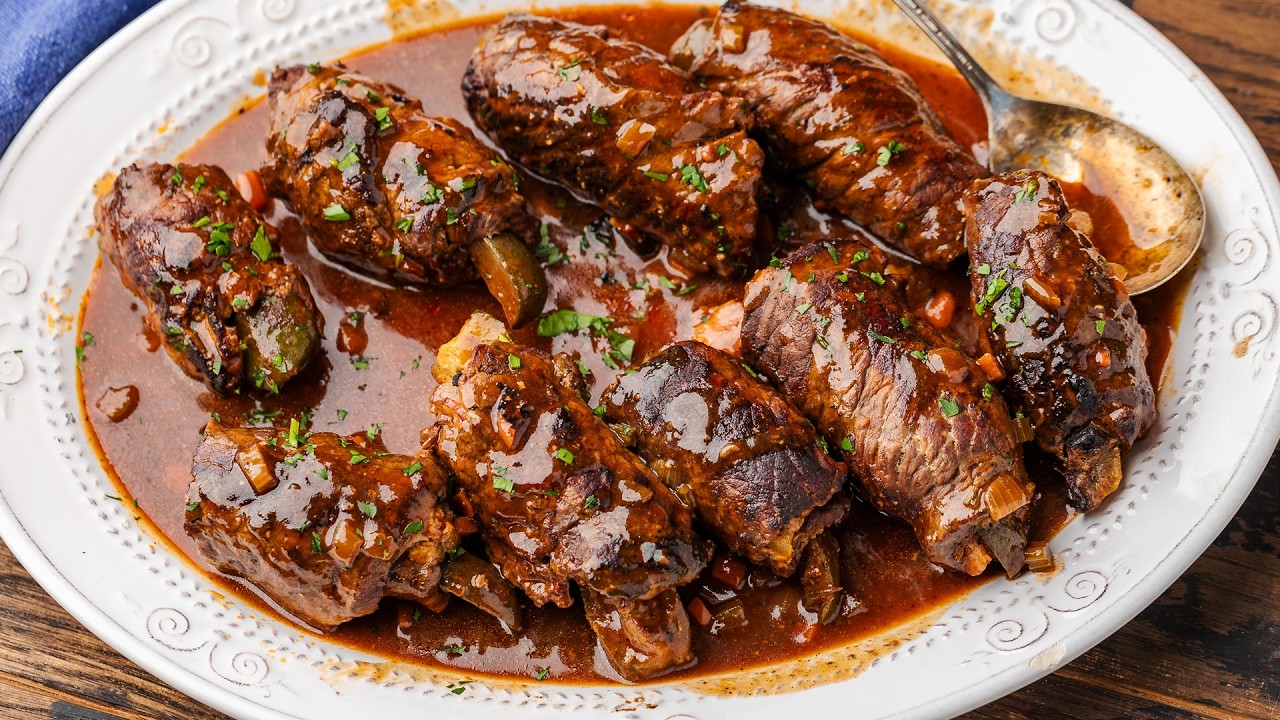
Rouladen Recipe: Rouladen is one of those old-world comfort foods that never go out of style. Imagine thin slices of beef wrapped around savory fillings like onions, pickles, and mustard, then slowly simmered in a rich gravy until they’re fall-apart tender. That’s Rouladen in a nutshell—a traditional German dish with roots that run deep in central European cuisine. Known for its bold flavors and melt-in-your-mouth texture, it’s a go-to meal for holidays, family gatherings, or just when you need some soul-warming food on a cold night.
This dish is most commonly associated with German cuisine, but variations exist across Hungary, Poland, and the Czech Republic. Each region puts its own spin on it, but the base concept remains the same—rolled meat filled with something savory. And while the filling can vary, the classic combo of mustard, bacon, onions, and pickles wrapped in beef is what makes German Rouladen truly special.
What makes Rouladen even more appealing is how simple and satisfying it is. Sure, it looks fancy, but the steps are easy once you get the hang of it. It’s all about layering flavors and giving it enough time to simmer into something magical.
History and Cultural Significance
Rouladen has a storied past, dating back to at least the 19th century. Originally, it was a dish for special occasions, often made with leftover roast beef. Over time, it became a centerpiece at family dinners and holiday meals, especially in Germany and Austria. Traditionally, it’s served during Christmas or Sunday meals, where families gather around the table to share a hearty meal.
Interestingly, the word “Roulade” is derived from the French word “rouler,” meaning to roll—hinting at its European culinary evolution. It represents a fusion of techniques and flavors that were passed down through generations, making it more than just food—it’s a piece of history served on a plate.
Today, Rouladen continues to hold a nostalgic value. For many, it’s the taste of childhood or grandma’s cooking. And even if you didn’t grow up with it, one bite is enough to make it a staple in your comfort food lineup.
Key Ingredients for Authentic Rouladen
Beef Cuts You Should Use
Choosing the right cut of beef is crucial for great Rouladen. The goal is to find a cut that’s lean yet tender enough to roll and slow-cook into deliciousness. Traditionally, top round (also known as topside) is the go-to cut. It’s affordable, widely available, and easy to flatten into thin sheets.
You’ll want slices that are about ¼-inch thick and roughly the size of a small dinner plate. If your butcher doesn’t have pre-cut roulade slices, ask them to slice it for you, or you can do it yourself at home with a sharp knife and a bit of patience.
Some home cooks also use flank steak or brisket, especially if they’re looking for a slightly richer flavor. Just make sure it’s thin enough to roll without tearing, and you’re good to go.
Here’s a quick list of suitable beef cuts:
- Top round
- Bottom round
- Flank steak
- Brisket (trimmed thin)
The key is slow cooking. Even tougher cuts become tender when braised correctly, and that’s the beauty of this dish.
Must-Have Fillings and Seasonings
Now, let’s talk about the good stuff—the filling! Classic Rouladen relies on a savory, slightly tangy blend that balances richness with a bit of bite.
Here’s what you need:
- Yellow mustard – Adds tang and depth. German-style mustard is ideal.
- Bacon – Provides smokiness and fat that bastes the beef from the inside.
- Onions – Sliced thinly, they caramelize slightly and boost umami.
- Pickles – Yup, pickles! Dill pickles add a briny zing that cuts through the richness.
Optional additions include:
- Carrots (for sweetness)
- Garlic (for extra punch)
- Parsley (for freshness)
Seasoning is simple—just salt and pepper on the meat before rolling. Some folks add paprika or a sprinkle of thyme for an herbal note. Once it’s all wrapped up, the flavors mingle during the long braise, creating a rich, savory profile that’s incredibly satisfying.
Kitchen Tools You’ll Need
Basic Cooking Tools
Before you dive into making Rouladen, make sure your kitchen is prepped with the right tools. While this recipe doesn’t require anything fancy, a few essentials will make the job easier—and your results tastier.
Start with a sturdy cutting board and a sharp knife. You’ll need to slice the beef thin and even, and chop onions and pickles without crushing them. A meat tenderizer or mallet is also key—flattening the beef not only helps it cook evenly, but it also makes rolling much easier.
You’ll also need:
- Toothpicks or kitchen twine – to hold the beef rolls together while they cook
- Large skillet or Dutch oven – for browning and simmering the rolls
- Tongs – to flip the meat without tearing it
- Ladle or spoon – to baste the meat or serve the gravy
A good lid for your pot is also essential, as you’ll be slow-simmering the Rouladen for at least an hour. The sealed environment helps trap the moisture and infuse the beef with all the rich flavors.
Optional Tools for Better Results
If you want to take your Rouladen to the next level, a few optional tools can help:
- Slow cooker or pressure cooker: These can save time and deliver ultra-tender meat with minimal effort.
- Food processor: Great for chopping large amounts of onions or making a smoother gravy base.
- Gravy separator: If you’re watching your fat intake, this tool can help you remove excess grease from the pan sauce.
None of these are mandatory, but they definitely streamline the process. Especially if you’re planning to make Rouladen more than once, investing in the right equipment pays off.
Step-by-Step Guide to Making Rouladen
Step 1: Preparing the Meat
Start with about 1.5 to 2 pounds of beef top round, sliced thin into roughly 4 to 6 pieces. Lay each slice between sheets of plastic wrap and gently pound it with a meat mallet until it’s about ¼-inch thick. This step is crucial—not just for tenderness, but also for making them easy to roll.
Season each piece with salt and pepper. Then, spread a thin layer of yellow mustard across one side of the beef. This is your flavor foundation and helps bind the other fillings to the meat.
Pro tip: Don’t overdo the mustard—a light layer is all you need to build flavor without overwhelming the dish.
Step 2: Assembling the Roll
Now comes the fun part—building the roll.
On top of the mustard, lay down a strip or two of bacon, a few slivers of dill pickle, and a thin layer of chopped onions. Keep everything centered so it doesn’t fall out when you roll.
Starting from the narrow end, carefully roll up the beef, tucking in the sides as you go. Once rolled, secure each piece with toothpicks or tie it with kitchen twine to hold everything in place during cooking.
Repeat this process for each slice of beef. At this point, they should resemble small meat cigars—neat, tight, and ready for searing.
Step 3: Browning and Searing
Place a bit of oil in a heavy-bottomed skillet or Dutch oven over medium-high heat. Once hot, add the rouladen, seam-side down. Brown them on all sides, turning gently with tongs. This step is key to developing a deep, savory flavor in the final dish.
Don’t overcrowd the pan—work in batches if needed to avoid steaming the meat. Each piece should have a nice, golden crust.
Once browned, remove them from the pan and set them aside. You’ll use the same pot to make the base of the gravy, using all those delicious browned bits stuck to the bottom.
Step 4: Cooking and Simmering
In the same pot, add a bit more oil if needed and toss in chopped onions, carrots, or celery for extra flavor. Cook until softened, then add a tablespoon of tomato paste and cook for another minute to build depth.
Deglaze the pan with beef broth (about 2 cups), scraping up all the brown bits. Add a splash of red wine or vinegar for acidity, then return the Rouladen to the pot.
Bring everything to a simmer, cover, and cook on low heat for about 1.5 to 2 hours. You can also place the pot in a 325°F (160°C) oven for the same amount of time.
The goal is fork-tender beef and a rich, developed sauce.
Step 5: Making the Gravy
Once the rouladen are fully cooked, remove them from the pot and set them aside. You’ll now turn the braising liquid into a silky, flavorful gravy.
Strain the liquid if you want a smooth gravy or blend the vegetables right in for added texture and nutrition. Return the liquid to the pot, then simmer until slightly reduced. For a thicker gravy, stir in a cornstarch slurry (1 tbsp cornstarch mixed with 2 tbsp cold water) and cook until it reaches your desired consistency.
Taste and adjust seasoning with salt and pepper. Add the rouladen back to the pot, spoon some gravy over them, and let them soak up that flavor for a few minutes before serving.
Serving Suggestions and Side Dishes
Classic German Sides
No Rouladen dish is complete without the perfect sides to complement its rich and savory flavor. Traditionally, Rouladen is served with hearty German staples that soak up the delicious gravy and round out the meal.
Here are the most popular and authentic side dishes:
- Potato Dumplings (Kartoffelklöße): These soft, doughy dumplings are made from mashed or grated potatoes and act like little gravy sponges. They’re dense yet delicate and are one of the most beloved pairings with Rouladen.
- Red Cabbage (Rotkohl): Sweet and tangy braised red cabbage adds a vibrant contrast to the dish. Its slight acidity and hint of sweetness cut through the richness of the meat and gravy beautifully.
- Spaetzle: These little German egg noodles are light, slightly chewy, and perfect for soaking up sauce. Homemade or store-bought, spaetzle is always a win alongside Rouladen.
- Boiled Potatoes or Mashed Potatoes: Simple but satisfying. Mashed potatoes create a creamy base, while boiled potatoes provide texture and absorb the sauce differently.
- Bread Dumplings (Semmelknödel): These are made from old bread, milk, eggs, and herbs—rustic and full of flavor, they make excellent vessels for gravy.
Pair these with a cold German beer or a glass of red wine, and you’ve got a feast fit for a celebration or just a cozy dinner at home.
Modern Twists You Can Try
If you’re looking to mix things up or want something a bit lighter or healthier, try these modern side dish options:
- Roasted Root Vegetables: Think carrots, parsnips, and turnips. Their natural sweetness balances the savory Rouladen.
- Cauliflower Mash: A lower-carb alternative to mashed potatoes, but just as creamy.
- Green Beans with Almonds: Adds crunch and a pop of color to the plate.
- Arugula Salad with Lemon Vinaigrette: A fresh, peppery salad to offset the richness of the main dish.
Rouladen doesn’t have to be tied to tradition—you can pair it with just about anything that complements its robust flavors. These modern sides bring freshness and a different textural contrast to the dish, making it more versatile and accessible for today’s palates.
Storing and Reheating Tips
Rouladen is one of those dishes that actually tastes better the next day. The flavors deepen, the gravy thickens, and the meat becomes even more tender. So don’t worry if you’ve made a big batch—it stores and reheats like a dream.
Storing:
- Let the Rouladen cool completely before storing.
- Place in an airtight container with the gravy to keep it moist.
- Store in the refrigerator for up to 4 days.
- For longer storage, freeze individual rolls in airtight containers or freezer bags for up to 3 months.
Reheating:
- The best method is reheating on the stove. Place the rouladen in a saucepan with a bit of the gravy, cover, and simmer over low heat until heated through.
- You can also reheat in the oven at 325°F (160°C) for about 20 minutes, covered.
- Microwave works in a pinch, but be sure to cover it and add a little extra gravy to keep it from drying out.
Pro tip: If you’re freezing them, consider freezing the gravy separately so you can reheat and pour it fresh. This helps maintain texture and flavor.
FAQs about Rouladen Recipe
Can I make Rouladen in advance?
Yes! In fact, it’s often better the next day. You can prep the rolls a day ahead, refrigerate them, and cook them when you’re ready. Or cook the whole dish and reheat—it holds up beautifully.
What’s the best way to tenderize beef for Rouladen?
Use a meat mallet to pound the slices thin and even. Not only does this make them easier to roll, but it also ensures they cook evenly and turn out melt-in-your-mouth tender.
Can I freeze cooked Rouladen?
Absolutely. Store in airtight containers or freezer bags with some gravy to prevent drying. They’ll last up to three months in the freezer. Thaw overnight in the fridge before reheating.
What other meats can I use?
While beef is traditional, you can also make rouladen with pork or veal. Chicken works for a lighter version—just be sure to adjust cooking times accordingly.
Is Rouladen gluten-free?
The meat and fillings are naturally gluten-free, but watch out for flour-based gravy or thickening agents. Use cornstarch or gluten-free flour if needed.
Conclusion
Making Rouladen is like taking a culinary trip to Germany—where old-world comfort meets big, bold flavors. It may look fancy, but once you break it down, it’s surprisingly simple and incredibly rewarding. With thin-sliced beef, a few flavorful fillings, and a slow, gentle simmer, you’ll end up with a dish that’s tender, juicy, and full of depth.
Whether you’re cooking for a cozy dinner or looking to impress guests with something hearty and homemade, Rouladen is always a hit. Plus, the leftovers are just as good—if not better—the next day. So roll up those sleeves and give this timeless recipe a try. Your taste buds (and your family) will thank you!