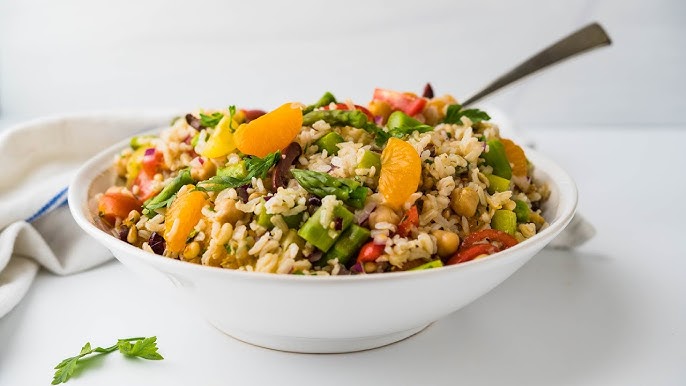
Rice Salad Recipe: Let’s talk about one of the most underrated yet incredibly versatile dishes out there—rice salad. It’s not just a pile of cold rice with random veggies thrown in. Nope. A good rice salad is a beautiful balance of texture, color, and flavor. Think of it like a party in a bowl—crunchy veggies, fluffy rice, a zesty dressing, maybe a sprinkle of herbs or nuts, and boom—you’ve got yourself a meal that works for lunch, dinner, picnics, and even meal prepping for the week.
Unlike leafy salads that might wilt or get soggy, rice salad holds up like a champ. It stays fresh in the fridge and tastes even better the next day as the flavors blend. It’s like the lazy cook’s dream and the flavor lover’s fantasy. Whether you’re going vegetarian, vegan, gluten-free, or protein-packed, this dish can do it all.
So, ready to dive into the world of rice salad? Let’s go step-by-step and create something you’ll want to make again and again.
Health Benefits of Rice Salad
Besides tasting great, rice salad also checks a lot of boxes for healthy eating. First off, rice is a fantastic source of carbohydrates, which means it gives you the energy your body needs to keep going through the day. Depending on the type of rice you use, you can get bonus benefits like extra fiber, magnesium, and even antioxidants. Brown rice, for instance, keeps the bran layer, which is packed with fiber and nutrients.
Then come the veggies. Toss in some bell peppers, cucumbers, cherry tomatoes, red onions, or carrots, and you’ve just added a rainbow of vitamins. Plus, with healthy fats from olive oil-based dressings, and optional protein like grilled chicken or chickpeas, you’re looking at a complete, balanced meal.
And let’s not forget: rice salad is naturally gluten-free, which is great news if you’re avoiding gluten. Whether you’re watching your weight, managing a diet, or just want something fresh and wholesome, rice salad fits the bill.
Types of Rice You Can Use
Picking the right rice for your salad makes a big difference. Some types hold up better to mixing, while others add unique flavors and textures. Here’s a quick breakdown:
- White Rice: Mild flavor, fluffy texture, and easy to find. Ideal for quick salads.
- Brown Rice: Nutty taste and more fiber. A little chewier, but adds heartiness.
- Wild Rice: Actually a grass, not technically rice—but deliciously nutty and firm. Great for fall-style salads.
- Basmati or Jasmine Rice: Fragrant and light. These long-grain rices stay separate and don’t get mushy.
Pro Tip: Make sure to cool the rice before mixing it with other ingredients—hot rice can turn your salad into a sticky mess.
Essential Ingredients You’ll Need
Before diving into the step-by-step guide, here’s what you’ll need on hand. This recipe is super flexible, but here’s a solid base to start with:
Main Ingredients:
- 2 cups cooked rice (your choice)
- 1 cup cherry tomatoes, halved
- 1 cup cucumber, diced
- ½ red onion, finely chopped
- 1 bell pepper, diced (any color)
- ½ cup corn (frozen or canned)
- ¼ cup chopped parsley or cilantro
Optional Add-ins:
- ½ cup feta cheese or cubed mozzarella
- ½ cup black olives, sliced
- 1 can chickpeas or kidney beans (drained)
- Grilled chicken or shrimp (for protein)
- Nuts like almonds, walnuts, or sunflower seeds
- Diced avocado
Basic Dressing:
- 3 tablespoons olive oil
- 1 tablespoon lemon juice or vinegar
- 1 teaspoon Dijon mustard
- Salt and pepper to taste
With this list, you can go wild with creativity or stick to the basics.
How to Choose the Right Ingredients
Fresh is always best, right? But sometimes we don’t have time to dice everything from scratch—and that’s okay. Here’s how to choose the best of what you’ve got:
- Veggies: If using canned veggies like corn or beans, rinse them well to remove excess salt and preservatives.
- Herbs: Fresh parsley, mint, or cilantro adds a burst of freshness, but you can use dried herbs in a pinch.
- Cheese & Protein: Feta, grilled halloumi, or even leftover rotisserie chicken work great. Choose based on your dietary needs.
- Oil & Vinegar: Extra virgin olive oil gives the best flavor. Apple cider vinegar or red wine vinegar are great choices.
Balance is key. Don’t overload with too many similar textures. Aim for a mix of crunchy, soft, creamy, and tangy.
Kitchen Tools Required
Nothing fancy needed here! A few basic tools will make your prep smooth:
- Medium to large mixing bowl
- Sharp knife and chopping board
- Strainer or colander (for rinsing rice/veggies)
- Saucepan or rice cooker
- Whisk (for mixing dressing)
- Measuring cups/spoons
- Serving spoon or tongs
If you’re meal prepping, having a few airtight containers is a plus.
Step-by-Step Guide: How to Make Rice Salad
Let’s get to the juicy part—how to actually make this amazing rice salad. Follow these steps, and you’ll have a bowl of goodness ready in no time.
Step 1: Cook the Rice Perfectly
Cook your rice according to package instructions until tender but not mushy. Long-grain, jasmine, or basmati rice works best. Once cooked, spread the rice on a tray and let it cool completely. Cooling keeps the grains separate and prevents a soggy salad.
Step 2: Prep the Vegetables and Add-ins
Chop your vegetables into bite-size pieces. Popular choices include cucumbers, bell peppers, tomatoes, red onions, and sweet corn. You can also add beans, olives, herbs, grilled chicken, or tuna for extra texture and protein.
Step 3: Make the Dressing
In a small bowl, whisk together olive oil, lemon juice or vinegar, salt, and black pepper. Add mustard or honey if you like a little tang or sweetness. Keep the dressing light so it complements the rice without overpowering it.
Step 4: Mix Everything Together
Place the cooled rice in a large bowl. Add the vegetables and any add-ins, then pour the dressing over the top. Gently toss until everything is evenly coated and well combined.
Step 5: Chill and Serve
Cover and refrigerate the rice salad for 20–30 minutes to allow the flavors to blend. Serve chilled or at room temperature.
Fresh, colorful, and satisfying—rice salad is perfect as a light meal or a refreshing side dish 🍚🥗
Delicious Dressing Ideas for Rice Salad
Want to switch up your flavor profile? Here are a few dressing variations that pair beautifully with rice salad:
1. Classic Mediterranean Dressing
- Olive oil
- Lemon juice
- Oregano
- Crumbled feta
- A touch of garlic
Great with olives, cucumbers, and cherry tomatoes.
2. Asian Sesame Dressing
- Sesame oil
- Rice vinegar
- Soy sauce
- Grated ginger
- Honey or maple syrup
Pair this with shredded cabbage, edamame, scallions, and chopped peanuts.
3. Creamy Yogurt-Based Dressing
- Greek yogurt
- Olive oil
- Lemon juice
- Garlic
- Dill or mint
Perfect with chickpeas, cucumbers, and fresh herbs.
Vegan and Vegetarian Options
Rice salad is naturally vegan-friendly if you skip the cheese and animal proteins. But you can still keep it nutritious and protein-packed by adding:
- Chickpeas
- Black beans
- Tofu cubes
- Roasted sweet potatoes
- Avocado
- Edamame
Want creaminess without dairy? Try a tahini or cashew-based dressing.
Keep in mind: balance the protein, fiber, and healthy fats to keep the salad satisfying as a full meal.
Protein Additions for a Complete Meal
Want to turn your rice salad into a protein powerhouse? Here are some tasty additions:
- Grilled Chicken: Classic, lean, and easy.
- Tuna or Salmon: Canned or freshly cooked, both work well.
- Hard-Boiled Eggs: Adds richness and substance.
- Shrimp: Light and flavorful—great with citrus dressings.
- Tofu or Tempeh: Ideal for plant-based diets.
- Seared Steak Strips: For a heartier meal.
Cook your proteins separately and mix them in right before serving for the best texture.
Flavor Boosters and Garnishes
Don’t underestimate the power of toppings—they add crunch, color, and big flavor hits. Try these:
- Toasted Nuts: Almonds, cashews, walnuts, or pine nuts.
- Seeds: Pumpkin seeds, sunflower seeds, or sesame.
- Fresh Herbs: Basil, dill, mint, chives.
- Dried Fruits: Cranberries, raisins, chopped apricots.
- Zest or Juice: Lemon or lime zest adds brightness.
Mix and match based on your main ingredients or theme. Asian salad? Go for sesame and scallions. Mediterranean? Choose olives, parsley, and feta.
How to Store and Meal Prep Rice Salad
Rice salad is one of the best make-ahead meals out there. Here’s how to store it right:
- Store in airtight containers in the fridge for up to 4 days.
- If you’re adding delicate ingredients like avocado or herbs, add them fresh right before serving.
- Dressing can be kept separate and added later to prevent sogginess.
Meal Prep Tip: Divide your rice salad into individual containers for grab-and-go lunches. Add a slice of lemon or a small container of extra dressing to each one for freshness.
Perfect Occasions for Serving Rice Salad
Rice salad is truly an all-star dish that fits into every event. Here are just a few times it’s the perfect option:
- Picnics & BBQs: Doesn’t spoil quickly and travels well.
- Lunchboxes: Great cold and stays fresh for hours.
- Potlucks: Make it in a big batch to feed a crowd.
- Weeknight Dinners: Quick, easy, and endlessly flexible.
- Post-Workout Meals: Packed with energy, protein, and hydration.
No matter the season or setting, rice salad fits in like that one friend who gets along with everyone.
Common Mistakes to Avoid
Even a simple dish can go sideways if you’re not careful. Watch out for these common mistakes:
- Using Hot Rice: Always let the rice cool fully before mixing—it prevents clumping and sogginess.
- Overcooking the Rice: Mushy rice ruins the salad. Cook just until tender, then fluff.
- Too Much Dressing: It can overwhelm the ingredients. Start small, then add more if needed.
- Lack of Texture: Add crunchy elements like nuts or raw veggies for balance.
- Skipping the Chill Time: This helps the flavors soak in and improves the taste big time.
Stay mindful of these, and you’ll always end up with a killer rice salad.
FAQs about Rice Salad Recipe
Q1: Can I use leftover rice for this salad?
Absolutely! Just make sure it’s been stored properly and brought to room temperature before mixing.
Q2: How do I keep rice salad from getting soggy?
Cool the rice completely before mixing and avoid over-dressing. Store dressings separately if meal prepping.
Q3: Can I freeze rice salad?
It’s not recommended. The texture of vegetables and rice doesn’t hold up well after freezing and thawing.
Q4: What’s the best rice for salad if I want to meal prep?
Brown rice or wild rice works best—they hold their texture even after days in the fridge.
Q5: How do I add spice to rice salad?
Add chopped jalapeños, chili flakes, or a spicy dressing to bring some heat.
Final Thoughts
There you have it—an easy, flexible, and super tasty rice salad recipe that you can make your own. Whether you’re feeding a family, prepping for the week, or bringing a dish to a party, rice salad always comes through. It’s colorful, healthy, filling, and a perfect canvas for your creativity. Add what you love, skip what you don’t, and play with flavors until it’s just right.
So, grab that bowl, get chopping, and turn that simple grain of rice into something truly delicious.