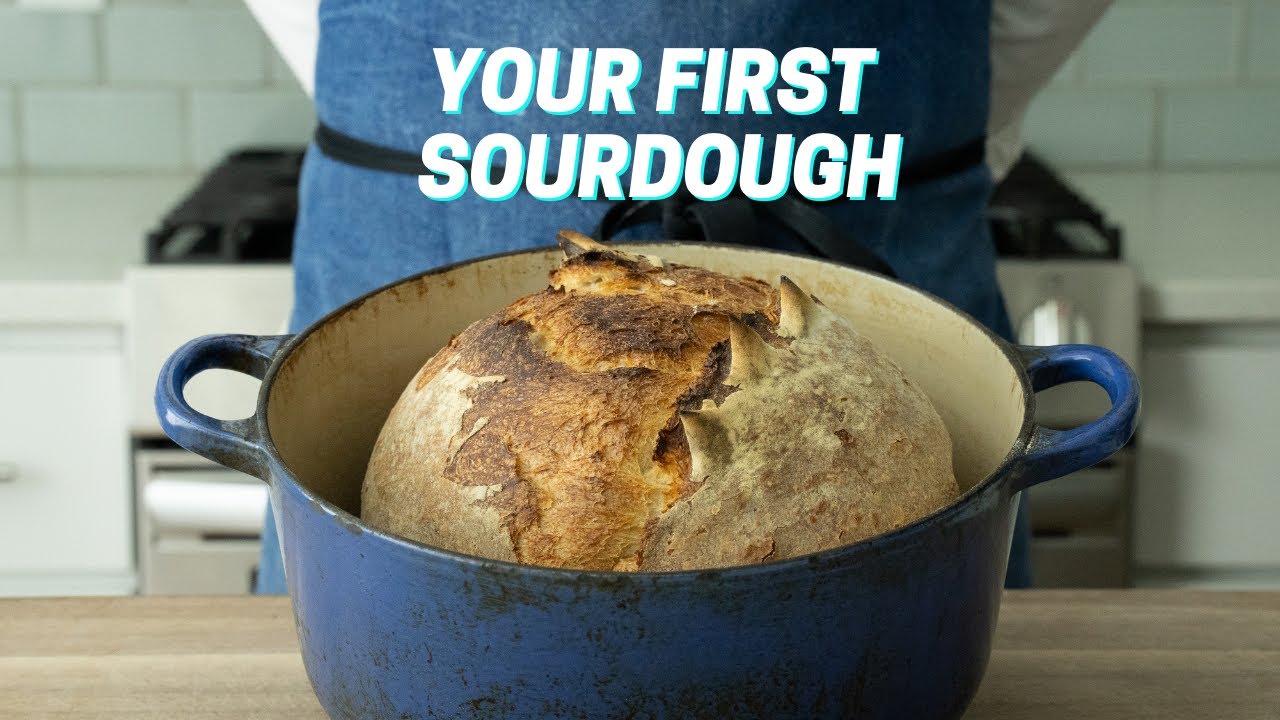
Quick Sourdough Bread Recipe: Sourdough bread isn’t just a trend; it’s a lifestyle for many home bakers. Unlike your typical loaf from the grocery store, sourdough has a character all its own. It’s tangy, chewy, crusty, and absolutely satisfying. But what really makes sourdough special is how it’s made. There’s no commercial yeast here—just a natural fermentation process using a “starter” of wild yeast and lactic acid bacteria. That alone makes it one of the most rewarding baking experiences around.
What draws people in is the depth of flavor. Unlike store-bought bread that may taste bland or overly sweet, sourdough has layers of complexity. It can be slightly sour (hence the name), rich, and even nutty depending on how it’s baked. It’s also better for digestion—thanks to the long fermentation which breaks down gluten and phytic acid, making nutrients easier to absorb.
Another reason sourdough is so loved? The therapeutic joy of making it. There’s something deeply calming about kneading dough, watching it rise, and finally pulling a crusty, golden loaf out of the oven. It feels like magic every single time.
What Makes This Recipe “Quick”?
Let’s be honest—traditional sourdough takes time. From feeding your starter to overnight proofing, it’s usually a 24-hour commitment. But not everyone has that kind of patience or schedule. That’s where this quick sourdough bread recipe comes in.
We’ve optimized the process by:
- Using a very active starter.
- Shortening the bulk fermentation.
- Skipping the overnight cold proof.
- Baking it the same day.
You still get the tang and texture, but in a fraction of the time—perfect for busy people who still want that artisanal loaf without the wait. This is especially helpful if you’re craving fresh bread by dinner and don’t want to start yesterday to have it ready today.
Now let’s dive into the good stuff—starting with your ingredients.
Ingredients You’ll Need
Core Ingredients for Sourdough Bread
At its heart, sourdough bread is made from just a few simple ingredients. The magic isn’t in how many things you add—it’s about how well you handle them. Here’s what you’ll need:
- Active Sourdough Starter (100% hydration): 1/2 cup (about 120g)
- Bread Flour: 3 1/2 cups (about 420g)
- Water: 1 1/2 cups (about 360g), lukewarm
- Salt: 2 tsp (about 10g)
That’s it. No sugar, no oil, no additives. The natural fermentation does all the work. Make sure your starter is bubbly and active—it should float in water. If it sinks, give it a feed and wait a few hours.
You can also use all-purpose flour in a pinch, though bread flour will give better structure and rise.
Optional Add-Ins for Flavor & Texture
Want to level up your loaf? Here are some tasty extras you can experiment with once you master the base recipe:
- Herbs: Rosemary, thyme, or oregano.
- Cheese: Cheddar, parmesan, or feta.
- Seeds: Sunflower, pumpkin, sesame, flax.
- Garlic: Roasted or minced.
- Nuts & Dried Fruits: Walnuts, cranberries, raisins.
Be careful not to overload your dough with heavy or wet ingredients, as they can mess with the fermentation.
Tools You’ll Need for This Recipe
A few tools can make the sourdough process a whole lot smoother. Here’s what to have on hand:
- Large Mixing Bowl – For combining and folding dough.
- Digital Kitchen Scale – Accuracy matters in baking.
- Bench Scraper – Helpful when shaping the dough.
- Dutch Oven or Covered Baking Dish – Traps steam for a perfect crust.
- Parchment Paper – Prevents sticking when transferring dough.
- Proofing Basket (Optional) – Supports your dough shape.
If you don’t have a Dutch oven, you can still bake on a pizza stone or baking sheet with a tray of water in the oven for steam.
Preparing Your Sourdough Starter
What Is a Sourdough Starter?
A sourdough starter is a natural leavening agent made by fermenting flour and water. Over time, wild yeast and beneficial bacteria populate the mixture, allowing it to rise dough without commercial yeast. Think of it as your little pet—it needs feeding and attention, but the results are so worth it.
Unlike instant yeast, which gives quick rises, a sourdough starter brings flavor and nutrition to your bread. Once established, it can live forever if fed regularly. You’ll take a bit of it for each bake and feed it again to keep it going strong.
Feeding and Activating the Starter
If your starter’s been sitting in the fridge, take it out at least 4–6 hours before baking. Feed it with equal parts flour and water (by weight), then let it sit at room temperature. Here’s a simple feeding:
- Discard all but 1/4 cup (60g) of starter
- Add 1/2 cup (60g) flour + 1/4 cup (60g) water
- Mix well and let it bubble and rise
It’s ready when it doubles in size and passes the float test: drop a spoonful into water—if it floats, it’s ready.
How to Know When Your Starter Is Ready
Timing is everything. If you jump the gun and use a sluggish starter, your dough won’t rise properly. Here are signs that your starter is active and ready:
- Bubbles: It should look airy and full of life.
- Volume: Has doubled or tripled after feeding.
- Smell: Slightly sweet, tangy, not sour or rotten.
- Float Test: A teaspoon floats in water.
If your starter doesn’t float but looks bubbly, try again in an hour. Sometimes it just needs more time.
Step-by-Step Guide to Quick Sourdough Bread
Step 1: Mix the Ingredients
Ready to dive in? Grab your bubbly starter and let’s make some dough. In a large bowl, combine:
- 3 1/2 cups bread flour
- 1 1/2 cups lukewarm water
- 1/2 cup active sourdough starter
- 2 tsp salt
Start by mixing the flour and water first (this is called autolyse) and let it rest for 30–45 minutes. This step helps the flour fully absorb the water, which makes the dough easier to work with and improves gluten development.
After resting, add the starter and salt. Use your hands or a sturdy spoon to combine everything into a rough dough. It’ll be sticky—don’t worry, that’s normal. Avoid over-mixing; just make sure everything’s incorporated. Once mixed, cover the bowl with a damp towel and move on to the next phase.
Step 2: Bulk Fermentation
This is where the magic starts. The dough begins to ferment, which builds structure and flavor. For our quick sourdough, bulk fermentation will last about 4 hours at room temperature (warm kitchen = faster fermentation).
During this time, you’ll do 3–4 rounds of stretch and folds every 30 minutes. Here’s how:
- Wet your hands.
- Grab one side of the dough, stretch it up, and fold it over.
- Turn the bowl and repeat 3 more times (like folding a napkin).
- Cover and rest for 30 minutes.
This strengthens the gluten without kneading and builds that chewy, airy texture sourdough is famous for.
By the end of bulk fermentation, the dough should feel airy, smoother, and slightly jiggly. You might see bubbles forming—that’s a good sign it’s alive and thriving.
Step 3: Stretch and Fold
This is a continuation of what you started in the bulk ferment. Stretching and folding is gentler than kneading but equally effective.
Each round improves dough strength:
- First stretch: dough feels rough and slack.
- Second: it’s getting tighter.
- Third: you’ll notice structure forming.
If your kitchen is cold, consider placing the dough in a slightly warm oven (turned off) or wrap the bowl in a warm towel. Ideal temp for sourdough fermentation is around 75°F–78°F (24°C–26°C). If too cold, the dough will stall.
After the final fold and rest, check if your dough has increased in size by at least 50% and looks puffy. That’s your signal it’s time to shape.
Step 4: Shaping the Dough
Lightly flour your work surface and tip out the dough. Handle it gently—you want to keep those beautiful air bubbles intact.
Here’s a basic shaping process:
- Pat the dough into a rectangle.
- Fold the top third down, then the bottom third up (like a letter).
- Turn it seam-side down and gently tighten the surface by pulling it toward you.
Transfer to a proofing basket or a bowl lined with a floured towel. Let it rest for 30–60 minutes for its final proof. You don’t need an overnight cold retard here—but if you’ve got extra time, even 1–2 hours in the fridge can improve flavor and scoring.
Cover it loosely and let’s prep for baking!
Step 5: Final Proofing
During this short proof, your dough is doing its final expansion. It should look puffed but not over-proofed. If it feels too soft and collapses when touched, it might be over-proofed. But don’t stress—sourdough is forgiving.
After about 45 minutes to 1 hour (depending on your room temperature), test with a poke:
- If it springs back slowly and leaves a slight dent, it’s ready.
- If it springs back too fast, it needs more time.
- If it doesn’t spring back at all, it’s likely over-proofed (still usable, but less rise in the oven).
While it’s finishing, preheat your oven to 475°F (245°C) with your Dutch oven inside. This ensures everything’s blazing hot and ready for the loaf.
Step 6: Scoring and Baking
Now it’s time to bake that beauty. Flip your dough onto a piece of parchment paper. Use a razor blade or sharp knife to make a deep slash across the top. This is called scoring—it controls how the bread expands while baking.
Carefully remove the hot Dutch oven, lift the parchment with the dough, and place it inside. Cover and bake for 20 minutes.
Then:
- Remove the lid.
- Bake for another 20–25 minutes, until golden brown and crusty.
The internal temperature should be around 208°F–210°F (97°C–98°C) if you want to be exact.
Let the bread cool on a wire rack for at least 1 hour before slicing. Yes, it’s hard to wait, but the inside continues cooking and setting. If you cut too soon, it’ll be gummy.
Boom—you’ve just made quick sourdough bread like a pro.
Tips for a Better Sourdough Bake
Common Mistakes to Avoid
Sourdough can be fussy, but most issues are easy to fix once you know what went wrong. Here are common beginner mistakes and how to avoid them:
- Using an inactive starter: If your starter isn’t bubbly and active, your dough won’t rise properly.
- Over-proofing or under-proofing: Watch the dough, not the clock. Learn how it looks and feels when ready.
- Not measuring by weight: Baking is a science—use a kitchen scale for best results.
- Skipping the autolyse step: This helps improve gluten and hydration.
- Opening the oven too soon: Let it steam properly for the first 20 minutes to form a crust.
Mistakes happen—even experienced bakers mess up occasionally. The key is to learn, adjust, and bake again.
How to Get the Perfect Crust
Everyone loves that crackly sourdough crust—here’s how to get it:
- Steam is essential: Use a Dutch oven or a pan of water in the oven.
- High oven temperature: Bake hot to get that rapid oven spring.
- Use parchment paper: Prevents sticking and helps transfer dough easily.
- Let it cool completely: This helps the crust set and crisp up more.
If your crust is too hard, try shortening the uncovered baking time. Too soft? Bake a bit longer uncovered or dry it out at a lower temp after baking.
Storing and Preserving Your Bread
Fresh sourdough is best on the first day, but it keeps well if stored properly. Here’s how:
- Room Temp (1–2 days): Wrap in a cotton towel or place cut-side down on a board.
- Paper Bag: Keeps it breathable but slows down drying.
- Plastic Bag: Retains moisture but softens the crust (better for toast).
- Freeze for Later: Slice and freeze for up to 3 months. Toast straight from frozen.
Avoid refrigerating your bread—it dries it out faster. When in doubt, slice and freeze. It’s the best way to always have sourdough on hand.
Nutrition and Health Benefits of Sourdough
Why Sourdough Is Easier to Digest
Let’s get real—regular bread often leaves you feeling bloated, heavy, or uncomfortable. But sourdough? It hits differently. One of the top reasons people switch to sourdough is because it’s noticeably easier on the stomach.
Why? The secret lies in the fermentation process.
The wild yeast and lactobacillus bacteria in sourdough starter help break down gluten and phytic acid—two of the biggest culprits behind bloating and poor digestion. Gluten is a protein that many people struggle with (especially those with sensitivities). Phytic acid is an “anti-nutrient” found in grains that blocks the absorption of essential minerals like iron and zinc.
Because sourdough ferments for hours (even in a “quick” version), it allows those bacteria to do their job. They pre-digest the gluten, making the bread less inflammatory and easier to metabolize.
Many folks with gluten sensitivities (not celiac) say they can eat sourdough without issue. That’s not a green light for everyone, but it’s worth exploring if you’ve had trouble with commercial breads.
Nutritional Content Compared to Regular Bread
You might be surprised to learn that sourdough is not only tastier but also nutritionally superior to most store-bought loaves.
Here’s a breakdown of how sourdough stacks up:
| Nutrient | Sourdough (per slice) | White Bread (per slice) |
|---|---|---|
| Calories | 90–100 | 80–100 |
| Carbs | 18–20g | 20–25g |
| Protein | 3–4g | 2–3g |
| Fiber | 1–2g | <1g |
| Sugar | <1g | 2–5g |
| Glycemic Index | 54 (low) | 70+ (high) |
| Gluten Content | Lower (due to fermentation) | High |
A few things stand out:
- Lower Glycemic Index (GI): Sourdough is digested more slowly, helping keep blood sugar stable.
- More Bioavailable Nutrients: Thanks to the breakdown of phytic acid, you absorb more minerals.
- Fewer Additives: Real sourdough has no preservatives, sugar, or fake ingredients.
Bottom line? It’s real food. You can feel good about eating it—and that’s worth a lot.
Troubleshooting Your First Bake
My Dough Didn’t Rise – What Happened?
Few things are more disappointing than mixing your dough, letting it sit, and… nothing happens. It’s flat, heavy, and didn’t rise an inch. Don’t worry—it’s fixable.
Here’s why your dough might not be rising:
- Inactive starter: The #1 culprit. If your starter isn’t bubbly and doubling, your bread won’t go anywhere.
- Cold kitchen: Temperature plays a HUGE role in fermentation. A cold room can stall rise times. Try proofing in a warm (but not hot) oven.
- Too much salt: Salt slows fermentation if overused. Stick to the recipe amount.
- Dough was overworked: Overmixing can break down gluten.
- Water was too hot: This can kill the wild yeast before they even start.
What to do next:
- Wait longer. Sometimes all it needs is more time.
- Place the dough in a warmer spot.
- Re-feed your starter and try again tomorrow. Don’t throw it out—it’s a learning process!
My Bread Is Too Dense – Fixes & Tips
Dense sourdough feels like a brick and chews like one too. While it might still taste okay, it lacks the open crumb (those beautiful air pockets) that make sourdough special.
Why it happens:
- Under-proofing: Didn’t let the dough ferment long enough.
- Over-proofing: Let it go too long, and the dough collapsed on itself.
- Weak starter: Not enough oomph to create lift.
- Poor shaping: Didn’t build enough surface tension.
- Too much flour during shaping: Prevents proper surface tension.
Here’s how to get that light, airy loaf:
- Use a strong, active starter every time.
- Watch the dough—not the clock—for readiness.
- Practice your shaping technique. It makes a huge difference.
- Don’t overload your dough with add-ins—they weigh it down.
Every loaf teaches you something. Keep going—you’ll get that perfect texture soon!
Variations of This Recipe
Whole Wheat Sourdough
Want something a bit heartier? Try using whole wheat flour for part (or all) of your dough. Whole wheat adds fiber, nutrients, and a rich, nutty flavor.
Here’s a simple swap:
- Use 50% bread flour + 50% whole wheat flour.
- You’ll need slightly more water since whole wheat absorbs more.
Be aware:
- Whole wheat ferments faster—keep an eye on it!
- The crumb will be denser than white flour but just as delicious.
You can also try spelt, rye, or einkorn flour for more nutrition and complexity. Just note these grains behave differently in hydration and structure.
Sourdough with Herbs, Seeds, or Cheese
Once you’ve mastered the base loaf, it’s time to get creative. Add-ins are a fun way to customize sourdough to your taste.
Flavor combo ideas:
- Garlic + Rosemary: Roasted garlic cloves with fresh rosemary—classic and aromatic.
- Cheddar + Jalapeño: Spicy, cheesy goodness.
- Cranberry + Walnut: Slightly sweet with crunch—great for breakfast.
When adding extras:
- Mix them in during the second stretch and fold.
- Avoid adding more than 20% of the total dough weight.
- Drain wet ingredients (like olives) before adding.
These loaves make amazing gifts, sandwich bread, or show-stoppers for dinner parties.
Serving Suggestions
Best Toppings & Pairings
Sourdough’s tangy flavor pairs beautifully with all sorts of sweet and savory toppings. Here are some ways to enjoy it:
Savory options:
- Avocado + chili flakes + olive oil
- Goat cheese + honey + walnuts
- Scrambled eggs + chives + feta
- Grilled cheese with sourdough – next-level comfort food
Sweet options:
- Nut butter + banana + cinnamon
- Butter + sea salt + jam
- Cream cheese + berries + drizzle of honey
It also makes killer sandwiches, paninis, French toast, or croutons for soup.
How to Toast and Store Leftovers
Leftover sourdough still has plenty of life. Here’s how to keep it fresh:
To toast:
- Slice and toast straight from the freezer or fresh.
- Use a skillet with butter for crispy edges.
- Rub a garlic clove on the toast for extra flavor.
Storage tips:
- Store cut-side down on a wooden board for 1–2 days.
- Wrap in a towel and place in a bread box.
- Freeze slices in a zip bag—toast directly from frozen.
Sourdough improves in flavor even a day or two after baking, so don’t rush to eat it all at once (though you might want to!).
FAQs about Quick Sourdough Bread Recipe
Can I Make Sourdough Without a Starter?
No, you need a sourdough starter for this recipe. It’s what makes sourdough… sourdough. You can buy one, get one from a friend, or make your own from scratch in about 7 days.
How Long Can I Keep the Dough in the Fridge?
You can refrigerate shaped dough for up to 24 hours before baking. This cold-proofing deepens flavor and improves texture.
Can I Freeze Sourdough Bread?
Absolutely! Slice the loaf, freeze in a ziplock bag, and toast slices as needed. It stays fresh for up to 3 months in the freezer.
What’s the Difference Between Sourdough and Yeast Bread?
Sourdough uses wild yeast from a starter, while regular bread uses commercial yeast. Sourdough has a tangier flavor, longer fermentation time, and better digestibility.
Is Sourdough Gluten-Free?
No. Sourdough still contains gluten, but the fermentation process breaks down some of it, making it easier to digest for many (not suitable for celiac).
Conclusion
There’s something downright magical about baking your own bread—especially when it’s sourdough. From the moment you mix your starter to that first slice of warm, crusty goodness, the process is as rewarding as the result. And thanks to this quick sourdough bread recipe, you don’t need to wait 24+ hours to get there.
Yes, sourdough can be intimidating at first. But with the right starter, a bit of patience, and a willingness to learn, anyone can master it. Whether you’re here for the health benefits, the flavor, or just the joy of baking, sourdough delivers every time.
So roll up your sleeves, dust off the flour, and get baking. Your first loaf is just the beginning.