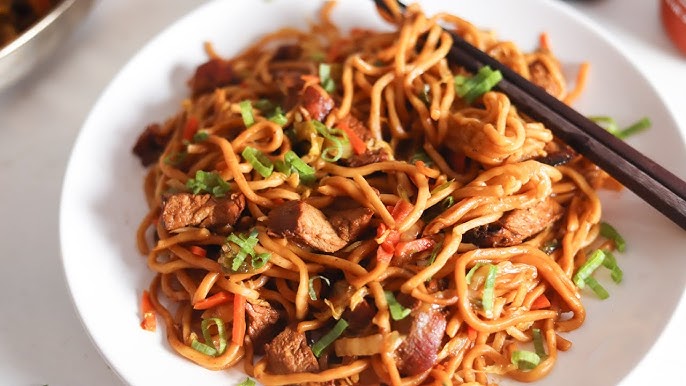
Pork Lo Mein Recipe: Craving takeout-style noodles with juicy pork and crisp veggies, all tossed in a rich savory sauce? You’re in the right place. This Pork Lo Mein recipe is quick, delicious, and better than any restaurant version—plus, you can whip it up in under 30 minutes once your ingredients are prepped. Whether you’re a beginner in the kitchen or a seasoned home cook, this easy-to-follow guide will help you create mouthwatering Pork Lo Mein that’ll have everyone asking for seconds.
Let’s get into it, step by step, with all the tips you need for the perfect noodle dish every time.
What Is Pork Lo Mein?
Pork Lo Mein is a classic Chinese-American dish made with soft egg noodles, stir-fried vegetables, and tender slices of pork all tossed in a savory soy-based sauce. “Lo Mein” literally translates to “tossed noodles” in Cantonese, which makes sense because instead of being crispy like Chow Mein, these noodles are cooked until tender and then tossed with the sauce and other ingredients.
The beauty of Pork Lo Mein lies in its versatility. You can use your favorite veggies, spice it up with some chili flakes, or keep it mild and comforting. It’s a one-pan dish that brings together all the best flavors—salty, sweet, umami—and textures: chewy noodles, juicy pork, and crunchy veggies.
Why You’ll Love This Pork Lo Mein Recipe
There’s something incredibly satisfying about a bowl of warm, saucy noodles. Here’s why this recipe is a must-try:
- Fast & Easy: Once you prep your ingredients, it takes less than 20 minutes to cook.
- Better Than Takeout: Fresher ingredients, less oil, and more flavor than your local spot.
- Customizable: Swap in chicken, beef, tofu, or any veggies you love.
- Budget-Friendly: Way cheaper than ordering in—and it makes great leftovers.
- Family Favorite: Even picky eaters tend to love this dish.
Plus, it’s a great way to clean out your fridge. Got half a bell pepper, some mushrooms, or leftover cabbage? Toss it in. Pork Lo Mein is forgiving like that.
The Origin of Lo Mein
Lo Mein originates from China, specifically Cantonese cuisine. The dish has evolved as it’s made its way across the globe, particularly in Western kitchens. In traditional Chinese cooking, Lo Mein noodles are boiled and then mixed into stir-fried vegetables and protein at the end, just long enough to soak up the sauce.
Unlike Americanized versions that can be overly oily or saucy, authentic Lo Mein aims for balance—a little bit of everything in every bite. That’s what we’re aiming for here: a true fusion of traditional method with home-cooked flavor and ease.
List of Ingredients You’ll Need
Let’s break this down into categories for easy shopping.
Main Ingredients:
- 8 oz lo mein noodles or spaghetti (fresh or dried)
- 1 lb pork tenderloin or pork shoulder, thinly sliced
- 2 tablespoons vegetable oil (for stir-frying)
- 1 cup sliced bell peppers (any color)
- 1 cup shredded carrots
- 1/2 cup sliced mushrooms
- 1/2 cup snow peas or sugar snap peas
- 3 garlic cloves, minced
- 1 teaspoon ginger, freshly grated
- 2 green onions, sliced
Sauce Ingredients:
- 3 tablespoons soy sauce (low-sodium preferred)
- 2 tablespoons oyster sauce
- 1 tablespoon hoisin sauce
- 1 tablespoon sesame oil
- 1 teaspoon sugar
- 1/2 teaspoon black pepper
- 1 tablespoon cornstarch mixed with 2 tablespoons water (for thickening)
Optional Add-Ins:
- Chili flakes or Sriracha for heat
- Cabbage, bean sprouts, broccoli florets
- Crushed peanuts or sesame seeds for topping
Having everything prepped before you start cooking is crucial. Stir-frying happens fast, and you won’t have time to chop mid-way.
Choosing the Right Noodles for Lo Mein
The best noodles for Pork Lo Mein are fresh Chinese egg noodles, but if you can’t find them, don’t worry. Here are some great substitutes:
- Fresh Lo Mein Noodles: Found in the refrigerated section of Asian markets.
- Spaghetti or Linguine: Boiled until al dente; a great alternative.
- Ramen Noodles: Discard the seasoning packet and use the noodles.
Avoid using rice noodles or glass noodles—they have a different texture and won’t hold the sauce as well.
Best Pork Cuts for Lo Mein
Choosing the right pork cut can make or break the texture of your dish. Here are some top picks:
- Pork Tenderloin: Lean and tender. Cooks quickly and stays juicy.
- Pork Shoulder: Slightly fattier but flavorful. Slice it thin for best results.
- Boneless Pork Chops: A good, lean option—easy to slice and cook.
Always slice the pork against the grain to keep it tender. If you’re unsure how to do that, just look for the lines running through the meat and cut perpendicular to them.
How to Prep Your Ingredients Before Cooking
This is where things get serious. Stir-frying is fast-paced, so prepping ahead saves you from kitchen chaos.
Cutting Vegetables the Right Way
- Bell peppers: thin julienne slices
- Carrots: shredded or matchstick cuts
- Mushrooms: thinly sliced
- Snow peas: trimmed on both ends
- Garlic & Ginger: minced or grated finely
The goal is to cut everything into similar sizes so they cook evenly.
Marinating the Pork
For extra flavor and tenderness, marinate your sliced pork for at least 15 minutes in:
- 1 tablespoon soy sauce
- 1 tablespoon cornstarch
- 1/2 teaspoon sesame oil
- 1/2 teaspoon sugar
This gives the pork that signature silky texture you find in restaurant-style stir-fries.
Step-by-Step Cooking Guide for Pork Lo Mein
Pork Lo Mein is savory, satisfying, and comes together quickly. Follow these simple steps for a delicious homemade version.
Step 1: Cook the Noodles
Bring a pot of salted water to a boil. Add lo mein or spaghetti noodles and cook according to package instructions until just tender. Drain well and toss lightly with oil to prevent sticking. Set aside.
Step 2: Stir-Fry the Pork
Heat oil in a large wok or skillet over medium-high heat. Add thinly sliced pork and season lightly with salt and pepper. Stir-fry for 2–3 minutes until browned and cooked through. Remove the pork from the pan and set aside.
Step 3: Stir-Fry the Veggies
In the same pan, add a little more oil if needed. Stir-fry vegetables such as bell peppers, carrots, cabbage, snap peas, or onions for 3–4 minutes until crisp-tender. Add minced garlic and ginger and cook for 30 seconds until fragrant.
Step 4: Combine Pork, Veggies & Noodles
Return the cooked pork to the pan. Add the cooked noodles and toss everything together over medium heat until evenly mixed.
Step 5: Pour in the Sauce
Pour in lo mein sauce or a mixture of soy sauce, oyster sauce, and a splash of sesame oil. Toss well to coat the noodles, pork, and vegetables evenly. Cook for 1–2 minutes until heated through. Serve hot and enjoy! 🍜✨
Tips for the Perfect Stir-Fry
Stir-frying might seem intimidating, but with these tips, you’ll nail it every time:
- Prep first. Don’t turn on the heat until everything is chopped and ready to go.
- High heat is key. A hot pan gives you that slightly smoky, restaurant-style finish.
- Don’t overcrowd. Cook in batches if needed—overcrowding causes steaming, not stir-frying.
- Toss constantly. Keep things moving to avoid burning and to ensure even cooking.
- Use a large wok or skillet. Space is important to get that perfect sear.
Common Mistakes to Avoid
Even simple dishes like Lo Mein can go wrong if you’re not careful. Here are some things to watch out for:
- Overcooking noodles: They should be slightly underdone before stir-frying.
- Too much sauce: A good Lo Mein is lightly coated, not swimming in liquid.
- Not slicing pork thin enough: Thick cuts take longer to cook and may end up chewy.
- Skipping the marinade: Marinating pork improves texture and flavor dramatically.
- Using raw garlic late: Add aromatics like garlic and ginger first so they don’t burn.
Avoiding these pitfalls will make the difference between “just okay” and “absolutely killer” noodles.
How to Store and Reheat Leftovers
Lo Mein makes awesome leftovers—but only if stored and reheated properly.
To Store:
- Let the noodles cool completely.
- Store in an airtight container in the refrigerator.
- Best consumed within 3–4 days.
To Reheat:
- Microwave: Sprinkle with a little water, cover loosely, and microwave in 30-second bursts.
- Stovetop: Add a splash of water or broth to a skillet and stir-fry until heated through.
Avoid freezing—noodles don’t hold up well after thawing and tend to turn mushy.
Variations of Pork Lo Mein
Want to mix things up? Here are a few delicious variations you can try:
Spicy Pork Lo Mein
- Add chili oil, red pepper flakes, or Sriracha to the sauce.
- Toss in some sliced red chilies for extra heat.
Low-Carb Pork Lo Mein
- Use zucchini noodles or shirataki noodles instead of regular noodles.
- Skip sugar in the sauce and use coconut aminos for a lower-carb soy sauce alternative.
Pork Lo Mein with Peanut Sauce
- Replace hoisin sauce with 2 tablespoons of creamy peanut butter.
- Add a splash of rice vinegar and a pinch of crushed peanuts for garnish.
Experiment until you find your perfect combo!
Pairing Ideas: What to Serve with Pork Lo Mein
Pork Lo Mein is a full meal in itself, but if you’re serving it as part of a bigger dinner spread, here are some tasty side ideas:
- Spring rolls or egg rolls
- Wonton soup or hot & sour soup
- Steamed or pan-fried dumplings
- Asian cucumber salad with sesame
- Steamed bok choy with garlic sauce
These sides balance out the meal with crunch, freshness, or extra comfort food vibes.
Is Pork Lo Mein Healthy? Nutritional Info & Tips
It can be. Here’s the breakdown and how to make it even better for you.
Nutrition (Per Serving – Approximate):
- Calories: 400–500
- Protein: 25–30g
- Carbs: 50–60g
- Fat: 15–20g
Make It Healthier:
- Use whole wheat or low-carb noodles.
- Go heavy on the veggies.
- Use lean pork cuts like tenderloin.
- Swap soy sauce for low-sodium versions or coconut aminos.
- Stir-fry with minimal oil or use a nonstick pan.
Homemade always wins when it comes to nutrition—you control the ingredients.
Gluten-Free & Low-Sodium Alternatives
If you’re watching your sodium or can’t have gluten, here’s how to adapt:
Gluten-Free Swaps:
- Use rice noodles or gluten-free soba noodles.
- Replace soy sauce with tamari or coconut aminos.
- Double-check that your hoisin and oyster sauces are gluten-free (some brands aren’t).
Low-Sodium Adjustments:
- Use low-sodium soy sauce.
- Skip the added salt or salty toppings like peanuts or crispy onions.
- Load up on herbs and aromatics to boost flavor naturally.
Even with these changes, your Pork Lo Mein can still taste amazing.
FAQs about Pork Lo Mein Recipe
What’s the difference between Lo Mein and Chow Mein?
Lo Mein uses soft boiled noodles that are tossed with sauce, while Chow Mein noodles are typically fried until crispy. Lo Mein is saucier and softer; Chow Mein is drier and crunchier.
Can I make Pork Lo Mein ahead of time?
Yes! You can prep all the ingredients and even cook the noodles a day ahead. Assemble and stir-fry everything when you’re ready to eat.
Can I use other proteins besides pork?
Absolutely. Chicken, beef, shrimp, or tofu work great. Just be sure to adjust cooking times based on your protein of choice.
How do I keep my noodles from sticking together?
After boiling, rinse noodles under cold water and toss them in a little sesame oil. This keeps them from clumping while you prepare other ingredients.
Can I freeze Pork Lo Mein?
Freezing is not recommended—it affects the texture of the noodles. It’s best eaten fresh or stored in the fridge for up to 4 days.
Final Thoughts
Pork Lo Mein is the kind of dish that hits all the right notes—savory, satisfying, and endlessly customizable. With fresh ingredients, a quick stir-fry, and a killer sauce, you can create a better-than-takeout experience right in your own kitchen.
The key is in the prep: get your noodles right, slice your pork thin, and stir-fry over high heat for flavor-packed results. Whether it’s a weeknight dinner or your go-to comfort food, this recipe is a keeper.
So what are you waiting for? Fire up that wok and get tossing!