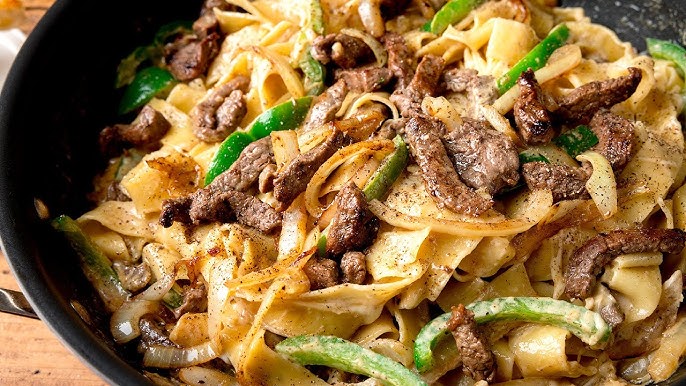
Philly Cheesesteak Pasta Recipe: Have you ever wished your favorite sandwich could somehow magically become a pasta dish? Well, dreams do come true—welcome to the world of Philly Cheesesteak Pasta. This recipe blends everything you love about a classic Philly cheesesteak—juicy beef, gooey cheese, sweet sautéed onions and peppers—with hearty pasta to give you the ultimate comfort food experience.
Imagine twirling a forkful of cheesy pasta that’s infused with all those deep, rich flavors from a sizzling cheesesteak. Sounds mouthwatering, right? Whether you’re cooking for family, meal-prepping, or just trying to break the boredom of everyday dinners, this dish is guaranteed to please. It’s quick, flavorful, and ridiculously easy to make.
This step-by-step guide will walk you through each part of the process. From choosing the best ingredients to nailing the cooking techniques, you’ll finish with a restaurant-worthy dish you can be proud of—without having to leave your kitchen.
Ingredients You’ll Need
Before we jump into the cooking process, let’s talk ingredients. What makes a Philly Cheesesteak Pasta unforgettable comes down to your components. Keep it simple, but don’t cut corners—freshness and quality matter here.
Meats
Traditionally, a Philly cheesesteak is made with thinly sliced ribeye steak, but when it comes to pasta, ground beef works wonders too. Here’s a quick comparison:
- Ribeye or sirloin steak (thinly sliced): This gives you that authentic cheesesteak vibe with tender bites of meat that melt in your mouth.
- Ground beef (85/15): It’s more accessible, cooks faster, and absorbs the flavors beautifully.
Pro Tip: If you want that steakhouse feel, go with sliced steak. If you’re after ease and budget-friendly options, ground beef is your best bet.
Pasta Choices
Not all pasta is created equal—especially when it comes to saucy, cheesy recipes like this one. You need something that holds sauce and meat well.
Best options:
- Penne
- Rotini
- Fusilli
- Shells
- Elbow macaroni
These shapes catch all the goodness—cheese, meat, veggies—in every bite. Avoid spaghetti or angel hair for this one; they don’t do the sauce justice.
Cheese
This is where the magic happens. That gooey, melty, cheesy finish is what brings this dish together. You’ll want to use a blend of cheeses for optimal flavor and texture.
Top cheese choices:
- Provolone (classic Philly flavor)
- Mozzarella (melty and mild)
- Cheddar (adds sharpness)
- Cream cheese (for creaminess)
Use freshly shredded cheese when possible—it melts better and tastes richer.
Vegetables
Don’t skip these. The veggies add sweetness, texture, and a pop of color that takes your pasta from basic to gourmet.
Essential veggies:
- Yellow or sweet onion
- Green bell pepper
- Optional: mushrooms for umami boost
Slice them thinly so they cook quickly and blend seamlessly with the beef and pasta.
Seasonings & Sauces
You don’t need anything too fancy, but the right seasonings bring everything to life.
Must-haves:
- Salt and pepper
- Garlic powder or fresh garlic
- Worcestershire sauce
- Beef broth or stock (adds depth)
Want a creamy sauce? Add heavy cream or a splash of milk with cream cheese. For a sharper flavor, a bit of Dijon mustard can work wonders.
Optional Add-ons
Want to take it to the next level? Try:
- Jalapeños for a kick
- Hot sauce for heat
- Caramelized onions for depth
- Crumbled bacon on top (because why not?)
Now that you’ve got your ingredients ready, let’s cook!
Step-by-Step Guide for Philly Cheesesteak Pasta
Step 1: Prep Your Ingredients
Begin by slicing onions and bell peppers thinly. Shred or cube provolone or mozzarella cheese, and mince garlic if using. Slice your beef (or ground beef works too). Preparing everything ahead ensures smooth, quick cooking.
Step 2: Cook the Pasta
Boil your chosen pasta—penne, rotini, or shells work best—until al dente. This prevents the pasta from turning mushy when combined with the sauce later. Drain and set aside.
Step 3: Brown the Beef or Steak
Heat oil in a skillet over medium-high heat. Add the sliced steak or ground beef, seasoning with salt and pepper. Sear until browned and flavorful. Remove the meat and set aside.
Step 4: Sauté the Vegetables
In the same skillet, add onions and bell peppers. Cook until soft and slightly caramelized, about 5–7 minutes. This step builds the classic Philly cheesesteak flavor foundation.
Step 5: Combine Meat and Veggies
Return the cooked beef to the skillet. Add garlic and sauté briefly until fragrant. The combination forms your savory base.
Step 6: Add Cheese Sauce or Melted Cheese
Stir in a homemade cheese sauce (made from butter, flour, milk, and cheese) or simply add shredded cheese directly to the pan. Allow it to melt into the mixture, creating a creamy, gooey consistency.
Step 7: Mix Pasta with Cheesesteak Mixture
Add the cooked pasta into the skillet. Toss well to ensure the cheese sauce coats every piece. Add a splash of pasta water if the mixture becomes too thick.
Step 8: Optional Bake for Golden Top
Transfer to a baking dish, top with extra cheese, and bake at 375°F (190°C) for 10–15 minutes. Baking gives a delicious golden crust.
Step 9: Garnish and Serve
Finish with parsley, pepper flakes, or extra cheese. Serve warm and enjoy your comforting Philly Cheesesteak Pasta!
Serving Suggestions
This dish is hearty on its own, but a few sides can really round out the meal.
Best sides:
- Garlic bread or cheesy toast
- Simple side salad with balsamic vinaigrette
- Roasted broccoli or green beans
- Pickled veggies to cut through the richness
Drink pairings:
- A bold red wine like Merlot or Cabernet
- Cold beer (lager or amber ale works great)
- Sparkling water with lemon for a light contrast
Storage and Reheating Tips
Got leftovers? You’re in luck—this pasta reheats beautifully!
To store:
- Let it cool completely
- Store in an airtight container in the fridge
- Good for up to 3–4 days
To reheat:
- Microwave: Add a splash of water or milk and cover with a paper towel. Heat in 1-minute intervals, stirring between each.
- Stovetop: Warm gently in a skillet with a little broth or cream to rehydrate the sauce.
- Oven: Reheat covered at 350°F for 15–20 minutes
Freezing Tip: You can freeze this pasta, but note that cream-based sauces may change texture slightly. Freeze in portions for up to 2 months.
Healthier Substitutions
Looking to cut calories or tweak it to fit your diet? No problem.
Lighter swaps:
- Use lean ground turkey or chicken instead of beef
- Swap out heavy cream for unsweetened almond milk or Greek yogurt
- Choose whole grain pasta or chickpea pasta for extra fiber
- Use reduced-fat cheese, or go light on the quantity
You can also load up on extra veggies—think mushrooms, spinach, or zucchini—for more volume and nutrition.
Even with these changes, you’ll still get that satisfying Philly cheesesteak experience—just a bit lighter.
Why You’ll Love This Recipe
Let’s be real—this dish is a weeknight dinner hero. It checks all the boxes:
✅ Comforting
✅ Easy to make
✅ Budget-friendly
✅ Family-approved
✅ Crowd-pleaser
It’s also incredibly versatile. Use what you have, make it your own, and know that it’ll turn out delicious every single time.
Philly Cheesesteak Pasta takes the heart of a beloved American classic and spins it into a cheesy, savory pasta dish that hits every note just right.
It’s comfort food, but make it next-level.
FAQs about Philly Cheesesteak Pasta Recipe
1. Can I make Philly Cheesesteak Pasta ahead of time?
Absolutely! Just prep it, cover tightly, and store in the fridge. When ready to serve, reheat in the oven at 350°F until hot and bubbly.
2. What other meats can I use besides beef?
Try sliced chicken, turkey, or even mushrooms for a vegetarian version. Ground turkey also works well.
3. Is there a keto or low-carb version of this recipe?
Yes! Swap regular pasta for zucchini noodles or low-carb pasta alternatives. Skip the flour and use heavy cream + cheese for a keto-friendly sauce.
4. Can I freeze Philly Cheesesteak Pasta?
You sure can. Freeze in airtight containers for up to 2 months. Thaw overnight and reheat with a little added cream or broth.
5. What pasta holds the sauce best?
Short, ridged shapes like penne, fusilli, and shells work best because they grab onto the sauce and meat.
Conclusion
There you have it—a full, step-by-step guide to making the ultimate Philly Cheesesteak Pasta. Whether you’re cooking for your crew on a cold night or just want a hearty, satisfying dish to warm your soul, this recipe brings the flavor, the comfort, and the wow factor. Simple ingredients, easy steps, and a final dish that looks—and tastes—like something straight out of a restaurant.
So go ahead. Treat yourself. Try this once and it just might become your new favorite.