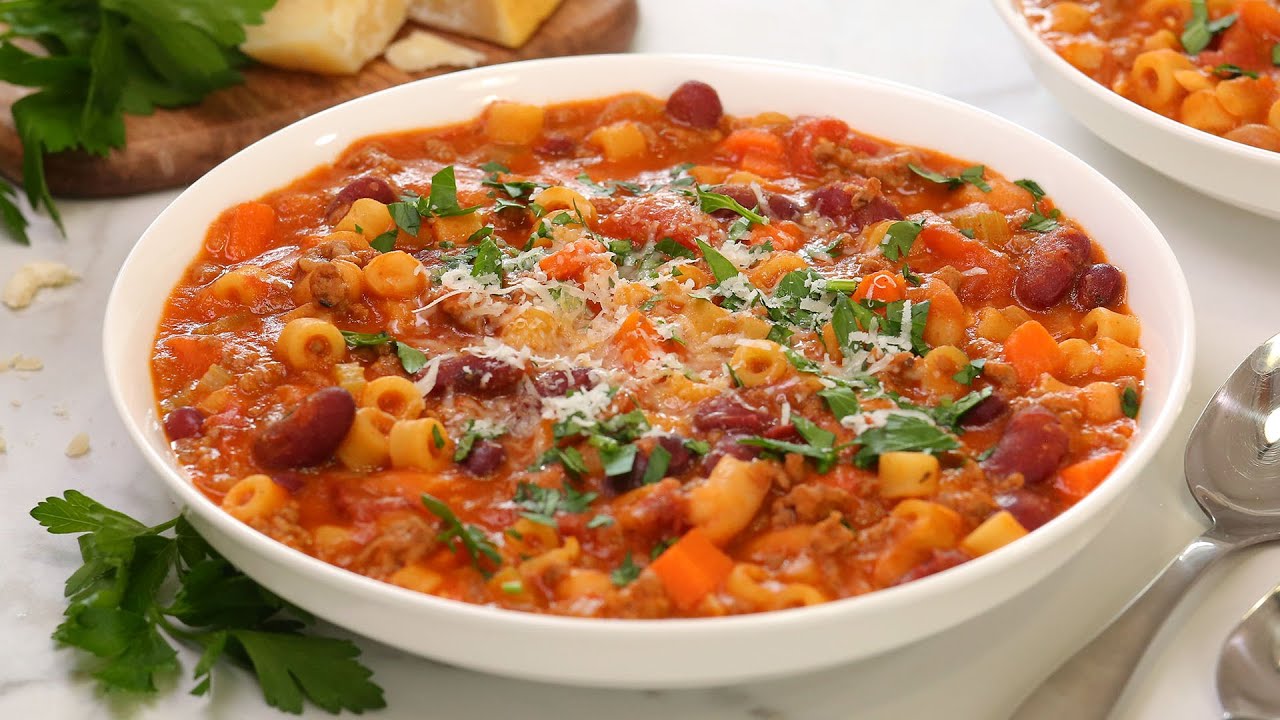
Pasta Fagioli Recipe: Warm, hearty, and packed with old-world charm, Pasta Fagioli (pronounced pasta fah-joh-lee) is a traditional Italian dish that hits all the right notes. This isn’t your typical pasta recipe. It’s a perfect balance of simplicity, nutrition, and soul-satisfying flavor. Whether you’re looking to impress at a dinner party or just cozy up on a cold evening, this dish will never fail you.
Let’s dive straight into making a version so rich and flavorful, it’ll taste like it came straight from an Italian Nonna’s kitchen.
Ingredients You’ll Need
Creating a good Pasta Fagioli starts with quality ingredients. Here’s what you’ll need to get that authentic taste:
Pantry Staples
- Olive Oil – Extra virgin for the best flavor
- Salt & Pepper – Essential seasoning
- Crushed Red Pepper Flakes – For a little heat (optional)
- Dried Italian Herbs – Like oregano, basil, and thyme
Fresh Ingredients
- Onion – Yellow or white, finely chopped
- Garlic – Freshly minced for a strong base
- Carrots – Diced small for even cooking
- Celery – Adds balance and texture
- Tomatoes – Crushed canned tomatoes or fresh peeled
- Fresh Parsley or Basil – For garnish and brightness
Beans and Pasta
- Cannellini Beans or Great Northern Beans – Cooked or canned
- Ditalini Pasta – Traditional, but you can substitute with small shells or elbow macaroni
Liquids
- Vegetable or Chicken Broth – Gives the soup its body
- Water – To adjust consistency as needed
Optional Additions
- Parmesan Rind – Adds umami if simmered in the broth
- Pancetta or Sausage – For a meaty twist
- Spinach or Kale – Boosts nutrition
Substitutions for Dietary Needs
- Use gluten-free pasta for gluten sensitivity
- Skip cheese for a dairy-free version
- Choose vegetable broth to keep it vegetarian or vegan
Kitchen Tools Required
Before you roll up your sleeves, make sure you have these tools on hand. They’ll make your cooking process smoother and more enjoyable:
Essential Tools
- Large Pot or Dutch Oven – This is your main cooking vessel. It holds all the flavors and gives room for everything to come together.
- Wooden Spoon – For stirring without damaging your pot’s surface.
- Chef’s Knife – For chopping all those beautiful fresh veggies.
- Cutting Board – Obvious, but crucial.
- Colander – To rinse and drain beans or pasta.
- Measuring Cups & Spoons – You’ll want to get your ratios just right.
Optional But Handy
- Immersion Blender – If you like a creamier texture, you can blend part of the soup.
- Ladle – For serving without making a mess.
- Grater – For fresh Parmesan or Pecorino Romano.
Having the right tools not only speeds up prep but also enhances the end result. And let’s be honest—anything that makes cooking easier is a win.
Preparation Tips Before You Start Cooking
Want to feel like a pro before the first onion is chopped? Here are a few smart prep tips:
Chop All Your Veggies First (Mise en Place)
French chefs do it, and so should you. Get everything diced and lined up in little bowls or plates. You’ll cook faster and avoid that frantic “where’s the garlic?” moment.
Rinse the Beans (If Using Canned)
Drain and rinse your canned beans well. This removes excess sodium and improves flavor.
Warm the Broth
Heating the broth before adding it into the pot helps keep your cooking time steady. Cold broth will drop the overall temperature of your pot and slow everything down.
Cook the Pasta Separately
Yes, it’s tempting to throw pasta into the soup to save time. But if you want firm pasta and the option to store leftovers without turning everything into mush, cook it on its own.
Don’t Rush the Sauté
Let those onions, carrots, and celery cook down slowly. This builds a deep flavor foundation that’s impossible to fake.
Taste as You Go
This seems obvious, but you’d be surprised how many people skip it. Adjust seasoning throughout the process, not just at the end.
Step-by-Step Guide to Make Pasta Fagioli
Alright, let’s get to the main event. Follow this step-by-step guide and you’ll have a pot full of Italian magic in no time.
Step 1: Gather and Prepare Your Ingredients
You’ll need olive oil, onion, garlic, celery, carrots, canned tomatoes, white beans (like cannellini), broth, small pasta (ditalini or elbow), salt, pepper, and Italian herbs. Dice the vegetables evenly so they cook at the same rate.
Step 2: Sauté the Aromatics (Onions, Garlic, Celery, Carrots)
Heat olive oil in a large pot over medium heat. Add the onion, celery, and carrots, cooking until soft and fragrant. Stir in the garlic and cook briefly until aromatic, being careful not to burn it.
Step 3: Add Tomatoes and Simmer the Base
Add crushed or diced tomatoes to the pot. Stir well and let the mixture simmer for 8–10 minutes. This allows the tomatoes to reduce slightly and develop a rich, balanced flavor.
Step 4: Add Broth and Beans – Let It Simmer
Pour in the broth and add drained, rinsed beans. Bring to a gentle simmer and cook for about 15 minutes. The broth absorbs the flavors of the vegetables and tomatoes, creating a hearty soup base.
Step 5: Cook the Pasta Separately
While the soup simmers, cook the pasta in salted boiling water until just al dente. Drain and set aside. Cooking pasta separately prevents it from becoming mushy.
Step 6: Combine Pasta and Soup Together
Add the cooked pasta to the soup pot and stir gently. Let everything simmer together for a few minutes so the pasta absorbs some of the broth’s flavor.
Step 7: Seasoning and Final Adjustments
Season with salt, black pepper, and Italian seasoning or fresh herbs. Adjust thickness with extra broth if needed. A drizzle of olive oil adds richness.
Step 8: Let It Rest – Flavor Gets Better
Remove from heat and let the soup rest for 5–10 minutes before serving. This resting time allows the flavors to deepen and blend beautifully. Serve warm with crusty bread or grated cheese.
How to Serve Pasta Fagioli
This dish is rustic and flexible, so it shines whether dressed up or served simply.
Serving Suggestions:
- Ladle into wide bowls with a generous grating of Parmesan on top
- Drizzle with extra virgin olive oil or a splash of chili oil for heat
- Serve alongside warm, crusty Italian bread for dipping
- Add a glass of red wine or sparkling water for the perfect pairing
Feeling extra? Top with a dollop of pesto or a spoonful of ricotta. It’s not traditional—but it’s delicious.
This dish is cozy enough for a solo Netflix night but impressive enough for a family gathering. It’s that versatile.
Storing and Reheating Pasta Fagioli
This dish is even better the next day. Here’s how to store and reheat it like a champ.
Refrigeration
- Store leftover soup and pasta separately in airtight containers
- Keeps well in the fridge for 3–4 days
- When reheating, add a splash of water or broth to loosen the texture
Freezing
- Freeze only the soup (without pasta) in freezer-safe containers
- Thaw overnight in the fridge and reheat on the stove
- Cook fresh pasta when you’re ready to serve again
Reheating Tips
- Microwave on medium power to avoid overcooking the beans
- Or reheat gently on the stovetop over low heat, stirring occasionally
- Always taste and adjust seasoning after reheating—flavors can mellow in the fridge
Variations You Can Try
One of the best things about Pasta Fagioli? It’s wildly customizable. Here are a few delicious detours:
1. Vegetarian/Vegan Version
- Use vegetable broth
- Skip the cheese or use vegan Parmesan
- Add kale, spinach, or zucchini for extra nutrients
2. Meaty Twist
- Brown pancetta, sausage, or bacon during the sauté stage
- Adds depth and a smoky flavor
- Great if you want a protein boost
3. Spicy Version
- Add more chili flakes
- Drop in a sliced fresh chili pepper
- Stir in spicy Italian sausage
4. Gluten-Free Alternative
- Use gluten-free pasta
- Double-check canned bean labels for hidden gluten
- Still rich, satisfying, and safe for sensitive stomachs
The possibilities are endless. Don’t be afraid to experiment. Your kitchen, your rules.
Health Benefits of Pasta Fagioli
Beyond its delicious flavor and comforting vibes, Pasta Fagioli is actually packed with nutrients. This isn’t just a cozy meal—it’s one that treats your body well too.
1. Rich in Plant-Based Protein
The beans in Pasta Fagioli are protein powerhouses. Cannellini or Great Northern beans are full of plant-based protein, making this a great meatless option that still keeps you full and satisfied. If you’re vegetarian or trying to cut down on meat, this dish is a smart pick.
2. High in Fiber
Both the beans and vegetables provide a big dose of fiber. That means better digestion, improved heart health, and a longer-lasting feeling of fullness. It’s comfort food that doesn’t leave you sluggish or guilty afterward.
3. Low in Fat (When Prepared Without Meat or Cheese)
When you make this recipe without added meats or heavy cheese, it’s naturally low in fat—especially the unhealthy kind. And even if you do add a bit of Parmesan, you’re still getting a meal that’s balanced and nourishing.
4. Loaded with Vitamins and Minerals
Thanks to the carrots, celery, garlic, and tomatoes, you’re getting a good dose of vitamin A, vitamin C, potassium, and antioxidants. It’s a well-rounded nutritional package in every spoonful.
5. Budget-Friendly and Meal-Prep Ready
One of the underrated benefits? This meal is cheap and makes a large batch. It’s ideal if you’re cooking for a family or trying to stretch your grocery dollars. And because it stores and reheats so well, it’s perfect for batch cooking and weekly meal prep.
This isn’t just food for the soul—it’s fuel for the body too. Win-win.
Common Mistakes and How to Fix Them
Even though Pasta Fagioli is fairly straightforward, there are a few pitfalls that can mess with the outcome. Let’s avoid those, shall we?
1. Overcooking the Pasta
This is the #1 rookie move. Pasta continues cooking even after it’s off the heat, especially if left in the soup. That’s why we recommend cooking it separately and only combining just before serving.
Fix: Cook the pasta al dente, and store it separately if you have leftovers.
2. Skipping the Sauté Step
Some people toss all the ingredients into the pot and boil it together to save time. But that sauté stage builds flavor like nothing else.
Fix: Always cook your onions, garlic, carrots, and celery first in olive oil. Don’t rush it.
3. Not Tasting and Adjusting Seasonings
You’ve got to taste as you go. Tomatoes, broths, and even beans can vary wildly in salt content.
Fix: Keep tasting and fine-tuning, especially before the final simmer.
4. Making It Too Thick or Too Watery
Soup texture is a personal thing, but there’s a sweet spot between stew and broth.
Fix: Add a little broth or water to thin out. If too thin, let it simmer uncovered to reduce. You can also mash some of the beans or blend a portion of the soup for thickness.
5. Ignoring Rest Time
Letting the dish sit for 10–15 minutes before serving really helps the flavors meld.
Fix: If you can wait, cover it and let it rest. If not, at least give it 5 minutes.
Knowing what not to do is half the battle. Keep these tips in mind, and you’ll nail it every time.
Tips from Italian Nonnas (Grandmas)
Italian grandmas don’t mess around when it comes to Pasta Fagioli. Their secrets are simple but game-changing. Here’s what the Nonnas will tell you:
1. Use Day-Old Bread for Dipping
Fresh bread is fine, but a crusty slice of day-old Italian bread? Now that’s authentic. Toast it up, rub it with garlic, and dip away.
2. Always Add a Parmesan Rind to the Pot
Got a leftover rind from a block of cheese? Don’t throw it out—drop it in the soup while it simmers. It releases a nutty, salty flavor that makes the broth irresistible.
3. Don’t Skip the Olive Oil Drizzle
A final splash of good-quality olive oil just before serving adds richness and aroma. Go for extra virgin—it makes a difference.
4. Simmer Low and Slow
No rushing allowed. A slow, gentle simmer helps everything meld perfectly. Fast boiling just breaks things down too quickly and can make veggies mushy.
5. Love Every Ingredient
Sounds cheesy (pun intended), but it’s real. Italian cooking is about honoring the ingredients. Take care, cook with intention, and the result will always be delicious.
These aren’t just tips—they’re traditions passed down through generations. Following them gives your Pasta Fagioli that authentic, homemade taste that no restaurant can touch.
Perfect Occasions to Make Pasta Fagioli
Looking for an excuse to whip up a pot of Pasta Fagioli? Honestly, you never need one. But here are some perfect times to bring this dish to the table:
Cold Weather Comfort
Chilly day? Rainy afternoon? Snowstorm outside? Pasta Fagioli warms you from the inside out. It’s the edible version of a hug.
Family Gatherings
It’s affordable, hearty, and makes a big batch. Great for feeding a crowd without stress.
Easy Weeknight Dinner
Busy week ahead? Meal prep a pot on Sunday, and you’ve got dinner for multiple nights.
Sick Days or Lazy Days
Feeling under the weather or just tired? This dish is gentle on the stomach, easy to eat, and deeply satisfying.
Potlucks or Casual Parties
Pasta Fagioli is a crowd-pleaser. Bring a big thermos or slow cooker full, and you’ll be the hero of the gathering.
Basically? There’s never a bad time for this dish.
FAQs about Pasta Fagioli Recipe
1. Can I use canned beans instead of dried beans?
Yes, absolutely. Canned beans save time and are just as tasty. Just be sure to rinse them well to remove extra sodium and any canning liquid.
2. Is Pasta Fagioli a soup or a pasta dish?
It’s both! Some versions are soupier, while others are thick and stew-like. Adjust the broth amount to your preference.
3. How do I keep pasta from getting mushy in leftovers?
Cook the pasta separately and add it only when serving. Store the pasta and soup in different containers if you’re saving extras.
4. Can I cook everything in one pot?
Technically, yes—but cooking pasta separately keeps it from getting overdone and soggy. One-pot is okay for same-day meals, though.
5. What’s the best pasta type for Pasta Fagioli?
Ditalini is the classic choice, but small shells, elbow macaroni, or orzo work well too. Just use a small pasta that fits nicely on a spoon.
Conclusion
Pasta Fagioli is more than just another soup or pasta dish—it’s a culinary tradition, a cozy comfort food, and a nutritional powerhouse all in one. With its humble ingredients and rich, layered flavor, it represents everything great about Italian home cooking: simple, satisfying, and made with love.
Whether you’re cooking for one or ten, following this step-by-step guide ensures you’ll end up with a bowl of pure joy. So gather your ingredients, roll up your sleeves, and let the aroma of garlic, herbs, and simmering tomatoes fill your kitchen.
Once you’ve tasted that first spoonful, you’ll understand why this dish has stood the test of time.