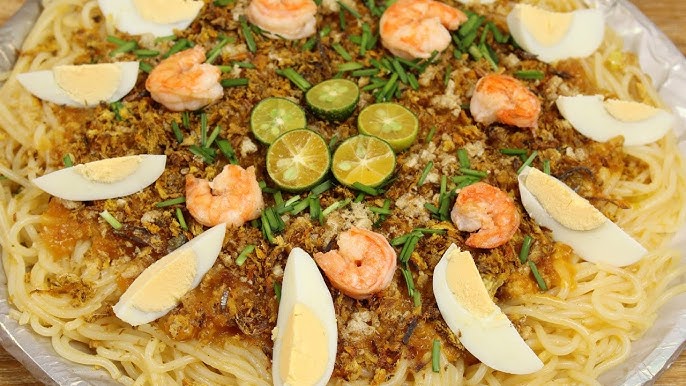
Palabok Recipe: Palabok is one of the most iconic noodle dishes in the Philippines, famous for its vibrant orange sauce and generous toppings. It’s a type of pancit, a category of noodle dishes deeply embedded in Filipino culinary culture. What makes palabok stand out is its rich shrimp-based sauce, paired with soft rice noodles, crispy toppings, and savory garnishes that all come together in a harmony of flavors and textures. Unlike other Filipino noodle dishes that can be stir-fried or soupy, palabok has a distinct thick sauce poured over the noodles, making it both filling and flavorful.
If you’ve ever walked into a Filipino birthday celebration, fiesta, or even a casual family gathering, chances are you’ll find palabok sitting proudly on the table. Its appeal goes beyond taste; it’s also a feast for the eyes, with its orange sauce, bright green spring onions, golden chicharrón crumbs, and slices of boiled egg scattered on top. This is not just food—it’s tradition, comfort, and celebration all in one dish.
Why Palabok is a Filipino Favorite
So why is palabok loved so much? The answer lies in its unique blend of flavors and textures. It’s creamy yet savory, light yet hearty. The sauce is seafood-based, often made with shrimp broth or stock, which gives it a natural sweetness and depth. Add to that the crunch of crushed pork cracklings, the smokiness of tinapa (smoked fish), the tenderness of boiled shrimp, and the richness of hard-boiled eggs—each bite is an explosion of taste.
Palabok also carries a sense of nostalgia for many Filipinos. For some, it brings back memories of their childhood when their mothers or grandmothers would prepare it during birthdays. For others, it’s a comfort food often enjoyed with friends after school or at casual gatherings. It’s not just a dish—it’s a cultural symbol of togetherness and celebration.
Another reason palabok is a staple is its versatility. While the classic version uses shrimp stock and traditional toppings, families and regions often put their own spin on it. Some add more seafood, others use chicken or ground pork, and some keep it simple with fewer toppings. No matter how you tweak it, palabok remains distinctly Filipino.
Occasions Where Palabok is Commonly Served
Palabok isn’t an everyday dish for most households—it’s something special. It’s most often served during:
- Birthdays and Anniversaries – Since noodles symbolize long life in Filipino tradition, palabok is a natural choice for birthday parties.
- Fiestas and Holidays – Big celebrations in the Philippines always feature pancit dishes, and palabok adds color and variety to the feast.
- Casual Gatherings – Some families love to cook palabok as a weekend treat or when entertaining guests.
- Merenda or Afternoon Snack – In some Filipino eateries, palabok is sold in small portions as a mid-day snack.
Simply put, palabok is more than food—it’s part of the Filipino identity, a dish that brings families and friends closer together at the table.
Ingredients You’ll Need
Main Noodles (Rice Noodles or Bihon)
The foundation of palabok lies in its noodles, specifically thin rice noodles, also known as bihon. These noodles are delicate, slightly chewy, and perfect for absorbing the sauce. Unlike thick noodles like udon or egg noodles, bihon keeps the dish light while still filling.
To prepare the noodles, they are usually soaked in water until soft, then quickly boiled until tender. The noodles should be firm enough to hold their shape but soft enough to mix well with the sauce. Using bihon is traditional, but some households substitute with other rice noodles if bihon is unavailable. The key is to use noodles that will complement—not overpower—the rich sauce.
Sauce Ingredients (Garlic, Annatto Seeds, Shrimp Stock, Cornstarch, etc.)
The sauce is the soul of palabok. It’s what gives the dish its signature taste and color. To make it, you’ll need the following essentials:
- Shrimp Stock – This is the base of the sauce, usually made by boiling shrimp heads and shells for maximum flavor.
- Garlic and Onion – These aromatics add depth and fragrance.
- Annatto Seeds (Achuete) – Soaked in oil or water, annatto seeds give the sauce its vibrant orange color.
- Cornstarch Slurry – This thickens the sauce, giving it the right consistency to coat the noodles.
- Fish Sauce or Patis – Adds a salty, umami kick.
- Ground Pork (Optional) – Some recipes include sautéed ground pork to make the sauce richer.
When cooked together, these ingredients form a luscious, savory sauce that clings beautifully to the rice noodles.
Toppings (Chicharrón, Shrimp, Smoked Fish, Egg, Spring Onions)
Palabok wouldn’t be palabok without its colorful and flavorful toppings. Each one adds a different texture and flavor profile:
- Shrimp – Boiled or sautéed, shrimp is often the highlight protein.
- Chicharrón (Pork Cracklings) – Crushed for a crunchy, salty topping.
- Tinapa (Smoked Fish) – Flaked smoked fish adds a smoky depth.
- Hard-Boiled Eggs – Sliced eggs add richness and visual appeal.
- Spring Onions – Fresh and green, they provide a pop of color and freshness.
The beauty of palabok is in its layers. Each topping contributes a different taste, creating a perfectly balanced dish.
Optional Additions for Extra Flavor
If you want to elevate your palabok, you can add:
- Calamansi (Philippine Lime) – For a citrusy zing.
- Tofu Cubes – For a vegetarian twist.
- Ground Chicken or Pork – For a meatier sauce.
- Squid or Mussels – To make it more seafood-forward.
Palabok is flexible, so you can always customize it to your preference.
Kitchen Tools Required
Cooking Pot and Strainer
A large pot is needed to boil both the noodles and the shrimp for the stock. A strainer will help drain the noodles properly, keeping them from getting soggy.
Mixing Bowl and Ladle
You’ll need these for mixing the sauce and serving the dish. A ladle helps you pour the sauce evenly over the noodles.
Knife and Chopping Board
For preparing toppings like eggs, spring onions, and smoked fish, a good knife and cutting board are essential.
With all these tools ready, cooking palabok becomes much easier and more enjoyable.
Step-by-Step Guide to Cooking Palabok
Step 1 – Preparing the Noodles
The first step in making palabok is preparing the noodles. Begin by soaking the rice noodles in water for about 15 to 20 minutes, until they become pliable. After soaking, boil them in water for around 2 to 3 minutes or until just tender. It’s important not to overcook them because they’ll become mushy and fall apart once you add the sauce.
Once cooked, drain the noodles using a strainer and set them aside. Some people toss the noodles in a little oil to prevent sticking, which also makes it easier to serve later. At this point, your noodle base is ready for the rich sauce and toppings.
Step 2 – Making the Shrimp Stock
The depth of flavor in palabok comes primarily from the shrimp stock. Without it, the sauce won’t have that signature savory-seafood taste. To make it, start by peeling and deveining your shrimp, making sure to save the heads and shells. Place them in a pot with about 4 cups of water, then bring it to a boil. Allow it to simmer for at least 10–15 minutes so that all the rich flavors are extracted.
After simmering, strain the broth to remove the shells and heads. What you’ll have is a flavorful, aromatic shrimp stock that will serve as the foundation for your sauce. This step may feel like a bit of extra work, but trust me, it’s what sets homemade palabok apart from shortcut versions. The broth gives the dish a natural sweetness and seafood punch that can’t be replicated by plain water or bouillon cubes.
If you want to intensify the flavor even more, you can sauté the shrimp heads in oil first before boiling them. Press down on the heads to release the shrimp “fat,” which is packed with flavor. Once you have your shrimp stock ready, set it aside—it’s the liquid gold you’ll use in the next step.
Step 3 – Cooking the Savory Sauce
Now comes the heart of palabok: the sauce. Start by heating oil in a large pan and sautéing garlic and onions until fragrant. This aromatic base will give your sauce depth. Next, pour in your prepared shrimp stock and bring it to a gentle boil.
To give the sauce its signature orange color, add annatto oil. You can make this by steeping annatto seeds in hot oil until the oil turns a vibrant orange. Strain the seeds out and add only the infused oil. Not only does it provide color, but it also gives a slightly earthy flavor that balances the richness of the shrimp broth.
Once the stock is simmering, season it with fish sauce and ground black pepper. For thickness, prepare a slurry by mixing 2 tablespoons of cornstarch with ½ cup of water, then slowly pour it into the sauce while stirring continuously. This prevents lumps and ensures a silky, gravy-like consistency.
Taste as you go—it should be savory, slightly salty, and full of shrimp flavor. Some recipes also add sautéed ground pork to make the sauce meatier, but you can skip it if you prefer a more seafood-focused dish. By now, your kitchen will smell incredible, and your sauce will be thick, glossy, and ready to coat the noodles.
Step 4 – Preparing the Toppings
Palabok isn’t just about the noodles and sauce—the toppings are what make it truly special. They add flavor, texture, and visual appeal, turning a simple noodle dish into a festive centerpiece. Here’s how to prepare them:
- Shrimp – Boil the peeled shrimp in salted water for 2–3 minutes until just cooked. Don’t overcook, or they’ll turn rubbery. Set aside for topping.
- Hard-Boiled Eggs – Boil eggs for 10 minutes, cool them in ice water, peel, and slice into wedges.
- Chicharrón (Pork Cracklings) – Crush them into small crumbs for that signature crunch.
- Tinapa (Smoked Fish) – Flake the fish into small pieces; its smoky, salty flavor pairs perfectly with the sauce.
- Fried Garlic Bits – Fry minced garlic in oil until golden brown, then drain on paper towels.
- Spring Onions – Chop finely to add freshness and color.
The combination of these toppings is what gives palabok its wow factor. Each bite is a mix of creamy sauce, chewy noodles, crunchy chicharrón, smoky tinapa, and the richness of egg and shrimp.
Step 5 – Assembling the Palabok
Now that everything is ready, it’s time for the most exciting part—assembling your palabok!
- Lay the Base – Place the cooked noodles neatly on a large serving platter or individual bowls.
- Pour the Sauce – Generously ladle the savory orange sauce over the noodles, making sure they are fully coated.
- Add the Toppings – Arrange the shrimp, egg slices, tinapa flakes, chicharrón crumbs, fried garlic, and spring onions on top. Distribute them evenly for balance.
- Final Touches – Garnish with lemon or calamansi wedges around the edges for a bright citrus option when serving.
The key to a stunning palabok is presentation. Since it’s often served at parties and gatherings, take your time arranging the toppings beautifully. A well-prepared palabok is not just delicious but also a feast for the eyes.
Tips for Perfecting Your Palabok
Even though palabok may seem straightforward, there are a few tricks to make sure your dish turns out perfectly every single time.
Common Mistakes to Avoid
- Overcooking the Noodles – Soft, mushy noodles ruin the dish. Always cook them just until tender.
- Too Watery Sauce – The sauce should cling to the noodles, not run off. Make sure to add enough cornstarch slurry to thicken it properly.
- Skipping the Toppings – The beauty of palabok is in its variety of toppings. Don’t leave them out, or you’ll miss the authentic experience.
How to Adjust Flavor to Your Taste
- If you like it richer, add more shrimp or ground pork to the sauce.
- For a smokier flavor, increase the amount of tinapa flakes.
- For a tangy kick, squeeze calamansi or lemon juice before eating.
Serving Suggestions
Palabok is best enjoyed hot and fresh, served immediately after assembling. Pair it with iced tea, calamansi juice, or even a cold soda. For parties, you can prepare the noodles, sauce, and toppings separately, then assemble just before serving to keep everything fresh.
Variations of Palabok
One of the best things about Filipino cuisine is its flexibility. Palabok, while classic in its original form, has several variations depending on the region, the cook, or the occasion. These variations give the dish a new personality while still keeping its essence intact.
Pancit Malabon vs. Pancit Palabok
People often confuse Pancit Malabon with Palabok, and while they look similar, there are key differences. Palabok uses thin rice noodles (bihon) and has a lighter shrimp-based sauce. Pancit Malabon, on the other hand, uses thicker rice noodles and usually includes more seafood like squid, mussels, and oysters. The sauce in Pancit Malabon is also richer and often mixed directly with the noodles, rather than just poured on top.
In short, Palabok is lighter, more delicate, and often easier to prepare at home, while Pancit Malabon is more indulgent and seafood-heavy, often reserved for big gatherings.
Vegetarian or Vegan Palabok
If you’re vegetarian or vegan, you can still enjoy this Filipino favorite! Instead of shrimp stock, make a vegetable broth flavored with mushrooms and seaweed for that umami, ocean-like taste. Replace fish sauce with soy sauce, and swap out meat toppings with crispy tofu cubes, fried mushrooms, and vegan chicharrón alternatives. You’ll still get the same satisfying flavors without using any animal products.
Modern Twists on the Classic Recipe
Creative cooks have also added their own modern flair to palabok. Some add cheese for extra creaminess, while others use spaghetti noodles as a substitute when rice noodles aren’t available. You might even find versions topped with crispy bacon instead of traditional chicharrón. These twists prove that palabok is not just traditional but also adaptable to contemporary tastes.
Serving Suggestions
Perfect Side Dishes for Palabok
Palabok is flavorful on its own, but pairing it with the right side dishes can make it even more enjoyable. Some great choices include:
- Lumpiang Shanghai (Filipino spring rolls) – The crispy rolls provide a nice contrast to the creamy noodles.
- Puto (steamed rice cakes) – A soft, slightly sweet side dish that balances the savory palabok.
- Fried Tofu with Dipping Sauce – A crunchy, protein-packed complement.
Ideal Drinks to Pair With It
To balance out the richness of the dish, pair palabok with refreshing drinks like:
- Calamansi Juice – Tangy and citrusy, it cuts through the heaviness of the sauce.
- Iced Tea – A classic Filipino drink pairing that’s light and sweet.
- Cold Soda – For a casual feast, soda adds fizz and freshness.
Whether you serve palabok as a main dish or as part of a larger spread, pairing it with the right sides and drinks will make the meal even more memorable.
Nutritional Value of Palabok
Palabok may be indulgent, but it does offer nutritional benefits when eaten in moderation.
Health Benefits of Key Ingredients
- Shrimp – High in protein and low in calories, shrimp also provides omega-3 fatty acids.
- Eggs – A great source of protein, healthy fats, and essential vitamins like B12.
- Rice Noodles – Naturally gluten-free and light, making them easier to digest compared to wheat noodles.
- Spring Onions and Garlic – Add antioxidants and boost the immune system.
Calories and Nutritional Breakdown
A typical serving of palabok (about one cup) contains around 300–400 calories, depending on toppings. It provides a good mix of carbohydrates from noodles, protein from shrimp and eggs, and fats from chicharrón and oil. To make it lighter, you can reduce the amount of chicharrón or replace it with tofu.
FAQs about Palabok Recipe
1. Can I use other types of noodles for Palabok?
Yes, while rice noodles (bihon) are traditional, you can use spaghetti noodles or even sotanghon (glass noodles) as substitutes.
2. How do I make Palabok ahead of time?
Prepare the noodles, sauce, and toppings separately, then assemble just before serving to keep everything fresh.
3. What toppings can I replace chicharrón with?
You can use crispy tofu, fried garlic chips, or even crispy onions as alternatives.
4. How do I make Palabok sauce thicker?
Add more cornstarch slurry and simmer until you achieve your desired consistency.
5. Can Palabok be frozen?
It’s best eaten fresh, but you can freeze the sauce separately for up to 1 month. Reheat before serving and prepare fresh noodles.
Conclusion
Palabok is more than just a noodle dish—it’s a celebration of Filipino culture, family, and tradition. With its flavorful shrimp sauce, vibrant orange color, and a variety of toppings, it’s no wonder this dish has become a staple at parties, gatherings, and even as a comforting homemade meal.
What’s truly special about palabok is how customizable it is. Whether you stick to the classic recipe, make a vegetarian version, or try modern twists, it always comes out delicious. Preparing it may take some effort, but the reward is a dish that brings joy and togetherness to everyone at the table.
So the next time you’re planning a gathering, surprise your guests with a platter of homemade palabok—it’s guaranteed to impress!