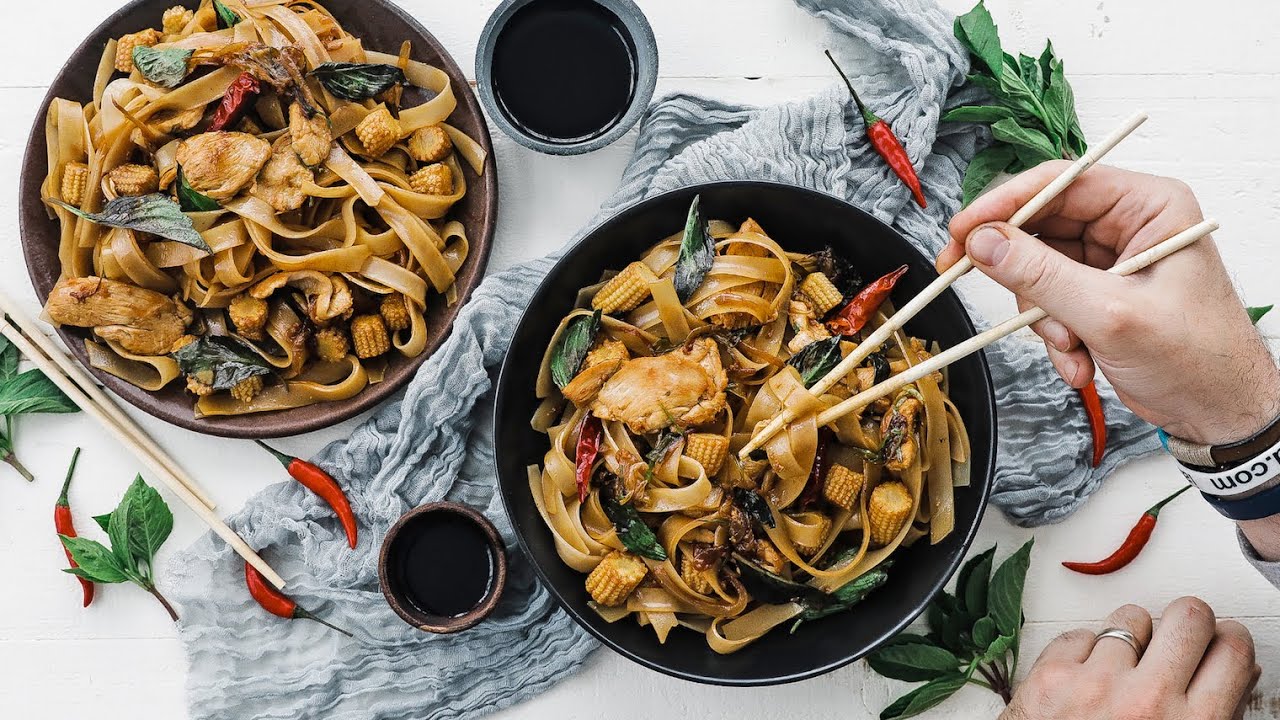
Pad Kee Mao Thai Recipe: Pad Kee Mao, famously known as “Drunken Noodles,” is one of the most loved Thai street food dishes—and for good reason. It’s spicy, savory, aromatic, and absolutely loaded with bold, addictive flavors.
Despite what the name might suggest, there’s no alcohol involved. The name actually comes from the idea that these fiery noodles are the perfect cure for a hangover, or maybe because you’d want a cold drink with them—they’re that spicy!
Whether you’re an experienced home cook or just beginning your Thai food journey, this guide will walk you through everything you need to create authentic Pad Kee Mao at home—no takeout menu required.
Ingredients You’ll Need
Let’s get right to the heart of the dish—the ingredients. Authentic Pad Kee Mao uses fresh Thai staples, but don’t worry if you can’t find everything at your local store. I’ll also list easy substitutions so you can still enjoy this dish with ingredients you have on hand.
Main Ingredients:
- Wide rice noodles (fresh or dried) – These are the backbone of Pad Kee Mao. Flat, chewy, and perfect for soaking up all that sauce.
- Protein of choice – Traditionally chicken, pork, or seafood. Tofu or tempeh works great for a vegan version.
- Thai holy basil (or Thai basil) – Adds the signature peppery, slightly anise-like flavor.
- Garlic – Lots of it.
- Bird’s eye chilies – For that unmistakable Thai heat.
- Bell peppers – Adds sweetness and crunch.
- Onion – Yellow or red, sliced.
- Carrots – Optional, for sweetness and color.
Sauce Ingredients:
- Oyster sauce – Brings rich umami depth.
- Soy sauce – Use both light and dark soy if possible.
- Fish sauce – Adds salty, savory depth.
- Sugar (preferably palm sugar) – Balances the spice and salt.
- Optional: Dark sweet soy sauce – Adds color and a slight caramelized taste.
Substitutions:
- Noodles: If you can’t find fresh wide rice noodles, soak dried ones or use tagliatelle-style rice noodles.
- Protein: Shrimp, beef, tofu, or mock meat—Pad Kee Mao is flexible.
- Basil: Regular sweet basil can work in a pinch, but holy basil gives the best flavor.
- Fish sauce substitute: Soy sauce + a dash of vinegar for a vegetarian option.
- Oyster sauce substitute: Vegan mushroom sauce.
Make sure all your ingredients are chopped, mixed, and ready before you start cooking. This dish comes together quickly, and having everything in place will make it a breeze.
Tools and Equipment
To get that irresistible smoky flavor, it’s all about high heat and fast cooking. Here’s what you’ll need:
- Wok or large skillet – Preferably carbon steel. Woks heat fast and evenly—ideal for stir-fry.
- Spatula or wooden spoon – Something to toss everything quickly.
- Mixing bowls – For the sauce and prepping ingredients.
- Knife and cutting board – You’ll be chopping a lot of garlic, basil, and veggies.
If you don’t have a wok, a large nonstick or stainless-steel skillet works. Just make sure it can handle high heat.
Understanding the Flavors of Pad Kee Mao
What makes Pad Kee Mao so addictive? It’s the layered flavors: spicy, savory, slightly sweet, and herbaceous. When you take a bite, you get heat from the chilies, umami from the sauces, sweetness from sugar and bell peppers, and that unmistakable aroma from Thai basil. It’s bold, yet balanced.
The sauce is the soul of the dish. A mix of oyster sauce, soy sauce, fish sauce, and a little sugar creates a deep, savory base. Don’t skip Thai basil—it’s not just garnish; it’s the flavor bomb that elevates the whole plate.
Think of it like a symphony of flavors: the chili is the drummer, basil is the lead singer, and the sauces play the orchestra in the background. Get that mix right, and you’ll see why this dish is so beloved.
Prep Work Before You Cook
Before the heat hits the pan, you’ve got to prep everything. Stir-fry dishes move fast, and the last thing you want is to burn your garlic while searching for your noodles.
Step-by-step Prep Checklist:
Soak the noodles:
- If using dried rice noodles, soak them in warm water for 30 minutes or boil them according to the package (but keep them al dente).
- Drain and rinse with cold water to stop cooking.
Chop your aromatics:
- Mince 4-6 cloves of garlic.
- Slice 3-5 Thai chilies thinly. Adjust based on heat preference.
- Slice onion, bell peppers, and carrots into strips.
Prepare protein:
- Thinly slice chicken, pork, or tofu. Season lightly with soy sauce and cornstarch for tenderness.
Mix your sauce:
- In a small bowl, combine:
- 1 tbsp oyster sauce
- 1 tbsp soy sauce
- 1 tbsp dark soy sauce (optional)
- 1 tsp fish sauce
- 1 tsp sugar
Wash and pluck Thai basil leaves.
- You’ll need about 1 cup loosely packed.
Now that you’re prepped, it’s time to get cooking!
Step-by-Step Cooking Instructions for Pad Kee Mao Thai
Let’s get to the fun part—cooking your Pad Kee Mao! Once you’ve prepped everything, this whole process takes just about 10-15 minutes. So crank up the heat, grab your wok or skillet, and let’s go!
Step 1: Soak or Boil the Rice Noodles
If you haven’t already done this during prep, now’s the time. If you’re using fresh wide rice noodles, gently separate them. If they’re sticking together, a quick microwave for 15-20 seconds can help loosen them up.
For dried noodles, soak in warm water for 30-40 minutes or boil for 4-6 minutes until just soft but still chewy. You want them flexible but not mushy.
Drain and rinse with cold water to stop further cooking, then set aside.
Step 2: Mix Your Pad Kee Mao Sauce
Combine the following in a small bowl:
- 1 tablespoon oyster sauce
- 1 tablespoon soy sauce
- 1 tablespoon dark soy sauce (for color and depth)
- 1 teaspoon fish sauce
- 1 teaspoon sugar (palm sugar if available)
Stir until the sugar dissolves. This sauce will coat your noodles in bold, rich flavor.
Step 3: Heat Your Wok or Skillet
Add 2 tablespoons of neutral oil (like vegetable or canola oil) and heat on high. The pan should be smoking hot before anything goes in. That’s how you develop that charred “wok hei” flavor.
Step 4: Cook the Protein
Add your sliced chicken, pork, shrimp, or tofu. Spread it out and let it sear for a minute before flipping. Cook until browned and just cooked through—about 2-3 minutes.
Remove it from the wok and set aside.
Step 5: Stir-Fry Vegetables and Aromatics
Add another splash of oil if needed. Toss in:
- Minced garlic
- Sliced chilies
Stir-fry for about 20-30 seconds—just until fragrant. Don’t let the garlic burn.
Add sliced onion, bell pepper, and carrots (if using). Stir-fry until slightly softened but still crisp—about 2 minutes.
Step 6: Add Noodles and Sauce
Now toss in your pre-soaked or fresh noodles and pour the sauce mixture right over them.
Use two spatulas or tongs to gently toss and separate the noodles, coating them in sauce. Stir-fry for about 2-3 minutes until the sauce reduces slightly and the noodles take on a rich, glossy color.
Step 7: Add Thai Basil and Finish
Return your protein to the pan. Add the Thai basil leaves and toss everything together just until the basil wilts—this only takes about 20 seconds.
Turn off the heat and serve hot!
That’s it! Your Pad Kee Mao is ready to enjoy—spicy, savory, fresh, and completely satisfying.
Tips for Cooking Perfect Pad Kee Mao
Want that restaurant-quality flavor? These little tips make a huge difference:
- High heat is key. You need a hot wok to get those slightly charred edges and caramelized sauce.
- Don’t overcrowd the pan. If you’re doubling the recipe, cook in batches. Overcrowding leads to steaming, not stir-frying.
- Toss continuously. Stir constantly to keep things from burning and to coat everything evenly.
- Use fresh noodles when possible. They soak up the sauce better and have a chewier texture.
- Control your timing. Noodles should be the last thing in before basil. If you overcook, they turn mushy fast.
Pad Kee Mao is all about timing, heat, and the right ingredients. Once you get the hang of it, you’ll be whipping it up in your sleep.
Common Mistakes to Avoid
Even experienced cooks make some missteps with this dish. Here’s what to watch out for:
- Overcooking the noodles: They should still have some bite. Mushy noodles will ruin the texture.
- Using the wrong basil: Thai basil or holy basil is a must. Regular sweet basil doesn’t bring the same punch.
- Not prepping in advance: This dish cooks FAST. If you’re still slicing veggies while the garlic is burning, you’re in trouble.
- Not adjusting heat levels: Thai food is bold, but if you can’t handle extreme spice, reduce the chili. Too hot, and you won’t enjoy it.
Stay focused, prep well, and you’ll avoid the rookie mistakes.
Pad Kee Mao vs. Pad See Ew
A lot of people confuse these two classic Thai noodle dishes, and it’s easy to see why—they both use wide rice noodles and a stir-fry method. But the flavors? Totally different.
| Feature | Pad Kee Mao (Drunken Noodles) | Pad See Ew |
|---|---|---|
| Flavor profile | Spicy, savory, herbal | Sweet, salty, mild |
| Basil used | Thai holy basil | None |
| Heat level | Hot to very hot | Mild |
| Sauce | Chili-heavy, fish sauce blend | Soy sauce-based |
| Vegetables | Bell pepper, onion, basil | Chinese broccoli |
Pad Kee Mao is fiery and full of attitude. Pad See Ew is mellow and comforting. Choose your adventure!
Making Pad Kee Mao Vegetarian or Vegan
This dish can easily be adapted for vegetarians and vegans without sacrificing flavor.
Protein Swaps:
- Tofu: Use firm or extra-firm. Press it and sear until crispy before adding.
- Tempeh: Great for texture and protein.
- Mushrooms: King oyster mushrooms mimic meatiness.
Sauce Swaps:
- Vegan oyster sauce: Mushroom-based versions are widely available.
- Fish sauce substitute: Use soy sauce plus a splash of lime juice or seaweed-based seasoning.
You can still enjoy all the heat and boldness without any animal products.
How to Adjust the Spice Level
Not everyone can handle Thai-level spice, and that’s okay! Here’s how to make Pad Kee Mao work for your tastebuds:
- Mild: Use 1 chili or none. Add sliced bell pepper for color without heat.
- Medium: Use 2-3 bird’s eye chilies, deseeded.
- Hot: 5+ chilies with seeds. Brace yourself.
You can also add chili flakes or chili oil at the end to let everyone adjust their own spice level.
Storage and Reheating Tips
Got leftovers? Lucky you.
- Storage: Let cool completely, then refrigerate in an airtight container for up to 3 days.
- Reheating: Stir-fry again in a hot pan with a splash of water or oil. Microwaving is okay but can dry out the noodles.
- Freezing: Not recommended. The noodles lose texture after thawing.
Pad Kee Mao is best fresh, but still delicious as next-day leftovers if stored and reheated properly.
What to Serve with Pad Kee Mao
To round out your Thai meal, try serving it with:
- Thai cucumber salad (Ajaad): Refreshing and tangy.
- Tom Yum soup: A spicy-sour soup that pairs beautifully.
- Thai iced tea or lime soda: Something cool to balance the heat.
- Fried egg (Kai Dao): Served on top in Thailand—runny yolk over spicy noodles? Yes, please.
These additions turn your meal into a Thai restaurant experience at home.
Nutritional Breakdown
Here’s an approximate breakdown per serving of Pad Kee Mao (based on chicken version):
| Nutrient | Amount (Approx.) |
|---|---|
| Calories | 450-600 |
| Protein | 25g |
| Carbohydrates | 55g |
| Fat | 20g |
| Fiber | 4g |
Want it healthier? Use less oil, more veggies, or switch to a lean protein like shrimp or tofu.
FAQs about Pad Kee Mao Thai Recipe
1. Can I make Pad Kee Mao without a wok?
Yes! A large skillet or frying pan works fine. Just use high heat and avoid overcrowding the pan.
2. Is Pad Kee Mao gluten-free?
It can be. Use gluten-free soy sauce (like tamari) and gluten-free oyster/fish sauce alternatives.
3. How spicy is it really?
Traditionally, very spicy. But you control the heat. Start mild and build up.
4. What type of noodles should I use?
Fresh wide rice noodles are best. If using dried, go for “sen yai” style and soak properly.
5. Can I freeze Pad Kee Mao?
It’s not ideal. The noodles get mushy after freezing and reheating. Best eaten fresh or next-day.
Final Thoughts
Pad Kee Mao isn’t just a meal—it’s an experience. From the fiery chilies to the fragrant Thai basil, every bite is packed with flavor. And once you’ve made it at home, you might never go back to takeout again.
Whether you’re curing a hangover or just want something bold and comforting, Pad Kee Mao has your back. It’s quick, customizable, and guaranteed to impress. Try it once, and it might just become your go-to stir-fry dish.