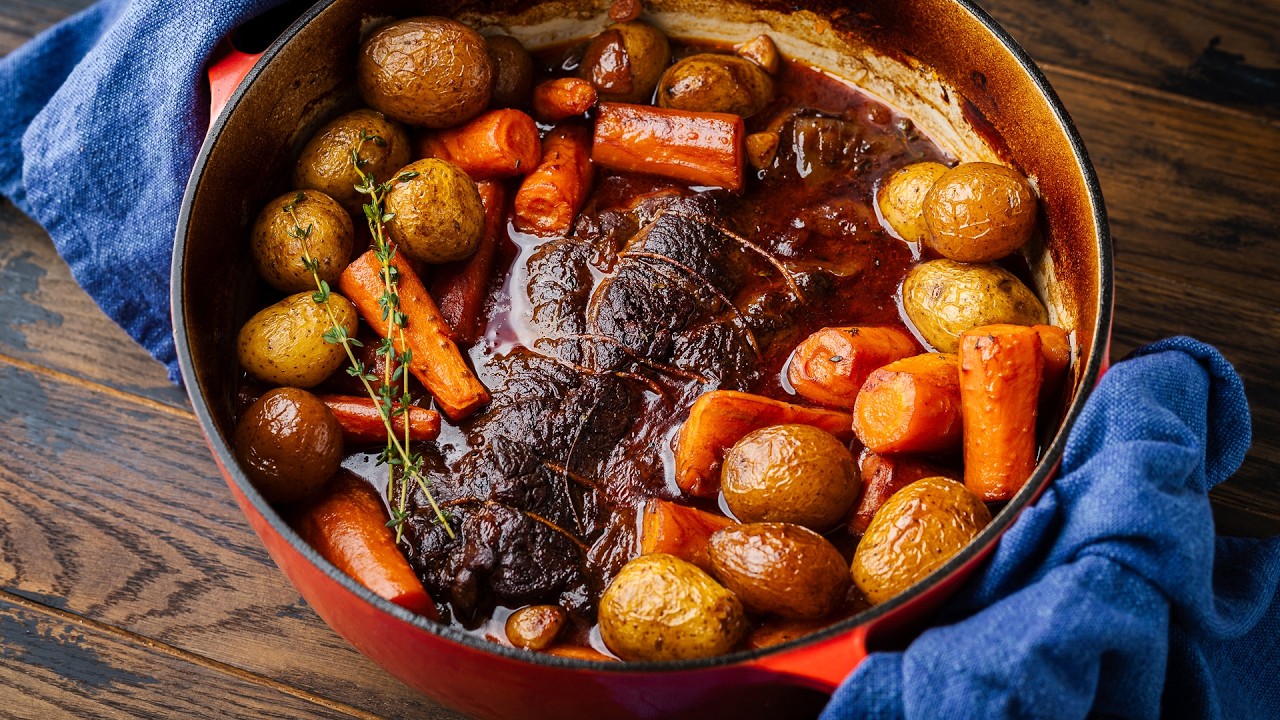
Oven Pot Roast Recipe: When you think of classic comfort food, pot roast instantly comes to mind. It’s that hearty dish you crave on chilly evenings, the one that fills the house with irresistible aromas and gathers everyone around the table. Unlike quick weeknight meals, a pot roast is all about slow cooking, patience, and letting flavors deepen until the meat is so tender that it practically melts in your mouth.
The beauty of a pot roast is its simplicity. It requires minimal ingredients, yet the result is a dish packed with rich, savory flavors. It’s not just food—it’s an experience. From the golden crust that forms on the meat to the caramelized edges of the vegetables, every bite feels like comfort wrapped in warmth.
The secret to a tender and juicy roast lies in three things: choosing the right cut of beef, searing it properly before roasting, and letting it cook low and slow in the oven. When done right, you end up with a dish that’s both rustic and elegant, perfect for Sunday dinners, family gatherings, or even holiday feasts.
In this guide, we’ll walk you through everything you need to know about making the perfect oven pot roast—from selecting ingredients to serving it beautifully at the table. Whether you’re a beginner in the kitchen or someone who’s cooked countless meals, you’ll find this recipe approachable and foolproof.
Ingredients You’ll Need for Oven Pot Roast
The success of a pot roast begins with the right ingredients. While the recipe itself is flexible, using high-quality items will always give you the best outcome. Let’s break down what you’ll need:
Essential Meat Selection
- Beef Chuck Roast (3–4 lbs.) – The most commonly used cut, known for its marbling and flavor.
- Alternative Cuts: Brisket or round roast, if chuck isn’t available.
Fresh Vegetables for Flavor
- Carrots – Adds sweetness and depth.
- Onions – Essential for the base flavor.
- Celery – Adds a mild savory note.
- Potatoes – For a hearty, filling addition.
Herbs and Seasonings
- Fresh Garlic Cloves – Infuses flavor into the broth.
- Bay Leaves – A must for earthy flavor.
- Rosemary & Thyme (fresh or dried) – Classic herbs that pair beautifully with beef.
- Salt and Black Pepper – Simple but essential.
Liquids and Broth Choices
- Beef Broth – The classic choice for braising.
- Red Wine (optional) – Adds depth and richness.
- Olive Oil – For searing the beef.
With these ingredients in hand, you’re ready to create a dish that will make your kitchen smell heavenly and your guests ask for seconds.
Choosing the Right Cut of Beef
Not all cuts of beef are created equal, especially when it comes to pot roast. The wrong cut could leave you with tough, chewy meat instead of the fall-apart tenderness you’re aiming for.
Best Cuts for Pot Roast
The number one choice for pot roast is chuck roast. It comes from the shoulder area of the cow, making it a well-marbled cut with plenty of connective tissue. When cooked slowly, that connective tissue breaks down into gelatin, giving the meat its signature tenderness and flavor.
Why Chuck Roast Works Best
Chuck roast is not only flavorful but also affordable compared to premium cuts. Its balance of fat and muscle fibers ensures that it stays moist during long cooking times. This is why it’s the gold standard for pot roasts across kitchens worldwide.
Alternatives You Can Use
- Brisket – Known for its rich flavor, but requires longer cooking.
- Round Roast – Leaner, so it can dry out if overcooked, but still works with proper braising.
- Short Ribs – Not traditional, but they make an incredibly rich and hearty variation.
The cut of beef you choose will determine the texture and overall success of your roast, so it’s worth investing in the right one.
Preparation Before Cooking
Before the roast even hits the oven, preparation is key. Taking a few extra minutes to handle your ingredients properly ensures a deeper flavor and better texture in the final dish.
Trimming and Cleaning the Meat
Start by trimming any excess fat from the beef. A little fat is necessary for flavor, but too much can make the dish greasy. Pat the meat dry with paper towels—this helps in getting a better sear when it hits the hot pan.
Marinating Tips for Extra Flavor
While pot roast doesn’t require marinating, you can take it up a notch by seasoning the meat ahead of time. Rub the beef with olive oil, garlic, salt, pepper, and herbs, then let it rest for at least an hour—or even overnight in the fridge. This allows the flavors to penetrate deeper.
Prepping Vegetables and Seasonings
Chop carrots, onions, and celery into large chunks. These vegetables not only flavor the broth but also cook alongside the beef, absorbing all the delicious juices. Keep the garlic cloves whole for a milder infusion, or smash them for a stronger punch.
By the time you’re done with prep, you’ll already notice how the simple combination of beef, herbs, and vegetables starts to smell like the beginning of a masterpiece.
Step-by-Step Guide to Cooking Oven Pot Roast
Now comes the fun part—cooking the roast. Here’s a breakdown of the process, step by step:
Step 1: Preheating the Oven
Set your oven to 325°F (160°C). This low and steady temperature is ideal for breaking down the meat’s connective tissue without drying it out.
Step 2: Searing the Roast for Flavor
Heat olive oil in a heavy-bottomed Dutch oven or oven-safe pot. Sear the roast on all sides until it develops a rich, golden-brown crust. This caramelization adds depth and locks in juices.
Step 3: Adding Vegetables and Broth
Once seared, remove the roast and set it aside. Add onions, carrots, and celery to the same pot, sautéing until slightly browned. Return the roast, add garlic, herbs, and bay leaves, then pour in beef broth (and red wine if using). The liquid should come about halfway up the meat.
Step 4: Slow Roasting in the Oven
Cover the pot with a tight-fitting lid and transfer it to the oven. Roast for 3–4 hours, depending on the size of your beef. The longer it cooks, the more tender it becomes.
Step 5: Checking for Doneness and Serving
The roast is ready when it’s fork-tender and easily pulls apart. Remove it from the oven, let it rest for 10 minutes, then slice or shred it. Serve alongside the vegetables and spoon the rich broth over everything.
At this point, your kitchen will smell heavenly, and your guests will already be hovering near the table, waiting for that first comforting bite.
Tips for Making the Best Pot Roast
A pot roast might sound like a straightforward dish, but the difference between “good” and “absolutely unforgettable” lies in the details. If you want your roast to turn out tender, juicy, and bursting with flavor, here are some tried-and-true tips to keep in mind.
Cooking Time and Temperature Guide
Pot roast is not a dish you can rush. Cooking it low and slow is the key to success. A good rule of thumb is to roast at 325°F (160°C) for about 1 hour per pound of beef. For example, a 3-pound roast will typically need 3 hours, while a 4-pound roast will take closer to 4 hours. Cooking it too fast at a higher temperature can result in a tough, chewy texture.
If you have extra time, lowering the oven temperature to 300°F (150°C) and cooking longer will make the meat even more tender. Think of it like a slow dance—the longer the beef takes, the softer and juicier it becomes.
How to Keep the Roast Moist
Nobody wants a dry pot roast, and the secret to keeping it moist is in the liquid. Always make sure there’s enough broth or cooking liquid in the pot so the meat is partially submerged. The steam created inside the covered pot helps tenderize the beef.
Also, resist the urge to constantly open the oven lid or check the roast. Every time you open it, steam escapes, which slows down cooking and dries out the meat. Instead, trust the process—your patience will be rewarded.
Mistakes to Avoid
- Skipping the Sear: If you don’t sear the meat first, you’ll miss out on that deep, rich flavor from caramelization.
- Overcrowding Vegetables: Too many vegetables in the pot can trap steam and make everything mushy. Keep it balanced.
- Not Letting the Roast Rest: Just like steak, a roast needs to rest after cooking. Letting it sit for 10–15 minutes before slicing allows the juices to redistribute, keeping the meat moist.
By keeping these tips in mind, you’ll elevate your pot roast from average to absolutely mouthwatering.
Side Dishes That Go Well with Pot Roast
Pot roast is a star on its own, but pairing it with the right side dishes transforms it into a full feast. Here are some classic and delicious options to serve alongside your roast:
Classic Mashed Potatoes
It’s hard to imagine pot roast without a mountain of creamy mashed potatoes. The buttery smoothness of potatoes is the perfect match for the rich gravy from the roast. You can even drizzle some of the cooking broth over them for extra flavor.
Buttery Dinner Rolls
Soft, golden rolls are perfect for soaking up the flavorful juices left on the plate. They’re also great for making little roast beef sandwiches the next day with leftovers.
Fresh Garden Salad
Since pot roast is a heavy, comforting dish, a fresh salad balances it out. Toss together mixed greens, cherry tomatoes, cucumbers, and a light vinaigrette for a refreshing contrast.
Roasted Vegetables
If you’re not adding potatoes to the roast itself, you can prepare roasted vegetables on the side. A mix of parsnips, Brussels sprouts, and carrots roasted with olive oil and herbs complements the flavors beautifully.
With these sides, your pot roast dinner won’t just be a meal—it will be an experience everyone looks forward to.
Variations of Oven Pot Roast
One of the best things about pot roast is its versatility. You can stick with the classic version or experiment with different flavors to create a dish that feels new every time you make it.
Red Wine Pot Roast
Adding red wine to the braising liquid gives the dish a deeper, richer flavor. The alcohol cooks off during roasting, leaving behind a luxurious sauce that pairs beautifully with the beef.
Garlic and Herb Pot Roast
If you’re a garlic lover, double the amount of garlic cloves and add more fresh herbs like rosemary, thyme, and oregano. This version is especially aromatic and perfect for garlic bread on the side.
Mushroom and Onion Pot Roast
Sauté mushrooms and onions in the pot before adding the beef. They absorb the broth and create an earthy, umami-rich sauce that makes the roast extra flavorful.
These variations prove that pot roast is anything but boring. A few tweaks here and there can give you a completely different dining experience.
How to Store and Reheat Pot Roast
If you’re lucky enough to have leftovers (which isn’t always the case because it disappears quickly!), you’ll want to store them properly to enjoy later.
Refrigeration Tips
Place leftover roast and vegetables in an airtight container with some of the cooking juices. Stored this way, the roast stays moist and flavorful. You can refrigerate it for up to 4 days.
Freezing Instructions
Pot roast freezes beautifully. Divide it into meal-sized portions, add broth to keep it from drying out, and freeze in airtight containers or freezer bags. It can last for up to 3 months in the freezer.
Best Reheating Methods
- Oven: Place the roast in a baking dish, cover with foil, and heat at 325°F until warmed through.
- Stovetop: Heat slices of beef with some broth in a covered skillet over low heat.
- Microwave: Works in a pinch, but always add a little broth to keep the meat from drying.
Reheated pot roast often tastes even better because the flavors continue to develop overnight.
Nutritional Value of Oven Pot Roast
Pot roast isn’t just delicious—it can also be a wholesome and nutritious meal, especially when made with fresh ingredients.
Calories and Protein Content
A typical serving of pot roast (about 6 ounces of beef with vegetables) contains 350–450 calories and 25–30 grams of protein, making it a filling and satisfying dish.
Vitamins and Minerals from Vegetables
Carrots, celery, and potatoes bring in fiber, vitamin A, vitamin C, and potassium. Together, they balance out the richness of the beef with essential nutrients.
How to Make It a Balanced Meal
Pairing the roast with a salad or steamed greens like broccoli ensures you’re getting a good mix of protein, fiber, and vitamins. This way, your comfort food doubles as a well-rounded dinner.
Common Mistakes to Avoid
Even though oven pot roast is a simple, comforting dish, many people still make mistakes that keep their roast from turning out as tender and flavorful as it should be. Avoiding these common errors can mean the difference between a tough, dry meal and a melt-in-your-mouth masterpiece.
Overcooking or Undercooking
Timing is everything when it comes to pot roast. If you pull it out of the oven too early, the connective tissues won’t have had enough time to break down, leaving the meat tough and chewy. On the flip side, cooking it too long at too high a temperature can cause it to dry out. The sweet spot is low heat for several hours, usually around 3–4 hours depending on the size of the roast. Always test with a fork—the meat should shred easily.
Using the Wrong Cut of Meat
Not every cut of beef is suitable for roasting. Lean cuts like sirloin or tenderloin may sound appealing, but they don’t have enough fat and connective tissue to stay moist during long cooking times. Cuts like chuck roast, brisket, or round roast are much better because they transform beautifully when slow-cooked.
Not Searing the Meat First
Skipping the searing step is one of the biggest mistakes. While you can technically cook a roast without searing, you’ll miss out on that deep, caramelized flavor that only comes from browning the meat first. Think of searing as building the foundation for your dish—it’s where the magic starts.
Adding Too Much Liquid
It might feel like you need to drown the roast in broth or wine, but too much liquid dilutes the flavors. The roast only needs liquid to come halfway up the sides. Remember, it’s braising, not boiling.
Not Letting It Rest
Just like steak, pot roast needs to rest after cooking. Cutting into it too soon will cause the juices to spill out, leaving the meat dry. Let it sit covered for 10–15 minutes before slicing or shredding.
By steering clear of these mistakes, you’ll be on your way to making a pot roast that will have everyone asking for seconds.
FAQs about Oven Pot Roast Recipe
1. Can I cook pot roast without searing?
Yes, you can, but it won’t taste as rich. Searing creates a deep, savory flavor by caramelizing the surface of the meat. If you’re short on time, you can skip it, but you’ll be sacrificing some of that signature taste.
2. How long should I cook a 3-pound roast?
At 325°F (160°C), a 3-pound roast will take about 3 hours to cook. If you want it extra tender, you can reduce the oven temperature to 300°F (150°C) and cook for closer to 4 hours.
3. Can I make it ahead of time?
Absolutely! Pot roast actually tastes better the next day because the flavors deepen overnight. You can cook it the day before, store it in the fridge, and reheat gently in the oven before serving.
4. What’s the best liquid for braising?
Beef broth is the most common, but you can enhance the flavor with a splash of red wine, beer, or even balsamic vinegar. Each adds its own depth and character to the dish.
5. How do I make my pot roast more flavorful?
Use plenty of aromatics like garlic, onions, fresh herbs, and bay leaves. Also, don’t skimp on salt and pepper. The secret is layering flavors—searing, seasoning, and braising with the right liquids will give you a roast packed with taste.
Conclusion
Oven pot roast is more than just a recipe—it’s a tradition, a comfort food that brings people together around the table. From choosing the right cut of beef to slow-cooking it until tender, every step plays a role in creating a meal that feels like home. Whether you stick to the classic version or try variations like red wine or garlic and herb, you’ll end up with a dish that’s hearty, flavorful, and guaranteed to satisfy.
The beauty of pot roast lies in its simplicity. With just a few quality ingredients, some patience, and a little love, you can create a meal that fills the kitchen with warmth and the dinner table with smiles. So the next time you’re craving comfort food, remember this step-by-step guide—and get ready to enjoy a roast that’s tender, juicy, and downright unforgettable.