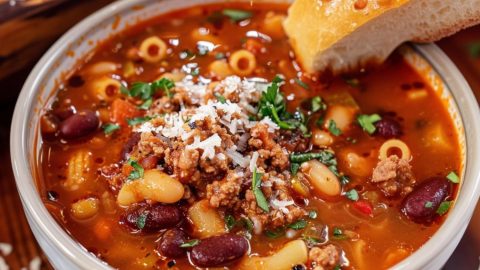
Olive Garden Pasta Fagioli Recipe: There’s something comforting about a warm bowl of soup that feels like a hug from the inside. One of the most loved soups at Olive Garden is Pasta Fagioli, a hearty Italian dish that combines beans, pasta, vegetables, and seasoned ground beef in a savory tomato-based broth. It’s filling, flavorful, and a perfect copycat recipe you can recreate at home.
Unlike some fancy Italian recipes that require hours of preparation, this one is simple, budget-friendly, and uses ingredients you probably already have in your pantry. Pasta Fagioli translates to “pasta and beans,” but Olive Garden’s version takes it to another level with rich seasonings, vegetables, and a cozy depth of flavor.
What Makes Pasta Fagioli Special
Pasta Fagioli is not just a soup—it’s comfort food at its finest. It blends the wholesomeness of beans with the satisfying bite of pasta. Unlike minestrone, which is more of a vegetable-based soup, Pasta Fagioli is meatier and heartier, making it a meal on its own. The addition of ground beef and herbs elevates this humble Italian classic into something unforgettable.
The History of This Italian Comfort Food
Pasta Fagioli comes from rural Italian kitchens where beans and pasta were affordable staples for everyday meals. Families would prepare it in large batches to feed everyone without spending much. Over time, the dish traveled across the world, and Olive Garden gave it a popular twist. Their version has become so iconic that people search for ways to make it at home to enjoy the same taste without leaving their kitchen.
Ingredients You’ll Need
To make a copycat version of Olive Garden’s Pasta Fagioli, you’ll need a blend of fresh vegetables, pantry staples, and flavorful seasonings.
Main Ingredients List
Here’s everything you’ll need:
- 1 lb ground beef (or ground turkey for a lighter option)
- 1 medium onion, diced
- 2 carrots, diced
- 2 celery stalks, diced
- 3 cloves garlic, minced
- 1 (15 oz) can kidney beans, drained and rinsed
- 1 (15 oz) can great northern beans, drained and rinsed
- 1 (15 oz) can diced tomatoes
- 1 (15 oz) can tomato sauce
- 4 cups beef broth (or chicken/vegetable broth)
- 1 cup small pasta (ditalini or elbow macaroni works best)
- 2 tsp Italian seasoning
- 1 tsp dried basil
- 1 tsp dried oregano
- ½ tsp thyme
- Salt and black pepper (to taste)
- 2 tbsp olive oil
Optional Additions for Extra Flavor
- Red pepper flakes (for a spicy kick)
- Fresh parsley (for garnish)
- Parmesan cheese (grated, for topping)
- A splash of red wine (for richness)
Ingredient Substitutions and Variations
- Instead of ground beef, try Italian sausage for extra flavor.
- Swap kidney beans with cannellini beans if you prefer a creamier texture.
- Use gluten-free pasta if you want a gluten-free version.
- Vegetarian? Skip the beef and use vegetable broth instead.
Kitchen Tools and Equipment
Having the right tools makes cooking much easier. You don’t need anything fancy, but a few essentials will help you prepare Pasta Fagioli smoothly.
Must-Have Cooking Tools
- Large soup pot or Dutch oven – to cook everything in one pot.
- Wooden spoon or spatula – for stirring.
- Sharp knife and cutting board – for chopping vegetables.
- Measuring cups and spoons – for accuracy.
- Strainer – to rinse beans and drain pasta.
Helpful Tips for Efficient Cooking
- Prep your veggies ahead of time to save cooking time.
- Use pre-chopped frozen vegetables if you’re in a rush.
- Cook pasta separately if you plan to store leftovers (this prevents it from getting soggy).
Step-by-Step Guide to Making Olive Garden Pasta Fagioli
Now let’s dive into the fun part—cooking! This recipe is beginner-friendly and takes less than an hour from start to finish.
Step 1 – Preparing the Vegetables
Start by dicing your onion, carrots, and celery. Mince the garlic for that fresh aroma. Heat olive oil in a large pot and sauté the veggies until they soften. This base, known as soffritto in Italian cooking, builds the foundation of flavor for your soup.
Step 2 – Browning the Meat
Push the veggies to one side of the pot and add the ground beef. Cook until browned, breaking it apart into small crumbles. Season lightly with salt and pepper. This adds a savory depth that makes the broth richer.
Step 3 – Creating the Soup Base
Pour in the diced tomatoes, tomato sauce, and broth. Stir well, scraping the bottom of the pot to release all those delicious browned bits from the meat and veggies. Add Italian seasoning, basil, oregano, and thyme. Let everything simmer gently for about 10–15 minutes to allow the flavors to meld together.
Step 4 – Adding the Pasta and Beans
Add the drained kidney beans, northern beans, and pasta. Stir everything together and continue cooking until the pasta is tender. If you want your soup to be a bit thicker, you can mash some of the beans before adding them in.
Step 5 – Simmering to Perfection
Reduce the heat and let the soup simmer until it reaches a thick, hearty consistency. Taste and adjust seasoning with more salt, pepper, or herbs if needed. For an extra boost, stir in a splash of red wine or sprinkle with fresh parsley before serving.
Serving Suggestions
A steaming bowl of Olive Garden Pasta Fagioli is a meal in itself, but pairing it with the right sides makes it even more satisfying.
Pairing with Breadsticks or Garlic Bread
One of the best things about eating at Olive Garden is the endless breadsticks. At home, you can recreate that magic with fresh garlic breadsticks or a warm loaf of Italian bread. The bread is perfect for soaking up the savory broth, making sure you don’t waste a drop of that flavorful soup. If you want a more authentic touch, brush your bread with olive oil, sprinkle with garlic powder and parsley, and bake until golden brown.
Best Side Dishes to Serve with Pasta Fagioli
- Green Salad – A crisp salad with lettuce, tomatoes, cucumbers, and Italian dressing balances the richness of the soup.
- Roasted Vegetables – Try roasted zucchini, eggplant, or bell peppers for an Italian-inspired spread.
- Caprese Salad – Fresh mozzarella, tomatoes, and basil drizzled with balsamic glaze make a refreshing side.
- Cheese Platter – A selection of Parmesan, Pecorino Romano, and Asiago cheeses pairs beautifully with this rustic soup.
Adding sides not only makes the meal more complete but also turns an everyday dinner into an Italian feast.
Storage and Reheating Tips
If you’re making a large batch, chances are you’ll have leftovers. Luckily, Pasta Fagioli tastes even better the next day as the flavors deepen.
How to Store Leftovers Safely
- Allow the soup to cool before storing.
- Keep in airtight containers in the refrigerator for up to 4–5 days.
- Store pasta separately if possible, as it tends to soak up broth and become mushy.
The Best Way to Reheat Without Losing Flavor
- Reheat on the stovetop over medium heat, adding a splash of broth or water to loosen the consistency.
- If reheating in the microwave, cover loosely with a lid to avoid splatters. Heat in intervals, stirring occasionally.
- Avoid overcooking while reheating to prevent the pasta from getting too soft.
For long-term storage, freeze the soup without pasta for up to 3 months. When ready to eat, thaw overnight in the fridge, reheat, and cook fresh pasta to add just before serving.
Nutritional Information
One of the best things about Pasta Fagioli is that it’s wholesome and packed with nutrients.
Calories and Macronutrients (per serving, approx.)
- Calories: 320
- Protein: 20g
- Carbohydrates: 38g
- Fat: 10g
- Fiber: 9g
This soup is filling but not overly heavy, making it a great option for lunch or dinner.
Health Benefits of Pasta Fagioli Ingredients
- Beans – High in fiber, plant-based protein, and great for heart health.
- Tomatoes – Rich in lycopene, an antioxidant that supports skin and heart health.
- Vegetables (carrots, celery, onions) – Provide vitamins, minerals, and natural sweetness.
- Olive Oil – A healthy fat that supports brain and heart function.
- Herbs – Basil, oregano, and thyme not only add flavor but also contain antioxidants.
Compared to heavier cream-based soups, this one is nutritious, light, and nourishing—perfect for anyone looking for comfort food without the guilt.
Tips and Tricks for the Best Pasta Fagioli
Even though this recipe is straightforward, a few insider tips can take your Pasta Fagioli from good to unforgettable.
Enhancing Flavor with Herbs and Spices
- Use fresh herbs when possible for a more vibrant flavor.
- Add a bay leaf during simmering for depth (remove before serving).
- A pinch of red pepper flakes adds just the right amount of heat.
- Finish with a drizzle of extra virgin olive oil for richness.
Mistakes to Avoid
- Overcooking pasta – It should be tender but not mushy.
- Not seasoning properly – Taste as you go and adjust salt and spices.
- Adding all beans at once – Mash some beans first for thickness, then stir in the rest.
- Skipping the simmering step – Letting the soup simmer allows flavors to blend beautifully.
By keeping these tips in mind, you’ll make a Pasta Fagioli that rivals Olive Garden’s.
Variations of Pasta Fagioli Recipe
One of the best things about Pasta Fagioli is its versatility. The traditional Olive Garden version is delicious, but you can easily customize it based on your diet, taste preferences, or the ingredients you have at home. Let’s explore a few variations that will help you enjoy this Italian classic in different ways.
Vegetarian Version
If you want to make a meatless version, simply skip the ground beef and use vegetable broth instead of beef broth. To keep the soup hearty, you can add extra beans such as cannellini or chickpeas. Another great addition is zucchini or mushrooms, which add a savory, meaty texture without the actual meat. A sprinkle of grated Parmesan or Pecorino Romano on top adds richness and keeps it satisfying.
Gluten-Free Option
For those avoiding gluten, swap regular pasta with gluten-free ditalini, elbow macaroni, or even quinoa pasta. Make sure to cook the pasta separately and add it just before serving to prevent it from breaking down too much in the broth. The rest of the ingredients in Pasta Fagioli are naturally gluten-free, so it’s an easy modification.
Spicy Pasta Fagioli
If you enjoy a little heat, you’ll love a spicy twist on this dish. You can:
- Use hot Italian sausage instead of ground beef.
- Add red pepper flakes while sautéing the vegetables.
- Stir in a splash of hot sauce or a pinch of cayenne pepper for an extra kick.
This variation pairs perfectly with a chilled glass of white wine or sparkling water, balancing the spice with freshness.
FAQs about Olive Garden Pasta Fagioli Recipe
1. Can I make Pasta Fagioli ahead of time?
Yes! In fact, it tastes even better the next day as the flavors meld together. Just store it in the fridge and reheat before serving.
2. What pasta shape works best?
Ditalini is the classic choice, but elbow macaroni, small shells, or any short pasta will work well.
3. Can I freeze Pasta Fagioli?
Absolutely. For best results, freeze the soup without pasta. Add freshly cooked pasta when reheating to avoid mushiness.
4. How long does it last in the fridge?
Stored properly in an airtight container, Pasta Fagioli lasts 4–5 days in the refrigerator.
5. Is it similar to minestrone soup?
Not exactly. While both are Italian soups, minestrone is vegetable-heavy, whereas Pasta Fagioli focuses on beans, pasta, and a richer broth with meat.
Conclusion
Olive Garden’s Pasta Fagioli is more than just a soup—it’s a bowl of comfort that warms your heart and fills your belly. With its flavorful broth, tender pasta, hearty beans, and perfectly seasoned meat, it’s no wonder this dish is a crowd favorite. The best part? You don’t need to dine out to enjoy it—you can now recreate it in your own kitchen with this step-by-step guide.
Whether you stick with the traditional Olive Garden style or try one of the delicious variations, this soup is guaranteed to impress. Pair it with breadsticks, a crisp salad, or roasted veggies, and you’ve got yourself an Italian-inspired feast right at home.
So, the next time you’re craving something cozy and satisfying, grab your ingredients and make a pot of Pasta Fagioli. Trust me—it’s a recipe you’ll come back to again and again.