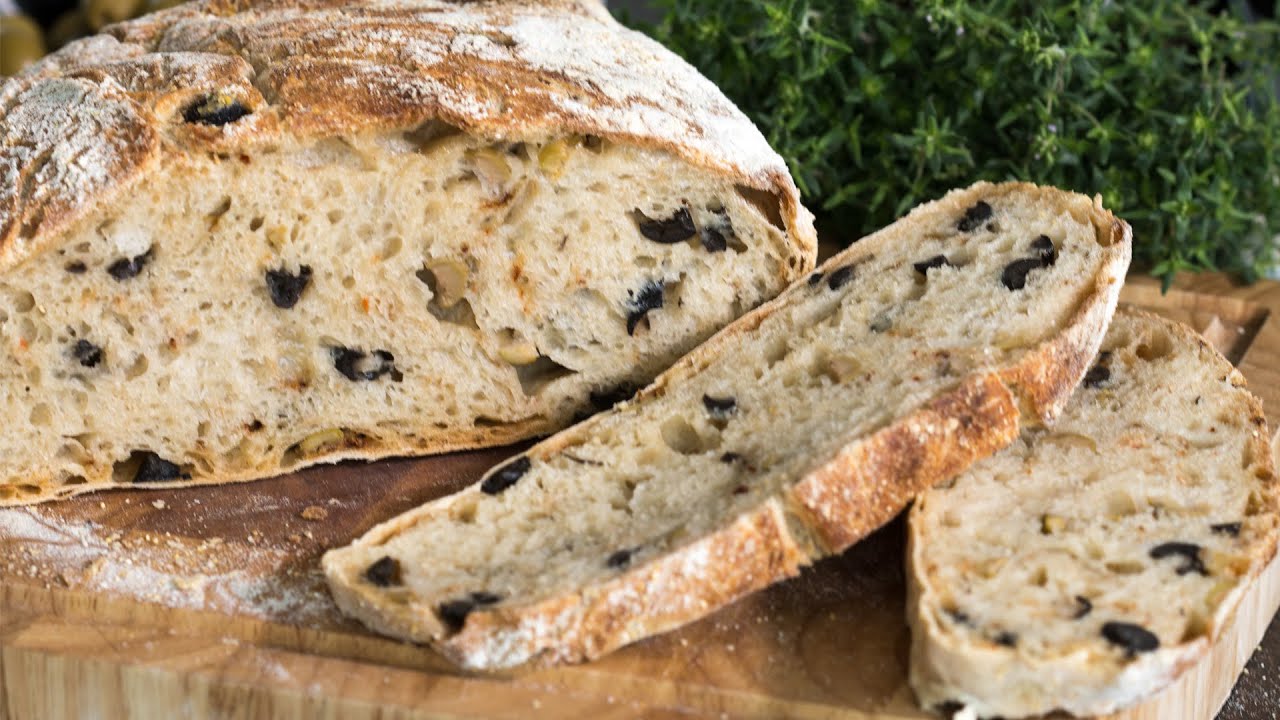
Olive Bread Recipe: There’s something deeply satisfying about baking bread at home—especially when it’s packed with flavorful ingredients like olives. If you’ve ever picked up a crusty loaf of olive bread at a bakery and wondered, “Can I make this myself?”—the answer is a big yes. And not only can you make it at home, but you can also make it even better, with fresh ingredients, your favorite olives, and a warm, artisan-style crust that fills your kitchen with mouthwatering aromas.
Olive bread, with its Mediterranean roots, is hearty, slightly tangy, and bursting with salty bites of olives in every slice. Whether you’re a beginner or a seasoned baker, this step-by-step guide will walk you through everything—from choosing your olives to the final slice.
Benefits of Baking Olive Bread at Home
So, why not just buy olive bread at the store? Well, once you try the homemade version, you won’t go back. First, homemade olive bread is healthier because you control what goes into it—no preservatives, no artificial flavoring, and way less sodium. Second, it’s customizable. Want a rustic crust? Add some herbs? Mix in sun-dried tomatoes or feta? You’re in charge.
Plus, the cost savings are a nice bonus. A gourmet olive loaf from a bakery might set you back $6 to $8—or more. Baking it at home costs a fraction of that. And finally, there’s that unbeatable freshness. Straight from your oven to the table? You can’t top that.
Types of Olive Bread
Before we dive into baking, let’s talk about the different styles of olive bread. The one you choose depends on your time, tools, and taste.
Rustic Olive Loaf
This is your classic bakery-style bread with a chewy crust and open crumb. It’s baked on a stone or sheet and shaped by hand.
No-Knead Olive Bread
The easiest version—great for beginners. It requires little effort but gives amazing results. The dough is mixed and left to ferment slowly, often overnight.
Sourdough Olive Bread
If you’re into sourdough baking, olives take it to the next level. The tang of the sourdough complements the briny olives perfectly.
List of Ingredients You’ll Need
Let’s get into the good stuff—what you actually need to make olive bread. This version is for a rustic artisan loaf.
Basic Ingredients:
- 3 ½ cups (450g) all-purpose or bread flour
- 1 ½ tsp salt
- 1 tsp sugar (optional)
- 2 tsp instant dry yeast
- 1 ¼ cups (300ml) warm water
- 1 ½ cups pitted olives (Kalamata, Castelvetrano, or your favorite)
- 1 tbsp olive oil
Optional Add-ins:
- 1 tbsp chopped fresh rosemary or thyme
- ½ cup crumbled feta cheese
- 1 tbsp garlic (minced or powder)
- Crushed chili flakes for heat
Want it even better? Use a mix of black and green olives for a balanced flavor.
Tools and Equipment Required
While you don’t need fancy gear, a few kitchen tools make things easier.
Essential Tools:
- Large mixing bowl
- Measuring cups and spoons
- Wooden spoon or silicone spatula
- Sharp knife or dough scraper
- Baking sheet or Dutch oven
- Parchment paper
Nice-to-Have:
- Stand mixer with dough hook
- Kitchen scale for accuracy
- Proofing basket (banneton)
- Lame or razor for scoring
No stand mixer? No problem. You can mix everything by hand.
Choosing the Right Olives
Not all olives are created equal—some are mild, others are deeply briny and bold.
Black Olives vs. Green Olives
- Black Olives: Milder, softer, and earthy. Think Kalamata or Nicoise.
- Green Olives: Firmer, tangier, with a brighter flavor. Castelvetrano is a top choice.
Mixing both adds depth to the bread. Just make sure they’re pitted—nobody wants a dental emergency.
Prepping the Olives for the Dough
Before throwing olives into the dough, take a few steps to make sure they don’t ruin the texture.
Steps to Prep:
- Rinse off brine to reduce saltiness.
- Dry them with paper towels. Wet olives mess with the dough’s hydration.
- Chop into halves or quarters depending on size.
Want extra flavor? Toss them in olive oil with a pinch of garlic and herbs before folding them into the dough.
Step-by-Step Guide to Making Olive Bread
Let’s break down the full process. This version uses a classic kneading method.
Step 1: Preparing the Dough
Begin by mixing flour, yeast, salt, and water in a large bowl. Stir until a shaggy dough forms. Add chopped olives—preferably a mix of Kalamata and green olives—for depth of flavor. Knead gently until the dough becomes smooth and elastic, about 8–10 minutes.
Step 2: First Rise (Bulk Fermentation)
Place the dough in a lightly oiled bowl, cover with a damp cloth or plastic wrap, and let it rise in a warm place for 1–2 hours. During this stage, the dough doubles in size and develops structure and flavor.
Step 3: Shaping the Dough
Once risen, gently punch down the dough to release air. Transfer it to a floured surface and shape it into a round boule or an elongated loaf. Tuck the seams underneath to create tension on the surface.
Step 4: Second Rise (Proofing)
Place the shaped dough on a parchment-lined baking sheet or in a proofing basket. Cover and let it rise again for 30–45 minutes. The dough should become puffy but not overstretched.
Step 5: Baking the Bread
Preheat your oven to 450°F (230°C). Score the top of the dough, place it in the oven, and bake for 25–35 minutes until golden brown with a hollow sound when tapped.
Step 6: Cooling and Slicing
Let the bread cool completely on a wire rack before slicing. Cooling enhances texture and flavor. Enjoy!
No-Knead Olive Bread Version
If kneading sounds like too much work, the no-knead olive bread recipe is for you. It’s hands-off, foolproof, and results in a delicious artisan loaf with minimal effort. The secret? Time. Long fermentation develops gluten and deep flavor, so your hands don’t have to do the heavy lifting.
Ingredients:
- 3 cups (390g) all-purpose flour
- 1 ½ tsp salt
- ¼ tsp instant yeast
- 1 ½ cups warm water
- 1 cup chopped olives
- Optional: herbs, cheese, garlic
Instructions:
- In a large bowl, mix flour, salt, and yeast.
- Add water and stir until a shaggy dough forms.
- Mix in olives and any extras (herbs, cheese, etc.).
- Cover and let rest at room temperature for 12–18 hours.
- Turn the dough out onto a floured surface and shape into a ball.
- Let it rest while you preheat your oven with a Dutch oven inside (450°F/230°C).
- Carefully transfer the dough to parchment paper and into the Dutch oven.
- Bake covered for 30 minutes, then uncovered for another 10–15 minutes.
- Cool before slicing.
This version is perfect for busy days or late-night prep—it literally takes 10 minutes of work, and the bread tastes like it came from a high-end bakery.
Olive Bread in a Dutch Oven
A Dutch oven is a baker’s secret weapon. It creates a mini steam oven, allowing the dough to rise beautifully and develop that golden, crispy crust that makes artisan bread irresistible.
Why It Works:
- Traps steam to help the dough expand.
- Maintains even heat for perfect baking.
- Results in a chewy crust and soft, airy crumb.
If you don’t have a Dutch oven, you can place a pan of water in the oven to create steam. It won’t be exactly the same, but it’ll get you close.
How to Use It:
- Always preheat the Dutch oven before adding your dough.
- Use parchment paper to safely transfer the dough inside.
- Cover with the lid for the first 25–30 minutes to trap moisture.
- Remove the lid for the last 10–15 minutes to brown the crust.
Flavor Enhancements
Plain olive bread is amazing—but adding a few extra ingredients takes it over the top. Here are some easy ways to boost the flavor:
Herbs:
- Rosemary: Classic pairing with olives—fresh is best.
- Thyme: Earthy and subtle, pairs well with feta.
- Oregano: Brings out that Mediterranean vibe.
Cheese:
- Feta: Salty and crumbly—fold it in with the olives.
- Parmesan: Adds a sharp, umami edge.
- Asiago: Melts well and adds richness.
Spices:
- Garlic powder or roasted garlic: Bold and aromatic.
- Chili flakes: Just a pinch for a spicy kick.
- Cracked black pepper: Gives depth and a touch of heat.
Add-ins should be folded in after the first rise so they don’t interfere with fermentation.
Tips for Perfect Olive Bread
Want to avoid a flat, dense loaf? Keep these tips in mind.
1. Watch Your Hydration
Too much water makes a sticky, unworkable dough. If using juicy olives or add-ins, reduce the water slightly.
2. Don’t Over-Knead
It’s tempting, but overworking the dough can make it tough. Knead just enough for elasticity, then let the gluten do its magic during rising.
3. Use High-Quality Flour
Bread flour has more protein, resulting in better gluten development. If you only have all-purpose flour, that works too—but expect a slightly softer texture.
4. Score Before Baking
Scoring helps the bread expand in the oven without bursting. Use a sharp blade and make confident, quick cuts.
5. Let It Cool
It’s hard to wait, but cutting too soon traps steam inside, making your beautiful crust soggy. Always let it cool for at least 30 minutes.
Storing and Freezing Olive Bread
Fresh bread doesn’t have preservatives, so storing it right is key.
How to Store:
- Short-term (1–2 days): Wrap in a clean towel or keep in a paper bag at room temp. Avoid plastic—it softens the crust.
- Medium-term (3–4 days): Store in a bread box or wrap in foil. Re-crisp in the oven before serving.
Freezing Tips:
- Let the loaf cool completely.
- Wrap tightly in plastic wrap, then in foil.
- Freeze for up to 3 months.
To reheat, let thaw at room temperature, then warm in the oven at 350°F (175°C) for 10–15 minutes.
Serving Suggestions
Olive bread is versatile and delicious on its own—but here are some creative ways to serve it:
Dipping Oils and Spreads:
- Olive oil + balsamic vinegar
- Hummus or baba ghanoush
- Herbed cream cheese or whipped feta
Pair With:
- Tomato basil soup or lentil soup
- Greek salad or Caesar salad
- Charcuterie boards (prosciutto, salami, cheeses)
It also makes an epic grilled cheese or open-faced sandwich with roasted veggies and goat cheese.
Common Mistakes to Avoid
Nobody wants to waste ingredients or effort, so learn from these common mistakes:
Over-proofing:
Letting the dough rise too long can collapse the structure. Stick to the time ranges and watch the dough—not the clock.
Under-baking:
Bread can look golden outside but still be doughy inside. Use the tap test (hollow sound) or a thermometer (internal temp should be ~200°F or 93°C).
Too Wet or Dry Dough:
Always adjust water or flour gradually. Dough should be tacky, not soupy or dry.
Skipping the Cool Down:
Cutting too soon ruins the texture. Be patient—it’s worth it.
FAQs about Olive Bread Recipe
1. Can I use olive oil instead of olives?
You can add olive oil for flavor and texture, but it won’t give the same salty bite or chunkiness that whole olives do. Use both for extra richness!
2. Is olive bread healthy?
Yes! It’s packed with heart-healthy fats from olives and contains no preservatives. Just watch your portions—it’s easy to eat half a loaf in one sitting.
3. What flour is best for olive bread?
Bread flour gives the best texture and rise, but all-purpose flour works too. For a rustic feel, you can mix in a bit of whole wheat.
4. Can I use gluten-free flour?
You can, but it requires a different recipe. Gluten-free doughs behave differently, so look for a specific gluten-free olive bread recipe.
5. Can I make this bread vegan?
Absolutely! This recipe is already vegan-friendly. Just skip cheese add-ins or use plant-based alternatives.
Conclusion
Making olive bread at home is one of those kitchen projects that feels impressive but is surprisingly doable. With simple ingredients, a little patience, and this step-by-step guide, you can bake a crusty, flavorful loaf that will blow store-bought versions out of the water.
Whether you’re new to bread baking or an old pro, this olive bread will become a favorite in your kitchen. Try it once, and you’ll be hooked.
Now go grab your favorite olives, fire up the oven, and treat yourself to a loaf of homemade goodness. You deserve it.