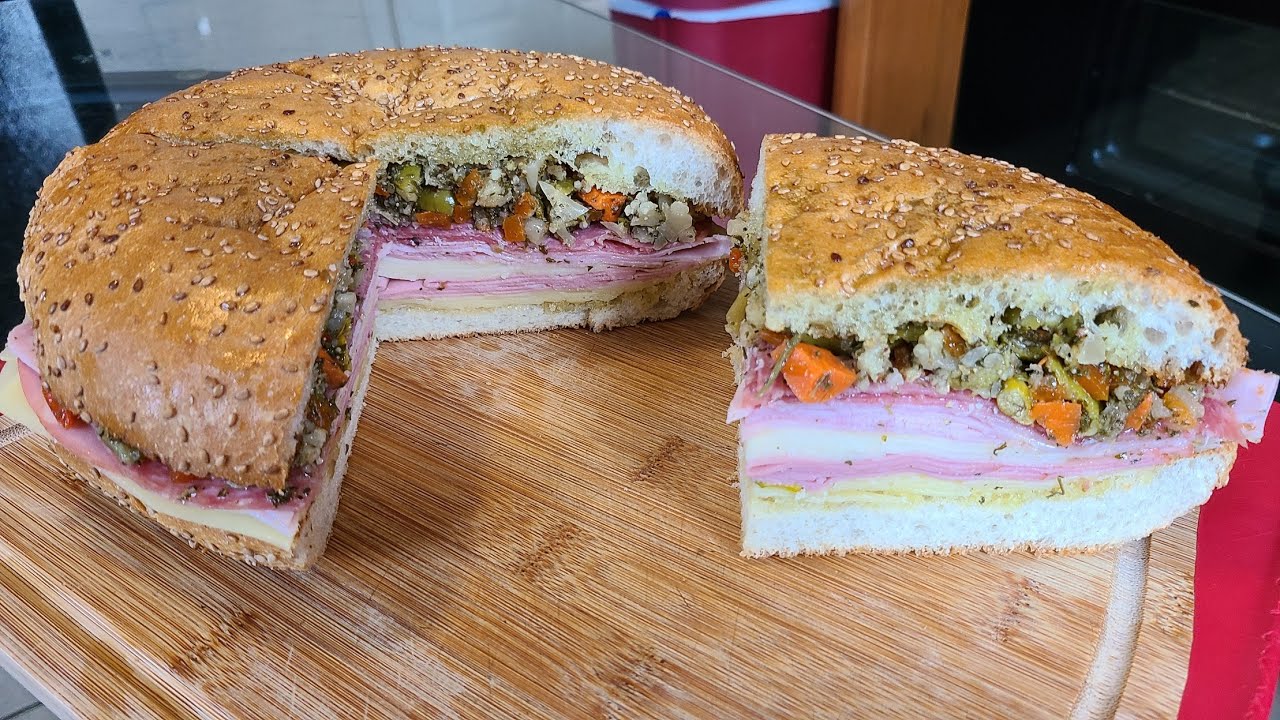
Muffuletta Recipe: The Muffuletta sandwich is not your ordinary deli sandwich. It’s a mouthwatering explosion of flavors, born from the cultural fusion of Italian and New Orleans cuisine. Pronounced “moo-foo-LET-ta,” this sandwich is a hearty, round loaf of Sicilian sesame bread stuffed to the brim with layers of marinated olive salad, cold cuts, and cheese. It’s salty, tangy, meaty, and downright unforgettable.
Unlike many sandwiches, the Muffuletta isn’t meant to be dainty. It’s bold, heavy, and typically big enough to feed a small army—or at least two very hungry people. One bite and you’ll understand why it’s become such an iconic food in New Orleans and beyond. It’s not just a sandwich; it’s a culinary experience.
Whether you’re planning a Mardi Gras-themed dinner or just craving something new, learning how to make a Muffuletta from scratch is a must. And once you’ve mastered it, you’ll have a go-to showstopper for parties, picnics, or indulgent lunches.
Origins of the Muffuletta
The Muffuletta has roots dating back to the early 1900s, originating from Central Grocery in New Orleans. Italian immigrants brought their love for cured meats, cheeses, and olives to Louisiana, and the Muffuletta was born as a way to combine all those flavors into one convenient meal.
Salvatore Lupo, the owner of Central Grocery, is often credited with inventing the sandwich. His goal? To create a dish that captured the essence of Italian antipasto in a portable form. It quickly became a hit among the city’s workers and visitors, especially those craving a filling lunch.
Over the years, the Muffuletta has evolved into various versions, but the original still reigns supreme. Authentic Muffulettas use round sesame loaves, a punchy olive salad, and a medley of Italian meats and cheeses. It’s a beloved part of New Orleans’ food history and continues to inspire food lovers around the world.
Key Ingredients You’ll Need
The Bread – Classic Muffuletta Loaf
The bread is the foundation of a great Muffuletta. You need a round, sturdy loaf—ideally, about 9 inches in diameter—with a slightly crunchy crust and soft, absorbent interior. The traditional choice is the Sicilian sesame loaf, a bread that can hold up to juicy fillings without falling apart.
If you can’t find Muffuletta bread at your local bakery, a large round Italian or French bread will work. Just make sure it’s not too airy or flaky. You want something with a bit of chew that won’t get soggy when layered with olive salad and deli meats.
Tips for selecting the right bread:
- Look for a loaf with sesame seeds on top (for authenticity).
- Avoid breads with strong flavors like sourdough—they can overpower the filling.
- Opt for something around 1.5–2 inches thick when halved.
The Olive Salad – The Secret Sauce
The real magic of a Muffuletta lies in its olive salad. This briny, tangy, and herbaceous mixture is what sets this sandwich apart from everything else.
Here’s what typically goes into an olive salad:
- Green olives (pimento-stuffed or Castelvetrano)
- Black olives (Kalamata or ripe olives)
- Pickled vegetables (cauliflower, carrots, celery)
- Roasted red peppers
- Garlic
- Capers
- Oregano, basil, parsley
- Red wine vinegar
- Olive oil
Chop everything coarsely and let it marinate for at least a few hours—or even overnight. The longer it sits, the better the flavors mingle. This salad isn’t just a condiment; it’s the soul of the Muffuletta. Slather it on generously!
Pro tip: You can make a big batch of olive salad and keep it in the fridge for up to 2 weeks. It’s also fantastic on pizzas, pastas, and grilled meats.
Deli Meats and Cheeses
Now comes the meaty middle. A classic Muffuletta sandwich is stacked with a trio of Italian cold cuts and a duo of cheeses. The combination offers saltiness, richness, and texture with every bite.
Here’s the traditional meat and cheese lineup:
- Genoa salami
- Capicola (or spicy ham)
- Mortadella (or plain deli ham)
- Provolone cheese
- Mozzarella or Swiss cheese
Layer them in generous portions—this isn’t the time to be shy. Each meat brings a different flavor note, and the cheese adds creaminess to balance the acidity of the olive salad.
If you’re experimenting or can’t find one of the meats, don’t worry—just try to keep a good mix of spicy, mild, and fatty cuts. The richness of the meats paired with the sharpness of the cheeses creates the classic Muffuletta flavor profile.
How to Make Muffuletta at Home – Step by Step
Step 1: Preparing the Olive Salad
Making the olive salad is the first and most important step. This flavor-packed spread is the heart of the Muffuletta and needs time to marinate so the ingredients can come together in perfect harmony.
Ingredients:
- 1 cup green olives, chopped
- 1 cup Kalamata or black olives, chopped
- ½ cup pickled cauliflower, finely chopped
- ¼ cup diced carrots
- ¼ cup diced celery
- ½ cup roasted red peppers, chopped
- 2 tablespoons capers
- 3 cloves garlic, minced
- 1 teaspoon dried oregano
- ½ teaspoon black pepper
- ½ teaspoon crushed red pepper (optional for spice)
- ½ cup olive oil
- ¼ cup red wine vinegar
- 2 tablespoons fresh parsley, chopped
Instructions:
- Combine all the ingredients in a large mixing bowl.
- Stir until everything is evenly coated with oil and vinegar.
- Transfer to a sealed container and refrigerate for at least 4 hours, but preferably overnight.
Why marinate? Time allows the vegetables and olives to soak in the oil and vinegar, making the salad rich, tangy, and deeply flavorful. This isn’t a step to rush—think of it as the base note in a beautiful symphony of flavors.
Step 2: Assembling the Sandwich
Once your olive salad is ready, it’s time to put everything together. This part is fun and super satisfying—kind of like stacking culinary Jenga with Italian flair.
Here’s how to assemble your Muffuletta:
- Slice your round loaf of bread horizontally.
- Scoop out a little of the soft bread from the top half to make space for the fillings.
- Spread half of the olive salad on the bottom half of the bread.
- Layer your meats in the following order: Genoa salami, capicola, and mortadella.
- Add provolone and mozzarella cheese slices.
- Top it with the rest of the olive salad.
- Close the sandwich with the top bread half.
Tips for layering:
- Make sure the olive salad is evenly spread, so every bite has flavor.
- Press the layers slightly as you build to compact them.
You might think this sandwich is done at this point, but there’s one more step that takes it from good to great.
Step 3: Pressing and Serving the Muffuletta
After assembly, the Muffuletta needs to rest. This step melds all the ingredients and helps the sandwich hold together better.
Here’s what to do:
- Wrap the entire sandwich tightly in plastic wrap or foil.
- Place it in the refrigerator and put a heavy skillet or cutting board on top to press it.
- Let it sit for at least 1 hour, though 3–4 hours (or even overnight) yields better flavor and texture.
When you’re ready to serve, unwrap and cut it into wedges or slices, like a pie. Use a serrated knife for clean cuts that won’t squash the sandwich.
Can you serve it warm? Absolutely. Some people enjoy lightly toasting the Muffuletta in a panini press or oven. This melts the cheese and warms the bread, offering a different—but equally delicious—experience.
Tips for the Perfect Muffuletta
Choosing the Right Bread
Bread can make or break a Muffuletta. The loaf needs to be dense enough to hold the fillings but not so crusty that it becomes difficult to bite through.
Look for these qualities:
- Round shape (about 9 inches wide)
- Crusty exterior with sesame seeds
- Soft, absorbent interior
If Muffuletta bread isn’t available near you, here are a few alternatives:
- Italian round loaf
- Ciabatta (in a pinch)
- Focaccia (pressing it helps!)
Avoid overly airy or crusty artisan loaves—they can fall apart or tear as you eat. And steer clear of sweet breads like brioche or Hawaiian rolls, which clash with the savory filling.
Letting the Flavors Marinate
This sandwich is not just about the individual ingredients—it’s about the way they come together over time. Pressing and refrigerating it allows:
- The oils from the olive salad to seep into the bread
- The meats and cheeses to meld
- The sandwich to firm up, making it easier to cut and eat
Some even say it tastes better the next day. That makes Muffuletta ideal for meal prep or make-ahead party sandwiches.
If you’re in a rush, you can serve it immediately, but if you’ve got time—let it rest. Your taste buds will thank you.
FAQs about Muffuletta Recipe
1. Can I make a vegetarian version of the Muffuletta?
Absolutely! You can swap the meats for grilled vegetables like zucchini, eggplant, and roasted peppers. Keep the olive salad and cheeses the same for that authentic flavor.
2. How long does a Muffuletta last in the fridge?
A fully assembled Muffuletta can last 2–3 days in the refrigerator. Wrap it tightly in foil or plastic to prevent it from drying out.
3. What can I use instead of Muffuletta bread?
If you can’t find the traditional round loaf, go for a dense Italian bread, ciabatta, or focaccia. Just avoid sweet or overly soft breads.
4. Can I freeze Muffuletta sandwiches?
Technically, yes—but it’s best eaten fresh or refrigerated. Freezing might affect the texture of the olive salad and bread.
5. Is the Muffuletta sandwich served hot or cold?
Traditionally, it’s served at room temperature or cold after being pressed. However, some people prefer to heat it slightly for melty cheese and a toasted exterior.
Conclusion
From the crunchy sesame loaf to the punchy olive salad and the satisfying layers of Italian cold cuts and cheese, every bite is like a love letter to New Orleans with a touch of Italian charm. And the best part? It’s incredibly versatile. Want it warm? Pop it in the oven. Want it spicy? Add some hot giardiniera. The Muffuletta invites you to make it your own.
So next time you’re hungry for something different, skip the usual sandwich routine and give the Muffuletta a go. It’s bold, it’s briny, it’s beautiful—and it’s bound to become one of your all-time favorites.