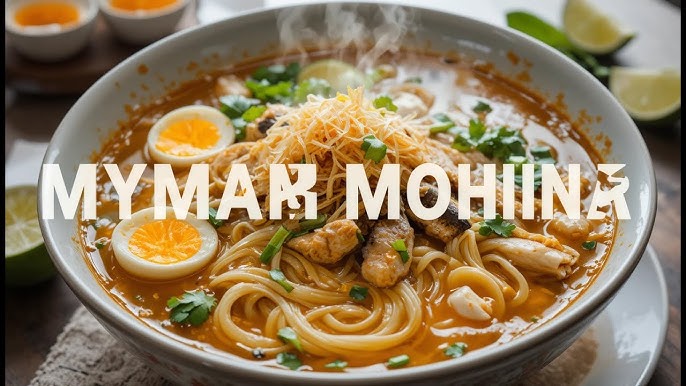
Mohinga Soup Recipe: Let’s dive into the flavorful world of Mohinga, Myanmar’s unofficial national dish and the heart and soul of Burmese breakfast culture. If you’ve never had Mohinga before, you’re in for a treat! This fish-based noodle soup is aromatic, hearty, and packed with layers of spices and herbs that blend beautifully into a bowl of pure comfort.
Imagine a bowl filled with warm, rich fish broth thickened with toasted rice flour, loaded with rice noodles, and topped with boiled eggs, crispy fritters, and fresh herbs. That’s Mohinga! It’s the type of dish that brings people together in Myanmar—from busy street-side vendors to early morning family breakfasts.
Whether you’re exploring Southeast Asian cuisine or just love trying something new and delicious, this guide will walk you through every step to making an authentic bowl of Mohinga at home—even if you’re not in Myanmar. No fancy techniques required—just fresh ingredients, a bit of patience, and a love for good food.
List of Ingredients You’ll Need
Before you begin cooking, let’s get everything in place. Mohinga has a beautiful balance of earthy, herbal, and spicy flavors, and every ingredient contributes to its signature taste.
Main Ingredients:
- Fish – Traditionally, catfish is used, but you can also use tilapia, mackerel, or any white-fleshed fish. Around 500–700g of fish works well for a medium-sized pot.
- Rice flour – Acts as a thickener. You’ll need around 1/3 to 1/2 cup, toasted lightly before use.
- Thin rice noodles – Cooked separately and added to the bowl before serving.
- Banana stem (optional but authentic) – Sliced thinly, it adds crunch and absorbs flavor.
- Lemongrass – 2 stalks, bruised and chopped. A key ingredient for that fresh, citrusy aroma.
Aromatics & Spices:
- Garlic – 6–8 cloves, finely chopped or crushed.
- Ginger – A 2-inch piece, grated.
- Onions – 2 medium, finely chopped.
- Turmeric powder – 1 tsp, for color and earthiness.
- Paprika or chili powder – 1 tsp, adjust to taste.
Herbs & Toppings:
- Fresh coriander (cilantro) – Chopped, for garnish.
- Boiled eggs – Halved, 1 per serving.
- Crispy split pea or lentil fritters – Optional but delicious.
- Lime wedges – For squeezing over before eating.
- Chili flakes or oil – For extra heat.
Optional Ingredients:
- Fish sauce – Adds umami depth (1–2 tbsp).
- Fermented rice or pickled mustard greens – Commonly used in regional versions.
- MSG or seasoning powder – Some cooks in Myanmar use it for that extra flavor boost.
Pro tip: If you can’t find banana stem or some herbs, don’t worry! You can still make a tasty version of Mohinga with the essentials.
Kitchen Tools & Equipment
You don’t need fancy kitchen gadgets for Mohinga, but having the right tools can make the process smoother.
- Large stockpot or Dutch oven – For making the broth.
- Ladle – For serving the soup.
- Sieve or strainer – Useful for removing fish bones from the broth.
- Mortar and pestle – Great for smashing aromatics (a blender also works).
- Small pan – For frying the spice paste.
- Serving bowls – Deep bowls for generous soup portions.
Having these tools ready before you begin will make your cooking experience much more enjoyable.
Preparation Before Cooking
Preparation is key to a smooth cooking session. Here’s how to get everything ready before you turn on the stove.
1. Prep the Fish:
Clean the fish, remove scales and guts (if necessary), and cut into chunks. If using fillets, keep the bones and heads—they make the broth taste richer. Rinse and pat dry.
2. Toast the Rice Flour:
In a dry pan over medium heat, toast the rice flour until it turns light brown and gives off a nutty aroma. Stir constantly to avoid burning. Let it cool and set aside.
3. Chop the Aromatics:
Finely chop garlic, onions, and ginger. Smash the lemongrass stalks to release oils. If using banana stem, slice it thinly into circles and soak in lemon water to prevent discoloration.
4. Boil the Eggs:
Hard-boil your eggs and peel them in advance. Set aside for serving.
Once these steps are done, you’re ready to start cooking. Now let’s get into the heart of it!
Step-by-Step Guide to Making Mohinga Soup
Step 1: Prepare the Fish Broth
Place fish (such as catfish) in a pot with water, onion, garlic, ginger, and lemongrass. Simmer gently for 15–20 minutes until the fish is cooked and flavorful. Remove the fish, carefully debone it, and flake the meat. Strain the broth and set both aside.
Step 2: Cook the Base Paste
In a pan, heat oil over medium heat. Add a paste made from turmeric, onion, garlic, and ginger. Stir-fry slowly for 5–7 minutes until fragrant and slightly golden. This step builds the signature depth of Mohinga.
Step 3: Mix in Rice Flour
In a bowl, mix rice flour with water to create a smooth slurry. Slowly add it to the pan while stirring continuously. Keep stirring to prevent lumps and ensure a silky texture.
Step 4: Combine Paste and Broth
Gradually pour the prepared fish broth into the paste mixture, stirring well. Add the flaked fish back in. Reduce heat and let the soup simmer gently for 20 minutes so flavors fully blend.
Step 5: Add Vegetables and Herbs
Add sliced banana stems and bruised lemongrass. Season with salt and adjust spice with chili or paprika as desired. Stir gently to combine.
Step 6: Simmer to Perfection
Simmer for another 10–15 minutes until the soup thickens slightly but remains pourable. Taste and adjust seasoning. If too thick, add water; if too mild, add salt or spice. Serve hot over noodles.
How to Serve Mohinga
Now that your pot of Mohinga is bubbling with deliciousness, it’s time to assemble the perfect bowl. Presentation matters just as much as flavor, especially with a dish as iconic as this one.
Here’s how to plate it up like they do on the streets of Yangon:
- Prepare the rice noodles – In a separate pot, cook the thin rice noodles according to package instructions. Rinse with cold water to stop the cooking process and drain thoroughly.
- Portion the noodles – Place a generous handful of rice noodles into each serving bowl. These noodles act as the foundation of the dish.
- Ladle the soup – Pour the hot, thickened fish soup over the noodles until they’re nicely submerged. The soup should coat the noodles but not drown them completely.
- Add toppings:
- Boiled egg halves (one per bowl is standard)
- Crispy fritters (like split pea or lentil fritters)
- Fresh cilantro or chopped spring onions
- Crushed chili flakes or a drizzle of chili oil
- Lime wedges on the side for squeezing
- Optional extras – Some people also add a dash of fish sauce or a spoonful of fermented mustard greens for extra zing.
Serve immediately while it’s hot, and let everyone customize their toppings at the table. Eating Mohinga is meant to be interactive and fun!
Tips for Making Authentic Mohinga
If you’re aiming for the most traditional, street-style flavor, these tips will help you nail it like a Burmese grandma would:
- Don’t skip the toasted rice flour. It’s what gives the soup its creamy body and slight nuttiness.
- Use fresh fish with bones if possible. Fish heads and bones enrich the broth more than boneless fillets ever will.
- Sauté the aromatics slowly. You want them golden, not burnt, so keep the heat medium and be patient.
- Fry your fritters fresh. If you’re going all-in, make split pea fritters (called “akyaw”) for that perfect crunchy texture.
- Adjust spice and salt at the end. The flavor intensifies as it simmers, so always taste before final seasoning.
Common Mistakes to Avoid:
- Skipping the straining step—fish bones in the soup can ruin the texture.
- Pouring dry rice flour straight into the pot—it’ll clump like glue!
- Overcooking the fish—keep it tender by flaking it only after boiling.
A little love and attention to detail make a huge difference with this dish.
Storage and Reheating Tips
Mohinga is best enjoyed fresh, but if you’ve made a big pot (and trust me, you’ll want to), here’s how to store and reheat it properly:
- Refrigeration: Store the soup and noodles separately. The soup can last up to 3–4 days in the fridge in an airtight container.
- Freezing: Mohinga broth freezes beautifully. Cool completely and freeze in portions. Thaw overnight in the fridge and reheat gently on the stovetop.
- Reheating: Use a saucepan over medium heat. Add a splash of water if it’s too thick. Avoid microwaving—stovetop reheating preserves the texture and flavor better.
Pro tip: Always boil fresh noodles when reheating, rather than storing cooked noodles—they tend to get soggy.
Variations of Mohinga
Mohinga isn’t one-size-fits-all. Across Myanmar, you’ll find unique takes depending on the region, availability of ingredients, and family traditions.
Regional Variations
- Yangon style: The most common version, with thicker soup and rich spices.
- Mandalay style: A lighter version with thinner broth and fewer toppings.
- Rakhine Mohinga: Spicy and tangy, often made with more chili and fermented ingredients.
Modern & Dietary Variations
- Vegetarian/Vegan Mohinga: Use mushrooms or tofu instead of fish. Seaweed can help recreate that oceanic flavor.
- Spicy Mohinga: Add crushed dried chilies to the paste or a spoon of chili oil before serving.
- Herb-heavy version: Use extra lemongrass and kaffir lime leaves for a fresher flavor.
Make it your own and experiment—you’ll discover which version you love best.
Nutritional Value of Mohinga
Mohinga isn’t just tasty—it’s also surprisingly nutritious when made at home with fresh ingredients.
| Nutrient | Amount (approx. per serving) |
|---|---|
| Calories | 300–400 kcal |
| Protein | 18–25g (from fish and eggs) |
| Carbs | 35–45g (mainly from noodles) |
| Fat | 10–15g (depends on oil used) |
| Fiber | 3–5g |
| Gluten-Free? | Yes, if using rice noodles |
It’s a wholesome, balanced meal—especially when topped with herbs and served with a side of veggies or fruit.
Why Mohinga is the National Dish of Myanmar
It’s not just a bowl of soup—it’s a bowl of culture.
Mohinga has been part of Burmese cuisine for centuries. Originally sold by street vendors in the early mornings, it became deeply woven into the daily lives of the people. Today, it’s eaten for breakfast, lunch, dinner—or anytime someone wants comfort.
Its significance is rooted in:
- Accessibility: Simple ingredients, easy to find.
- Tradition: Passed down from one generation to the next.
- Unity: From north to south, east to west, every corner of Myanmar has its own take—but it’s still Mohinga.
It’s like Myanmar’s version of chicken noodle soup, ramen, or pho—a national treasure in a bowl.
Comparison with Other Southeast Asian Soups
You might be wondering—how is Mohinga different from dishes like Thai tom yum or Vietnamese pho?
Let’s compare:
| Dish | Base Flavor | Noodle Type | Key Protein | Herb Profile |
|---|---|---|---|---|
| Mohinga | Fish + turmeric | Rice vermicelli | Catfish | Lemongrass, banana stem |
| Pho | Beef bone + spices | Flat rice noodles | Beef | Basil, mint, lime |
| Tom Yum | Sour & spicy | None usually | Shrimp | Lemongrass, lime leaf |
| Laksa | Coconut + curry | Egg/rice noodles | Chicken/Shrimp | Cilantro, lime |
What sets Mohinga apart is its earthy, fish-forward broth, its use of toasted rice flour, and the unique toppings like fritters and banana stem.
Pairing Ideas with Mohinga
Want to turn your Mohinga into a complete meal?
- Drinks: Iced green tea, lemongrass tea, or even a cold beer for adults.
- Side dishes: Fermented tea leaf salad (lahpet thoke), pickled veggies, or spicy sambal.
- Dessert pairing: Coconut rice cakes or palm sugar syrup sweets.
Balance the savory richness of Mohinga with light, fresh sides and you’re golden.
Cooking Mohinga for a Crowd
Hosting a party or a cultural food night? Mohinga is perfect!
- Scale it up: Use a larger pot and double the ingredients.
- Make ahead: Prepare the broth and toppings the day before. Reheat and assemble before serving.
- Serve buffet-style: Lay out noodles, soup, and toppings separately so guests can build their own bowls.
It’s interactive, fun, and a guaranteed crowd-pleaser!
FAQs about Mohinga Soup Recipe
1. Can I make Mohinga without fish?
Yes! Use mushrooms, tofu, or seaweed for a vegetarian version that still packs flavor.
2. What kind of rice flour works best?
Plain white rice flour is traditional. Avoid glutinous rice flour—it will make the soup too sticky.
3. Is Mohinga gluten-free?
It can be! Just make sure your rice noodles and other condiments are labeled gluten-free.
4. How spicy is traditional Mohinga?
Mild to moderate. You can easily adjust the spice level with more or less chili powder or chili oil.
5. Can I freeze leftover Mohinga?
Yes, the soup freezes well. Store it without the noodles and toppings, then reheat gently on the stove.
Conclusion
There you have it—your complete, step-by-step guide to cooking authentic Mohinga soup at home. This iconic Burmese dish may sound complex, but once you break it down, it’s totally doable—and incredibly rewarding.
From its bold, comforting flavors to its rich cultural roots, Mohinga is more than just a meal. It’s a window into the heart of Myanmar, served in a warm, aromatic bowl.
Give it a try, tweak it to your taste, and most of all—enjoy every spoonful.