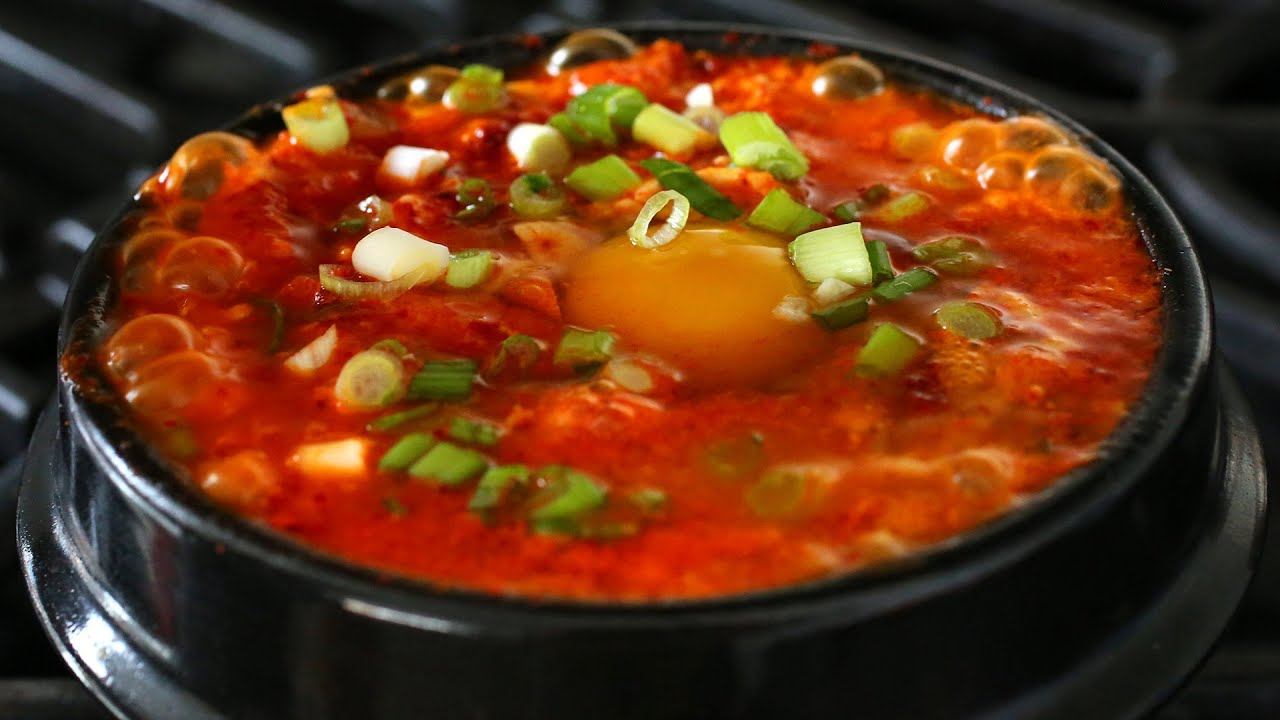
Korean Sundubu Jjigae Recipe: Sundubu Jjigae, also known as Korean soft tofu stew, is one of Korea’s most comforting and flavorful dishes. If you’ve ever dined at a Korean restaurant, you’ve probably seen it bubbling away in a small stone pot, topped with a cracked egg, and served piping hot alongside a bowl of rice. This dish is more than just food—it’s a hug in a bowl, warming you up on cold days while delivering a punch of spice and rich umami flavors.
So, what makes Sundubu Jjigae special? At its core, it’s a hearty stew made with soft tofu (sundubu), broth, vegetables, protein, and a spicy seasoning base. The key element is the tofu—it’s uncurdled, silky, and melt-in-your-mouth, giving the stew its signature texture.
Historically, Sundubu Jjigae became popular in Korea during the Joseon Dynasty, and it has since evolved into a household favorite. Today, it’s often enjoyed as a comfort meal, a hangover cure, or simply a quick yet nutritious dinner option. And the best part? You don’t need to be a professional chef to make it at home. With the right ingredients and a little guidance, you can whip up an authentic Sundubu Jjigae in under 30 minutes.
If you’ve never made Korean food before, don’t worry. This guide will walk you through everything—from gathering ingredients to cooking step by step—so you can enjoy this classic stew from your own kitchen.
Ingredients You’ll Need
Like most Korean dishes, Sundubu Jjigae balances a mix of savory, spicy, and umami flavors. The ingredients are simple yet powerful, and each plays a key role in building the flavor profile of the stew.
Core Ingredients:
- Soft tofu (sundubu): The star of the dish. It’s smoother and silkier than regular tofu.
- Gochugaru (Korean red chili flakes): Adds smoky spice and depth.
- Gochujang (Korean chili paste): For sweetness and body in the broth.
- Garlic & onion: Essential aromatics for building flavor.
- Soy sauce: For umami richness.
- Vegetable or anchovy stock: The base liquid of the stew.
- Egg: Cracked in at the end for creaminess.
Optional Add-ons:
- Seafood (shrimp, clams, squid): For a briny kick.
- Meat (beef, pork, chicken): To make the stew heartier.
- Kimchi: For extra tang and spice.
- Mushrooms & zucchini: To bulk up the stew with vegetables.
Substitutes if You Can’t Find Korean Ingredients:
- Instead of gochugaru, use a mild chili powder mixed with paprika.
- Instead of sundubu, use silken tofu (found in most Asian stores).
- If you don’t have anchovy broth, use chicken or vegetable stock.
Having these ingredients ready before you start will make the cooking process smooth and enjoyable.
Tools and Equipment
While traditional Korean households often use special cookware to prepare Sundubu Jjigae, you can still make it with standard kitchen tools.
Traditional Tools:
- Ttukbaegi (stone pot): A thick, earthenware pot that retains heat and keeps the stew bubbling while you eat.
Modern Alternatives:
- A small saucepan or Dutch oven works well if you don’t have a ttukbaegi.
Serving Essentials:
- White steamed rice (a must!).
- Korean side dishes like kimchi, pickled radish, or seasoned spinach.
Pro tip: Serving Sundubu Jjigae while it’s bubbling hot is key—it enhances both the aroma and the eating experience.
Step-by-Step Guide to Making Sundubu Jjigae
Let’s get cooking! Making Sundubu Jjigae is simpler than it looks. Just follow these steps carefully, and you’ll have a bubbling pot of Korean comfort food in no time.
Step 1 – Preparing the Stock
The flavor foundation of Sundubu Jjigae starts with the stock. Traditionally, Koreans use anchovy and kelp broth for a savory, oceanic depth. To make it at home, boil dried anchovies and kelp in water for 10–15 minutes, then strain. If anchovies aren’t your thing, a light chicken or vegetable stock also works well.
Step 2 – Sautéing the Base Flavors
Heat sesame oil in your pot, then add garlic, onion, and gochugaru. This step is crucial—it blooms the chili flakes and aromatics, releasing their full flavor. Stir gently until fragrant.
Step 3 – Adding Vegetables and Protein
Now toss in your choice of vegetables and protein. Seafood lovers can add shrimp, mussels, or squid, while meat eaters might go for thinly sliced beef or pork. Let everything sauté briefly before pouring in the prepared stock.
Step 4 – Incorporating the Soft Tofu
Carefully add chunks of soft tofu into the pot. Unlike firm tofu, sundubu doesn’t hold its shape, so spoon it in gently to keep its silky texture intact.
Step 5 – Cracking the Egg on Top
Once the stew is bubbling, crack a fresh egg directly into the pot. The heat will cook the egg partially, leaving the yolk creamy. Serve immediately while hot, with rice on the side.
Tips for the Perfect Sundubu Jjigae
- Adjust the spice level by reducing gochugaru or mixing in a little sugar.
- Taste your broth before adding tofu; this ensures the flavors are balanced.
- Avoid stirring too much after adding tofu—it can break apart.
- Always serve bubbling hot—it’s part of the experience!
Variations of Sundubu Jjigae
One of the beautiful things about Sundubu Jjigae is how versatile it is. While the classic version is already comforting and delicious, you can easily adapt the stew to your taste, mood, or dietary needs. Whether you love seafood, crave a hearty beef stew, or prefer a vegetarian-friendly option, Sundubu Jjigae has a variation for you.
Seafood Sundubu Jjigae
Seafood lovers rejoice—this version is packed with shrimp, clams, mussels, squid, or a combination of all. The natural brininess from shellfish gives the broth a deep, ocean-like flavor that pairs perfectly with the spicy base. To make it, simply add your chosen seafood after sautéing the aromatics, then let the broth absorb all the seafood goodness. Pro tip: don’t overcook the seafood, especially shrimp and squid, as they can turn rubbery quickly.
Beef Sundubu Jjigae
For meat lovers, thinly sliced beef or ground beef makes an excellent addition. The beef releases rich juices into the stew, making the broth deeper and heartier. This variation works especially well when paired with kimchi, as the tangy flavor balances out the richness of the beef. If you want a more filling meal, this version with beef is a perfect choice.
Vegetarian Sundubu Jjigae
Not a fan of meat or seafood? No problem. Sundubu Jjigae can be just as satisfying with vegetables alone. Mushrooms (shiitake, oyster, or enoki) add an earthy umami depth, zucchini brings freshness, and spinach or bok choy can give the stew a healthy green twist. Swap anchovy stock for vegetable stock, and you’ve got yourself a completely vegetarian and even vegan-friendly dish.
The beauty of Sundubu Jjigae lies in its adaptability—you can make it spicy, mild, protein-heavy, or veggie-packed depending on your mood.
Nutritional Value and Health Benefits
Sundubu Jjigae isn’t just delicious—it’s also packed with nutrients that make it a wholesome meal. Let’s break down why this stew is considered one of the healthier comfort foods out there.
High Protein and Low-Carb Benefits
Tofu is a great source of plant-based protein, making Sundubu Jjigae a fantastic option for anyone looking to increase protein intake without relying on meat. Add seafood, beef, or chicken, and you’re doubling up on protein power. Plus, it’s naturally low in carbs, especially when paired with a moderate portion of rice.
Rich in Vitamins and Minerals
Depending on the ingredients you use, Sundubu Jjigae can be loaded with vitamins. Vegetables like zucchini, mushrooms, and spinach provide vitamins A, C, and K, while seafood contributes iodine and omega-3 fatty acids. Even the gochugaru (chili flakes) brings antioxidants to the mix.
Great for Digestion
Soft tofu is easy to digest, making the stew light on the stomach. If you add kimchi, you also get probiotics that support gut health. The broth itself, especially if made with anchovies and kelp, is rich in minerals that can help restore balance in the body.
Overall, Sundubu Jjigae is a balanced dish that delivers protein, fiber, vitamins, and minerals, making it both comforting and nourishing.
Serving Suggestions
Eating Sundubu Jjigae is not just about the stew itself—it’s about the entire experience of a Korean meal. Here’s how to elevate your meal for an authentic touch.
What to Eat with Sundubu Jjigae
Traditionally, Sundubu Jjigae is served with a hot bowl of steamed white rice. The rice balances the spice and helps you enjoy the stew more fully. You can also enjoy it with brown rice or mixed-grain rice for a healthier twist.
Traditional Korean Side Dishes (Banchan)
Koreans rarely eat just one dish at a meal. Instead, they serve multiple side dishes, called banchan, alongside the main dish. For Sundubu Jjigae, the best side dishes include:
- Kimchi: Spicy, tangy, and crunchy, it’s the ultimate companion.
- Kongnamul (seasoned soybean sprouts): Light and refreshing.
- Japchae (glass noodles): Adds a sweet-savory balance.
- Pickled radish or cucumber kimchi: For a crunchy, refreshing contrast.
Pairing with Rice and Kimchi
If you’re keeping it simple, Sundubu Jjigae with just rice and kimchi is more than enough. The heat of the stew, the softness of the rice, and the tangy crunch of kimchi create the perfect trio for a comforting Korean meal at home.
Storage and Reheating
You’ve made a delicious pot of Sundubu Jjigae—now what if you have leftovers? The good news is that this stew stores well and can be reheated for another meal.
How to Store Leftovers Properly
Allow the stew to cool to room temperature before transferring it to an airtight container. Store in the refrigerator for up to 3 days. Make sure the tofu is submerged in broth to keep it moist and flavorful.
Reheating Tips Without Losing Flavor
When reheating, use a stovetop over medium heat instead of a microwave. This keeps the flavors intact and prevents the tofu from breaking apart too much. If the broth has reduced, add a splash of water or stock to bring it back to life.
Freezing Sundubu Jjigae – Is It Possible?
While freezing is not ideal due to the delicate texture of tofu, you can freeze the broth separately and add fresh tofu later when reheating. If you freeze the entire stew, the tofu may lose its silky texture and become grainy. For best results, always add fresh sundubu when making the dish again.
FAQs about Korean Sundubu Jjigae Recipe
1. What is the difference between Sundubu Jjigae and Kimchi Jjigae?
Sundubu Jjigae is made with soft tofu as the main ingredient, while Kimchi Jjigae focuses on fermented kimchi as its base flavor. Both are spicy stews but have different highlights in taste and texture.
2. Can I make Sundubu Jjigae without gochugaru?
Yes, but it won’t have the same authentic smoky spice. You can substitute with a mix of paprika and chili flakes for a similar flavor profile.
3. Is Korean soft tofu the same as silken tofu?
They’re very similar. Korean soft tofu (sundubu) is unpressed and extra smooth, while silken tofu is slightly firmer but works as a good substitute if sundubu is not available.
4. Can I cook Sundubu Jjigae in advance?
Yes, you can prepare the broth and base flavors in advance. However, it’s best to add the tofu and egg right before serving to maintain their texture and freshness.
5. What protein works best for this stew?
Seafood and beef are the most common, but chicken, pork, or even just vegetables with mushrooms can make excellent variations depending on your taste.
Conclusion
The best part? You don’t have to be a seasoned cook to master this dish. With just a few essential ingredients and a step-by-step approach, you can recreate an authentic Korean experience right in your kitchen. Pair it with steamed rice, kimchi, and a few banchan, and you’ll have yourself a meal that’s both hearty and balanced.
So, the next time you crave something cozy, nourishing, and a little spicy, try making Sundubu Jjigae at home. Once you do, it might just become your go-to comfort meal—perfect for cold nights, lazy weekends, or whenever you want a taste of Korea.